Loading...
Xu Da vs Yamagata Aritomo
Yamagata Aritomo leads by 7.6 pts · 2 figures compared
…
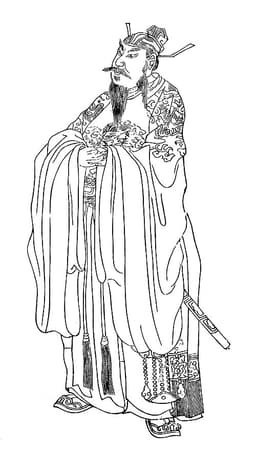
Xu Da
General · Medieval
74.9Total
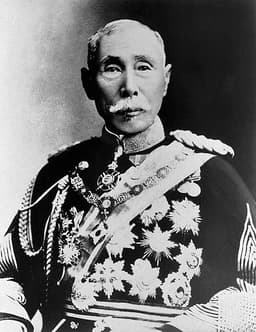
Yamagata Aritomo
General · Modern
82.5Total
Basic Information
Born
1332
1838
Died
1385
1922
Era
Medieval
Modern
Nationality
China
Japan
Occupation
General
General
Civilization
Eastern
Eastern
Score Comparison
Military (10%)
88.0
78.0
Political (20%)
68.0
82.0
Influence (20%)
82.0
80.0
Legacy (20%)
72.0
90.0
Leadership (15%)
62.0
78.0
Strategy (15%)
80.8
82.0
TOTAL
74.9
82.5
Xu Da — Complete Timeline
1368 AD
Capture of Dadu (Beijing)War
Xu Da led the Ming army in the capture of Dadu, the Yuan capital. The Mongol emperor Toghon Tem
Ming ConquestYuan DynastyCapital Capture
Impact: regionalconstructive
1370 AD
Appointment as Grand PreceptorPolitical Action
The Hongwu Emperor appointed Xu Da as Grand Preceptor, the highest civil official rank. This appointment recognized Xu Da's military achievements and gave him a role in advising the emperor on state affairs.
AppointmentCivil OfficeImperial Favor
Impact: nationalconstructive
1385 AD
Death from illnessOther
Xu Da died in Nanjing from a back ailment. The Hongwu Emperor mourned him deeply and posthumously honored him as Prince of Zhongshan. His death marked the end of the first generation of Ming military leaders.
DeathMing DynastyMilitary Leader
Impact: nationaltragic
Yamagata Aritomo — Complete Timeline
1873 AD
Establishment of the Imperial Japanese ArmyReform
Yamagata Aritomo, as War Minister, oversaw the creation of the Imperial Japanese Army based on the Prussian model. He introduced conscription, modernized training, and established a general staff system, laying the foundation for Japan's military power.
Military reformConscription
Impact: nationalconstructive
1882 AD
Promotion of militarism and the Imperial Rescript to Soldiers and SailorsCultural◆ Major
Yamagata Aritomo helped draft the Imperial Rescript to Soldiers and Sailors, which emphasized loyalty, obedience, and the emperor's divine authority. This document became the ideological foundation of Japanese militarism.
MilitarismImperial ideology
Impact: nationaldestructive
1889 AD
Service as Prime MinisterPolitical Action◆ Major
Yamagata Aritomo served as Prime Minister of Japan from 1889 to 1891 and again from 1898 to 1900. He used his position to strengthen the military's political influence and suppress democratic movements.
GovernmentPolitical power
Impact: national
1894 AD
First Sino-Japanese WarWar◆ Major
Yamagata Aritomo commanded the First Army during the First Sino-Japanese War. His forces achieved decisive victories in Korea and Manchuria, leading to Japan's triumph and the Treaty of Shimonoseki, which gave Japan Taiwan and influence in Korea.
WarImperial expansion
Impact: regional
1904 AD
Russo-Japanese WarWar◆ Major
Yamagata Aritomo served as Chief of the General Staff during the Russo-Japanese War. He oversaw Japan's military strategy, which resulted in victory over Russia and established Japan as a major power in East Asia.
WarGreat power
Impact: global
Expert Analysis
Origins
Yamagata Aritomo was born in 1838 in Hagi, a feudal domain in Japan, into a lower-ranking samurai family. His early life was shaped by the turmoil of the Bakumatsu period, where he joined the Kiheitai militia and fought against the Tokugawa shogunate, advocating for imperial restoration. This experience forged his belief in a modern, centralized military. In contrast, Xu Da (1332–1385) was born into a poor peasant family in Fengyang, China. He joined the Red Turban Rebellion against the Mongol Yuan dynasty, where his military prowess caught the attention of Zhu Yuanzhang, the future Hongwu Emperor. Xu Da's humble origins and loyalty to the Ming cause defined his career.
Rise to Power
Yamagata emerged as a key figure in the Meiji Restoration, traveling to Europe to study military systems. He became War Minister and architect of the Imperial Japanese Army, modeled on Prussian lines. His rise was institutional: he created conscription laws, military academies, and the General Staff. Xu Da's rise was through battlefield success. He led campaigns that crushed rival rebel factions and Mongol forces. His capture of Dadu (Beijing) in 1368 ended Yuan rule, making him the Ming dynasty's foremost general. He was appointed Grand Preceptor, the highest civil office.
Leadership & Governance
Yamagata's leadership was bureaucratic and ideological. He emphasized discipline, loyalty (via the Imperial Rescript to Soldiers and Sailors), and militarism, shaping Japan's aggressive expansion. As Prime Minister, he influenced foreign policy and suppressed dissent. Xu Da led by example, sharing hardships with his troops. He was known for strategic acumen, logistical skill, and strict discipline, forbidding looting. He governed conquered territories with fairness, aiding Ming consolidation. While Yamagata built a military machine, Xu Da built a dynasty.
Triumph & Tragedy
Yamagata's triumphs include the First Sino-Japanese War (1894–95) and Russo-Japanese War (1904–05), where Japan defeated larger empires. However, his promotion of militarism contributed to Japan's eventual path to World War II and defeat. Xu Da's triumph was the Ming conquest of China, expelling the Mongols. His tragedy was his early death from illness at age 53, before seeing the Ming dynasty's full consolidation. He died in honor, unlike Yamagata who lived to see his militaristic legacy turn destructive.
Character & Destiny
Yamagata was cold, calculating, and power-hungry, often clashing with civilian leaders. He believed in the primacy of the military. His destiny was to be the father of Japanese militarism, a double-edged legacy. Xu Da was loyal, humble, and self-effacing, refusing high titles. He died naturally, revered as a paragon of martial virtue. His destiny was to be the architect of China's greatest dynasty, honored for centuries.
Legacy
Yamagata's legacy is controversial: he modernized Japan but set it on a militaristic path that led to catastrophe. His institutional framework survived into post-war Japan. Xu Da's legacy is uniformly positive: he is celebrated as a national hero who restored Han Chinese rule, with temples and legends. In military terms, Yamagata's impact on modern warfare is greater, but Xu Da's strategic achievements in medieval warfare are comparable.
Conclusion
In a direct comparison, Yamagata Aritomo scores higher overall (82 vs 74.4) due to his broader impact on military institutions and modern warfare. Xu Da was a brilliant field commander but lacked Yamagata's organizational legacy. However, Xu Da's moral character and lasting fame in China are superior. Yamagata's militarism brought short-term success but long-term tragedy. Xu Da's conquests were more decisive and humane. On balance, Yamagata is the greater general in terms of historical influence, but Xu Da is the more admirable one. **Final Verdict: Yamagata Aritomo wins by 7.6 points.**
Rankings
🥇
Yamagata AritomoLeader
Mil: 78.0Pol: 82.0Inf: 80.0
82.5
🥈
Xu Da
Mil: 88.0Pol: 68.0Inf: 82.0
74.9
+7.6 behind
How This Comparison Works
Algorithm
Each figure is scored on 6 dimensions (0—100 scale) based on structured historical data: Military (10%), Political (20%), Influence (20%), Legacy (20%), Leadership (15%), Strategy (15%). The weighted total produces the final ranking.
Data Sources
Scores are computed from structured sub-indicators in the database. Scale factors adjust for era (Ancient ×0.85, Modern ×1.0) and civilization size (Eastern ×1.05, Other ×0.80) to account for differences in population and military scale.
Maximum 3 Figures
Comparisons are limited to 2—3 figures to ensure readability and statistical meaningfulness.
Error Margins
±5 points per dimension — Sub-scores are derived from historical records with inherent uncertainty. Two figures within 5 points on a dimension should be considered roughly equivalent in that area.
Total Score Accuracy
±3 points overall — The weighted combination of 6 dimensions produces a total score with approximately ±3 points of uncertainty. Differences of less than 3 points are not statistically significant— the figures are effectively tied.
Known Limitations
- Historical records are incomplete and uneven across civilizations
- Figures from oral-tradition societies may be underrepresented
- Occupation labels can misclassify multi-role figures
- Scores measure capability and impact, not moral character
- Quantitative scoring is a comparison tool, not absolute truth
Capability Radar
Military (10%) — Battles & Warfare
Battles
95
75
Win Rate
95
70
Expansion
95
80
Political (20%) — Governance & Reform
Reform
50
90
Diplomacy
65
75
Economy
55
70
Influence (20%) — Cultural & Global Reach
Cultural
70
80
Global
80
70
Legacy (20%) — Historical Impact
Historical
85
85
Longevity
75
75
Leadership (15%) — Power & Stability
Tenure
60
85
Stability
70
65
Strategy (15%) — Tactics & Innovation
Strategy
92
85
Tactics
90
80
Reform
70
95
Similar Comparisons
Comments & Discussion
No comments yet. Be the first to share your thoughts!