Loading...
Saladin vs Xu Da
Xu Da leads by 10.8 pts · 2 figures compared
…
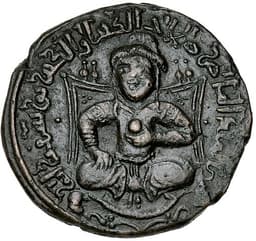
Saladin
General · Medieval
64.1Total
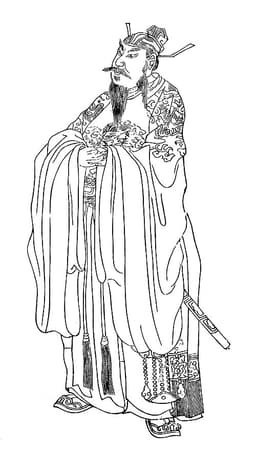
Xu Da
General · Medieval
74.9Total
Basic Information
Born
1137
1332
Died
1193
1385
Era
Medieval
Medieval
Nationality
Ayyubid Sultanate
China
Occupation
General
General
Civilization
Middle Eastern
Eastern
Score Comparison
Military (10%)
75.0
88.0
Political (20%)
69.6
68.0
Influence (20%)
65.2
82.0
Legacy (20%)
52.0
72.0
Leadership (15%)
62.0
62.0
Strategy (15%)
76.0
80.8
TOTAL
64.1
74.9
Saladin — Complete Timeline
1187 AD
Battle of HattinWar
Saladin's forces defeated the Crusader army at Hattin, near Tiberias. He captured King Guy of Jerusalem and the True Cross relic. The victory decimated the Crusader military and opened the way for the recapture of Jerusalem.
BattleCrusadesVictory
Impact: regional
Recapture of JerusalemWar
Saladin's army besieged and captured Jerusalem from the Crusaders after 88 years of Christian rule. He allowed the inhabitants to leave peacefully or be ransomed, contrasting with the Crusaders' massacre in 1099. This event triggered the Third Crusade.
ConquestJerusalemCrusades
Impact: global
1189 AD
Siege of AcreWar◆ Major
Saladin faced a prolonged siege of Acre by Crusader forces under Richard the Lionheart and Philip Augustus. After nearly two years, the city fell to the Crusaders. Saladin's inability to relieve the siege was a major setback.
SiegeCrusadesDefeat
Impact: regional
1191 AD
Battle of ArsufWar◆ Major
Saladin's forces attacked Richard the Lionheart's army marching south from Acre. Richard's disciplined infantry repelled the attacks, inflicting heavy losses on Saladin's troops. The battle ended in a tactical Crusader victory, but Saladin's army remained intact.
BattleCrusadesRichard the Lionheart
Impact: regional
1192 AD
Treaty of RamlaPolitical Action◆ Major
Saladin and Richard the Lionheart signed the Treaty of Ramla, ending the Third Crusade. The treaty granted Crusaders control of a coastal strip from Jaffa to Acre, while Muslims retained Jerusalem. Christian pilgrims were allowed access to holy sites.
TreatyCrusadesDiplomacy
Impact: regional
Xu Da — Complete Timeline
1368 AD
Capture of Dadu (Beijing)War
Xu Da led the Ming army in the capture of Dadu, the Yuan capital. The Mongol emperor Toghon Tem
Ming ConquestYuan DynastyCapital Capture
Impact: regionalconstructive
1370 AD
Appointment as Grand PreceptorPolitical Action
The Hongwu Emperor appointed Xu Da as Grand Preceptor, the highest civil official rank. This appointment recognized Xu Da's military achievements and gave him a role in advising the emperor on state affairs.
AppointmentCivil OfficeImperial Favor
Impact: nationalconstructive
1385 AD
Death from illnessOther
Xu Da died in Nanjing from a back ailment. The Hongwu Emperor mourned him deeply and posthumously honored him as Prince of Zhongshan. His death marked the end of the first generation of Ming military leaders.
DeathMing DynastyMilitary Leader
Impact: nationaltragic
Expert Analysis
Saladin vs Xu Da
### The Conqueror's Grace
History rarely offers a clean mirror, but sometimes it presents two figures who, though separated by a continent and a century, seem to be wrestling with the same fundamental question: what does it mean to win? One man recaptured the holiest city in Christendom and then, in an act of stunning magnanimity, refused to sack it. Another drove an entire dynasty from the world’s largest capital, only to spend his final years in quiet, anxious service to a paranoid emperor. Saladin and Xu Da both shattered empires, but the paths they walked—and the worlds they left behind—could not be more different. Why did one become a legend of chivalry and the other a ghost in the machinery of state?
### Origins
Saladin was born in 1137 into a world of fractured loyalties. The Muslim Near East was a patchwork of warring emirs and sects, all menaced by the Frankish Crusader states clinging to the Levantine coast. A Kurdish mercenary’s son, he grew up in the court of the powerful Syrian ruler Nur ad-Din, where politics was a knife-fight and piety a weapon. His education was not in a palace library, but in the camp and the council chamber. He learned that unity was a luxury, and that reputation—especially the reputation for justice and honor—was a form of power.
Xu Da, born in 1332, emerged from a different kind of chaos. China groaned under the Mongol Yuan dynasty, a foreign rule that had grown corrupt and brittle. A peasant’s son from a farming village, Xu Da saw his family die in a famine. He joined a rebellion not out of ambition, but desperation. His rise was forged in the crucible of a civil war that would last two decades. Where Saladin inherited a network of alliances, Xu Da had to build one from scratch, trusting only the men who bled beside him.
### Rise to Power
Saladin’s ascent was a masterclass in patience. He served as a loyal lieutenant to Nur ad-Din, first in Egypt, then in Syria. His turning point came not with a single battle, but with a vacuum. When Nur ad-Din died in 1174, Saladin moved swiftly, not as a conqueror, but as a unifier. He married into dynasties, negotiated with rivals, and only fought when negotiation failed. By 1187, he had assembled a coalition that could challenge the Crusader kingdoms. The Battle of Hattin that year was his masterpiece: he lured the thirsty, exhausted Crusader army into the desert, surrounded them, and annihilated them. He captured King Guy of Jerusalem and the relic of the True Cross. The door to Jerusalem was open.
Xu Da’s path was more direct, and more violent. He was the sword of a single man: Zhu Yuanzhang, the future Hongwu Emperor. In 1368, Xu Da led the Ming army north, straight for the Yuan capital of Dadu—modern Beijing. The Mongol emperor Toghon Temür fled without a fight, and Xu Da marched into the Forbidden City. The victory was total, the end of a dynasty. But unlike Saladin, Xu Da did not become a sultan. He remained a general, his power derived entirely from the emperor he served.
### Leadership & Governance
Here the two men diverge most sharply. Saladin was a ruler who governed. He established the Ayyubid Sultanate, built schools and mosques, and cultivated a court that valued poetry and law. His military genius lay in logistics and morale: he kept his armies fed and his men loyal. His political wisdom was a form of theater. When he recaptured Jerusalem in 1187, he did not slaughter the Christian population, as the Crusaders had done in 1099. He ransomed them, let them leave with their possessions, and even protected the Church of the Holy Sepulchre. He understood that a conquest without cruelty was a conquest that could last.
Xu Da’s governance was different. He was a general, not a sultan. His role was to conquer, not to rule. The Hongwu Emperor, a man of deep suspicion, kept his generals on a short leash. Xu Da’s appointment as Grand Preceptor in 1370 was a high honor, but it also placed him in the imperial bureaucracy, where every move was watched. His military strategy was brilliant—he used combined arms, feigned retreats, and relentless pursuit to shatter the Mongol remnants at the Battle of Lake Buir in 1388—but he never wielded independent political power. He was the emperor’s instrument, and he knew it.
### Triumph & Tragedy
Saladin’s greatest moment was the recapture of Jerusalem. His greatest trial was the Third Crusade. Facing Richard the Lionheart and Philip Augustus, he lost the Siege of Acre in 1189 after a brutal two-year defense. At the Battle of Arsuf in 1191, Richard’s disciplined infantry broke his cavalry charges. Yet Saladin never lost the war. In 1192, he signed the Treaty of Ramla, which granted the Crusaders a coastal strip but kept Jerusalem in Muslim hands. He died the next year, in 1193, his empire intact, his reputation untarnished.
Xu Da’s tragedy was subtler. He died in 1385 in Nanjing, not in battle, but from a back ailment. The Hongwu Emperor mourned him and posthumously made him a prince. But the emperor’s grief did not extend to trust. In the years after Xu Da’s death, the Hongwu Emperor purged many of his other generals, executing them on charges of treason. Xu Da’s loyalty had been absolute, and it had saved his life. But it had also cost him something: he never had a moment of triumph that was truly his own. He was the greatest general of his age, but he was never the master of his fate.
### Character & Destiny
Saladin’s character was his destiny. He was a man of calculated mercy, a pragmatist who understood that a legend of chivalry was a weapon more powerful than a sword. He could afford to be generous because he was secure in his power. Xu Da’s character was shaped by the opposite: insecurity. He was a peasant who had risen too high, and he knew that the emperor who had trusted him could just as easily destroy him. His caution was not cowardice; it was survival. Saladin’s world rewarded reputation. Xu Da’s world rewarded obedience.
### Legacy
Saladin is remembered as a paragon of chivalry, a figure who transcends his era. In the West, he is the noble enemy of Richard the Lionheart. In the Middle East, he is the unifier of Islam, the man who gave Jerusalem back to the faithful. His legacy is a story—a story of honor in war, of mercy in victory.
Xu Da’s legacy is quieter, but no less real. He is the architect of the Ming dynasty, the man who drove the Mongols out of China. But he is not a name that echoes in the West. He is a statue in a forgotten temple, a footnote in a history that belongs to his emperor. His tragedy is that his greatness was absorbed into the state he served.
### Conclusion
One man built a legend. The other built a dynasty. Saladin’s story is a mirror of what we wish war could be: noble, restrained, and meaningful. Xu Da’s story is a mirror of what war often is: brutal, efficient, and anonymous. Both conquered, both won, but they left behind very different shadows. In the end, perhaps the only difference is who gets to tell the story. Saladin told his own. Xu Da’s was told for him.
Rankings
🥇
Xu DaLeader
Mil: 88.0Pol: 68.0Inf: 82.0
74.9
🥈
Saladin
Mil: 75.0Pol: 69.6Inf: 65.2
64.1
+10.8 behind
How This Comparison Works
Algorithm
Each figure is scored on 6 dimensions (0—100 scale) based on structured historical data: Military (10%), Political (20%), Influence (20%), Legacy (20%), Leadership (15%), Strategy (15%). The weighted total produces the final ranking.
Data Sources
Scores are computed from structured sub-indicators in the database. Scale factors adjust for era (Ancient ×0.85, Modern ×1.0) and civilization size (Eastern ×1.05, Other ×0.80) to account for differences in population and military scale.
Maximum 3 Figures
Comparisons are limited to 2—3 figures to ensure readability and statistical meaningfulness.
Error Margins
±5 points per dimension — Sub-scores are derived from historical records with inherent uncertainty. Two figures within 5 points on a dimension should be considered roughly equivalent in that area.
Total Score Accuracy
±3 points overall — The weighted combination of 6 dimensions produces a total score with approximately ±3 points of uncertainty. Differences of less than 3 points are not statistically significant— the figures are effectively tied.
Known Limitations
- Historical records are incomplete and uneven across civilizations
- Figures from oral-tradition societies may be underrepresented
- Occupation labels can misclassify multi-role figures
- Scores measure capability and impact, not moral character
- Quantitative scoring is a comparison tool, not absolute truth
Capability Radar
Military (10%) — Battles & Warfare
Battles
78
95
Win Rate
72
95
Expansion
82
95
Political (20%) — Governance & Reform
Reform
68
50
Diplomacy
88
65
Economy
65
55
Influence (20%) — Cultural & Global Reach
Cultural
85
70
Global
78
80
Legacy (20%) — Historical Impact
Historical
82
85
Longevity
80
75
Leadership (15%) — Power & Stability
Tenure
75
60
Stability
70
70
Strategy (15%) — Tactics & Innovation
Strategy
85
92
Tactics
80
90
Reform
70
70
Similar Comparisons
Comments & Discussion
ScytheOfSaladin6/16/2026
Saladin’s chivalry is overblown myth—he sacked Jerusalem’s Christian quarters in 1187, just with more PR spin than the Crusaders. Xu Da’s real genius was logistics: he fed 250,000 troops across China without mutiny. Saladin couldn’t even hold Acre. Give me the man who built supply chains, not legends.
数据猎手6/16/2026
光比魅力?别闹了。萨拉丁的耶路撒冷战役没杀平民?笑话,他收了赎金才放人,没钱的就当奴隶。徐达更实在:北伐时火器战术碾压蒙古骑兵,洪武年间造了百万斤铁炮。数据不会骗人,徐达的战争机器比萨拉丁的骑士故事硬核十倍。
DesertGhost6/16/2026
Saladin’s grace was calculated PR—he needed alliances, so he played the magnanimous overlord. Xu Da? He swallowed dynasties whole, then knelt to a paranoid Zhu Yuanzhang. That’s true humility: knowing your sword’s worth but never raising it above the throne. Saladin died rich in legend; Xu Da died rich in loyalty.
北境兵锋6/16/2026
你们捧萨拉丁的“骑士精神”?他不过是个精明的政治玩家,靠给敌人留面子换取稳定边界。徐达才是真将士:淝水之战?他指挥了鄱阳湖焚船火攻,把陈友谅的舰队列阵撕成碎片。萨拉丁在哈丁战役靠断水赢,徐达靠硬仗碾碎元朝铁骑——谁更血腥,谁更优雅?
ClassicsDecoded6/16/2026
Saladin’s grace echoes Alexander—conquer with mercy, rule through awe. Xu Da’s silence mirrors Cincinnatus: power seized, then relinquished to the state. One mastered the optics of victory; the other mastered the surrender of self. History loves the showman, but the ghost in the machine built empires that breathe.
汉唐遗民6/16/2026
萨拉丁的“宽容”是政治伪装,他扶持阿尤布王朝靠的是库尔德家族集团。徐达?他平定云南时,把元朝残余整合成明朝戍边军,十三布政司的版图有一半是他马蹄丈量的。萨拉丁死后帝国分裂,徐达死后明朝硬扛了276年。谁更懂如何让胜利活过一代人?