Loading...
This comparison has not been analyzed yet.
One-time AI generation (~1 minute). Scores and timeline are already available below.
Xiao Xi vs Yusuf Adil Shah
Yusuf Adil Shah leads by 18.0 pts · 2 figures compared
…

Xiao Xi
Emperor · Medieval
39.4Total
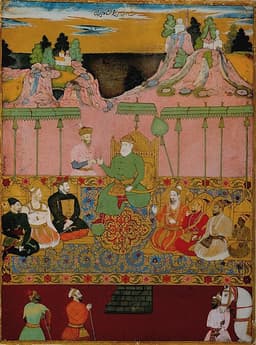
Yusuf Adil Shah
Emperor · Medieval
57.4Total
Basic Information
Born
583
1490
Died
621
1510
Era
Medieval
Medieval
Nationality
China
India
Occupation
Emperor
Emperor
Civilization
Eastern
Indian
Score Comparison
Military (10%)
20.0
50.0
Political (20%)
39.4
68.0
Influence (20%)
45.5
56.4
Legacy (20%)
35.0
47.5
Leadership (15%)
49.9
68.0
Strategy (15%)
38.6
60.0
TOTAL
39.4
57.4
Xiao Xi — Complete Timeline
618 AD
Proclamation as Emperor of LiangPolitical Action◆ Major
Xiao Xi declared himself emperor of the Liang dynasty in Jiangling, claiming legitimacy as a successor to the Southern Liang. He established a court and ruled over a small territory in the south.
ProclamationLiang DynastySui-Tang Transition
Impact: regional
621 AD
Defeat by Li XiaogongWar◆ Major
Xiao Xi's Liang forces were defeated by the Tang general Li Xiaogong. The defeat led to the collapse of the Liang dynasty and Xiao Xi's capture.
BattleTang UnificationDefeat
Impact: regionaltragic
Execution by TangPolitical Action◆ Major
Xiao Xi was executed by the Tang dynasty after his capture. His death ended the Liang pretender state and furthered Tang consolidation of the south.
ExecutionTang Unification
Impact: regionaltragic
Yusuf Adil Shah — Complete Timeline
1490 AD
Foundation of the Adil Shahi dynastyPolitical Action
Yusuf Adil Shah declared independence from the Bahmani Sultanate and established the Adil Shahi dynasty with its capital at Bijapur. This marked the beginning of a new sultanate in the Deccan.
FoundingIndependence
Impact: regionalconstructive
1495 AD
Construction of the Bijapur FortCultural◆ Major
Yusuf Adil Shah began the construction of the Bijapur Fort, a massive citadel with walls and bastions. The fort became the center of Adil Shahi power and a symbol of the dynasty's strength.
ArchitectureFortification
Impact: regionalconstructive
1500 AD
War against the Vijayanagara EmpireWar◆ Major
Yusuf Adil Shah fought a war against the Vijayanagara Empire, capturing the fort of Raichur. The conflict established Bijapur as a major military power in the Deccan.
WarVijayanagaraTerritorial Expansion
Impact: regional
1510 AD
Alliance with the PortuguesePolitical Action
Yusuf Adil Shah formed an alliance with the Portuguese governor Afonso de Albuquerque, allowing the Portuguese to establish a trading post at Goa. This facilitated the import of horses and firearms.
DiplomacyTradePortuguese
Impact: regional
This comparison has not been analyzed yet.
One-time AI generation (~1 minute). Scores and timeline are already available below.
Rankings
🥇
Yusuf Adil ShahLeader
Mil: 50.0Pol: 68.0Inf: 56.4
57.4
🥈
Xiao Xi
Mil: 20.0Pol: 39.4Inf: 45.5
39.4
+18.0 behind
How This Comparison Works
Algorithm
Each figure is scored on 6 dimensions (0—100 scale) based on structured historical data: Military (10%), Political (20%), Influence (20%), Legacy (20%), Leadership (15%), Strategy (15%). The weighted total produces the final ranking.
Data Sources
Scores are computed from structured sub-indicators in the database. Scale factors adjust for era (Ancient ×0.85, Modern ×1.0) and civilization size (Eastern ×1.05, Other ×0.80) to account for differences in population and military scale.
Maximum 3 Figures
Comparisons are limited to 2—3 figures to ensure readability and statistical meaningfulness.
Error Margins
±5 points per dimension — Sub-scores are derived from historical records with inherent uncertainty. Two figures within 5 points on a dimension should be considered roughly equivalent in that area.
Total Score Accuracy
±3 points overall — The weighted combination of 6 dimensions produces a total score with approximately ±3 points of uncertainty. Differences of less than 3 points are not statistically significant— the figures are effectively tied.
Known Limitations
- Historical records are incomplete and uneven across civilizations
- Figures from oral-tradition societies may be underrepresented
- Occupation labels can misclassify multi-role figures
- Scores measure capability and impact, not moral character
- Quantitative scoring is a comparison tool, not absolute truth
Capability Radar
Military (10%) — Battles & Warfare
Battles
5
55
Win Rate
5
60
Expansion
5
55
Political (20%) — Governance & Reform
Reform
0
50
Diplomacy
5
55
Economy
0
50
Influence (20%) — Cultural & Global Reach
Cultural
5
40
Global
5
30
Legacy (20%) — Historical Impact
Historical
5
45
Longevity
5
40
Leadership (15%) — Power & Stability
Tenure
10
60
Stability
5
45
Strategy (15%) — Tactics & Innovation
Strategy
5
55
Tactics
5
50
Reform
0
45
Similar Comparisons
Comments & Discussion
No comments yet. Be the first to share your thoughts!