Loading...
Bayezid I vs Yusuf Adil Shah
Bayezid I leads by 2.2 pts · 2 figures compared
…
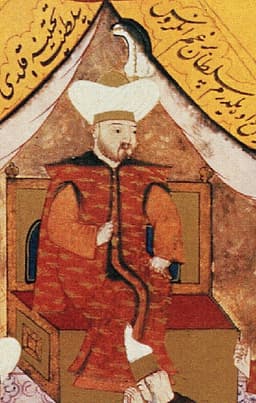
Bayezid I
Emperor · Medieval
59.6Total
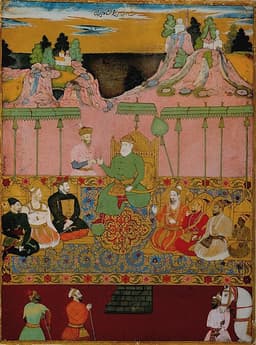
Yusuf Adil Shah
Emperor · Medieval
57.4Total
Basic Information
Born
1360
1490
Died
1403
1510
Era
Medieval
Medieval
Nationality
Ottoman Empire
India
Occupation
Emperor
Emperor
Civilization
Middle Eastern
Indian
Score Comparison
Military (10%)
72.0
50.0
Political (20%)
45.0
68.0
Influence (20%)
56.7
56.4
Legacy (20%)
58.0
47.5
Leadership (15%)
68.0
68.0
Strategy (15%)
68.1
60.0
TOTAL
59.6
57.4
Bayezid I — Complete Timeline
1389 AD
Battle of KosovoWar◆ Major
Bayezid I led the Ottoman army to victory at the Battle of Kosovo against a coalition of Serbian and Balkan forces. Both Sultan Murad I and Serbian Prince Lazar were killed, but the battle solidified Ottoman control over the Balkans.
BattleKosovoBalkans
Impact: regional
1393 AD
Annexation of Bulgarian and Serbian TerritoriesWar◆ Major
Bayezid I conquered the Bulgarian Empire and much of Serbia, incorporating these territories into the Ottoman realm. These conquests expanded Ottoman control over the Balkans and eliminated major Christian states in the region.
ConquestBulgariaSerbia
Impact: regional
1394 AD
Siege of Constantinople (1394-1402)War◆ Major
Bayezid I besieged Constantinople, the Byzantine capital, for eight years. The siege was ultimately lifted due to the Mongol invasion of Anatolia, but it severely weakened the Byzantine Empire and demonstrated Ottoman ambition to capture the city.
SiegeConstantinopleByzantine
Impact: regional
1396 AD
Battle of NicopolisWar◆ Major
Bayezid I defeated a large Crusader army from Hungary, France, and other European states at Nicopolis on the Danube. The victory crushed the last major Crusade against the Ottomans and confirmed Ottoman dominance in the Balkans.
BattleCrusadeNicopolis
Impact: regional
1402 AD
Battle of AnkaraWar
Bayezid I was defeated and captured by Timur at the Battle of Ankara. The defeat led to the collapse of Ottoman unity and a period of civil war (the Ottoman Interregnum), ending Bayezid's reign and temporarily halting Ottoman expansion.
BattleTimurDefeat
Impact: globaltragic
Yusuf Adil Shah — Complete Timeline
1490 AD
Foundation of the Adil Shahi dynastyPolitical Action
Yusuf Adil Shah declared independence from the Bahmani Sultanate and established the Adil Shahi dynasty with its capital at Bijapur. This marked the beginning of a new sultanate in the Deccan.
FoundingIndependence
Impact: regionalconstructive
1495 AD
Construction of the Bijapur FortCultural◆ Major
Yusuf Adil Shah began the construction of the Bijapur Fort, a massive citadel with walls and bastions. The fort became the center of Adil Shahi power and a symbol of the dynasty's strength.
ArchitectureFortification
Impact: regionalconstructive
1500 AD
War against the Vijayanagara EmpireWar◆ Major
Yusuf Adil Shah fought a war against the Vijayanagara Empire, capturing the fort of Raichur. The conflict established Bijapur as a major military power in the Deccan.
WarVijayanagaraTerritorial Expansion
Impact: regional
1510 AD
Alliance with the PortuguesePolitical Action
Yusuf Adil Shah formed an alliance with the Portuguese governor Afonso de Albuquerque, allowing the Portuguese to establish a trading post at Goa. This facilitated the import of horses and firearms.
DiplomacyTradePortuguese
Impact: regional
Expert Analysis
Origins
Bayezid I was born in 1360 to Sultan Murad I, the Ottoman ruler who expanded the empire into Europe. He received military training from a young age and participated in the Battle of Kosovo in 1389, where his father was assassinated. His early life was shaped by the Ottoman ghazi ethos of holy war and expansion.
Yusuf Adil Shah, reportedly a Georgian slave purchased by Mahmud Gawan, rose through the ranks of the Bahmani Sultanate. Born around 1450, his exact origins are obscure. He converted to Islam and became a key military commander under the Bahmani sultans, eventually being appointed governor of Bijapur.
Rise to Power
Bayezid I ascended the Ottoman throne after the Battle of Kosovo (1389), where Murad I died. He quickly consolidated power by executing his brother Yakub to prevent civil war. His early reign focused on campaigns in Anatolia, where he annexed several Turkish beyliks through diplomacy and force. By 1396, he had expanded Ottoman territory significantly.
Yusuf Adil Shah declared independence from the Bahmani Sultanate in 1489, taking advantage of the empire's fragmentation. He established his capital at Bijapur and began constructing the Bijapur Fort. He skillfully allied with the Portuguese, allowing them a trading post at Goa in 1510, which secured maritime support against Vijayanagara.
Leadership & Governance
Bayezid I ruled with an iron fist, centralizing authority and suppressing dissent. He replaced local Turkish lords with Ottoman administrators and enforced strict Islamic law. His governance was effective in consolidating the empire but alienated some vassals. His military leadership was aggressive, earning him the nickname "Yıldırım" (Thunderbolt) for his swift campaigns.
Yusuf Adil Shah governed with a blend of Persianate court culture and pragmatic alliances. He promoted religious tolerance, employing Hindus in his administration and allowing Christian missionaries. He focused on building infrastructure, including the Bijapur Fort, which became a symbol of his power. His political score of 68.0 reflects his diplomatic skill, contrasting with Bayezid's 45.0.
Triumph & Tragedy
Bayezid I's greatest triumph was the Battle of Nicopolis (1396), where he crushed a Crusader army, securing Ottoman dominance in the Balkans. He also besieged Constantinople for eight years, demonstrating his ambition. However, his tragedy was the Battle of Ankara (1402), where Timur defeated and captured him, leading to the Ottoman Interregnum. His military score of 72.0 was undermined by strategic overreach.
Yusuf Adil Shah's triumph was founding the Adil Shahi dynasty, which lasted until 1686. He captured Raichur from Vijayanagara, establishing Bijapur as a major power. His tragedy was the failed alliance with the Portuguese, who later turned against him. His influence score of 56.4 is slightly below Bayezid's 56.7, but his political acumen kept his state stable.
Character & Destiny
Bayezid I was impulsive and prideful, refusing to pay tribute to Timur, which provoked the invasion. His aggressive expansion left him vulnerable from the east. His character directly caused his downfall: he ignored advice to retreat and faced Timur at Ankara, resulting in capture.
Yusuf Adil Shah was cautious and diplomatic, preferring alliances over war. He secured his throne through negotiation and strategic marriages. His character ensured the dynasty's survival, but his reliance on external powers limited his independence.
Legacy
Bayezid I's legacy is mixed: he expanded the Ottoman Empire but caused its temporary collapse. The Ottoman Interregnum (1402-1413) nearly destroyed the state. However, his conquests in the Balkans and Anatolia laid the groundwork for future sultans. His legacy score of 58.0 reflects his impact despite the setback.
Yusuf Adil Shah's legacy is the Adil Shahi dynasty, which ruled for nearly 200 years. His construction of Bijapur Fort and promotion of culture influenced Deccan architecture. However, the dynasty was eventually annexed by the Mughal Empire. His legacy score of 47.5 is lower due to the state's eventual fall.
Conclusion
Bayezid I had a greater overall impact, scoring 59.6 total vs 57.4 for Yusuf Adil Shah. While both founded significant states, Bayezid's actions reshaped the Balkans and Anatolia, directly affecting the course of European and Middle Eastern history. Yusuf Adil Shah's influence was more regional. Bayezid's higher military and strategy scores (72.0 and 68.1) demonstrate his larger effect on history, despite his ultimate defeat.
Rankings
🥇
Bayezid ILeader
Mil: 72.0Pol: 45.0Inf: 56.7
59.6
🥈
Yusuf Adil Shah
Mil: 50.0Pol: 68.0Inf: 56.4
57.4
+2.2 behind
How This Comparison Works
Algorithm
Each figure is scored on 6 dimensions (0—100 scale) based on structured historical data: Military (10%), Political (20%), Influence (20%), Legacy (20%), Leadership (15%), Strategy (15%). The weighted total produces the final ranking.
Data Sources
Scores are computed from structured sub-indicators in the database. Scale factors adjust for era (Ancient ×0.85, Modern ×1.0) and civilization size (Eastern ×1.05, Other ×0.80) to account for differences in population and military scale.
Maximum 3 Figures
Comparisons are limited to 2—3 figures to ensure readability and statistical meaningfulness.
Error Margins
±5 points per dimension — Sub-scores are derived from historical records with inherent uncertainty. Two figures within 5 points on a dimension should be considered roughly equivalent in that area.
Total Score Accuracy
±3 points overall — The weighted combination of 6 dimensions produces a total score with approximately ±3 points of uncertainty. Differences of less than 3 points are not statistically significant— the figures are effectively tied.
Known Limitations
- Historical records are incomplete and uneven across civilizations
- Figures from oral-tradition societies may be underrepresented
- Occupation labels can misclassify multi-role figures
- Scores measure capability and impact, not moral character
- Quantitative scoring is a comparison tool, not absolute truth
Capability Radar
Military (10%) — Battles & Warfare
Battles
85
55
Win Rate
80
60
Expansion
85
55
Political (20%) — Governance & Reform
Reform
65
50
Diplomacy
60
55
Economy
70
50
Influence (20%) — Cultural & Global Reach
Cultural
60
40
Global
65
30
Legacy (20%) — Historical Impact
Historical
70
45
Longevity
55
40
Leadership (15%) — Power & Stability
Tenure
70
60
Stability
55
45
Strategy (15%) — Tactics & Innovation
Strategy
80
55
Tactics
75
50
Reform
70
45
Similar Comparisons
Comments & Discussion
No comments yet. Be the first to share your thoughts!