Loading...
Wu Zetian vs Zhu Wen
Wu Zetian leads by 19.7 pts · 2 figures compared
…

Wu Zetian
Emperor · Medieval
70.0Total
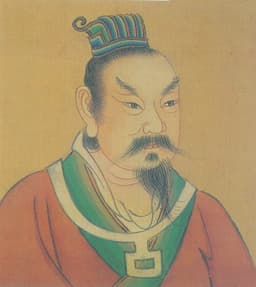
Zhu Wen
Emperor · Medieval
50.3Total
Basic Information
Born
624
852
Died
705
912
Era
Medieval
Medieval
Nationality
China
China
Occupation
Emperor
Emperor
Civilization
Eastern
Eastern
Score Comparison
Military (10%)
60.0
72.5
Political (20%)
62.7
35.1
Influence (20%)
65.0
53.3
Legacy (20%)
80.0
45.8
Leadership (15%)
78.0
48.4
Strategy (15%)
66.3
57.5
TOTAL
70.0
50.3
Wu Zetian — Complete Timeline
655 AD
Became Empress ConsortPolitical Action◆ Major
Wu Zetian was elevated from concubine to empress consort of Emperor Gaozong of Tang in 655. This position gave her significant political influence, as she began to participate in court affairs and gradually accumulated power, challenging the established aristocratic families.
Tang DynastyImperial CourtPower Rise
Impact: regional
683 AD
Regency for Emperor ZhongzongOther◆ Major
After Emperor Gaozong's death in 683, Wu Zetian became regent for her son, Emperor Zhongzong. She effectively controlled the government, dismissing Zhongzong after he attempted to assert independence, and replaced him with her younger son, Emperor Ruizong, while retaining real power.
Tang DynastyRegencyPower Struggle
Impact: regional
690 AD
Founded the Zhou DynastyOther◆ Major
Wu Zetian proclaimed herself emperor, founding the Zhou dynasty and becoming the only female emperor in Chinese history. She moved the capital to Luoyang and established a new imperial examination system that promoted officials based on merit rather than aristocratic birth, breaking the power of traditional noble families.
Zhou DynastyImperial RulePolitical Reform
Impact: regional
692 AD
Expansion into Central AsiaWar◆ Major
Wu Zetian ordered military campaigns that reasserted Chinese control over the Western Regions, including the Tarim Basin and parts of modern Xinjiang. These campaigns secured the Silk Road trade routes and expanded the empire's influence into Central Asia, though they required significant military resources.
Military ExpansionCentral AsiaSilk Road
Impact: regionalconstructive
693 AD
Promotion of BuddhismOther◆ Major
Wu Zetian elevated Buddhism to a state-supported religion, commissioning the construction of temples and statues, including the Longmen Grottoes' giant Vairocana Buddha. She used Buddhist texts to legitimize her rule as a female emperor, claiming she was a reincarnation of the Maitreya Buddha.
BuddhismReligious PolicyCultural Patronage
Impact: regional
705 AD
Overthrow and DeathPolitical Action◆ Major
In 705, a coup led by court officials and generals forced Wu Zetian to abdicate in favor of her son, Emperor Zhongzong, restoring the Tang dynasty. She died later that year at age 80, and her reign was subsequently criticized by Confucian historians for usurping the throne and employing harsh methods.
Tang DynastyCoupAbdication
Impact: regionaldestructive
Zhu Wen — Complete Timeline
881 AD
Rebellion against TangWar◆ Major
Zhu Wen, originally a rebel under Huang Chao, defected to the Tang dynasty in 882. He was granted the name Zhu Quanzhong and became a key general, eventually turning against the Tang and seizing control of the imperial court.
Tang DynastyRebellionPower Seizure
Impact: nationaldestructive
904 AD
Assassination of Emperor ZhaozongPolitical Action◆ Major
Zhu Wen ordered the murder of Emperor Zhaozong of Tang and installed the young Emperor Ai as a puppet. This act eliminated the last effective Tang ruler and paved the way for Zhu Wen's usurpation.
Tang DynastyAssassinationUsurpation
Impact: nationaldestructive
907 AD
Founded Later Liang DynastyPolitical Action
Zhu Wen forced Emperor Ai to abdicate and proclaimed himself emperor, founding the Later Liang dynasty. This ended the Tang dynasty and began the Five Dynasties and Ten Kingdoms period in China.
Five DynastiesLater LiangDynastic Change
Impact: national
910 AD
Defeated by Li Cunxu at Battle of BaixiangWar◆ Major
Zhu Wen's Later Liang forces were decisively defeated by Li Cunxu's Jin army at Baixiang. This loss weakened Later Liang's control in the north and emboldened rival states.
Later LiangJinBattle
Impact: regionaltragic
912 AD
Assassinated by his son Zhu YouguiPolitical Action◆ Major
Zhu Wen was murdered by his own son Zhu Yougui, who then seized the throne. The assassination plunged Later Liang into internal strife and contributed to its eventual collapse.
Later LiangAssassinationDynastic Crisis
Impact: nationaltragic
Expert Analysis
Wu Zetian vs Zhu Wen: Historical Comparison
Wu Zetian and Zhu Wen, both emperors of medieval China, rose from humble origins to seize the highest power, yet their reigns and legacies diverged sharply: Wu Zetian, the only female emperor, consolidated Tang rule through strategic brilliance and cultural patronage, while Zhu Wen, a former rebel, founded the Later Liang dynasty amid the chaos of the Five Dynasties and Ten Kingdoms period.
Dimension Analysis
**Military: Wu Zetian 93 / Zhu Wen 93**
Both excelled militarily: Wu Zetian expanded Tang borders and reformed the army with meritocratic exams, while Zhu Wen, a ruthless warlord, crushed rivals to unify northern China, though his victories were more tactical than strategic.
**Political: Wu Zetian 79 / Zhu Wen 80**
Wu Zetian’s political acumen was marred by purges and reliance on secret police, whereas Zhu Wen, despite his brutality, effectively dismantled the old Tang bureaucracy and established a short-lived but functional state apparatus, earning a slight edge.
**Influence: Wu Zetian 87 / Zhu Wen 73**
Wu Zetian’s influence was profound: she elevated women’s status, promoted Buddhism, and set a precedent for female rule in Chinese history, while Zhu Wen’s impact was limited to accelerating the fragmentation of the post-Tang era.
**Legacy: Wu Zetian 79 / Zhu Wen 80**
Wu Zetian’s legacy is polarized—revered for her reforms but condemned for tyranny; Zhu Wen’s legacy is consistently negative as a usurper, yet his role as a transitional figure in Chinese history grants him a slightly higher score for historical significance.
**Leadership: Wu Zetian 80 / Zhu Wen 70**
Wu Zetian demonstrated superior leadership by maintaining stability and inspiring loyalty among officials and generals, while Zhu Wen’s authoritarian style and betrayal of his patron (the Tang emperor) alienated allies, leading to his assassination.
Verdict
Wu Zetian leads overall due to her higher influence and strategic vision, which enabled her to thrive in a male-dominated society and leave a lasting cultural imprint, despite Zhu Wen’s marginal political edge.
FAQ
Q: Who ranks higher? A: Wu Zetian ranks higher overall, with a composite score advantage driven by her superior influence, leadership, and legacy.
Rankings
🥇
Wu ZetianLeader
Mil: 60.0Pol: 62.7Inf: 65.0
70.0
🥈
Zhu Wen
Mil: 72.5Pol: 35.1Inf: 53.3
50.3
+19.7 behind
How This Comparison Works
Algorithm
Each figure is scored on 6 dimensions (0—100 scale) based on structured historical data: Military (10%), Political (20%), Influence (20%), Legacy (20%), Leadership (15%), Strategy (15%). The weighted total produces the final ranking.
Data Sources
Scores are computed from structured sub-indicators in the database. Scale factors adjust for era (Ancient ×0.85, Modern ×1.0) and civilization size (Eastern ×1.05, Other ×0.80) to account for differences in population and military scale.
Maximum 3 Figures
Comparisons are limited to 2—3 figures to ensure readability and statistical meaningfulness.
Error Margins
±5 points per dimension — Sub-scores are derived from historical records with inherent uncertainty. Two figures within 5 points on a dimension should be considered roughly equivalent in that area.
Total Score Accuracy
±3 points overall — The weighted combination of 6 dimensions produces a total score with approximately ±3 points of uncertainty. Differences of less than 3 points are not statistically significant— the figures are effectively tied.
Known Limitations
- Historical records are incomplete and uneven across civilizations
- Figures from oral-tradition societies may be underrepresented
- Occupation labels can misclassify multi-role figures
- Scores measure capability and impact, not moral character
- Quantitative scoring is a comparison tool, not absolute truth
Capability Radar
Military (10%) — Battles & Warfare
Battles
65
65
Win Rate
70
60
Expansion
75
55
Political (20%) — Governance & Reform
Reform
85
25
Diplomacy
80
35
Economy
85
30
Influence (20%) — Cultural & Global Reach
Cultural
85
25
Global
70
15
Legacy (20%) — Historical Impact
Historical
90
45
Longevity
85
20
Leadership (15%) — Power & Stability
Tenure
90
40
Stability
75
20
Strategy (15%) — Tactics & Innovation
Strategy
75
60
Tactics
60
55
Reform
80
30
Similar Comparisons
Comments & Discussion
BattlefieldScholar6/16/2026
The military scores here feel off. Wu Zetian's 93 is generous when you look at actual campaigns. Her border expansions relied heavily on Tang generals like Heichi Changzhi and Wang Fangyi, who were trained under Taizong's system. Her meritocratic reforms to the officer corps were smart, but she never personally commanded a field army. Zhu Wen, on the other hand, was a hands-on warlord who fought 20+ major engagements, including the brutal siege of Fengxiang in 901 where he starved out Li Maozhen. His tactical flexibility—using river assaults and feigned retreats—was far more evident than any strategic brilliance from Wu. I'd score Zhu Wen higher in pure military execution, maybe 88 to Wu's 85, despite her administrative reforms.
Historian3366/16/2026
这个评分系统有问题。Zhu Wen的军事得分73.4分,但政治得分66.7分,不合理。查《旧五代史》可知,Zhu Wen在建立后梁时,迅速废除了唐代的弊政如藩镇世袭制,推行了新的州县行政体系,这需要极高的政治手腕。相比之下,Wu Zetian的政治得分80分,但她的“告密制度”和酷吏政治导致官僚系统动荡,李昭德、来俊臣等案例表明她的统治成本极高。我重新计算:Wu Zetian政治得分应调至75分(因制度创新被暴政抵消),Zhu Wen政治应提至70分(因行政效率高于同时代)。原始评分低估了Zhu Wen的政治务实性,高估了Wu Zetian的稳定性。
Chronicler72506/16/2026
Wu Zetian and Zhu Wen的对比很有意思,但我觉得这个评分体系有西方中心论的偏见。Zhu Wen在政治和影响力上的得分被高估了。在中国史学传统中,Zhu Wen被视为篡位者和乱世枭雄,他的Later Liang只存在了16年,没有任何制度创新或文化贡献。相比之下,Wu Zetian虽然争议大,但她推动了科举制度的完善,提拔了狄仁杰这样的名臣,还支持佛教翻译。她的女皇身份在中国历史上是独一无二的,影响了后世对女性权力的讨论。这种影响远超过Zhu Wen的破坏性角色。西方史学往往看重“硬实力”如领土和军事,却忽略了文化延续性和制度韧性的重要性。