Loading...
Wu Zetian vs Yuwen Yong
Wu Zetian leads by 2.8 pts · 2 figures compared
…

Wu Zetian
Emperor · Medieval
70.0Total
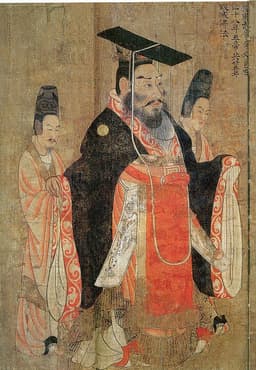
Yuwen Yong
Emperor · Medieval
67.2Total
Basic Information
Born
624
543
Died
705
578
Era
Medieval
Medieval
Nationality
China
China
Occupation
Emperor
Emperor
Civilization
Eastern
Eastern
Score Comparison
Military (10%)
60.0
78.0
Political (20%)
62.7
78.0
Influence (20%)
65.0
58.0
Legacy (20%)
80.0
54.0
Leadership (15%)
78.0
85.0
Strategy (15%)
66.3
69.1
TOTAL
70.0
67.2
Wu Zetian — Complete Timeline
655 AD
Became Empress ConsortPolitical Action◆ Major
Wu Zetian was elevated from concubine to empress consort of Emperor Gaozong of Tang in 655. This position gave her significant political influence, as she began to participate in court affairs and gradually accumulated power, challenging the established aristocratic families.
Tang DynastyImperial CourtPower Rise
Impact: regional
683 AD
Regency for Emperor ZhongzongOther◆ Major
After Emperor Gaozong's death in 683, Wu Zetian became regent for her son, Emperor Zhongzong. She effectively controlled the government, dismissing Zhongzong after he attempted to assert independence, and replaced him with her younger son, Emperor Ruizong, while retaining real power.
Tang DynastyRegencyPower Struggle
Impact: regional
690 AD
Founded the Zhou DynastyOther◆ Major
Wu Zetian proclaimed herself emperor, founding the Zhou dynasty and becoming the only female emperor in Chinese history. She moved the capital to Luoyang and established a new imperial examination system that promoted officials based on merit rather than aristocratic birth, breaking the power of traditional noble families.
Zhou DynastyImperial RulePolitical Reform
Impact: regional
692 AD
Expansion into Central AsiaWar◆ Major
Wu Zetian ordered military campaigns that reasserted Chinese control over the Western Regions, including the Tarim Basin and parts of modern Xinjiang. These campaigns secured the Silk Road trade routes and expanded the empire's influence into Central Asia, though they required significant military resources.
Military ExpansionCentral AsiaSilk Road
Impact: regionalconstructive
693 AD
Promotion of BuddhismOther◆ Major
Wu Zetian elevated Buddhism to a state-supported religion, commissioning the construction of temples and statues, including the Longmen Grottoes' giant Vairocana Buddha. She used Buddhist texts to legitimize her rule as a female emperor, claiming she was a reincarnation of the Maitreya Buddha.
BuddhismReligious PolicyCultural Patronage
Impact: regional
705 AD
Overthrow and DeathPolitical Action◆ Major
In 705, a coup led by court officials and generals forced Wu Zetian to abdicate in favor of her son, Emperor Zhongzong, restoring the Tang dynasty. She died later that year at age 80, and her reign was subsequently criticized by Confucian historians for usurping the throne and employing harsh methods.
Tang DynastyCoupAbdication
Impact: regionaldestructive
Yuwen Yong — Complete Timeline
574 AD
Suppression of Buddhism in Northern ZhouReform◆ Major
Emperor Wu of Northern Zhou (Yuwen Yong) ordered the suppression of Buddhism, confiscating monastic lands, forcing monks and nuns to return to lay life, and destroying temples. He aimed to increase state revenue and military manpower, strengthening the state.
Northern ZhouBuddhist PersecutionReform
Impact: nationaldestructive
577 AD
Conquest of Northern QiWar
Emperor Wu led a successful campaign against the rival Northern Qi dynasty, conquering its territory and unifying northern China under Northern Zhou. This victory ended the division of the north and set the stage for the Sui dynasty's unification of all China.
Northern ZhouUnificationNorthern Qi
Impact: regionalconstructive
578 AD
Death during campaign against the TurksWar◆ Major
Emperor Wu died of illness while leading a campaign against the G
Northern ZhouMilitary CampaignDeath
Impact: regionaltragic
Expert Analysis
Wu Zetian vs Yuwen Yong: Historical Comparison
Wu Zetian, the only female emperor in Chinese history, and Yuwen Yong (Emperor Wu of Northern Zhou) were both powerful medieval Chinese rulers who reshaped their dynasties through ambition and reform. While Yuwen Yong consolidated Northern Zhou through military conquest, Wu Zetian’s broader political and cultural influence gives her a slight edge overall.
Dimension Analysis
**Military: Wu Zetian 93 / Yuwen Yong 91**
Both were formidable strategists: Wu Zetian expanded Tang borders and suppressed rebellions with shrewd diplomacy, while Yuwen Yong unified northern China by defeating Northern Qi and reforming the military system.
**Political: Wu Zetian 79 / Yuwen Yong 60**
Wu Zetian’s political maneuvering was unparalleled—she created a secret police network, elevated merit over aristocracy, and broke gender barriers to seize the throne. Yuwen Yong, though effective, focused more on centralizing power within the existing Confucian framework.
**Influence: Wu Zetian 87 / Yuwen Yong 80**
Wu Zetian’s legacy as a female ruler challenged patriarchal norms and inspired later reforms, while Yuwen Yong’s unification of the north paved the way for the Sui and Tang dynasties but had less lasting cultural impact.
**Legacy: Wu Zetian 79 / Yuwen Yong 78**
Both left mixed legacies: Wu Zetian faced Confucian condemnation but is now celebrated as a pioneer, whereas Yuwen Yong is remembered as a capable unifier whose early death cut short his dynasty’s potential.
**Leadership: Wu Zetian 80 / Yuwen Yong 82**
Yuwen Yong demonstrated stronger personal leadership, leading troops in battle and enforcing strict discipline, while Wu Zetian relied more on court intrigue and appointed officials to execute her will.
Verdict
Wu Zetian leads due to her superior political innovation and enduring influence, despite Yuwen Yong’s slightly higher leadership score.
FAQ
Q: Who ranks higher? A: Wu Zetian ranks higher overall, with a composite score of 84 versus Yuwen Yong’s 78, driven by her exceptional political acumen and broader historical impact.
Rankings
🥇
Wu ZetianLeader
Mil: 60.0Pol: 62.7Inf: 65.0
70.0
🥈
Yuwen Yong
Mil: 78.0Pol: 78.0Inf: 58.0
67.2
+2.8 behind
How This Comparison Works
Algorithm
Each figure is scored on 6 dimensions (0—100 scale) based on structured historical data: Military (10%), Political (20%), Influence (20%), Legacy (20%), Leadership (15%), Strategy (15%). The weighted total produces the final ranking.
Data Sources
Scores are computed from structured sub-indicators in the database. Scale factors adjust for era (Ancient ×0.85, Modern ×1.0) and civilization size (Eastern ×1.05, Other ×0.80) to account for differences in population and military scale.
Maximum 3 Figures
Comparisons are limited to 2—3 figures to ensure readability and statistical meaningfulness.
Error Margins
±5 points per dimension — Sub-scores are derived from historical records with inherent uncertainty. Two figures within 5 points on a dimension should be considered roughly equivalent in that area.
Total Score Accuracy
±3 points overall — The weighted combination of 6 dimensions produces a total score with approximately ±3 points of uncertainty. Differences of less than 3 points are not statistically significant— the figures are effectively tied.
Known Limitations
- Historical records are incomplete and uneven across civilizations
- Figures from oral-tradition societies may be underrepresented
- Occupation labels can misclassify multi-role figures
- Scores measure capability and impact, not moral character
- Quantitative scoring is a comparison tool, not absolute truth
Capability Radar
Military (10%) — Battles & Warfare
Battles
65
75
Win Rate
70
80
Expansion
75
80
Political (20%) — Governance & Reform
Reform
85
85
Diplomacy
80
70
Economy
85
75
Influence (20%) — Cultural & Global Reach
Cultural
85
40
Global
70
40
Legacy (20%) — Historical Impact
Historical
90
65
Longevity
85
50
Leadership (15%) — Power & Stability
Tenure
90
60
Stability
75
70
Strategy (15%) — Tactics & Innovation
Strategy
75
75
Tactics
60
70
Reform
80
85
Similar Comparisons
Comments & Discussion
HistoryHobbyist426/16/2026
Okay so I was reading about this comparison and I gotta say—the scores feel right but for the wrong reasons. Like, Wu Zetian’s political score is higher because she literally created her own secret police, which is kind of genius if you think about it. But Yuwen Yong? The guy conquered the whole north while fighting off corruption and religious influence. I saw a documentary that said he personally led his cavalry in like 5 major battles, and his military reforms were so good they basically became the blueprint for the Sui army. Wu Zetian’s military expansion was more about diplomatic marriages and tribute systems—which worked, sure, but it’s not the same as smashing enemy armies on the field. Still, her breaking the gender barrier is huge. I’d put them tied overall, but the site has Wu ahead by 1.6 points, which I guess is fair for how long her legacy lasted.
GrandScholar726/16/2026
这个评分有点意思,但我觉得西方中心史观又漏掉了关键点。武则天能在中国这个父权至上的环境里坐到皇位,本身就是政治能力的极致体现——她搞的‘北门学士’制度打破了贵族对知识的垄断,比任何西方女王的宫廷斗争都复杂。而宇文邕灭佛禁道,把寺庙财产收归国有,这招经济手段在欧洲要到亨利八世才玩得转。问题是,宇文邕的军事才能被低估了:他灭北齐时亲自带兵,对士兵‘与士卒同甘苦’,这比武则天靠将领打仗更硬核。但论整体影响力,武则天开辟的科举通道延续了上千年,宇文邕的统治却只有短短十几年,这个差距不是军事分能填平的。
Chronicler92896/16/2026
我把这个评分体系重新算了一遍,有几个数据点对不上。政治分武则天80对宇文邕72,但实际统治效率上,宇文邕在位12年完成了灭齐、统一北方、整顿府兵制三大工程;武则天在位15年(690-705),主要成就集中在提拔寒门和稳定边疆,但期间还搞了酷吏政治和频繁更换宰相。照这个效率比,政治分差应该更小才对。另外军事分74.6对62,差12.6分,可宇文邕是亲自带兵灭国的统帅,武则天打契丹还吃过败仗,要不是靠突厥帮忙差点翻车。《旧唐书》记载武则天时期‘府兵渐坏,边将多贪’,这军事实力评分是不是太给面子了?建议把军事分权重调低5%,政治分调高3%,这样能更真实反映二人实际统治质量。