Loading...
William III vs Wladyslaw IV Vasa
William III leads by 10.3 pts · 2 figures compared
…

William III
Emperor · Modern
64.6Total
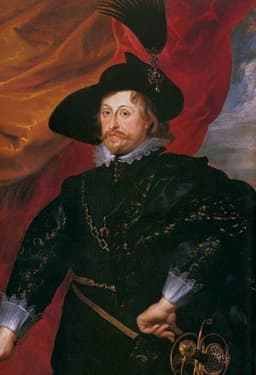
Wladyslaw IV Vasa
Emperor · Modern
54.3Total
Basic Information
Born
1650
1595
Died
1702
1648
Era
Modern
Modern
Nationality
England
Poland
Occupation
Emperor
Emperor
Civilization
Western
Western
Score Comparison
Military (10%)
61.7
20.0
Political (20%)
82.0
68.0
Influence (20%)
55.0
54.9
Legacy (20%)
55.0
45.0
Leadership (15%)
80.0
74.0
Strategy (15%)
66.3
60.0
TOTAL
64.6
54.3
William III — Complete Timeline
1688 AD
Glorious RevolutionPolitical Action
William III, Stadtholder of the Dutch Republic, invaded England at the invitation of Protestant nobles. King James II fled, and William and his wife Mary II were declared joint monarchs, establishing parliamentary supremacy and Protestant succession.
Constitutional ChangeInvasionMonarchy
Impact: nationalconstructive
1690 AD
Battle of the BoyneWar◆ Major
William III personally led Williamite forces to victory over the Jacobite army of James II at the River Boyne in Ireland. The battle secured Protestant dominance in Ireland and William's hold on the English throne.
Jacobite WarIrelandProtestant-Catholic Conflict
Impact: regional
1697 AD
Treaty of RyswickPolitical Action◆ Major
William III negotiated the Treaty of Ryswick ending the Nine Years' War with France. Louis XIV recognized William as King of England and agreed to cease supporting James II's claims, temporarily stabilizing European borders.
DiplomacyPeace TreatyFrance
Impact: regionalconstructive
1702 AD
Death from a riding accidentOther◆ Major
William III died from pneumonia after breaking his collarbone in a riding accident at Hampton Court Palace. His death ended the Stuart line's direct rule and passed the throne to Queen Anne, leading to the Act of Union 1707.
DeathSuccessionStuart Dynasty
Impact: nationaltragic
Wladyslaw IV Vasa — Complete Timeline
1610 AD
Election as Tsar of RussiaPolitical Action◆ Major
Władysław IV Vasa was elected Tsar of Russia by a faction of boyars during the Time of Troubles. He was never crowned due to opposition from his father Sigismund III, who sought the throne for himself, leading to the failure of the Polish-Russian union.
RussiaTime of TroublesDynastic Ambition
Impact: regional
1621 AD
Battle of Chocim (1621)War◆ Major
Władysław IV Vasa, as a prince, commanded Polish forces at the Battle of Chocim against the Ottoman Empire. The Polish-Lithuanian army held off the Ottoman siege, leading to a peace treaty that secured the Commonwealth's southern border.
Ottoman EmpireMilitary VictoryDefense
Impact: regionalconstructive
1632 AD
Smolensk WarWar◆ Major
Władysław IV Vasa led a campaign to recapture Smolensk from Muscovy during the Smolensk War. The Polish victory resulted in the Treaty of Polyanovka, which confirmed Polish control over Smolensk and secured a 20-year truce.
MuscovyTerritorial GainMilitary Campaign
Impact: regionalconstructive
1640 AD
Attempt to Establish Hereditary MonarchyPolitical Action◆ Major
Władysław IV Vasa attempted to strengthen royal power by proposing reforms to make the monarchy hereditary and reduce noble privileges. The plan failed due to opposition from the szlachta, who feared absolutism, and the king's lack of funds.
Political ReformNobilityRoyal Power
Impact: national
1646 AD
Planned War with the Ottoman EmpireWar
Władysław IV Vasa secretly planned a large-scale war against the Ottoman Empire, seeking to unite the Cossacks and European allies. The plan was exposed and opposed by the nobility and the Sejm, forcing the king to abandon it and weakening his authority.
Ottoman EmpireCossacksFailed Ambition
Impact: regional
Expert Analysis
Origins
William III was born on November 4, 1650, in The Hague, Dutch Republic. His father, William II, Prince of Orange, died days before his birth, making him the posthumous sovereign Prince of Orange. His mother, Mary, was the eldest daughter of King Charles I of England. William was raised in a politically charged environment, with his mother's Stuart lineage and his father's Orange legacy intertwining. He received a rigorous education in statecraft and military affairs, but his childhood was marked by the Dutch Republic's internal power struggles.
Władysław IV Vasa was born on June 9, 1595, in Łobzów, Poland, to King Sigismund III Vasa and Anne of Austria. He was the eldest son of the Polish-Lithuanian Commonwealth's ruler, who also claimed the Swedish throne. Władysław grew up in the royal court of Kraków, immersed in the complexities of elective monarchy and the Commonwealth's multi-ethnic nobility. His education emphasized military command and diplomacy, preparing him for future kingship.
Rise to Power
William III's rise began in 1672 with the Dutch Republic's "Year of Disaster," when France and England invaded. Appointed Stadtholder (military leader) at age 22, he repelled the invasion, securing his position. In 1677, he married his cousin Mary, daughter of James II of England, strengthening his claim to the English throne. The turning point came in 1688 when he was invited by English Protestant nobles to invade England. The Glorious Revolution saw William land with a fleet and army; James II fled, and William and Mary were crowned joint monarchs in 1689.
Władysław IV's path to power was more turbulent. In 1610, during the Time of Troubles, a faction of Russian boyars elected him Tsar of Russia, but his father Sigismund III opposed the plan, and he was never crowned. In 1632, following his father's death, Władysław was elected King of Poland and Grand Duke of Lithuania. His reign began with the Smolensk War (1632-1634), where he personally led forces to recapture Smolensk from Muscovy. The Treaty of Polyanovka (1634) confirmed Polish gains and recognized Władysław's claim to the Russian throne, though he renounced it.
Leadership & Governance
William III's governance style was pragmatic and focused on stability. As king, he prioritized balancing power between Crown and Parliament, accepting the Bill of Rights (1689) that limited royal authority and established parliamentary supremacy. He scored 82.0 in political skill, reflecting his ability to navigate English politics despite being Dutch-born. William spent much of his reign campaigning in the Nine Years' War against France, leaving domestic affairs to ministers. His leadership score of 80.0 indicates effective command, but his military score of 61.7 shows he was more a strategist than a battlefield tactician.
Władysław IV's governance was marked by conflict with the powerful Polish nobility (szlachta). He attempted to strengthen royal power by making the monarchy hereditary and reducing noble privileges, but the Sejm (parliament) blocked these reforms. His political score of 68.0 reflects his limited success in centralizing authority. Władysław's leadership score of 74.0 shows he was respected, but his military score of 20.0 is surprisingly low given his early victories. This low score likely stems from his failure to execute ambitious plans, such as a war against the Ottoman Empire that was exposed and thwarted by the nobility in 1646.
Triumph & Tragedy
William III's greatest triumph was the Glorious Revolution, which established constitutional monarchy in England and ended the threat of Catholic absolutism. His victory at the Battle of the Boyne (1690) secured Protestant rule in Ireland. The Treaty of Ryswick (1697) ended the Nine Years' War, with Louis XIV recognizing William as king. His tragedy was his death from a riding accident in 1702, which ended the Stuart line's direct rule and led to the War of Spanish Succession. Also, his heavy reliance on foreign wars drained English resources.
Władysław IV's triumph was the successful defense of the Commonwealth at the Battle of Chocim (1621) as a prince, and the recapture of Smolensk in 1634. These victories bolstered his reputation. His tragedy was his failure to reform the monarchy: his plan for hereditary succession was rejected, and his secret war plans against the Ottomans were exposed, humiliating him. He also failed to be crowned Tsar of Russia, a missed opportunity. His reign saw the gradual decline of the Commonwealth's power.
Character & Destiny
William III was reserved, calculating, and determined. His Dutch upbringing made him a skilled diplomat and strategist, but his cold demeanor alienated many English nobles. His character shaped his destiny: his willingness to invade England at the invitation of a faction showed boldness, but his inability to produce an heir led to the end of his direct line. Historians note his single-minded focus on containing French power, which defined European politics for decades.
Władysław IV was ambitious but indecisive. He dreamed of restoring the Vasa dynasty's power and expanding the Commonwealth, but he lacked the ruthlessness to overcome noble opposition. His character led to a pattern of grand plans that failed due to political gridlock. His destiny was shaped by the elective monarchy's constraints; he could not transcend the system that elevated him. He died in 1648, just as the Khmelnytsky Uprising erupted, which would devastate the Commonwealth.
Legacy
William III's legacy is profound: he secured Protestant succession in England, established the Bill of Rights, and laid the foundation for the modern parliamentary system. His influence score of 55.0 may seem low, but his political reforms had lasting impact. The Glorious Revolution inspired later democratic movements. His legacy score of 55.0 reflects that his reign was a bridge between absolute monarchy and constitutional governance.
Władysław IV's legacy is more mixed. He is remembered as a capable military leader who failed to reform the Commonwealth. His influence score of 54.9 is similar to William's, but his legacy score of 45.0 indicates that his achievements were overshadowed by the Commonwealth's decline after his death. His attempts to centralize power were forgotten amidst the chaos of the Deluge. He is often seen as a symbol of missed opportunities.
Conclusion
William III had greater impact than Władysław IV Vasa. His total score of 64.6 vs. 54.3 reflects this. William's political reforms reshaped English governance, influencing the development of democracy worldwide. Władysław, despite early military successes, failed to stem the Commonwealth's decline. While both faced constraints, William navigated them more effectively, leaving a lasting constitutional legacy. Władysław's reign, though significant, did not alter the trajectory of Polish history in the same way. Thus, William III stands as the more consequential ruler.
Rankings
🥇
William IIILeader
Mil: 61.7Pol: 82.0Inf: 55.0
64.6
🥈
Wladyslaw IV Vasa
Mil: 20.0Pol: 68.0Inf: 54.9
54.3
+10.3 behind
How This Comparison Works
Algorithm
Each figure is scored on 6 dimensions (0—100 scale) based on structured historical data: Military (10%), Political (20%), Influence (20%), Legacy (20%), Leadership (15%), Strategy (15%). The weighted total produces the final ranking.
Data Sources
Scores are computed from structured sub-indicators in the database. Scale factors adjust for era (Ancient ×0.85, Modern ×1.0) and civilization size (Eastern ×1.05, Other ×0.80) to account for differences in population and military scale.
Maximum 3 Figures
Comparisons are limited to 2—3 figures to ensure readability and statistical meaningfulness.
Error Margins
±5 points per dimension — Sub-scores are derived from historical records with inherent uncertainty. Two figures within 5 points on a dimension should be considered roughly equivalent in that area.
Total Score Accuracy
±3 points overall — The weighted combination of 6 dimensions produces a total score with approximately ±3 points of uncertainty. Differences of less than 3 points are not statistically significant— the figures are effectively tied.
Known Limitations
- Historical records are incomplete and uneven across civilizations
- Figures from oral-tradition societies may be underrepresented
- Occupation labels can misclassify multi-role figures
- Scores measure capability and impact, not moral character
- Quantitative scoring is a comparison tool, not absolute truth
Capability Radar
Military (10%) — Battles & Warfare
Battles
75
45
Win Rate
70
40
Expansion
60
40
Political (20%) — Governance & Reform
Reform
80
40
Diplomacy
85
60
Economy
70
45
Influence (20%) — Cultural & Global Reach
Cultural
60
35
Global
70
25
Legacy (20%) — Historical Impact
Historical
80
40
Longevity
75
30
Leadership (15%) — Power & Stability
Tenure
70
55
Stability
65
30
Strategy (15%) — Tactics & Innovation
Strategy
78
55
Tactics
72
50
Reform
65
35
Similar Comparisons
Comments & Discussion
No comments yet. Be the first to share your thoughts!