Loading...
Wenceslaus II of Bohemia vs Yelu Hongji
Wenceslaus II of Bohemia leads by 4.5 pts · 2 figures compared
…
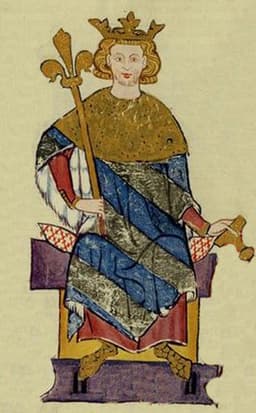
Wenceslaus II of Bohemia
Emperor · Medieval
55.0Total

Yelu Hongji
Emperor · Medieval
50.5Total
Basic Information
Born
1271
1032
Died
1305
1101
Era
Medieval
Medieval
Nationality
Bohemia
Khitan Empire
Occupation
Emperor
Emperor
Civilization
Western
Eastern
Score Comparison
Military (10%)
55.0
35.0
Political (20%)
53.8
46.6
Influence (20%)
56.4
54.9
Legacy (20%)
48.3
43.3
Leadership (15%)
74.0
74.0
Strategy (15%)
41.7
43.3
TOTAL
55.0
50.5
Wenceslaus II of Bohemia — Complete Timeline
1300 AD
Minting of the Prague GroschenReform◆ Major
Wenceslaus II introduced the Prague groschen, a silver coin that became the standard currency in Central Europe for centuries. This monetary reform stabilized the Bohemian economy and facilitated trade across the region.
Currency ReformEconomic PolicyTrade
Impact: regionalconstructive
Coronation as King of PolandPolitical Action◆ Major
Wenceslaus II was crowned King of Poland in Gniezno, uniting Bohemia and Poland under his rule. This coronation was part of his efforts to expand his influence in Central Europe, but it was contested by Polish nobles.
CoronationPersonal UnionPoland
Impact: regional
1305 AD
Death of Wenceslaus IIOther◆ Major
Wenceslaus II died suddenly at the age of 34, likely from tuberculosis. His death left the Bohemian-Polish union fragile, and his son Wenceslaus III was unable to maintain control, leading to the collapse of the P
DeathDynastic CrisisSuccession
Impact: regionaltragic
Yelu Hongji — Complete Timeline
1055 AD
Accession as Eighth Liao EmperorPolitical Action◆ Major
Yelu Hongji became the eighth Liao emperor after the death of his father, Yelu Zongzhen. His reign was characterized by a focus on cultural pursuits and the maintenance of peace with the Song dynasty.
Liao dynastySuccessionCultural focus
Impact: regional
1060 AD
Maintenance of Peace with SongPolitical Action
Yelu Hongji maintained the peace established by the Treaty of Shanyuan, avoiding military conflict with the Song dynasty. His reign was a period of relative stability and prosperity for the Liao state.
Liao dynastyPeaceStability
Impact: regionalconstructive
1070 AD
Patronage of Chinese Art and CultureCultural
Yelu Hongji was a noted patron of Chinese art and culture, commissioning paintings and supporting the work of Chinese artists at the Liao court. His reign saw the production of notable artworks that depicted Liao court life and Buddhist themes.
Liao dynastyArt patronageChinese culture
Impact: regionalconstructive
Expert Analysis
Origins
Wenceslaus II of Bohemia was born in 1271 to King Ottokar II of Bohemia and Kunigunda of Slavonia. His early life was marked by the death of his father in 1278 at the Battle of Marchfeld, after which he was held captive by Otto IV of Brandenburg. Upon his release in 1283, he returned to a kingdom in turmoil. He received a thorough education in governance and chivalry, preparing him for his eventual rule. In contrast, Yelu Hongji, born in 1075, was the son of Emperor Yelu Zongzhen of the Liao dynasty. As a Khitan prince, he was steeped in both nomadic traditions and Chinese culture, receiving a classical Confucian education. His upbringing at the Liao court emphasized cultural refinement over martial prowess, shaping his later reign.
Rise to Power
Wenceslaus II ascended to the Bohemian throne in 1278 at age 7, but effective power was held by regents until he came of age in 1283. His rise was consolidated through strategic marriages: he married Judith of Habsburg in 1285, aligning with the powerful Habsburgs. By 1290, he had subdued internal opposition and began expanding his influence. His major turning point came in 1300 when he was crowned King of Poland in Gniezno, uniting Bohemia and Poland under his rule. This was achieved through inheritance claims and diplomatic maneuvering rather than military conquest. Yelu Hongji became the eighth Liao emperor in 1101 upon his father's death, inheriting a stable empire. His rise was uncontested, as the Liao succession was orderly. He focused on consolidating his rule through cultural patronage rather than military expansion, maintaining the peace established by the Treaty of Shanyuan with the Song dynasty in 1005.
Leadership & Governance
Wenceslaus II's leadership was characterized by administrative and economic reforms. His most significant achievement was the introduction of the Prague groschen in 1300, a high-quality silver coin that became the standard currency in Central Europe for centuries, facilitating trade and economic integration. He also centralized royal power by limiting the influence of the nobility and promoting mining, especially silver from Kutná Hora. His governance scored 74.0 in leadership, reflecting his effective state-building. However, his military score of 55.0 indicates a preference for diplomacy over warfare. Yelu Hongji's leadership style was culturally oriented. He patronized Chinese art, commissioning paintings and supporting artists, which earned him a leadership score of 74.0 as well. His political score of 46.6 suggests a less assertive governance, as he maintained the status quo rather than enacting major reforms. He relied on the existing bureaucratic structures and avoided conflict, keeping the Liao state stable but static.
Triumph & Tragedy
Wenceslaus II's greatest triumph was the unification of Bohemia and Poland, creating a powerful Central European realm. His monetary reform with the Prague groschen was a lasting economic success, boosting trade and royal revenues. However, his sudden death at age 34 in 1305, likely from tuberculosis, was a tragedy. It left the union fragile, and his son Wenceslaus III was assassinated within a year, ending the Přemyslid dynasty. This collapse undid much of his work. Yelu Hongji's triumph was his patronage of Chinese art, which enriched Liao culture and produced notable works like the "Liao Dynasty Portraits." His maintenance of peace with the Song allowed for cultural exchange and economic prosperity. However, his reign saw the rise of the Jurchen tribes, who would eventually overthrow the Liao in 1125, just a decade after his death in 1110. His focus on culture over military preparedness left the empire vulnerable.
Character & Destiny
Wenceslaus II was pragmatic and ambitious, with a talent for administration and diplomacy. His decision to mint the groschen showed foresight, but his early death cut short his plans. Historian Francis Dvornik described him as "a ruler of great ability, whose premature death was a disaster for Central Europe." His character shaped his destiny: he built a union through diplomacy, but its fragility reflected a lack of time to consolidate. Yelu Hongji was contemplative and artistic, more interested in culture than conquest. He was known as Emperor Daozong, and his reign was peaceful but passive. His character led to a stable but stagnant rule, and his lack of attention to military threats contributed to the Liao's decline. The Khitan Liao dynasty fell to the Jurchens in 1125, a fate sealed by his neglect.
Legacy
Wenceslaus II's legacy endures through the Prague groschen, which remained in use until the 16th century. His unification of Bohemia and Poland set a precedent for future rulers, though the union dissolved. In Czech history, he is remembered as a capable king who strengthened the state. His overall legacy score of 48.3 reflects the short-lived nature of his achievements. Yelu Hongji's legacy is as a patron of art; the Liao dynasty's cultural artifacts, such as murals and sculptures, are valued today. However, his political legacy is limited, as the Liao empire collapsed soon after. His influence score of 54.9 is slightly higher than Wenceslaus's 56.4, but his total score of 50.5 is lower than Wenceslaus's 55.0.
Conclusion
Wenceslaus II of Bohemia had a greater impact than Yelu Hongji. His total score of 55.0 surpasses Yelu Hongji's 50.5, driven by higher scores in military (55.0 vs 35.0) and political (53.8 vs 46.6). While Yelu Hongji maintained peace and patronized culture, his reign did not produce lasting structural changes. Wenceslaus II's monetary reform and unification efforts, though short-lived, influenced Central European history for centuries. The Prague groschen was a tangible innovation that facilitated trade, whereas Yelu Hongji's cultural patronage, while significant, did not alter the course of the Liao dynasty. Wenceslaus II's ambition and administrative reforms mark him as the more consequential ruler.
Rankings
🥇
Wenceslaus II of BohemiaLeader
Mil: 55.0Pol: 53.8Inf: 56.4
55.0
🥈
Yelu Hongji
Mil: 35.0Pol: 46.6Inf: 54.9
50.5
+4.5 behind
How This Comparison Works
Algorithm
Each figure is scored on 6 dimensions (0—100 scale) based on structured historical data: Military (10%), Political (20%), Influence (20%), Legacy (20%), Leadership (15%), Strategy (15%). The weighted total produces the final ranking.
Data Sources
Scores are computed from structured sub-indicators in the database. Scale factors adjust for era (Ancient ×0.85, Modern ×1.0) and civilization size (Eastern ×1.05, Other ×0.80) to account for differences in population and military scale.
Maximum 3 Figures
Comparisons are limited to 2—3 figures to ensure readability and statistical meaningfulness.
Error Margins
±5 points per dimension — Sub-scores are derived from historical records with inherent uncertainty. Two figures within 5 points on a dimension should be considered roughly equivalent in that area.
Total Score Accuracy
±3 points overall — The weighted combination of 6 dimensions produces a total score with approximately ±3 points of uncertainty. Differences of less than 3 points are not statistically significant— the figures are effectively tied.
Known Limitations
- Historical records are incomplete and uneven across civilizations
- Figures from oral-tradition societies may be underrepresented
- Occupation labels can misclassify multi-role figures
- Scores measure capability and impact, not moral character
- Quantitative scoring is a comparison tool, not absolute truth
Capability Radar
Military (10%) — Battles & Warfare
Battles
30
30
Win Rate
35
30
Expansion
40
20
Political (20%) — Governance & Reform
Reform
55
40
Diplomacy
65
50
Economy
70
40
Influence (20%) — Cultural & Global Reach
Cultural
45
30
Global
35
20
Legacy (20%) — Historical Impact
Historical
50
30
Longevity
40
20
Leadership (15%) — Power & Stability
Tenure
60
60
Stability
50
50
Strategy (15%) — Tactics & Innovation
Strategy
30
30
Tactics
25
30
Reform
20
20
Similar Comparisons
Comments & Discussion
No comments yet. Be the first to share your thoughts!