Loading...
Muhammad II of Khwarezm vs Yelu Hongji
Muhammad II of Khwarezm leads by 4.0 pts · 2 figures compared
…
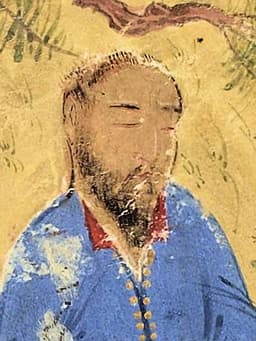
Muhammad II of Khwarezm
Emperor · Medieval
54.5Total

Yelu Hongji
Emperor · Medieval
50.5Total
Basic Information
Born
1169
1032
Died
1220
1101
Era
Medieval
Medieval
Nationality
Khwarezmian Empire
Khitan Empire
Occupation
Emperor
Emperor
Civilization
Middle Eastern
Eastern
Score Comparison
Military (10%)
55.0
35.0
Political (20%)
40.8
46.6
Influence (20%)
60.0
54.9
Legacy (20%)
49.2
43.3
Leadership (15%)
74.0
74.0
Strategy (15%)
45.0
43.3
TOTAL
54.5
50.5
Muhammad II of Khwarezm — Complete Timeline
1218 AD
Conflict with Genghis KhanPolitical Action
Muhammad II executed Mongol envoys sent by Genghis Khan to establish trade relations. This act provoked the Mongol invasion of the Khwarezmian Empire, leading to one of the most devastating conquests in history.
DiplomacyMongol InvasionProvocation
Impact: globaldestructive
1219 AD
Mongol Invasion of KhwarezmWar
Genghis Khan invaded the Khwarezmian Empire with a massive army. Muhammad II failed to mount a coordinated defense, and the Mongols captured and destroyed major cities including Samarkand, Bukhara, and Urgench, massacring millions.
InvasionMongolDestruction
Impact: globaltragic
1220 AD
Flight and DeathOther◆ Major
Muhammad II fled westward as the Mongols advanced, abandoning his empire. He died on an island in the Caspian Sea, possibly from pneumonia or assassination, leaving his son Jalal ad-Din to continue the resistance.
FlightDeathCollapse
Impact: regionaltragic
Yelu Hongji — Complete Timeline
1055 AD
Accession as Eighth Liao EmperorPolitical Action◆ Major
Yelu Hongji became the eighth Liao emperor after the death of his father, Yelu Zongzhen. His reign was characterized by a focus on cultural pursuits and the maintenance of peace with the Song dynasty.
Liao dynastySuccessionCultural focus
Impact: regional
1060 AD
Maintenance of Peace with SongPolitical Action
Yelu Hongji maintained the peace established by the Treaty of Shanyuan, avoiding military conflict with the Song dynasty. His reign was a period of relative stability and prosperity for the Liao state.
Liao dynastyPeaceStability
Impact: regionalconstructive
1070 AD
Patronage of Chinese Art and CultureCultural
Yelu Hongji was a noted patron of Chinese art and culture, commissioning paintings and supporting the work of Chinese artists at the Liao court. His reign saw the production of notable artworks that depicted Liao court life and Buddhist themes.
Liao dynastyArt patronageChinese culture
Impact: regionalconstructive
Expert Analysis
Origins
Muhammad II of Khwarezm was born around 1169 into the Khwarezmian ruling dynasty, which had expanded under his father, Ala ad-Din Tekish. He inherited a sprawling empire encompassing Persia, Central Asia, and parts of Afghanistan. His early life was shaped by court intrigue and the need to consolidate power over semi-autonomous vassals. He received education in Islamic jurisprudence and statecraft, but lacked military training beyond ceremonial roles.
Yelu Hongji, born in 1075, was the eighth emperor of the Liao dynasty, a Khitan-led empire ruling northern China and Mongolia. His father, Yelu Zongzhen, had secured the throne after a period of instability. Yelu Hongji grew up in a sinicized court, deeply influenced by Chinese culture and Buddhism. He was tutored in Confucian classics and art, developing a lifelong passion for painting and calligraphy.
Rise to Power
Muhammad II ascended to the throne in 1200 after his father's death. He immediately faced rebellions from his brothers and the powerful Ghurid dynasty. By 1204, he had defeated the Ghurids and expanded westward into Persia, capturing territory from the Abbasid caliphate. His turning point came in 1215 when he sent envoys to Genghis Khan, initially establishing trade relations. However, in 1218, he ordered the execution of Mongol envoys, believing them to be spies. This act, scoring 45.0 in strategy, provoked the Mongol invasion.
Yelu Hongji became emperor in 1101 after his father's death. His reign was marked by continuity rather than conquest. He maintained the Treaty of Shanyuan (1005) with the Song dynasty, ensuring peace on the southern border. His rise was uneventful, as he inherited a stable empire with a functioning bureaucracy. He focused on cultural patronage, commissioning artists and building temples. His political score of 46.6 reflects his ability to maintain stability without major military campaigns.
Leadership & Governance
Muhammad II governed through a centralized bureaucracy but relied heavily on his mother, Turkan Khatun, and military commanders. He implemented tax reforms to fund his army but alienated local populations by imposing high levies. His leadership score of 74.0 is undermined by his failure to coordinate defense during the Mongol invasion. He divided his army into scattered garrisons, allowing Genghis Khan to defeat them piecemeal. He also executed his own general, Inalchuq, after the Mongols demanded punishment, showing indecision.
Yelu Hongji ruled as a Confucian monarch, delegating administrative tasks to a civil service based on merit. He promoted Chinese-style education and supported the printing of Buddhist scriptures. His governance score of 46.6 reflects his passive approach: he avoided conflict but also neglected military readiness. The Liao army declined under his reign, as he reduced military spending to fund cultural projects. He maintained peace with the Song through tribute payments, which drained the treasury.
Triumph & Tragedy
Muhammad II's greatest triumph was expanding the Khwarezmian Empire to its largest extent, controlling trade routes from the Oxus to the Caspian. He defeated the Ghurids and forced the Abbasid caliph to recognize his authority. His tragedy was the Mongol invasion: within two years (1219-1221), his empire was destroyed. He fled from city to city, abandoning his family and subjects. He died on an island in the Caspian Sea in 1220, possibly from pneumonia or an assassin. His military score of 55.0 reflects his initial successes but ultimate collapse.
Yelu Hongji's triumph was his patronage of Chinese art, which produced masterpieces like "Liao Dynasty Hunting Scene" and supported artists like Chen Rong. His reign was a period of cultural flourishing. His tragedy was the decline of Liao military power. He failed to address the rising threat of the Jurchen Jin dynasty, which would eventually conquer the Liao in 1125, after his death. His influence score of 54.9 is due to his cultural contributions, but his legacy is overshadowed by the Liao's fall.
Character & Destiny
Muhammad II was arrogant and impulsive, as shown by his execution of Mongol envoys without considering consequences. He was also indecisive, failing to choose between fighting or negotiating. His character led to his empire's destruction. Historians like Juvayni describe him as paranoid, distrusting his own commanders. His total score of 54.5 reflects a ruler who achieved expansion but lacked the strategic foresight to preserve it.
Yelu Hongji was cultured and peace-loving, but also passive and risk-averse. He prioritized art over military, which weakened his empire. His character was shaped by the stability of his era, but he failed to prepare for future threats. Chinese records depict him as a benevolent ruler who loved poetry. His total score of 50.5 reflects a competent administrator but a leader who did not adapt to changing geopolitical realities.
Legacy
Muhammad II's legacy is primarily negative: his actions triggered the Mongol invasion that killed millions and reshaped Eurasia. The Khwarezmian Empire was erased, and its people suffered genocide. However, his resistance inspired later Muslim rulers. His legacy score of 49.2 reflects his role as a catalyst for historical change.
Yelu Hongji's legacy is cultural: his patronage helped preserve Chinese art in the Liao region, influencing later Yuan dynasty aesthetics. He is remembered as a peaceful emperor, but his reign did not prevent the Liao's collapse. His legacy score of 43.3 is lower because his contributions were limited to art and did not alter the course of history.
Conclusion
Muhammad II of Khwarezm had a greater impact on world history, despite his lower political and strategy scores. His actions directly led to the Mongol invasion, which created the largest contiguous land empire and reshaped global trade, culture, and demographics. Yelu Hongji's cultural contributions, while valuable, were localized and did not change the trajectory of civilizations. Muhammad II scores 54.5 total versus Yelu Hongji's 50.5, but his influence score of 60.0 compared to 54.9 underscores his broader historical significance. The Khwarezmian emperor's failure was more consequential than the Liao emperor's success.
Rankings
🥇
Muhammad II of KhwarezmLeader
Mil: 55.0Pol: 40.8Inf: 60.0
54.5
🥈
Yelu Hongji
Mil: 35.0Pol: 46.6Inf: 54.9
50.5
+4.0 behind
How This Comparison Works
Algorithm
Each figure is scored on 6 dimensions (0—100 scale) based on structured historical data: Military (10%), Political (20%), Influence (20%), Legacy (20%), Leadership (15%), Strategy (15%). The weighted total produces the final ranking.
Data Sources
Scores are computed from structured sub-indicators in the database. Scale factors adjust for era (Ancient ×0.85, Modern ×1.0) and civilization size (Eastern ×1.05, Other ×0.80) to account for differences in population and military scale.
Maximum 3 Figures
Comparisons are limited to 2—3 figures to ensure readability and statistical meaningfulness.
Error Margins
±5 points per dimension — Sub-scores are derived from historical records with inherent uncertainty. Two figures within 5 points on a dimension should be considered roughly equivalent in that area.
Total Score Accuracy
±3 points overall — The weighted combination of 6 dimensions produces a total score with approximately ±3 points of uncertainty. Differences of less than 3 points are not statistically significant— the figures are effectively tied.
Known Limitations
- Historical records are incomplete and uneven across civilizations
- Figures from oral-tradition societies may be underrepresented
- Occupation labels can misclassify multi-role figures
- Scores measure capability and impact, not moral character
- Quantitative scoring is a comparison tool, not absolute truth
Capability Radar
Military (10%) — Battles & Warfare
Battles
55
30
Win Rate
50
30
Expansion
60
20
Political (20%) — Governance & Reform
Reform
35
40
Diplomacy
20
50
Economy
40
40
Influence (20%) — Cultural & Global Reach
Cultural
30
30
Global
40
20
Legacy (20%) — Historical Impact
Historical
55
30
Longevity
30
20
Leadership (15%) — Power & Stability
Tenure
60
60
Stability
25
50
Strategy (15%) — Tactics & Innovation
Strategy
40
30
Tactics
45
30
Reform
30
20
Similar Comparisons
Comments & Discussion
No comments yet. Be the first to share your thoughts!