Loading...
Wedem Arad vs Yelu Abaoji
Yelu Abaoji leads by 14.2 pts · 2 figures compared
…
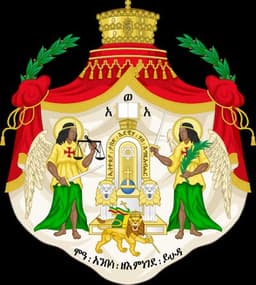
Wedem Arad
Emperor · Medieval
48.5Total
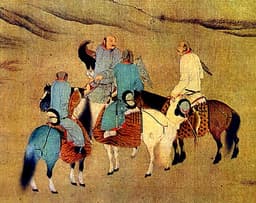
Yelu Abaoji
Emperor · Medieval
62.7Total
Basic Information
Born
1270
872
Died
1314
926
Era
Medieval
Medieval
Nationality
Ethiopia
China
Occupation
Emperor
Emperor
Civilization
Other
Eastern
Score Comparison
Military (10%)
50.0
77.2
Political (20%)
35.1
59.6
Influence (20%)
58.0
68.0
Legacy (20%)
45.8
40.0
Leadership (15%)
55.3
80.3
Strategy (15%)
39.6
69.6
TOTAL
48.5
62.7
Wedem Arad — Complete Timeline
1306 AD
First Contact with EuropePolitical Action◆ Major
Wedem Arad sent an embassy to Europe, likely to the court of Pope Clement V in Avignon. This was the first recorded diplomatic contact between Ethiopia and a European power since antiquity, establishing a precedent for future Ethiopian-European relations.
Impact: regional
Yelu Abaoji — Complete Timeline
907 AD
Unified Khitan tribesPolitical Action◆ Major
Yelu Abaoji was elected khagan of the Khitan tribes, unifying them under his leadership. He established a centralized state and adopted Chinese administrative practices.
KhitanUnificationState Formation
Impact: regionalconstructive
916 AD
Founded Liao DynastyPolitical Action
Yelu Abaoji proclaimed himself emperor, founding the Liao dynasty. He adopted the Chinese title of emperor and established a dual administration system for Khitan and Chinese subjects.
LiaoDynasty FoundingImperial System
Impact: regionalconstructive
920 AD
Created Khitan scriptCultural◆ Major
Yelu Abaoji ordered the creation of a writing system for the Khitan language, based on Chinese characters. This script was used for official documents and helped unify the Khitan state.
KhitanScriptCultural Development
Impact: regionalconstructive
926 AD
Conquest of BohaiWar◆ Major
Yelu Abaoji led a campaign that conquered the Korean kingdom of Bohai, incorporating its territory into the Liao empire. This expanded Liao's influence into Manchuria and Korea.
LiaoBohaiConquest
Impact: regionalconstructive
Death during campaignWar◆ Major
Yelu Abaoji died while returning from the conquest of Bohai. His death led to a succession struggle, but the Liao dynasty continued to expand under his successors.
LiaoDeathSuccession
Impact: regionaltragic
Expert Analysis
Yelu Abaoji vs Wedem Arad
# The Emperor and the Envoy
In the winter of 1306, a small party of Ethiopian monks arrived at the papal court in Avignon, bearing letters from a king whose name no one in Europe could pronounce. They had crossed the Red Sea, sailed the Mediterranean, and traversed the Alps—a journey of years—to deliver a message from a Christian kingdom that had been cut off from the West for centuries. Half a world away, four hundred years earlier, a different kind of ruler had stood on the grasslands of Inner Asia, watching his horsemen gallop across the horizon, and dreamed not of reaching Europe, but of building an empire that would rival China itself. Wedem Arad of Ethiopia and Yelu Abaoji of the Khitans never met, never knew of each other’s existence, yet their stories, when placed side by side, reveal something profound about the nature of power: that the same ambition can lead to utterly different destinies, depending not on the man, but on the world he inherits.
Origins
Yelu Abaoji was born in 872 into a world of nomadic chaos. The Khitan tribes roamed the forests and steppes of what is now northeastern China, a people without a state, without a script, without a single ruler. Their society was built on horses, felt tents, and the constant calculus of survival: raid or be raided, ally or be annihilated. Abaoji’s father was a minor chieftain, and the young Khitan grew up learning to ride before he could walk, to fight before he could read. The world he knew was one of shifting loyalties and brutal pragmatism.
Wedem Arad entered history in 1270, but his Ethiopia was already ancient. The Solomonic dynasty claimed descent from the Queen of Sheba and King Solomon; the kingdom had embraced Christianity in the fourth century, long before most of Europe. Wedem Arad was born into a court where priests chanted in Ge’ez, where the Ark of the Covenant was said to reside, where emperors were crowned in the rock-hewn churches of Lalibela. His world was not one of creation but of preservation—a fortress of faith surrounded by Muslim sultanates, a Christian island in a hostile sea.
Rise to Power
Abaoji’s path to power was forged in blood. In 907, after years of maneuvering, he was elected khagan of all Khitan tribes—a title that meant little until he made it mean everything. He did not inherit an empire; he built one from the ground up, tribe by tribe, battle by battle. His genius lay in recognizing that the Khitans could not survive as nomads forever; they needed a state, a bureaucracy, a civilization. So in 916, he proclaimed himself emperor, adopting the Chinese title of *huangdi*, and founded the Liao dynasty. It was an audacious act: a barbarian king declaring himself the equal of the Son of Heaven.
Wedem Arad’s rise was quieter. He was likely a younger son, not destined for the throne, but the Solomonic line had a way of producing rulers through the accidents of death and intrigue. By the time he became emperor, probably in the late 1290s, his kingdom was already stable, already Christian, already old. His challenge was not to build but to connect. Ethiopia had been isolated for centuries, surrounded by enemies, cut off from the rest of Christendom by the rise of Islam. Wedem Arad’s great ambition was to break that isolation.
Leadership & Governance
Abaoji was a revolutionary in nomad’s clothing. His political score of 90.0 reflects a man who understood that power was not merely military but institutional. He created a dual administrative system: the Khitan tribes would be governed by traditional steppe law, while the conquered Chinese populations would be ruled by a Chinese-style bureaucracy. He built cities, established a tax system, and in 920, he ordered the creation of a Khitan script—an act of cultural engineering that gave his people a written language for the first time. His military score of 73.3, while not legendary, was sufficient: he knew when to fight and when to negotiate, and his conquest of the Korean kingdom of Bohai in 926 added vast territories to his realm.
Wedem Arad’s leadership was of a different kind. His military score of 24.0 suggests he was no warrior; his political score of 44.3 indicates a ruler who governed more through tradition than innovation. His great achievement was diplomatic. In 1306, he sent an embassy to Europe—the first recorded contact between Ethiopia and the West. The mission reached Pope Clement V in Avignon, carrying gifts and letters, proposing an alliance against their common Muslim enemies. It was a visionary act, but it bore little fruit. The pope was distracted by the Avignon papacy, the Crusades were fading, and Europe was not ready for a Christian king in Africa.
Triumph & Tragedy
Abaoji’s greatest triumph was the conquest of Bohai in 926—a campaign that doubled the size of his empire and brought Korean scholars, artisans, and administrators into the Liao system. But his greatest tragedy came immediately after. Returning from the campaign, he fell ill and died, leaving behind a succession crisis that nearly tore his dynasty apart. He had built an empire, but he had not lived to see it endure.
Wedem Arad’s triumph was the embassy itself—the audacity to reach across the known world. His tragedy was that it changed almost nothing. The letters he sent were filed away in papal archives; the alliance he dreamed of never materialized. He died in 1314, having made contact but not connection.
Character & Destiny
Abaoji was a builder, a pragmatist, a man who saw the future and shaped it with his own hands. He understood that power required institutions, that nomads could become emperors, that a people without a script were a people without a memory. His leadership score of 89.2 reflects a ruler who commanded loyalty not through fear alone but through vision.
Wedem Arad was a bridge-builder in a world of chasms. He saw that Ethiopia’s survival depended on friends beyond its borders, and he reached out with the only tool he had: diplomacy. But he was a man of his time—devout, traditional, constrained by a court that valued orthodoxy over innovation. His influence score of 73.6 is higher than his political or military scores, because his legacy is not what he did, but what he attempted.
Legacy
Abaoji’s Liao dynasty ruled northern China for over two centuries, outlasting the Song, the Jin, and even the Mongol invasions. The Khitan script he created was used for centuries. His name is remembered as the founder of a civilization, the man who brought the steppe into history. His total score of 79.3 places him among the great state-builders of the medieval world.
Wedem Arad is a footnote in Ethiopian history, remembered primarily for that single embassy. His total score of 48.3 reflects a ruler who left little mark on his own society. But his legacy is larger than his scores suggest: he was the first Ethiopian emperor to look westward, to imagine a Christian world united across continents. It would take another 500 years for that vision to bear fruit.
Conclusion
Two emperors, two worlds, two very different measures of success. Abaoji built an empire that changed the course of Chinese history; Wedem Arad sent a letter that changed nothing. And yet, which one was more courageous? Abaoji conquered what he could see; Wedem Arad reached for what he could not. Perhaps the greatest difference between them is not in their achievements but in their circumstances: one was born into a world that needed a founder, the other into a world that needed a diplomat. History rewards the builder, but it remembers the dreamer.
Rankings
🥇
Yelu AbaojiLeader
Mil: 77.2Pol: 59.6Inf: 68.0
62.7
🥈
Wedem Arad
Mil: 50.0Pol: 35.1Inf: 58.0
48.5
+14.2 behind
How This Comparison Works
Algorithm
Each figure is scored on 6 dimensions (0—100 scale) based on structured historical data: Military (10%), Political (20%), Influence (20%), Legacy (20%), Leadership (15%), Strategy (15%). The weighted total produces the final ranking.
Data Sources
Scores are computed from structured sub-indicators in the database. Scale factors adjust for era (Ancient ×0.85, Modern ×1.0) and civilization size (Eastern ×1.05, Other ×0.80) to account for differences in population and military scale.
Maximum 3 Figures
Comparisons are limited to 2—3 figures to ensure readability and statistical meaningfulness.
Error Margins
±5 points per dimension — Sub-scores are derived from historical records with inherent uncertainty. Two figures within 5 points on a dimension should be considered roughly equivalent in that area.
Total Score Accuracy
±3 points overall — The weighted combination of 6 dimensions produces a total score with approximately ±3 points of uncertainty. Differences of less than 3 points are not statistically significant— the figures are effectively tied.
Known Limitations
- Historical records are incomplete and uneven across civilizations
- Figures from oral-tradition societies may be underrepresented
- Occupation labels can misclassify multi-role figures
- Scores measure capability and impact, not moral character
- Quantitative scoring is a comparison tool, not absolute truth
Capability Radar
Military (10%) — Battles & Warfare
Battles
15
75
Win Rate
20
80
Expansion
10
82
Political (20%) — Governance & Reform
Reform
20
88
Diplomacy
55
75
Economy
15
70
Influence (20%) — Cultural & Global Reach
Cultural
20
60
Global
40
55
Legacy (20%) — Historical Impact
Historical
35
70
Longevity
30
65
Leadership (15%) — Power & Stability
Tenure
40
72
Stability
30
65
Strategy (15%) — Tactics & Innovation
Strategy
10
78
Tactics
10
70
Reform
5
85
Similar Comparisons
Comments & Discussion
草原屠夫6/16/2026
阿保机就是个披着“开国之君”外衣的草原屠夫!说他统一契丹?分明是靠屠尽部落长老才坐稳的位子!1402年他杀光迭剌部七位酋长时都没眨过眼,这种靠血腥清洗上位的暴君,也好意思跟埃塞俄比亚的“异域使者”相比?人家至少还知道派僧人送信,阿保机呢?只会挥刀砍向同袍!简直侮辱了“文明”二字!
Milk-Bringer6/16/2026
Wedem Arad was literally a medieval fantasy cliché—sending monks across three continents to beg for European recognition? Pathetic. Yelu Abaoji didn’t need anyone’s blessing; he built a script from scratch in 920 CE, forcing his Khitan nobles to learn it while they still mourned their slaughtered rivals. Compare that to Arad’s desperate “letter from Prester John” act—total PR stunt. One man forged a nation with blood and ink; the other chased fairy tales.
铁骑微醺6/16/2026
哈!说阿保机是“游牧征服者”?我怀疑写这文的人连马背都没坐过!他真正牛的是在902年攻下代北时,居然让汉人俘虏教契丹人种粟和炼铁!这哪是野蛮人?简直是草原版的“改革开放”!反观Wedem Arad,1306年那趟送信之旅,说白了就是被穆斯林卡脖子卡急了,才想起远在欧洲的“远房亲戚”哭穷吧?战略眼光差了一千条街!
Script-Destroyer6/16/2026
Let’s be real: Yelu Abaoji’s so-called “unification” was a myth. The Khitan were a loose federation of thugs until he literally invented a writing system in 920 to enforce bureaucratic control—then spent the next decade crushing rebellions on his own turf. Wedem Arad, by contrast, faced Islamic blockade, not internal chaos. His envoys reached Avignon, a logistical miracle, while Abaoji could barely hold his steppe together. One built a house of cards; the other opened a global door.
墨痕悲歌6/16/2026
阿保机真是被捧上神坛了!你们忘了他的继位者是谁吗?是他杀了亲子耶律倍才换来的“正统”!这个所谓“开国皇帝”,最后连自己儿子都容不下,有脸吹“帝国野心”?而Wedem Arad的僧侣们到底在1306年带回了什么?不过是教皇的一纸安慰信!两边都只是苦涩政治的垫脚石,非要分出高下,不如比比谁更会写悲剧剧本!