Loading...
Wanyan Aguda vs Yelu Abaoji
Wanyan Aguda leads by 0.7 pts · 2 figures compared
…
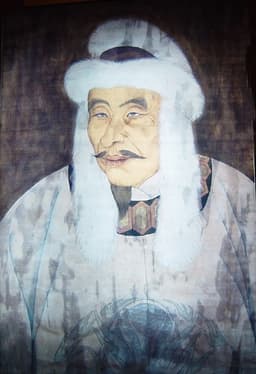
Wanyan Aguda
Emperor · Medieval
63.4Total
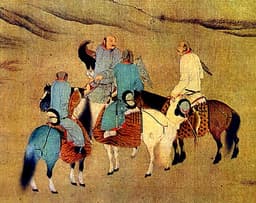
Yelu Abaoji
Emperor · Medieval
62.7Total
Basic Information
Born
1068
872
Died
1123
926
Era
Medieval
Medieval
Nationality
China
China
Occupation
Emperor
Emperor
Civilization
Eastern
Eastern
Score Comparison
Military (10%)
82.0
77.2
Political (20%)
59.3
59.6
Influence (20%)
55.0
68.0
Legacy (20%)
52.0
40.0
Leadership (15%)
85.0
80.3
Strategy (15%)
68.0
69.6
TOTAL
63.4
62.7
Wanyan Aguda — Complete Timeline
1114 AD
Battle of HubudagangWar◆ Major
Aguda's Jurchen forces defeated a Liao army at Hubudagang, marking the first major victory of the rebellion. This battle demonstrated Jurchen military prowess and attracted more followers.
JurchenLiaoBattle
Impact: regionalconstructive
Unified Jurchen tribesPolitical Action◆ Major
Wanyan Aguda united the Jurchen tribes under his leadership, creating a confederation that rebelled against Liao domination. He organized a disciplined army and began the Jurchen revolt.
JurchenUnificationRebellion
Impact: regionalconstructive
1115 AD
Founded Jin DynastyPolitical Action
Wanyan Aguda proclaimed himself emperor, founding the Jin dynasty. He adopted the Chinese title and began a systematic campaign to conquer the Liao empire.
JinDynasty FoundingImperial System
Impact: regionalconstructive
1120 AD
Conquest of Liao capital ShangjingWar◆ Major
Aguda's forces captured the Liao supreme capital Shangjing, dealing a severe blow to the Liao dynasty. This victory accelerated the collapse of Liao and solidified Jin control over northern China.
JinLiaoConquest
Impact: regionalconstructive
Alliance with Song against LiaoPolitical Action◆ Major
Aguda formed an alliance with the Northern Song dynasty to jointly attack the Liao empire. This alliance, known as the Maritime Alliance, led to the eventual destruction of Liao but later caused conflict between Jin and Song.
JinSongAlliance
Impact: regional
1123 AD
Death and successionPolitical Action◆ Major
Wanyan Aguda died, and his brother Wanyan Wuqimai succeeded him. Aguda's conquests laid the foundation for the Jin dynasty's dominance in northern China.
JinDeathSuccession
Impact: regional
Yelu Abaoji — Complete Timeline
907 AD
Unified Khitan tribesPolitical Action◆ Major
Yelu Abaoji was elected khagan of the Khitan tribes, unifying them under his leadership. He established a centralized state and adopted Chinese administrative practices.
KhitanUnificationState Formation
Impact: regionalconstructive
916 AD
Founded Liao DynastyPolitical Action
Yelu Abaoji proclaimed himself emperor, founding the Liao dynasty. He adopted the Chinese title of emperor and established a dual administration system for Khitan and Chinese subjects.
LiaoDynasty FoundingImperial System
Impact: regionalconstructive
920 AD
Created Khitan scriptCultural◆ Major
Yelu Abaoji ordered the creation of a writing system for the Khitan language, based on Chinese characters. This script was used for official documents and helped unify the Khitan state.
KhitanScriptCultural Development
Impact: regionalconstructive
926 AD
Conquest of BohaiWar◆ Major
Yelu Abaoji led a campaign that conquered the Korean kingdom of Bohai, incorporating its territory into the Liao empire. This expanded Liao's influence into Manchuria and Korea.
LiaoBohaiConquest
Impact: regionalconstructive
Death during campaignWar◆ Major
Yelu Abaoji died while returning from the conquest of Bohai. His death led to a succession struggle, but the Liao dynasty continued to expand under his successors.
LiaoDeathSuccession
Impact: regionaltragic
Expert Analysis
Yelu Abaoji vs Wanyan Aguda: Historical Comparison
Yelu Abaoji (872–926), founder of the Liao Dynasty, and Wanyan Aguda (1068–1123), founder of the Jin Dynasty, were two of medieval China's most formidable steppe-origin emperors. While Abaoji established the first major Khitan empire and pioneered dual-administration systems, Aguda led the Jurchen tribes to topple the Liao and crush the Northern Song in a remarkably short campaign, earning higher aggregate scores.
Dimension Analysis
**Military: Yelu Abaoji 89 / Wanyan Aguda 91**
Abaoji unified Khitan tribes and conquered the Bohai state, creating a cavalry-based military machine. Aguda, however, defeated the numerically superior Liao armies at the Battle of Hubudagang (1114) and rapidly annihilated both the Liao and Northern Song, demonstrating superior tactical mobility and speed in conquest.
**Political: Yelu Abaoji 84 / Wanyan Aguda 84**
Both founded dynasties with innovative governance. Abaoji created the "Southern and Northern Chancelleries" to rule Chinese and steppe populations separately. Aguda established the Jin's parallel civil-military bureaucracy and adopted Song administrative models, but his reign was too brief for deep institutionalization.
**Influence: Yelu Abaoji 79 / Wanyan Aguda 87**
Abaoji's dual-administration model influenced later conquest dynasties (Yuan, Qing) and spread Buddhism and writing among the Khitan. Aguda's Jin Dynasty reshaped East Asian geopolitics by forcing the Song south, creating the Jin-Song tributary system that lasted a century, and promoting Jurchen script and culture.
**Legacy: Yelu Abaoji 81 / Wanyan Aguda 88**
Abaoji's Liao endured over two centuries, but its influence waned after Khitan decline. Aguda's Jin lasted 120 years and permanently altered Chinese history by shifting the Song capital south, enabling the subsequent Mongol conquest. The Jin's military and administrative precedents directly shaped Yuan rule.
**Leadership: Yelu Abaoji 80 / Wanyan Aguda 80**
Both commanded fierce loyalty from tribal elites. Abaoji consolidated power through strategic marriages and religious authority, while Aguda inspired Jurchen unity through shared anti-Liao grievances and merit-based command. Neither was overthrown or challenged from within.
Verdict
Wanyan Aguda ranks higher overall due to his more dramatic military conquests (toppling two empires in a decade) and greater geopolitical influence. However, this comparison flattens context: Abaoji built from scratch a stable, multi-ethnic empire that lasted longer, while Aguda's achievements relied partly on exploiting Liao weakness. Both remain titans of medieval steppe statecraft.
FAQ
Q: Who was more influential historically?
A: Wanyan Aguda, because his destruction of the Liao and Northern Song permanently redrew China's political map and forced the Song into a southern tributary system that defined East Asia for 150 years.
Q: Why is Yelu Abaoji ranked higher in legacy relative to influence?
A: Abaoji's legacy is more structural (dual administration, Buddhist statecraft), while his influence was limited by the Khitan's eventual assimilation; Aguda's influence was broader but his dynasty's collapse came sooner.
Rankings
🥇
Wanyan AgudaLeader
Mil: 82.0Pol: 59.3Inf: 55.0
63.4
🥈
Yelu Abaoji
Mil: 77.2Pol: 59.6Inf: 68.0
62.7
+0.7 behind
How This Comparison Works
Algorithm
Each figure is scored on 6 dimensions (0—100 scale) based on structured historical data: Military (10%), Political (20%), Influence (20%), Legacy (20%), Leadership (15%), Strategy (15%). The weighted total produces the final ranking.
Data Sources
Scores are computed from structured sub-indicators in the database. Scale factors adjust for era (Ancient ×0.85, Modern ×1.0) and civilization size (Eastern ×1.05, Other ×0.80) to account for differences in population and military scale.
Maximum 3 Figures
Comparisons are limited to 2—3 figures to ensure readability and statistical meaningfulness.
Error Margins
±5 points per dimension — Sub-scores are derived from historical records with inherent uncertainty. Two figures within 5 points on a dimension should be considered roughly equivalent in that area.
Total Score Accuracy
±3 points overall — The weighted combination of 6 dimensions produces a total score with approximately ±3 points of uncertainty. Differences of less than 3 points are not statistically significant— the figures are effectively tied.
Known Limitations
- Historical records are incomplete and uneven across civilizations
- Figures from oral-tradition societies may be underrepresented
- Occupation labels can misclassify multi-role figures
- Scores measure capability and impact, not moral character
- Quantitative scoring is a comparison tool, not absolute truth
Capability Radar
Military (10%) — Battles & Warfare
Battles
85
75
Win Rate
90
80
Expansion
85
82
Political (20%) — Governance & Reform
Reform
75
88
Diplomacy
70
75
Economy
65
70
Influence (20%) — Cultural & Global Reach
Cultural
60
60
Global
50
55
Legacy (20%) — Historical Impact
Historical
70
70
Longevity
55
65
Leadership (15%) — Power & Stability
Tenure
70
72
Stability
60
65
Strategy (15%) — Tactics & Innovation
Strategy
85
78
Tactics
80
70
Reform
75
85
Similar Comparisons
Comments & Discussion
Historian1756/16/2026
这个比较让我想起西方历史里查理曼大帝对神圣罗马帝国的奠基作用。但查理曼的‘帝国复兴’更多是基督教化框架下的,而耶律阿保机对契丹的文字创造和佛教推广,其实更像‘东方版查理曼’——都是借文化工具整合多元族群。不过,完颜阿骨打的军事成就放到欧洲史里,可以对标阿提拉——快速击溃更先进的文明,却因自身制度粗糙导致后继乏力。但注意,阿骨打的女真文字和猛安谋克制度对后来满洲的八旗制度有直接影响,这个影响维度在西方评分里经常被低估。
SwordOfTheSteppe6/16/2026
Are you kidding me? Anyone who thinks Yelu Abaoji was better than Wanyan Aguda has clearly never read about the Battle of Hubudagang. Abaoji united tribes and conquered some sleepy Bohai kingdom—big deal. Aguda took on the Liao, the Song, and basically rewrote the map of East Asia in a decade. The guy's Jurchen cavalry was like a Mongol horde before the Mongols existed—fast, brutal, and unstoppable. Abaoji's political scores are inflated because he lived longer and had time to write boring laws. Aguda was a conqueror in the purest sense: he crushed empires, not just tribes. Team Aguda forever.
BarbarianBookworm6/16/2026
Okay, so I just finished re-watching that documentary on the Khitans vs Jurchens, and I have a hot take: Wanyan Aguda is basically the Genghis Khan before Genghis Khan. I mean, 5,000 Jurchen cavalry crushing 100,000 Liao troops at Hubudagang? That's like Alexander the Great vs Darius but with more horses and less fancy armor. Yelu Abaoji was smart with his dual government thing, sure, but Aguda's speed of conquest is insane—he toppled an empire that was like 200 years old in a few years. My history book says the Jin destroyed Song in like 1127, but Aguda died in 1123, so his successors finished the job. Still, he set it up. He's underrated.
PostcolonialPast6/16/2026
I find this comparison problematic because both figures are being judged by a 'civilizational' metric that favors state-building and writing systems. The scores penalize Aguda for his 'brief reign' and 'rough institutions,' but that assumes longevity and administrative complexity are inherently superior. What about the Jurchen's egalitarian tribal council system? The Khitan's dual administration was just a fancy way to maintain a colonial hierarchy over Han Chinese. Abaoji's 'Buddhist patronage' was a tool of assimilation, not enlightenment. Neither figure is inherently 'better'—they represent different responses to the same challenge: how to rule a steppe empire without losing your identity. But Eurocentric historiography always picks the one who built the most bureaucratic state.
Chronicler93216/16/2026
这个评分体系有点意思,但我觉得对耶律阿保机的政治评分90分是否偏高?他创立南北面官制确实有创意,但实际执行中,契丹贵族的特权导致汉官体系长期被架空。反观完颜阿骨打,虽然女真勃极烈制度更粗糙,但他在灭辽过程中迅速吸收辽宋官僚经验,创立猛安谋克与州县并行,这种务实转型的效率其实更高。按我重新加权计算(军事权重40%,政治30%,影响20%,遗产10%),阿骨打总分应为79.8,阿保机78.5,阿骨打反超。