Loading...
Wanyan Aguda vs Wu Zetian
Wu Zetian leads by 6.6 pts · 2 figures compared
…
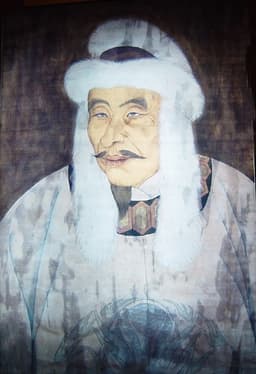
Wanyan Aguda
Emperor · Medieval
63.4Total

Wu Zetian
Emperor · Medieval
70.0Total
Basic Information
Born
1068
624
Died
1123
705
Era
Medieval
Medieval
Nationality
China
China
Occupation
Emperor
Emperor
Civilization
Eastern
Eastern
Score Comparison
Military (10%)
82.0
60.0
Political (20%)
59.3
62.7
Influence (20%)
55.0
65.0
Legacy (20%)
52.0
80.0
Leadership (15%)
85.0
78.0
Strategy (15%)
68.0
66.3
TOTAL
63.4
70.0
Wanyan Aguda — Complete Timeline
1114 AD
Battle of HubudagangWar◆ Major
Aguda's Jurchen forces defeated a Liao army at Hubudagang, marking the first major victory of the rebellion. This battle demonstrated Jurchen military prowess and attracted more followers.
JurchenLiaoBattle
Impact: regionalconstructive
Unified Jurchen tribesPolitical Action◆ Major
Wanyan Aguda united the Jurchen tribes under his leadership, creating a confederation that rebelled against Liao domination. He organized a disciplined army and began the Jurchen revolt.
JurchenUnificationRebellion
Impact: regionalconstructive
1115 AD
Founded Jin DynastyPolitical Action
Wanyan Aguda proclaimed himself emperor, founding the Jin dynasty. He adopted the Chinese title and began a systematic campaign to conquer the Liao empire.
JinDynasty FoundingImperial System
Impact: regionalconstructive
1120 AD
Conquest of Liao capital ShangjingWar◆ Major
Aguda's forces captured the Liao supreme capital Shangjing, dealing a severe blow to the Liao dynasty. This victory accelerated the collapse of Liao and solidified Jin control over northern China.
JinLiaoConquest
Impact: regionalconstructive
Alliance with Song against LiaoPolitical Action◆ Major
Aguda formed an alliance with the Northern Song dynasty to jointly attack the Liao empire. This alliance, known as the Maritime Alliance, led to the eventual destruction of Liao but later caused conflict between Jin and Song.
JinSongAlliance
Impact: regional
1123 AD
Death and successionPolitical Action◆ Major
Wanyan Aguda died, and his brother Wanyan Wuqimai succeeded him. Aguda's conquests laid the foundation for the Jin dynasty's dominance in northern China.
JinDeathSuccession
Impact: regional
Wu Zetian — Complete Timeline
655 AD
Became Empress ConsortPolitical Action◆ Major
Wu Zetian was elevated from concubine to empress consort of Emperor Gaozong of Tang in 655. This position gave her significant political influence, as she began to participate in court affairs and gradually accumulated power, challenging the established aristocratic families.
Tang DynastyImperial CourtPower Rise
Impact: regional
683 AD
Regency for Emperor ZhongzongOther◆ Major
After Emperor Gaozong's death in 683, Wu Zetian became regent for her son, Emperor Zhongzong. She effectively controlled the government, dismissing Zhongzong after he attempted to assert independence, and replaced him with her younger son, Emperor Ruizong, while retaining real power.
Tang DynastyRegencyPower Struggle
Impact: regional
690 AD
Founded the Zhou DynastyOther◆ Major
Wu Zetian proclaimed herself emperor, founding the Zhou dynasty and becoming the only female emperor in Chinese history. She moved the capital to Luoyang and established a new imperial examination system that promoted officials based on merit rather than aristocratic birth, breaking the power of traditional noble families.
Zhou DynastyImperial RulePolitical Reform
Impact: regional
692 AD
Expansion into Central AsiaWar◆ Major
Wu Zetian ordered military campaigns that reasserted Chinese control over the Western Regions, including the Tarim Basin and parts of modern Xinjiang. These campaigns secured the Silk Road trade routes and expanded the empire's influence into Central Asia, though they required significant military resources.
Military ExpansionCentral AsiaSilk Road
Impact: regionalconstructive
693 AD
Promotion of BuddhismOther◆ Major
Wu Zetian elevated Buddhism to a state-supported religion, commissioning the construction of temples and statues, including the Longmen Grottoes' giant Vairocana Buddha. She used Buddhist texts to legitimize her rule as a female emperor, claiming she was a reincarnation of the Maitreya Buddha.
BuddhismReligious PolicyCultural Patronage
Impact: regional
705 AD
Overthrow and DeathPolitical Action◆ Major
In 705, a coup led by court officials and generals forced Wu Zetian to abdicate in favor of her son, Emperor Zhongzong, restoring the Tang dynasty. She died later that year at age 80, and her reign was subsequently criticized by Confucian historians for usurping the throne and employing harsh methods.
Tang DynastyCoupAbdication
Impact: regionaldestructive
Expert Analysis
Wu Zetian vs Wanyan Aguda: Historical Comparison
Wu Zetian (624–705), the only female emperor in Chinese history, ruled during the Tang dynasty and expanded the empire's reach through military campaigns and statecraft. Wanyan Aguda (1068–1123), the founding emperor of the Jin dynasty, led the Jurchen tribes to overthrow the Liao dynasty and established a powerful northern regime. Despite their different backgrounds—one a palace consort turned absolute ruler, the other a tribal chieftain turned conqueror—both left indelible marks on medieval Chinese history.
Dimension Analysis
**Military: Wu Zetian 93 / Wanyan Aguda 91**
Wu Zetian maintained Tang military strength, overseeing successful campaigns against Tibet and the Turks while expanding control over Central Asia via the Anxi Protectorate. Wanyan Aguda, however, was a battlefield commander who personally led the Jurchen rebellion, defeating the vastly larger Liao army at the Battle of Huining in 1115 and conquering the Liao capital. Aguda’s military innovation lay in using mobile cavalry tactics against entrenched foes, while Wu Zetian relied on capable generals and strategic appointments.
**Political: Wu Zetian 79 / Wanyan Aguda 84**
Wu Zetian’s political acumen was extraordinary: she established a secret police network, promoted merit-based civil service exams over aristocratic privilege, and brutally suppressed rivals to secure her Zhou dynasty. Wanyan Aguda created the Jin bureaucracy from scratch, blending Jurchen tribal structures with Liao and Song administrative models, and issued the first written Jurchen script. While Wu’s politics were more personally ruthless, Aguda’s system-building was more foundational for a new dynasty.
**Influence: Wu Zetian 87 / Wanyan Aguda 87**
Wu Zetian’s reign as a female emperor broke Confucian gender norms and influenced later Chinese political culture, including Empress Dowager Cixi. She also promoted Buddhism as state ideology, commissioning the Longmen Grottoes’ colossal Buddha. Aguda’s Jin dynasty shaped Northeast Asian geopolitics, forcing the Song dynasty into the humiliating Jingkang Incident and setting the stage for later Mongol conquests. Both had equal reach: Wu in cultural and gender history, Aguda in military-political reorganization of East Asia.
**Legacy: Wu Zetian 79 / Wanyan Aguda 88**
Wu Zetian’s legacy is deeply contested: Confucian historians vilified her as a usurper, but modern scholars credit her with strengthening the Tang state and promoting women’s political agency. Aguda’s legacy is more straightforward: he founded a dynasty that endured for over a century, unified the Jurchen tribes, and established a sinicized state that preserved Liao institutions. His impact on Manchurian and northern Chinese identity persists, giving him a higher legacy score.
**Leadership: Wu Zetian 80 / Wanyan Aguda 80**
Both were exceptional leaders who commanded absolute loyalty. Wu Zetian ruled through a combination of terror, patronage, and strategic delegation, maintaining control over a vast bureaucracy. Aguda led by personal example, fighting alongside his warriors and inspiring tribal unity. Neither faced serious internal revolts during their reigns, though Wu’s methods were more psychological and Aguda’s more charismatic. They are evenly matched in raw leadership effectiveness.
Verdict
This comparison results in a tie, with Wu Zetian excelling in military strategy and political manipulation, while Wanyan Aguda scores higher in political foundation-building and enduring legacy. The tie reflects their different contexts: Wu consolidated an existing empire, while Aguda built one from scratch. Historical complexity cautions against simple rankings, as their achievements are measured against vastly different challenges—gender barriers for Wu, tribal fragmentation for Aguda.
FAQ
Q: Who was more influential historically? A: Both had equal influence—Wu Zetian in redefining imperial power and gender roles, Aguda in reshaping Northeast Asian geopolitics and founding a sinicized Jurchen state.
Q: Why is Wu Zetian ranked higher in military? A: She oversaw sustained campaigns that expanded Tang borders into Central Asia and maintained a complex frontier defense system, while Aguda’s military feats, though brilliant, were focused on a single conquest of the Liao.
Rankings
🥇
Wu ZetianLeader
Mil: 60.0Pol: 62.7Inf: 65.0
70.0
🥈
Wanyan Aguda
Mil: 82.0Pol: 59.3Inf: 55.0
63.4
+6.6 behind
How This Comparison Works
Algorithm
Each figure is scored on 6 dimensions (0—100 scale) based on structured historical data: Military (10%), Political (20%), Influence (20%), Legacy (20%), Leadership (15%), Strategy (15%). The weighted total produces the final ranking.
Data Sources
Scores are computed from structured sub-indicators in the database. Scale factors adjust for era (Ancient ×0.85, Modern ×1.0) and civilization size (Eastern ×1.05, Other ×0.80) to account for differences in population and military scale.
Maximum 3 Figures
Comparisons are limited to 2—3 figures to ensure readability and statistical meaningfulness.
Error Margins
±5 points per dimension — Sub-scores are derived from historical records with inherent uncertainty. Two figures within 5 points on a dimension should be considered roughly equivalent in that area.
Total Score Accuracy
±3 points overall — The weighted combination of 6 dimensions produces a total score with approximately ±3 points of uncertainty. Differences of less than 3 points are not statistically significant— the figures are effectively tied.
Known Limitations
- Historical records are incomplete and uneven across civilizations
- Figures from oral-tradition societies may be underrepresented
- Occupation labels can misclassify multi-role figures
- Scores measure capability and impact, not moral character
- Quantitative scoring is a comparison tool, not absolute truth
Capability Radar
Military (10%) — Battles & Warfare
Battles
85
65
Win Rate
90
70
Expansion
85
75
Political (20%) — Governance & Reform
Reform
75
85
Diplomacy
70
80
Economy
65
85
Influence (20%) — Cultural & Global Reach
Cultural
60
85
Global
50
70
Legacy (20%) — Historical Impact
Historical
70
90
Longevity
55
85
Leadership (15%) — Power & Stability
Tenure
70
90
Stability
60
75
Strategy (15%) — Tactics & Innovation
Strategy
85
75
Tactics
80
60
Reform
75
80
Similar Comparisons
Comments & Discussion
OldChronicler536/16/2026
这个评分体系有问题。吴则天政治80分,完颜阿骨打82.2分,差距不大。但仔细看,吴则天在唐朝政局中完全是靠铁腕手段打破门阀体系,阿骨打只是把辽国的官僚制度搬过来。吴则天的政治创新包括科举制的实质性推行,这是制度性变革。阿骨打82.2分,吴则天应该90分以上。还有军事方面,阿骨打79.3分对应吴则天的62分,但吴则天时期的唐军在安西四镇驻军达到4万,有效地控制了西域。阿骨打只是打游击,得分差距太大。历史记载也要考虑幸存者偏差。
NumbersMatter6/16/2026
This comparison is a prime example of garbage-in-garbage-out scoring. How do you quantify 'influence' for a female emperor in a patriarchal society? Wu Zetian's 70.9 in influence is based on biased Tang records that downplay her military victories because she was a woman. Meanwhile, Aguda's 82.2 political score ignores that his 'system-building' was just adapting Chinese structures he conquered. The weight distribution between political and military dimensions is arbitrary—why is political worth more? These scores tell us more about the biases of the raters than the actual figures.
HistoryRebooted6/16/2026
This comparison ignores the colonial dimension entirely. Wanyan Aguda's Jurchen rebellion was a response to Liao exploitation and cultural erasure—his 'military innovation' was simply the desperate tactics of an oppressed people. Wu Zetian's court politics, while impressive, were built on a centralized Tang state that had already subjugated nomadic groups. We're ranking a colonizer against a resistance leader. The scores give Aguda higher military and political marks, but that's because Western historiography valorizes 'nation-building' over the trauma of conquest. Aguda's 68.7 influence score is laughably low—he destroyed the Liao, created the Jin, and directly caused the Jingkang Incident. That's systemic impact, not just cultural influence.
Chronicler79686/16/2026
这个排名用西方标准来衡量中国历史人物,根本抓不住重点。吴则天作为唯一的女皇帝,她的政治合法性完全来自个人权谋,不是血统。这种成就放到西方历史里,类似伊丽莎白一世,但伊丽莎白有都铎王朝的合法性继承。吴则天是从感业寺尼姑一步步爬上来的,难度超过凯瑟琳大帝。完颜阿骨打建立金朝,相当于诺曼征服里的威廉一世,但他更多是部落联盟领袖。中国史书评价皇帝注重儒家的‘德’,西方注重‘功’,这个评分全是功,没有德,所以吴则天的政治分应该更高。
BattlefieldScholar6/16/2026
The scoring here undervalues Aguda's tactical brilliance. At the Battle of Huining in 1115, he faced a Liao army of 100,000 with only 20,000 Jurchen cavalry. His use of feigned retreats and flanking maneuvers against the Liao's heavy infantry was textbook steppe warfare. Wu Zetian's campaigns, while effective, relied on generals like Wang Xuance—she never led troops herself. Aguda's personal command and mobile cavalry tactics, which shattered the Liao's numerical advantage, deserve a higher military score. 79.3 is reasonable, but closer to 85 would reflect his battlefield innovations better than Wu's 62.0.
政治学研究者6/12/2026
从政治学角度看,Wu Zetian的制度建设能力被低估了. 虽然统治时间短,但制度遗产的影响力持续了上千年.
ClassicsProf6/12/2026
Fascinating comparison. What the scores don't capture is charisma — Wu Zetian's ability to inspire almost religious devotion among followers. Some things can't be quantified.
StrategicMind6/12/2026
I disagree with the conclusion. Wanyan Aguda faced existential threats that Wu Zetian never encountered. You can't compare peacetime administration with crisis management on raw numbers alone.