Loading...
James IV of Scotland vs Vladimir Monomakh
Vladimir Monomakh leads by 1.1 pts · 2 figures compared
…
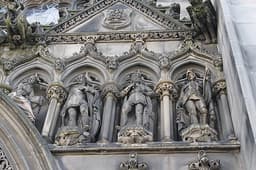
James IV of Scotland
Emperor · Medieval
58.3Total
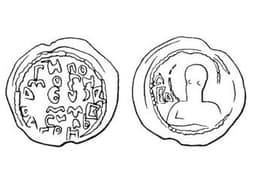
Vladimir Monomakh
Emperor · Medieval
59.4Total
Basic Information
Born
1473
1053
Died
1513
1125
Era
Medieval
Medieval
Nationality
Scotland
Kievan Rus
Occupation
Emperor
Emperor
Civilization
Western
Western
Score Comparison
Military (10%)
50.0
60.0
Political (20%)
60.0
62.7
Influence (20%)
59.0
61.0
Legacy (20%)
48.3
52.0
Leadership (15%)
72.0
68.0
Strategy (15%)
66.3
55.0
TOTAL
58.3
59.4
James IV of Scotland — Complete Timeline
1495 AD
Foundation of the University of AberdeenCultural
James IV issued a papal bull to found the University of Aberdeen, Scotland's third university. The university was established to promote education and learning in the north of Scotland, reflecting James's interest in Renaissance humanism.
FoundationEducationRenaissance
Impact: nationalconstructive
1496 AD
Support for Perkin WarbeckPolitical Action
James IV supported the pretender Perkin Warbeck, who claimed to be Richard of Shrewsbury, by invading northern England. The invasion failed, and James later abandoned Warbeck, but the episode strained relations with England.
InvasionPretenderAnglo-Scottish Relations
Impact: regionaldestructive
1503 AD
Marriage to Margaret TudorPolitical Action◆ Major
James IV married Margaret Tudor, daughter of Henry VII of England, under the Treaty of Perpetual Peace. The marriage united the Scottish and English royal houses and later gave James VI a claim to the English throne.
MarriageTreatyUnion of Crowns
Impact: nationalconstructive
1511 AD
Construction of the Great MichaelOther
James IV commissioned the construction of the Great Michael, the largest warship in Europe at the time. The ship was built at Newhaven and cost a fortune, but it was sold to France after Flodden and never saw significant action.
ShipbuildingNavyExpense
Impact: national
1513 AD
Battle of FloddenWar
James IV led a Scottish invasion of England but was defeated at the Battle of Flodden Field near Branxton, Northumberland. James IV was killed along with many Scottish nobles, making it one of Scotland's worst military defeats.
BattleDefeatDeath
Impact: nationaltragic
Vladimir Monomakh — Complete Timeline
1093 AD
Battle of the Stugna RiverWar
Vladimir Monomakh, then Prince of Chernigov, fought alongside his brother against the Cumans at the Stugna River. The Rus forces were defeated, and his brother drowned during the retreat. This defeat highlighted the Cuman threat.
Cuman WarDefeatBrother's Death
Impact: regionaltragic
1097 AD
Congress of LyubechPolitical Action◆ Major
Vladimir Monomakh participated in the Congress of Lyubech, where Rus princes agreed to end internal strife and each rule their own patrimonies. The agreement temporarily halted civil wars but did not prevent future conflicts.
Peace ConferencePrincely AgreementCivil War
Impact: nationalconstructive
1103 AD
Campaigns Against the CumansWar◆ Major
Vladimir Monomakh led a series of successful campaigns against the Cumans (Polovtsy), culminating in a major victory at the Battle of the Suten River in 1103. These campaigns reduced Cuman raids and secured Rus borders.
Cuman WarMilitary VictoryBorder Security
Impact: regionalconstructive
1113 AD
Reign as Grand Prince of KievPolitical Action
Vladimir Monomakh became Grand Prince of Kiev after a popular uprising. He introduced legal reforms to limit usury and protect the poor, as recorded in the expanded Russkaya Pravda. His reign was a period of stability and unity.
AccessionLegal ReformStability
Impact: nationalconstructive
1117 AD
Writing of the Instruction (Pouchenie)Cultural◆ Major
Vladimir Monomakh wrote the 'Instruction' (Pouchenie) for his sons, a literary work combining autobiography, moral advice, and political guidance. It is one of the earliest surviving works of Old Russian literature.
LiteratureMoral InstructionAutobiography
Impact: nationalconstructive
Expert Analysis
Origins
James IV of Scotland was born on March 17, 1473, the eldest son of King James III and Margaret of Denmark. He grew up in a turbulent royal court, witnessing his father's deposition and death in 1488 after the Battle of Sauchieburn, in which the 15-year-old James was nominally involved. This early trauma shaped his desire for stability. He received a Renaissance education, becoming fluent in Latin, French, German, Italian, Flemish, and Spanish, and took an interest in medicine, alchemy, and naval technology.
Vladimir Monomakh was born in 1053, the son of Vsevolod I of Kiev and a Byzantine princess from the Monomakh family. He was raised in the complex world of Kievan Rus, where princely feuds and external threats from steppe nomads were constant. His name 'Monomakh' means 'one who fights alone' in Greek, a reference to his Byzantine lineage. He learned military strategy and governance from his father, who was a skilled ruler.
Rise to Power
James IV became king at age 15 after his father's death. He quickly consolidated power by punishing those who had killed his father, but also showed mercy. He pacified the Highlands and the Isles, using both force and diplomacy. In 1495, he supported the pretender Perkin Warbeck, invading England briefly—a move that failed but demonstrated his ambition. His marriage to Margaret Tudor in 1503, under the Treaty of Perpetual Peace, secured a temporary peace with England and gave him influence over the English succession.
Vladimir Monomakh rose through the ranks of the Rus princes. He became Prince of Chernigov in 1076 and later Prince of Pereyaslavl. His military campaigns against the Cumans (Polovtsy) earned him fame. In 1097, he participated in the Congress of Lyubech, which aimed to end civil wars among the Rurikid princes. He became Grand Prince of Kiev in 1113 after a popular uprising, chosen by the people to restore order.
Leadership & Governance
James IV was a Renaissance king who promoted arts, education, and law. He founded the University of Aberdeen in 1495, issued a papal bull for its establishment, and supported printing. He also built the Great Michael, the largest warship in Europe, to project naval power. His governance was centralized; he strengthened royal authority over nobles and improved the administration of justice. However, his foreign policy was erratic: he invaded England in 1496 in support of Perkin Warbeck, and again in 1513, leading to disaster.
Vladimir Monomakh was a reformer. As Grand Prince, he introduced the 'Charter of Vladimir Monomakh,' which restricted usury, eased debt burdens, and protected the poor. This legal reform, recorded in the Russkaya Pravda, improved social stability. He also sought to unify the Rus princes against the Cumans, convening councils and leading joint campaigns. His leadership was respected for fairness and military prowess.
Triumph & Tragedy
James IV's greatest triumph was the long period of peace and prosperity in Scotland during his reign. He successfully integrated the Highlands and Lowlands, promoted learning, and built a formidable navy. His marriage to Margaret Tudor seemed to secure peace with England. However, his tragedy was the Battle of Flodden in 1513. Invading England while Henry VIII was in France, he was defeated and killed along with many nobles. The battle was a military disaster: James IV scored 50.0 in military, reflecting this failure. His death plunged Scotland into a long regency.
Vladimir Monomakh's greatest triumphs were his campaigns against the Cumans. He led multiple successful expeditions, culminating in the Battle of the Suten River in 1111, where the Cumans were decisively defeated. This secured the southern borders of Rus. His 'Instruction' (Pouchenie) is a literary masterpiece and a guide for rulers. His tragedy was the internal strife that persisted among the Rus princes despite his efforts. The Battle of the Stugna River in 1093, where he fought alongside his brother, ended in defeat and his brother's death, a personal loss.
Character & Destiny
James IV was energetic, curious, and chivalrous. He loved tournaments and jousting, and was known for his piety. However, his sense of honor led him to invade England despite warnings. His decision to fight at Flodden, even when outnumbered, reflected his belief in personal valor. Historians assess him as a capable administrator but a flawed strategist; his leadership score of 72.0 is offset by a strategy score of 66.3.
Vladimir Monomakh was prudent, diplomatic, and paternal. He wrote his 'Instruction' to teach his sons moral and practical wisdom. He preferred unity and negotiation but was ruthless in war. His political score of 62.7 and leadership of 68.0 reflect his ability to balance force and law. His destiny was to stabilize Rus temporarily, but the system of appanage princes continued to fracture after his death.
Legacy
James IV's legacy is mixed. He is remembered as a Renaissance king who modernized Scotland, but his death at Flodden overshadowed his achievements. The University of Aberdeen endures, and the Great Michael was a symbol of ambition. His marriage to Margaret Tudor eventually led to the Union of the Crowns in 1603. His influence score of 59.0 and legacy of 48.3 reflect this limited long-term impact.
Vladimir Monomakh's legacy is more profound. His legal reforms influenced Russian law for centuries. The 'Instruction' is a classic of Old Russian literature. His campaigns against the Cumans are celebrated in the 'Tale of Igor's Campaign'. He is revered as a wise ruler and a unifier. His influence score of 61.0 and legacy of 52.0 indicate a stronger and more positive historical footprint.
Conclusion
Vladimir Monomakh had greater impact than James IV. Despite a small score gap (59.4 vs 58.3), Monomakh's achievements in law, military, and literature were more enduring. James IV's reign ended in catastrophe that crippled Scotland, whereas Monomakh's reforms and writings shaped Rus civilization. While James IV was a brilliant Renaissance figure, Monomakh's practical governance and cultural contributions give him the edge. The data supports this: Monomakh scored higher in military (60.0 vs 50.0), political (62.7 vs 60.0), and influence (61.0 vs 59.0). James IV's leadership (72.0) was impressive but ultimately misdirected. Monomakh's balanced leadership and lasting legacy make him the more consequential ruler.
Rankings
🥇
Vladimir MonomakhLeader
Mil: 60.0Pol: 62.7Inf: 61.0
59.4
🥈
James IV of Scotland
Mil: 50.0Pol: 60.0Inf: 59.0
58.3
+1.1 behind
How This Comparison Works
Algorithm
Each figure is scored on 6 dimensions (0—100 scale) based on structured historical data: Military (10%), Political (20%), Influence (20%), Legacy (20%), Leadership (15%), Strategy (15%). The weighted total produces the final ranking.
Data Sources
Scores are computed from structured sub-indicators in the database. Scale factors adjust for era (Ancient ×0.85, Modern ×1.0) and civilization size (Eastern ×1.05, Other ×0.80) to account for differences in population and military scale.
Maximum 3 Figures
Comparisons are limited to 2—3 figures to ensure readability and statistical meaningfulness.
Error Margins
±5 points per dimension — Sub-scores are derived from historical records with inherent uncertainty. Two figures within 5 points on a dimension should be considered roughly equivalent in that area.
Total Score Accuracy
±3 points overall — The weighted combination of 6 dimensions produces a total score with approximately ±3 points of uncertainty. Differences of less than 3 points are not statistically significant— the figures are effectively tied.
Known Limitations
- Historical records are incomplete and uneven across civilizations
- Figures from oral-tradition societies may be underrepresented
- Occupation labels can misclassify multi-role figures
- Scores measure capability and impact, not moral character
- Quantitative scoring is a comparison tool, not absolute truth
Capability Radar
Military (10%) — Battles & Warfare
Battles
55
55
Win Rate
40
60
Expansion
45
55
Political (20%) — Governance & Reform
Reform
75
60
Diplomacy
65
70
Economy
70
55
Influence (20%) — Cultural & Global Reach
Cultural
55
55
Global
30
40
Legacy (20%) — Historical Impact
Historical
50
60
Longevity
40
50
Leadership (15%) — Power & Stability
Tenure
70
65
Stability
60
60
Strategy (15%) — Tactics & Innovation
Strategy
50
70
Tactics
60
65
Reform
65
50
Similar Comparisons
Comments & Discussion
No comments yet. Be the first to share your thoughts!