Loading...
This comparison has not been analyzed yet.
One-time AI generation (~1 minute). Scores and timeline are already available below.
Urraca of Leon vs Yeshaq I
Urraca of Leon leads by 0.7 pts · 2 figures compared
…
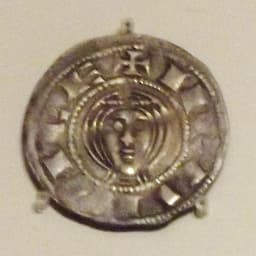
Urraca of Leon
Emperor · Medieval
49.7Total

Yeshaq I
Emperor · Medieval
49.0Total
Basic Information
Born
1079
1390
Died
1126
1429
Era
Medieval
Medieval
Nationality
Castile
Ethiopia
Occupation
Emperor
Emperor
Civilization
Western
Other
Score Comparison
Military (10%)
50.0
50.0
Political (20%)
45.1
42.3
Influence (20%)
56.4
52.5
Legacy (20%)
50.0
41.7
Leadership (15%)
51.9
65.0
Strategy (15%)
35.7
43.7
TOTAL
49.7
49.0
Urraca of Leon — Complete Timeline
1109 AD
Accession as Queen RegnantPolitical Action
Upon the death of her father Alfonso VI, Urraca became the first queen regnant in medieval Europe outside Byzantium, ruling the united kingdoms of Leon and Castile. Her accession was unprecedented and challenged traditional gender norms, leading to conflicts with her husband and nobles.
AccessionQueen RegnantGender Norms
Impact: regionalprogressive
Marriage to Alfonso I of AragonPolitical Action◆ Major
Urraca married Alfonso I of Aragon, the Battler, in an attempt to unite the Christian kingdoms against the Almoravids. The marriage quickly soured due to political and personal conflicts, leading to a civil war between Urraca and her husband that lasted for years.
MarriageAragonCivil War
Impact: regionaldestructive
1110 AD
Civil War with Alfonso IWar◆ Major
Urraca fought a protracted civil war against her husband Alfonso I of Aragon, who sought to control her kingdoms. The conflict involved shifting alliances with nobles and the Church, and resulted in widespread destruction. Urraca eventually secured a separation from Alfonso in 1114.
Civil WarAlfonso ISeparation
Impact: regionaldestructive
1113 AD
Defense of the Realm Against the AlmoravidsWar◆ Major
Urraca led military campaigns against the Almoravid Empire, which had launched invasions into her territory. She successfully defended key cities such as Toledo and Zamora, preventing the Almoravids from conquering the Leonese-Castilian heartland. Her leadership maintained Christian control over central Iberia.
DefenseAlmoravidsReconquista
Impact: regionalconstructive
Yeshaq I — Complete Timeline
1425 AD
Campaign against the Sultanate of AdalWar
Yeshaq I conducted military campaigns against the Sultanate of Adal, seeking to contain its expansion. The conflict was part of the ongoing struggle between the Christian Ethiopian Empire and Muslim states in the Horn of Africa.
Military CampaignAdalConflict
Impact: regional
1428 AD
Embassy to Alfonso V of AragonPolitical Action◆ Major
Yeshaq I sent an embassy to King Alfonso V of Aragon, proposing a military alliance against Muslim powers. This was one of the earliest diplomatic missions from Ethiopia to a European kingdom, though the alliance was not realized.
DiplomacyEthiopian-European RelationsAlliance Proposal
Impact: regional
This comparison has not been analyzed yet.
One-time AI generation (~1 minute). Scores and timeline are already available below.
Rankings
🥇
Urraca of LeonLeader
Mil: 50.0Pol: 45.1Inf: 56.4
49.7
🥈
Yeshaq I
Mil: 50.0Pol: 42.3Inf: 52.5
49.0
+0.7 behind
How This Comparison Works
Algorithm
Each figure is scored on 6 dimensions (0—100 scale) based on structured historical data: Military (10%), Political (20%), Influence (20%), Legacy (20%), Leadership (15%), Strategy (15%). The weighted total produces the final ranking.
Data Sources
Scores are computed from structured sub-indicators in the database. Scale factors adjust for era (Ancient ×0.85, Modern ×1.0) and civilization size (Eastern ×1.05, Other ×0.80) to account for differences in population and military scale.
Maximum 3 Figures
Comparisons are limited to 2—3 figures to ensure readability and statistical meaningfulness.
Error Margins
±5 points per dimension — Sub-scores are derived from historical records with inherent uncertainty. Two figures within 5 points on a dimension should be considered roughly equivalent in that area.
Total Score Accuracy
±3 points overall — The weighted combination of 6 dimensions produces a total score with approximately ±3 points of uncertainty. Differences of less than 3 points are not statistically significant— the figures are effectively tied.
Known Limitations
- Historical records are incomplete and uneven across civilizations
- Figures from oral-tradition societies may be underrepresented
- Occupation labels can misclassify multi-role figures
- Scores measure capability and impact, not moral character
- Quantitative scoring is a comparison tool, not absolute truth
Capability Radar
Military (10%) — Battles & Warfare
Battles
20
20
Win Rate
25
20
Expansion
15
20
Political (20%) — Governance & Reform
Reform
40
30
Diplomacy
50
55
Economy
35
30
Influence (20%) — Cultural & Global Reach
Cultural
40
25
Global
30
20
Legacy (20%) — Historical Impact
Historical
55
30
Longevity
45
20
Leadership (15%) — Power & Stability
Tenure
45
60
Stability
20
40
Strategy (15%) — Tactics & Innovation
Strategy
20
20
Tactics
15
20
Reform
10
15
Similar Comparisons
Comments & Discussion
No comments yet. Be the first to share your thoughts!