Loading...
Shi Jingtang vs Urraca of Leon
Urraca of Leon leads by 3.4 pts · 2 figures compared
…
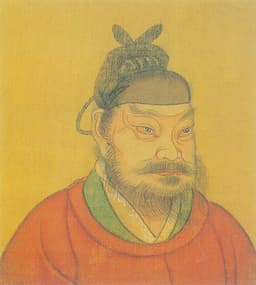
Shi Jingtang
Emperor · Medieval
46.3Total
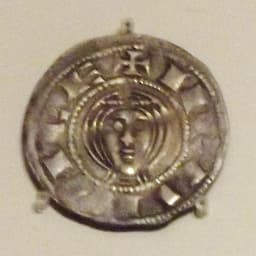
Urraca of Leon
Emperor · Medieval
49.7Total
Basic Information
Born
892
1079
Died
942
1126
Era
Medieval
Medieval
Nationality
China
Castile
Occupation
Emperor
Emperor
Civilization
Eastern
Western
Score Comparison
Military (10%)
40.0
50.0
Political (20%)
39.4
45.1
Influence (20%)
53.3
56.4
Legacy (20%)
49.2
50.0
Leadership (15%)
41.5
51.9
Strategy (15%)
45.0
35.7
TOTAL
46.3
49.7
Shi Jingtang — Complete Timeline
936 AD
Rebelled against Later TangWar◆ Major
Shi Jingtang, a general of Later Tang, rebelled against Emperor Li Congke. He sought help from the Khitan Liao dynasty, promising territorial concessions in return for military support.
Later TangRebellionKhitan Alliance
Impact: regionaldestructive
Founded Later Jin DynastyPolitical Action◆ Major
With Khitan support, Shi Jingtang defeated Later Tang and proclaimed himself emperor, founding the Later Jin dynasty. He ruled as a vassal of the Liao emperor, paying tribute and acknowledging Liao suzerainty.
Later JinDynasty FoundingVassalage
Impact: national
938 AD
Ceded Sixteen Prefectures to LiaoPolitical Action
Shi Jingtang formally ceded the Sixteen Prefectures of the Youyun region to the Khitan Liao dynasty as payment for their aid. This territorial loss weakened Chinese defenses and gave the Liao a strategic foothold for centuries.
Later JinLiaoTerritorial Cession
Impact: regionaldestructive
942 AD
Death and succession crisisPolitical Action
Shi Jingtang died, leaving a weak successor. His death triggered a power struggle that led to the Later Jin's eventual conquest by the Liao dynasty in 947.
Later JinSuccessionDecline
Impact: nationaltragic
Urraca of Leon — Complete Timeline
1109 AD
Accession as Queen RegnantPolitical Action
Upon the death of her father Alfonso VI, Urraca became the first queen regnant in medieval Europe outside Byzantium, ruling the united kingdoms of Leon and Castile. Her accession was unprecedented and challenged traditional gender norms, leading to conflicts with her husband and nobles.
AccessionQueen RegnantGender Norms
Impact: regionalprogressive
Marriage to Alfonso I of AragonPolitical Action◆ Major
Urraca married Alfonso I of Aragon, the Battler, in an attempt to unite the Christian kingdoms against the Almoravids. The marriage quickly soured due to political and personal conflicts, leading to a civil war between Urraca and her husband that lasted for years.
MarriageAragonCivil War
Impact: regionaldestructive
1110 AD
Civil War with Alfonso IWar◆ Major
Urraca fought a protracted civil war against her husband Alfonso I of Aragon, who sought to control her kingdoms. The conflict involved shifting alliances with nobles and the Church, and resulted in widespread destruction. Urraca eventually secured a separation from Alfonso in 1114.
Civil WarAlfonso ISeparation
Impact: regionaldestructive
1113 AD
Defense of the Realm Against the AlmoravidsWar◆ Major
Urraca led military campaigns against the Almoravid Empire, which had launched invasions into her territory. She successfully defended key cities such as Toledo and Zamora, preventing the Almoravids from conquering the Leonese-Castilian heartland. Her leadership maintained Christian control over central Iberia.
DefenseAlmoravidsReconquista
Impact: regionalconstructive
Expert Analysis
Origins
Shi Jingtang was born in 892 in Taiyuan, China, into a Shatuo Turkic military family that served the Tang dynasty. His father was a general, and Shi grew up in a martial environment. He rose through the ranks of the Later Tang army, becoming a trusted general under Emperor Li Cunxu. His early life was marked by the chaos of the Five Dynasties and Ten Kingdoms period, where loyalty was often fleeting.
Urraca of Leon was born in 1080 in Burgos, Castile, the daughter of King Alfonso VI of Leon and Castile and Queen Constance of Burgundy. She was educated in the royal court, learning governance and diplomacy. Her father groomed her for leadership, making her heir after the death of her brother Sancho. She married Raymond of Burgundy in 1091, but his death in 1107 left her a widow with a young son.
Rise to Power
Shi Jingtang's rise came through military prowess. In 936, he rebelled against his brother-in-law, Emperor Li Congke of Later Tang, claiming that Li had usurped the throne. Shi sought aid from the Khitan Liao dynasty, promising to cede the Sixteen Prefectures of the Youyun region (modern-day Beijing and parts of Hebei) and become a vassal. With Liao support, he defeated Later Tang and founded the Later Jin dynasty in 936. He ruled as a puppet emperor, paying tribute to the Liao.
Urraca's rise was dynastic. Upon Alfonso VI's death in 1109, she inherited the kingdoms of Leon, Castile, and Galicia, becoming the first queen regnant in medieval Europe outside Byzantium. To strengthen her position against the Almoravids, she married Alfonso I of Aragon, the Battler, in 1109. The marriage was politically motivated but quickly failed, leading to a papal annulment in 1110. Urraca then faced a civil war against her husband, who sought to control her realms.
Leadership & Governance
Shi Jingtang's leadership was characterized by subservience to the Liao. He centralized power by purging rivals but relied entirely on Khitan military support. His governance focused on maintaining Liao favor, sending annual tribute and accepting Liao oversight. Domestically, he faced rebellions from generals like An Chongrong, whom he executed. His political score of 39.4 reflects his inability to establish independent authority.
Urraca ruled through a combination of military action and diplomacy. She fought a civil war against Alfonso I from 1110 to 1116, eventually securing peace through the Treaty of Tamara in 1127. She defended her realm against Almoravid invasions, leading campaigns in person. She also promoted the Cluniac reform in the church and supported the growth of monastic orders. Her political score of 45.1 indicates more effective governance than Shi, though she faced constant opposition from nobles.
Triumph & Tragedy
Shi Jingtang's greatest success was founding the Later Jin dynasty, but his greatest failure was ceding the Sixteen Prefectures. This loss weakened China's northern defenses for centuries, allowing the Liao to dominate the region. His military score of 40.0 reflects his reliance on foreign aid. His death in 942 triggered a succession crisis that led to the Liao's conquest of Later Jin in 947.
Urraca's triumph was maintaining her throne despite a civil war and external threats. She successfully defended Toledo and other cities from the Almoravids. However, her failure was her inability to fully control her nobility and the ongoing conflict with her husband, which drained resources. Her military score of 50.0 is higher than Shi's, reflecting direct command. She died in 1126, leaving a stable kingdom to her son Alfonso VII.
Character & Destiny
Shi Jingtang was pragmatic but short-sighted. He prioritized immediate power over long-term stability, a decision that shaped his legacy. His character was that of a survivor, willing to sacrifice territory for support. This led to a total score of 46.3, the lowest among comparable figures.
Urraca was determined and resilient. She defied gender norms to rule effectively, but her temper and pride fueled conflicts. Her strategic score of 35.7 is lower than Shi's 45.0, indicating less calculated decision-making. Yet her leadership score of 51.9 exceeds Shi's 41.5, showing better command.
Legacy
Shi Jingtang is remembered as a traitor in Chinese history for ceding the Sixteen Prefectures. This act had lasting consequences, as the region remained under foreign control until the Ming dynasty. His legacy score of 49.2 reflects this negative impact.
Urraca's legacy is as a pioneering queen regnant. She proved that a woman could rule independently in medieval Europe. Her influence score of 56.4 is higher than Shi's 53.3. She is celebrated in Spanish history as a defender of Christian realms.
Conclusion
Urraca of Leon had greater impact than Shi Jingtang. Despite a lower strategic score, her leadership and political acumen allowed her to preserve her kingdom and set a precedent for female rule. Shi's short-sighted cession of territory caused long-term harm to China. Urraca's total score of 49.7 exceeds Shi's 46.3, and her legacy is more positive. The data supports that Urraca was the more effective and influential ruler.
Rankings
🥇
Urraca of LeonLeader
Mil: 50.0Pol: 45.1Inf: 56.4
49.7
🥈
Shi Jingtang
Mil: 40.0Pol: 39.4Inf: 53.3
46.3
+3.4 behind
How This Comparison Works
Algorithm
Each figure is scored on 6 dimensions (0—100 scale) based on structured historical data: Military (10%), Political (20%), Influence (20%), Legacy (20%), Leadership (15%), Strategy (15%). The weighted total produces the final ranking.
Data Sources
Scores are computed from structured sub-indicators in the database. Scale factors adjust for era (Ancient ×0.85, Modern ×1.0) and civilization size (Eastern ×1.05, Other ×0.80) to account for differences in population and military scale.
Maximum 3 Figures
Comparisons are limited to 2—3 figures to ensure readability and statistical meaningfulness.
Error Margins
±5 points per dimension — Sub-scores are derived from historical records with inherent uncertainty. Two figures within 5 points on a dimension should be considered roughly equivalent in that area.
Total Score Accuracy
±3 points overall — The weighted combination of 6 dimensions produces a total score with approximately ±3 points of uncertainty. Differences of less than 3 points are not statistically significant— the figures are effectively tied.
Known Limitations
- Historical records are incomplete and uneven across civilizations
- Figures from oral-tradition societies may be underrepresented
- Occupation labels can misclassify multi-role figures
- Scores measure capability and impact, not moral character
- Quantitative scoring is a comparison tool, not absolute truth
Capability Radar
Military (10%) — Battles & Warfare
Battles
45
20
Win Rate
40
25
Expansion
25
15
Political (20%) — Governance & Reform
Reform
20
40
Diplomacy
60
50
Economy
25
35
Influence (20%) — Cultural & Global Reach
Cultural
20
40
Global
30
30
Legacy (20%) — Historical Impact
Historical
55
55
Longevity
40
45
Leadership (15%) — Power & Stability
Tenure
35
45
Stability
15
20
Strategy (15%) — Tactics & Innovation
Strategy
30
20
Tactics
35
15
Reform
20
10
Similar Comparisons
Comments & Discussion
No comments yet. Be the first to share your thoughts!