Loading...
Muhan Qaghan vs Urraca of Leon
Muhan Qaghan leads by 15.2 pts · 2 figures compared
…
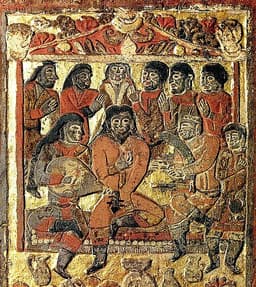
Muhan Qaghan
Emperor · Medieval
64.9Total
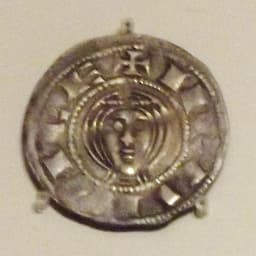
Urraca of Leon
Emperor · Medieval
49.7Total
Basic Information
Born
540
1079
Died
572
1126
Era
Medieval
Medieval
Nationality
Gokturk Khaganate
Castile
Occupation
Emperor
Emperor
Civilization
Eastern
Western
Score Comparison
Military (10%)
74.0
50.0
Political (20%)
72.0
45.1
Influence (20%)
58.3
56.4
Legacy (20%)
54.0
50.0
Leadership (15%)
79.8
51.9
Strategy (15%)
66.3
35.7
TOTAL
64.9
49.7
Muhan Qaghan — Complete Timeline
557 AD
Conquest of the Hephthalite EmpireWar◆ Major
Muhan Qaghan allied with the Sassanid Persian Empire to defeat the Hephthalite Empire in Central Asia. The Hephthalites were crushed, and their territory was divided between the Turks and Persians, with the Turks gaining the eastern regions.
ConquestHephthalites
Impact: regionaldestructive
560 AD
Expansion of the Turkic Khaganate to its greatest extentWar◆ Major
Muhan Qaghan led campaigns that expanded the Turkic Khaganate to its maximum territorial extent, stretching from the Caspian Sea to the borders of China. He conquered the Hephthalites in Central Asia and subjugated many tribes, making the khaganate a dominant power.
ExpansionTurkic Empire
Impact: regionalconstructive
565 AD
Suppression of internal revoltsWar
Muhan Qaghan faced revolts from subject tribes, including the Tiele and other steppe peoples. He brutally suppressed these uprisings, executing many leaders and forcibly relocating populations to maintain control over the vast khaganate.
Revolt SuppressionInternal Conflict
Impact: regionaldestructive
568 AD
Diplomatic relations with the Byzantine EmpirePolitical Action◆ Major
Muhan Qaghan sent an embassy to the Byzantine Empire, establishing diplomatic and trade relations. This alliance was aimed against the Sassanid Persians, and it opened the Silk Road to Turkic merchants, increasing the khaganate's wealth and influence.
DiplomacyByzantine-Turkic Alliance
Impact: globalconstructive
Urraca of Leon — Complete Timeline
1109 AD
Accession as Queen RegnantPolitical Action
Upon the death of her father Alfonso VI, Urraca became the first queen regnant in medieval Europe outside Byzantium, ruling the united kingdoms of Leon and Castile. Her accession was unprecedented and challenged traditional gender norms, leading to conflicts with her husband and nobles.
AccessionQueen RegnantGender Norms
Impact: regionalprogressive
Marriage to Alfonso I of AragonPolitical Action◆ Major
Urraca married Alfonso I of Aragon, the Battler, in an attempt to unite the Christian kingdoms against the Almoravids. The marriage quickly soured due to political and personal conflicts, leading to a civil war between Urraca and her husband that lasted for years.
MarriageAragonCivil War
Impact: regionaldestructive
1110 AD
Civil War with Alfonso IWar◆ Major
Urraca fought a protracted civil war against her husband Alfonso I of Aragon, who sought to control her kingdoms. The conflict involved shifting alliances with nobles and the Church, and resulted in widespread destruction. Urraca eventually secured a separation from Alfonso in 1114.
Civil WarAlfonso ISeparation
Impact: regionaldestructive
1113 AD
Defense of the Realm Against the AlmoravidsWar◆ Major
Urraca led military campaigns against the Almoravid Empire, which had launched invasions into her territory. She successfully defended key cities such as Toledo and Zamora, preventing the Almoravids from conquering the Leonese-Castilian heartland. Her leadership maintained Christian control over central Iberia.
DefenseAlmoravidsReconquista
Impact: regionalconstructive
Expert Analysis
Origins
Muhan Qaghan was born around 554 AD into the Ashina clan, the ruling family of the Gokturk Khaganate. His father, Bumin Qaghan, had founded the khaganate in 552 AD after rebelling against the Rouran Khaganate. Muhan's early life was steeped in the nomadic warrior culture of the steppes, where horsemanship and archery were essential skills. He received training in military tactics and tribal diplomacy, preparing him for leadership. His upbringing in a rapidly expanding empire gave him firsthand experience in managing conquests and alliances.
Urraca of Leon was born in 1079 to King Alfonso VI of Leon and Castile, and his second wife, Constance of Burgundy. As a princess, she received an education typical for medieval royalty, including reading, writing, and political affairs. Her father's court was a center of learning and religious fervor during the Reconquista. Urraca's early life was marked by her father's military campaigns against the Almoravids and the complex politics of the Iberian Christian kingdoms. She was married at age eight to Raymond of Burgundy, a nobleman who became count of Galicia, but he died in 1107, leaving her a widow.
Rise to Power
Muhan Qaghan ascended to the throne in 553 AD after his father Bumin's death. He quickly consolidated power by eliminating rivals within the Ashina clan and subjugating neighboring tribes. His key turning point came around 557 AD when he allied with the Sassanid Persian Empire to defeat the Hephthalite Empire. This alliance crushed the Hephthalites, who controlled Central Asia, and divided their territory. Muhan's forces pushed eastward, conquering the Tiele tribes and expanding the khaganate to its greatest extent, from the Caspian Sea to the borders of China. By 560 AD, he had established the Gokturk Khaganate as the dominant power in Eurasia.
Urraca became queen regnant in 1109 upon the death of her father Alfonso VI. She inherited the united kingdoms of Leon, Castile, and Galicia, making her the first queen regnant in medieval Europe outside Byzantium. To strengthen her position against the Almoravids, she married Alfonso I of Aragon in 1109, hoping to unite Christian forces. However, the marriage quickly soured as Alfonso I sought to control her kingdoms, leading to a civil war that lasted from 1110 to 1117. Urraca fought to maintain her independence, shifting alliances between her son Alfonso VII and her husband. She successfully defended her realm, eventually separating from Alfonso I in 1114.
Leadership & Governance
Muhan Qaghan ruled with an iron fist, relying on military might and fear to maintain control. He organized the khaganate into a centralized hierarchy with the Ashina clan at the top. He appointed loyal governors to oversee conquered peoples, often using brutal suppression to quell revolts. For example, when the Tiele tribes rebelled around 560 AD, he executed many leaders and redistributed their lands. His governance was focused on expansion and tribute extraction, with little emphasis on administrative reforms. However, he established diplomatic ties with the Byzantine Empire in 568 AD, sending an embassy that opened trade routes and formed an anti-Sassanid alliance.
Urraca's leadership was characterized by political maneuvering and resilience. She faced constant challenges from her husband, son, and nobility. She used marriage alliances and strategic concessions to retain power. For instance, she granted autonomy to Galicia to secure support from its count. She also relied on the Church for legitimacy, presenting herself as a defender of Christianity against the Almoravids. Her military campaigns were defensive, focusing on protecting key cities like Toledo and Zamora. She lacked the resources for large-scale conquest but effectively used guerrilla tactics and fortifications. Her governance was marked by legal reforms, including the confirmation of fueros (charters) that granted rights to towns.
Triumph & Tragedy
Muhan Qaghan's greatest success was the expansion of the Gokturk Khaganate to its maximum extent, an area spanning over 3,000 kilometers. He defeated the Hephthalite Empire and subjugated numerous steppe tribes, bringing the Silk Road under Turkic control. His alliance with the Byzantine Empire demonstrated his diplomatic skill. However, his greatest failure was the inability to create a stable administrative system. After his death in 572 AD, the khaganate fragmented due to internal revolts and succession disputes. His brutal suppression of tribes sowed resentment that later erupted into rebellions. He scored 74.0 in military and 79.8 in leadership, reflecting his conquests but also his reliance on force.
Urraca's greatest triumph was preserving her inheritance and establishing the precedent of female rule. She successfully defended her kingdoms against the Almoravids and maintained Leon-Castile as a major Christian power. Her son Alfonso VII eventually inherited a stable realm. However, her marriage to Alfonso I of Aragon was a disaster, leading to a destructive civil war that weakened both kingdoms. She also faced constant rebellion from her nobility, who questioned her authority. Her political score of 45.1 reflects her struggles in a male-dominated society. She died in 1126, possibly from childbirth complications, leaving a mixed legacy.
Character & Destiny
Muhan Qaghan was a ruthless and ambitious ruler, driven by a desire for conquest and control. He made decisions quickly and decisively, often resorting to violence to solve problems. His character was shaped by the steppe tradition of strong leadership, where mercy was seen as weakness. This approach brought him short-term success but long-term instability. Historical assessments note that he was a capable military commander but a poor administrator. His destiny was to build an empire that collapsed soon after his death, largely due to his failure to integrate conquered peoples.
Urraca was a determined and intelligent woman who fought against the limitations of her gender. She was pragmatic, using marriage and diplomacy as tools. However, she was also prone to making poor personal choices, such as marrying Alfonso I without securing her position. Her character was marked by stubbornness and a fierce desire for independence. She faced constant opposition from men who saw her as weak, but she proved them wrong by surviving numerous crises. Her destiny was to be a pioneer for female rulers, but her reign was overshadowed by conflict and instability.
Legacy
Muhan Qaghan's legacy is mixed. He expanded the Gokturk Khaganate to its peak, but his empire fragmented after his death. The Gokturk Khaganate eventually fell to the Tang dynasty and internal divisions. However, his conquests laid the foundation for later Turkic empires, such as the Uyghur Khaganate. His diplomatic contacts with Byzantium opened trade routes that continued for centuries. He scored 54.0 in legacy, reflecting his limited long-term impact. Today, he is remembered as a key figure in Turkic history but not as a transformative leader.
Urraca's legacy is more significant in terms of political precedent. She proved that a woman could rule in medieval Europe, paving the way for later queens like Eleanor of Aquitaine. Her defense of her kingdoms helped preserve Christian territories in Spain. Her son Alfonso VII continued her work, unifying Leon and Castile. She scored 50.0 in legacy, indicating her role as a trailblazer. However, her reign was too turbulent to achieve lasting reforms. Historians view her as a transitional figure who struggled against the constraints of her time.
Conclusion
Muhan Qaghan had a greater overall impact on history than Urraca of Leon, as measured by his total score of 64.9 versus her 49.7. His military conquests reshaped the political map of Eurasia, controlling the Silk Road and influencing the balance of power between Byzantium and Persia. Urraca's achievements were more symbolic than substantive; she maintained her kingdom but did not expand it. While she broke gender barriers, her reign was marked by civil war and instability. Muhan's expansionist policies had wider repercussions, even if his empire was short-lived. Therefore, Muhan Qaghan emerges as the more impactful figure in terms of scale and geopolitical influence.
Rankings
🥇
Muhan QaghanLeader
Mil: 74.0Pol: 72.0Inf: 58.3
64.9
🥈
Urraca of Leon
Mil: 50.0Pol: 45.1Inf: 56.4
49.7
+15.2 behind
How This Comparison Works
Algorithm
Each figure is scored on 6 dimensions (0—100 scale) based on structured historical data: Military (10%), Political (20%), Influence (20%), Legacy (20%), Leadership (15%), Strategy (15%). The weighted total produces the final ranking.
Data Sources
Scores are computed from structured sub-indicators in the database. Scale factors adjust for era (Ancient ×0.85, Modern ×1.0) and civilization size (Eastern ×1.05, Other ×0.80) to account for differences in population and military scale.
Maximum 3 Figures
Comparisons are limited to 2—3 figures to ensure readability and statistical meaningfulness.
Error Margins
±5 points per dimension — Sub-scores are derived from historical records with inherent uncertainty. Two figures within 5 points on a dimension should be considered roughly equivalent in that area.
Total Score Accuracy
±3 points overall — The weighted combination of 6 dimensions produces a total score with approximately ±3 points of uncertainty. Differences of less than 3 points are not statistically significant— the figures are effectively tied.
Known Limitations
- Historical records are incomplete and uneven across civilizations
- Figures from oral-tradition societies may be underrepresented
- Occupation labels can misclassify multi-role figures
- Scores measure capability and impact, not moral character
- Quantitative scoring is a comparison tool, not absolute truth
Capability Radar
Military (10%) — Battles & Warfare
Battles
75
20
Win Rate
80
25
Expansion
90
15
Political (20%) — Governance & Reform
Reform
65
40
Diplomacy
75
50
Economy
60
35
Influence (20%) — Cultural & Global Reach
Cultural
55
40
Global
55
30
Legacy (20%) — Historical Impact
Historical
65
55
Longevity
50
45
Leadership (15%) — Power & Stability
Tenure
80
45
Stability
70
20
Strategy (15%) — Tactics & Innovation
Strategy
85
20
Tactics
70
15
Reform
60
10
Similar Comparisons
Comments & Discussion
No comments yet. Be the first to share your thoughts!