Loading...
Ulugh Beg vs Zhu Qizhen
Ulugh Beg leads by 8.4 pts · 2 figures compared
…
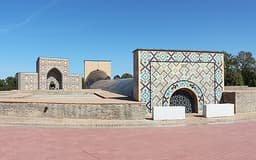
Ulugh Beg
Emperor · Medieval
50.7Total
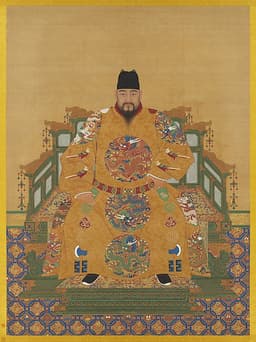
Zhu Qizhen
Emperor · Medieval
42.3Total
Basic Information
Born
1394
1427
Died
1449
1464
Era
Medieval
Medieval
Nationality
Timurid Empire
China
Occupation
Emperor
Emperor
Civilization
Middle Eastern
Eastern
Score Comparison
Military (10%)
50.0
14.9
Political (20%)
37.9
32.2
Influence (20%)
68.0
51.8
Legacy (20%)
55.0
45.0
Leadership (15%)
41.5
48.4
Strategy (15%)
30.3
45.0
TOTAL
50.7
42.3
Ulugh Beg — Complete Timeline
1420 AD
Patronage of Mathematics and AstronomyCultural
Ulugh Beg gathered scholars like Al-Kashi and Qadi Zada al-Rumi at his court in Samarkand. He funded the study of mathematics, trigonometry, and astronomy, making Samarkand a leading scientific center of the 15th century.
SciencePatronageSamarkand
Impact: regionalconstructive
1424 AD
Construction of the Ulugh Beg ObservatoryInvention◆ Major
Ulugh Beg built a large observatory in Samarkand, equipped with a 40-meter sextant. He used it to compile the Zij-i Sultani, a star catalog of over 1,000 stars, which was the most accurate in the world for 250 years.
AstronomyScienceSamarkand
Impact: globalconstructive
1437 AD
Publication of the Zij-i SultaniCultural◆ Major
Ulugh Beg published the Zij-i Sultani, a star catalog and astronomical tables. It corrected errors in Ptolemy's Almagest and provided accurate positions of stars and planets, influencing later astronomers like Copernicus and Tycho Brahe.
AstronomyScienceStar Catalog
Impact: globalconstructive
1447 AD
Accession as Timurid SultanPolitical Action◆ Major
Upon the death of his father Shah Rukh, Ulugh Beg became the ruler of the Timurid Empire, based in Samarkand. His reign was short and marked by conflict with his nephew Abd al-Latif and other rivals.
SuccessionTimurid EmpireSamarkand
Impact: regional
1449 AD
Defeat and Execution by Abd al-LatifPolitical Action
Ulugh Beg was defeated in battle by his son Abd al-Latif, who had rebelled against him. He was captured and executed on Abd al-Latif's orders, ending his reign. His death marked the decline of the Timurid Empire.
DeathCivil WarTimurid Decline
Impact: regionaltragic
Zhu Qizhen — Complete Timeline
1435 AD
Accession as Zhengtong EmperorPolitical Action◆ Major
Zhu Qizhen ascended the Ming throne as the Zhengtong Emperor at age eight, following the death of his father, the Xuande Emperor. A regency council led by the Grand Empress Dowager and senior officials governed until he came of age.
Ming DynastySuccessionRegency
Impact: national
1449 AD
Tumu Crisis: Capture by OiratsWar
The Zhengtong Emperor personally led a poorly planned campaign against the Oirat Mongols under Esen Taishi. At the Battle of Tumu Fortress, the Ming army was annihilated, and the emperor was captured, becoming a prisoner of the Oirats for nearly a year.
Tumu CrisisMing DynastyMilitary Disaster
Impact: nationaltragic
1457 AD
Abolition of the Eunuch DirectorateReform
The Tianshun Emperor abolished the Directorate of Ceremonial, the powerful eunuch agency that had dominated court politics under his earlier reign. This move aimed to reduce eunuch influence, though it was partially reversed later.
Eunuch ReformGovernmentMing Dynasty
Impact: nationalconstructive
Restoration as Tianshun EmperorPolitical Action◆ Major
After being released in 1450 and placed under house arrest by his brother, the Jingtai Emperor, Zhu Qizhen staged a coup in 1457 with the help of loyalist officials. He reclaimed the throne as the Tianshun Emperor, executing his brother's supporters.
CoupRestorationMing Dynasty
Impact: nationaldestructive
Execution of Yu QianPolitical Action◆ Major
After his restoration, the Tianshun Emperor ordered the execution of Yu Qian, the minister who had defended Beijing during the Tumu Crisis and supported the Jingtai Emperor. This act removed a key statesman and deepened political divisions.
ExecutionPolitical PurgeMing Court
Impact: nationaldestructive
1464 AD
Death and Legacy of InstabilityOther◆ Major
The Tianshun Emperor died after a second reign of seven years. His capture and restoration had weakened the Ming monarchy, leading to increased factionalism and setting a precedent for eunuch influence that plagued later reigns.
DeathLegacyMing Decline
Impact: national
Expert Analysis
Origins
Ulugh Beg was born in 1394 in Sultaniyya, Persia, as the grandson of the conqueror Timur (Tamerlane). His father was Shah Rukh, who ruled the eastern Timurid Empire. Ulugh Beg grew up in a court that valued learning; he studied under the mathematician Ghiyath al-Din Jamshid al-Kashi and showed early aptitude for astronomy. He was appointed governor of Samarkand in 1409 at age 15, where he began attracting scholars.
Zhu Qizhen was born in 1427 in Beijing, China, as the eldest son of the Xuande Emperor of the Ming dynasty. He was raised in the Forbidden City, receiving a Confucian education. His father died when he was eight, and he ascended the throne as the Zhengtong Emperor in 1435. A regency council led by the Empress Dowager and three senior eunuchs governed until he assumed personal rule in 1442.
Rise to Power
Ulugh Beg's rise was gradual. He governed Samarkand under his father Shah Rukh for decades, focusing on intellectual pursuits. In 1447, upon Shah Rukh's death, Ulugh Beg became the Timurid Sultan. However, his reign was contested by his nephew Abd al-Latif, who rebelled. Ulugh Beg's military score of 50.0 and political score of 37.9 reflect his inability to secure power through force or diplomacy.
Zhu Qizhen's rise was automatic due to primogeniture. He became emperor at age eight, but real power lay with the Grand Secretariat and eunuchs. His political score of 32.2 indicates weak control over the court. In 1449, he was persuaded by eunuch Wang Zhen to lead a campaign against the Oirat Mongols, leading to the Tumu Crisis.
Leadership & Governance
Ulugh Beg's leadership (score 41.5) was scholarly. He prioritized science over administration, funding the construction of the Ulugh Beg Observatory in Samarkand in the 1420s. The observatory featured a 40-meter meridian arc (sextant) for measuring star positions. He gathered a team of astronomers, including al-Kashi and Qadi Zada al-Rumi, and produced the Zij-i Sultani, a star catalog of over 1,000 stars with unprecedented accuracy. However, his neglect of governance led to rebellion.
Zhu Qizhen's leadership (score 48.4) was erratic. He relied on eunuchs like Wang Zhen, whose advice led to the disastrous Tumu Campaign. After his capture, his brother Zhu Qiyu became emperor (Jingtai Emperor). Upon his release, Zhu Qizhen was placed under house arrest. In 1457, he staged a coup with support from disgruntled officials, regaining the throne as the Tianshun Emperor. He then executed Yu Qian, the minister who had defended Beijing during the crisis, a move that damaged his legacy.
Triumph & Tragedy
Ulugh Beg's greatest triumph was scientific: the Zij-i Sultani, which corrected errors in Ptolemy's Almagest and influenced later Islamic and European astronomy. His observatory was the finest of its time. His tragedy was political: he was defeated and executed by his own son Abd al-Latif in 1449. His short reign as sultan (two years) ended in failure, with his military score of 50.0 proving insufficient.
Zhu Qizhen's tragedy was the Tumu Crisis: his army of 500,000 was routed by Esen Taishi's Oirats, and he was captured. This was a humiliating blow to Ming prestige. His triumph was his restoration in 1457, but it came at the cost of executing Yu Qian and purging loyal officials. His legacy score of 45.0 reflects his role in weakening the Ming monarchy.
Character & Destiny
Ulugh Beg was a scholar first, ruler second. His personality was reflective and intellectual, but he lacked the ruthlessness needed to maintain power. His strategy score of 30.3 shows poor political judgment. He trusted his son, who betrayed him. His destiny was to be remembered as a scientist, not a king.
Zhu Qizhen was impulsive and easily influenced. His decision to lead the campaign personally was reckless. His character score of 48.4 suggests average leadership, but his lack of strategic sense (score 45.0) led to disaster. His destiny was to be a cautionary tale of imperial overreach.
Legacy
Ulugh Beg's legacy is immense in astronomy. His star catalog was used for centuries, and his observatory influenced later Islamic and European scientists. He scored 68.0 in influence and 55.0 in legacy. The Zij-i Sultani was printed in Europe and used by Copernicus. His name appears on a lunar crater. He is considered one of the greatest astronomers of the medieval world.
Zhu Qizhen's legacy is mixed. He is known for the Tumu Crisis, which weakened the Ming dynasty and led to increased factionalism. His restoration set a precedent for deposed emperors to reclaim power. His influence score of 51.8 and legacy score of 45.0 reflect his negative impact on Ming stability. He is not remembered for any positive achievements.
Conclusion
Ulugh Beg had greater impact than Zhu Qizhen. Despite his political failure, his scientific contributions were lasting and global. His total score of 50.7 exceeds Zhu Qizhen's 42.3 by 8.4 points. While Zhu Qizhen's reign had significant consequences for China, they were largely negative. Ulugh Beg's star catalog advanced human knowledge, making him the more influential figure. The astronomer-king who studied the stars left a brighter legacy than the emperor who lost his throne.
Rankings
🥇
Ulugh BegLeader
Mil: 50.0Pol: 37.9Inf: 68.0
50.7
🥈
Zhu Qizhen
Mil: 14.9Pol: 32.2Inf: 51.8
42.3
+8.4 behind
How This Comparison Works
Algorithm
Each figure is scored on 6 dimensions (0—100 scale) based on structured historical data: Military (10%), Political (20%), Influence (20%), Legacy (20%), Leadership (15%), Strategy (15%). The weighted total produces the final ranking.
Data Sources
Scores are computed from structured sub-indicators in the database. Scale factors adjust for era (Ancient ×0.85, Modern ×1.0) and civilization size (Eastern ×1.05, Other ×0.80) to account for differences in population and military scale.
Maximum 3 Figures
Comparisons are limited to 2—3 figures to ensure readability and statistical meaningfulness.
Error Margins
±5 points per dimension — Sub-scores are derived from historical records with inherent uncertainty. Two figures within 5 points on a dimension should be considered roughly equivalent in that area.
Total Score Accuracy
±3 points overall — The weighted combination of 6 dimensions produces a total score with approximately ±3 points of uncertainty. Differences of less than 3 points are not statistically significant— the figures are effectively tied.
Known Limitations
- Historical records are incomplete and uneven across civilizations
- Figures from oral-tradition societies may be underrepresented
- Occupation labels can misclassify multi-role figures
- Scores measure capability and impact, not moral character
- Quantitative scoring is a comparison tool, not absolute truth
Capability Radar
Military (10%) — Battles & Warfare
Battles
20
10
Win Rate
20
5
Expansion
10
5
Political (20%) — Governance & Reform
Reform
40
30
Diplomacy
25
20
Economy
35
30
Influence (20%) — Cultural & Global Reach
Cultural
70
30
Global
65
20
Legacy (20%) — Historical Impact
Historical
75
40
Longevity
70
30
Leadership (15%) — Power & Stability
Tenure
30
40
Stability
20
20
Strategy (15%) — Tactics & Innovation
Strategy
15
5
Tactics
15
5
Reform
10
5
Similar Comparisons
Comments & Discussion
No comments yet. Be the first to share your thoughts!