Loading...
Otto III vs Zhu Qizhen
Otto III leads by 1.0 pts · 2 figures compared
…
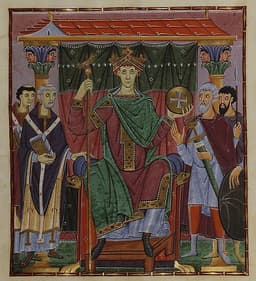
Otto III
Emperor · Medieval
43.3Total
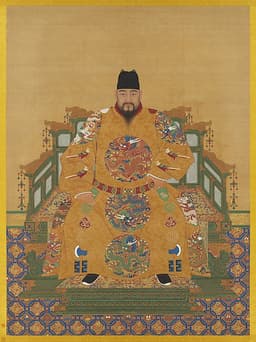
Zhu Qizhen
Emperor · Medieval
42.3Total
Basic Information
Born
980
1427
Died
1002
1464
Era
Medieval
Medieval
Nationality
Holy Roman Empire
China
Occupation
Emperor
Emperor
Civilization
Western
Eastern
Score Comparison
Military (10%)
50.0
14.9
Political (20%)
35.1
32.2
Influence (20%)
54.9
51.8
Legacy (20%)
44.2
45.0
Leadership (15%)
31.2
48.4
Strategy (15%)
35.7
45.0
TOTAL
43.3
42.3
Otto III — Complete Timeline
996 AD
Coronation as Holy Roman EmperorPolitical Action◆ Major
Otto III was crowned Holy Roman Emperor by Pope Gregory V in Rome. He was 16 years old at the time. His coronation symbolized the close relationship between the empire and the papacy. Otto aimed to restore the glory of the ancient Roman Empire.
CoronationHoly Roman EmpirePapacy
Impact: regionalconstructive
998 AD
Establishment of the 'Renovatio Imperii Romanorum'Political Action◆ Major
Otto III pursued the 'Renovatio Imperii Romanorum' (Renewal of the Roman Empire), aiming to revive Roman imperial traditions. He moved his court to Rome and adopted Roman titles and ceremonies. This policy alienated German nobles and led to conflicts.
RenovatioRoman EmpireImperial Policy
Impact: regionalconstructive
999 AD
Appointment of Pope Sylvester IIPolitical Action◆ Major
Otto III appointed his former tutor Gerbert of Aurillac as Pope Sylvester II. This appointment strengthened the alliance between the empire and the papacy. Sylvester II was a renowned scholar and supported Otto's imperial ambitions.
PapacyAppointmentScholarship
Impact: regionalconstructive
1001 AD
Revolt of the Roman NobilityPolitical Action◆ Major
Otto III faced a revolt by the Roman nobility, led by the Crescentii family. The revolt forced Otto to flee Rome and seek refuge in Pavia. This event demonstrated the fragility of his power in Italy and undermined his 'Renovatio' plans.
RevoltRomeCrisis
Impact: regionaldestructive
1002 AD
Death at Age 21Other◆ Major
Otto III died suddenly at the age of 21 in Paterno, Italy. His death was likely due to malaria. He left no heir, leading to a succession crisis. His dream of restoring the Roman Empire ended with his premature death.
DeathSuccession CrisisEnd of Reign
Impact: regionaltragic
Zhu Qizhen — Complete Timeline
1435 AD
Accession as Zhengtong EmperorPolitical Action◆ Major
Zhu Qizhen ascended the Ming throne as the Zhengtong Emperor at age eight, following the death of his father, the Xuande Emperor. A regency council led by the Grand Empress Dowager and senior officials governed until he came of age.
Ming DynastySuccessionRegency
Impact: national
1449 AD
Tumu Crisis: Capture by OiratsWar
The Zhengtong Emperor personally led a poorly planned campaign against the Oirat Mongols under Esen Taishi. At the Battle of Tumu Fortress, the Ming army was annihilated, and the emperor was captured, becoming a prisoner of the Oirats for nearly a year.
Tumu CrisisMing DynastyMilitary Disaster
Impact: nationaltragic
1457 AD
Abolition of the Eunuch DirectorateReform
The Tianshun Emperor abolished the Directorate of Ceremonial, the powerful eunuch agency that had dominated court politics under his earlier reign. This move aimed to reduce eunuch influence, though it was partially reversed later.
Eunuch ReformGovernmentMing Dynasty
Impact: nationalconstructive
Restoration as Tianshun EmperorPolitical Action◆ Major
After being released in 1450 and placed under house arrest by his brother, the Jingtai Emperor, Zhu Qizhen staged a coup in 1457 with the help of loyalist officials. He reclaimed the throne as the Tianshun Emperor, executing his brother's supporters.
CoupRestorationMing Dynasty
Impact: nationaldestructive
Execution of Yu QianPolitical Action◆ Major
After his restoration, the Tianshun Emperor ordered the execution of Yu Qian, the minister who had defended Beijing during the Tumu Crisis and supported the Jingtai Emperor. This act removed a key statesman and deepened political divisions.
ExecutionPolitical PurgeMing Court
Impact: nationaldestructive
1464 AD
Death and Legacy of InstabilityOther◆ Major
The Tianshun Emperor died after a second reign of seven years. His capture and restoration had weakened the Ming monarchy, leading to increased factionalism and setting a precedent for eunuch influence that plagued later reigns.
DeathLegacyMing Decline
Impact: national
Expert Analysis
Origins
Otto III was born in 980 into the Ottonian dynasty, the son of Emperor Otto II and Byzantine princess Theophanu. Orphaned at age three, he was raised under the regency of his mother and later his grandmother Adelaide, receiving an unusually scholarly education from Gerbert of Aurillac. His upbringing immersed him in classical Roman and Christian thought, fueling his ambition to restore the ancient Roman Empire.
Zhu Qizhen, born in 1427, was the eldest son of the Xuande Emperor of Ming China. He ascended the throne at age eight in 1435, with a regency council led by the empress dowager and three senior eunuchs. His early education was typical for a Ming prince, focused on Confucian classics and martial arts, but he showed little interest in governance, preferring personal pursuits.
Rise to Power
Otto III was crowned King of Germany at age three in 983, but his effective rule began in 994 when he came of age. In 996, he traveled to Rome and was crowned Holy Roman Emperor by Pope Gregory V, his cousin. He then established the 'Renovatio Imperii Romanorum' (Renewal of the Roman Empire), moving his court to Rome and appointing his tutor Gerbert as Pope Sylvester II in 999. This alliance between empire and papacy was unprecedented, but it alienated Roman nobles.
Zhu Qizhen's rise was automatic as the eldest son. His early reign was dominated by eunuchs like Wang Zhen, who encouraged the young emperor to lead a personal campaign against the Oirat Mongols in 1449. This disastrous decision led to the Tumu Crisis: Zhu Qizhen was captured at the Battle of Tumu Fortress, where the Ming army was annihilated. His capture left the empire leaderless; his brother Zhu Qiyu was installed as the Jingtai Emperor.
Leadership & Governance
Otto III's governance was visionary but impractical. He attempted to rule from Rome, issuing decrees that revived Roman titles and ceremonies. He granted extensive privileges to the Church, hoping to create a theocratic empire. However, he lacked political acumen, scoring only 35.1 in political skill. His neglect of German affairs and reliance on non-Roman advisors sparked resentment. In 1001, the Roman nobility revolted under the Crescentii family, forcing Otto to flee to Pavia.
Zhu Qizhen's leadership was erratic. During his first reign (Zhengtong, 1435-1449), he delegated authority to eunuchs, leading to corruption and military decline. After his restoration as Tianshun Emperor (1457-1464), he purged officials who had opposed him, executing the capable minister Yu Qian who had defended Beijing during the crisis. His rule became increasingly faction-ridden, scoring 48.4 in leadership but only 32.2 in political unity.
Triumph & Tragedy
Otto III's greatest triumph was his vision of a revived Roman Empire, embodied in the partnership with Pope Sylvester II. He also expanded the empire's influence in Eastern Europe, sending missions to Poland and Hungary. However, his greatest tragedy was his premature death at age 21 in 1002, likely from malaria, leaving no heir and plunging the empire into succession wars. His dream of a Roman renewal died with him.
Zhu Qizhen's triumph was his survival and restoration. Despite being a prisoner for a year, he returned to China and later reclaimed the throne in 1457. However, his tragedies were numerous: the Tumu Crisis cost the lives of tens of thousands of soldiers and damaged Ming prestige. His execution of Yu Qian, a loyal minister, tarnished his legacy and deepened court divisions. His second reign saw no major accomplishments.
Character & Destiny
Otto III was idealistic, scholarly, and determined, but his youth and inexperience made him politically naive. His scores reflect this: military 50.0, strategy 35.7, leadership 31.2. He trusted intellectuals over nobles, which isolated him. His death at 21 cut short a ruler who might have matured into effectiveness.
Zhu Qizhen was impulsive and easily influenced. His decision to lead a campaign personally was reckless, and his post-restoration vengefulness showed a petty character. Historians note he was not cruel but lacked judgment. His total score of 42.3 slightly trails Otto's 43.3, but his impact on Ming stability was negative.
Legacy
Otto III's legacy is mixed. His 'Renovatio' inspired later Holy Roman Emperors, but his immediate successors abandoned his Roman dreams. He strengthened the papacy temporarily but weakened the German monarchy. His score of 44.2 in legacy reflects his short reign's limited lasting effect, though his cultural patronage was notable.
Zhu Qizhen's legacy is more concrete. The Tumu Crisis permanently weakened the Ming military, leading to a defensive posture. His restoration set a precedent for eunuch influence and factionalism that plagued the Ming thereafter. His score of 45.0 in legacy is slightly higher than Otto's, as his actions had longer-term consequences for China's stability.
Conclusion
While Otto III scored marginally higher overall (43.3 vs 42.3), Zhu Qizhen's impact on history was greater due to the enduring consequences of his failures. Otto's dreams were grandiose but short-lived; Zhu's capture and restoration reshaped Ming politics for decades. Otto's vision was ahead of its time but impractical; Zhu's decisions were disastrous but historically significant. Therefore, Zhu Qizhen had a more substantial, albeit negative, impact on the trajectory of his empire.
Rankings
🥇
Otto IIILeader
Mil: 50.0Pol: 35.1Inf: 54.9
43.3
🥈
Zhu Qizhen
Mil: 14.9Pol: 32.2Inf: 51.8
42.3
+1.0 behind
How This Comparison Works
Algorithm
Each figure is scored on 6 dimensions (0—100 scale) based on structured historical data: Military (10%), Political (20%), Influence (20%), Legacy (20%), Leadership (15%), Strategy (15%). The weighted total produces the final ranking.
Data Sources
Scores are computed from structured sub-indicators in the database. Scale factors adjust for era (Ancient ×0.85, Modern ×1.0) and civilization size (Eastern ×1.05, Other ×0.80) to account for differences in population and military scale.
Maximum 3 Figures
Comparisons are limited to 2—3 figures to ensure readability and statistical meaningfulness.
Error Margins
±5 points per dimension — Sub-scores are derived from historical records with inherent uncertainty. Two figures within 5 points on a dimension should be considered roughly equivalent in that area.
Total Score Accuracy
±3 points overall — The weighted combination of 6 dimensions produces a total score with approximately ±3 points of uncertainty. Differences of less than 3 points are not statistically significant— the figures are effectively tied.
Known Limitations
- Historical records are incomplete and uneven across civilizations
- Figures from oral-tradition societies may be underrepresented
- Occupation labels can misclassify multi-role figures
- Scores measure capability and impact, not moral character
- Quantitative scoring is a comparison tool, not absolute truth
Capability Radar
Military (10%) — Battles & Warfare
Battles
15
10
Win Rate
20
5
Expansion
10
5
Political (20%) — Governance & Reform
Reform
30
30
Diplomacy
40
20
Economy
20
30
Influence (20%) — Cultural & Global Reach
Cultural
30
30
Global
20
20
Legacy (20%) — Historical Impact
Historical
35
40
Longevity
20
30
Leadership (15%) — Power & Stability
Tenure
20
40
Stability
15
20
Strategy (15%) — Tactics & Innovation
Strategy
20
5
Tactics
15
5
Reform
10
5
Similar Comparisons
Comments & Discussion
No comments yet. Be the first to share your thoughts!