Loading...
Trajan vs Yamagata Aritomo
Yamagata Aritomo leads by 6.5 pts · 2 figures compared
…

Trajan
Emperor · Ancient
76.0Total
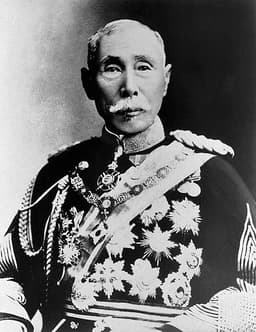
Yamagata Aritomo
General · Modern
82.5Total
Basic Information
Born
53
1838
Died
117
1922
Era
Ancient
Modern
Nationality
Roman Empire
Japan
Occupation
Emperor
General
Civilization
Western
Eastern
Score Comparison
Military (10%)
86.0
78.0
Political (20%)
79.2
82.0
Influence (20%)
82.0
80.0
Legacy (20%)
65.6
90.0
Leadership (15%)
73.2
78.0
Strategy (15%)
76.0
82.0
TOTAL
76.0
82.5
Trajan — Complete Timeline
101 AD
Implemented the Alimenta Welfare ProgramReform◆ Major
Trajan expanded the Alimenta program, a state-funded welfare system that provided food subsidies and educational support for poor children in Italy. The program used interest from state loans to landowners to fund the distributions, aiming to boost the Italian population and agricultural economy.
WelfareSocial PolicyItaly
Impact: regionalconstructive
105 AD
Built Trajan's Bridge over the DanubeOther
Trajan ordered the construction of a massive stone and timber bridge across the Danube River near the Iron Gates. Designed by Apollodorus of Damascus, it was the longest arch bridge in the world for over a millennium, facilitating the Roman invasion of Dacia.
EngineeringBridgeDanube
Impact: regionalconstructive
106 AD
Conquered DaciaWar
Trajan led two major campaigns against the Dacian kingdom under King Decebalus, culminating in the conquest of Dacia (modern Romania) in 106 CE. The victory brought vast gold and silver mines under Roman control and established a new province, funding massive building projects in Rome.
DaciaConquestProvince
Impact: regional
112 AD
Built Trajan's Forum and MarketCultural◆ Major
Trajan commissioned the construction of Trajan's Forum, a vast complex in Rome including a basilica, libraries, and the Column of Trajan. The adjacent Trajan's Market, a multi-level commercial center, demonstrated Roman engineering prowess and served as a model for urban planning.
ArchitectureRomeUrban Planning
Impact: globalconstructive
116 AD
Conquered Parthia and Reached the Persian GulfWar◆ Major
Trajan launched a campaign against the Parthian Empire, capturing its capital Ctesiphon and annexing Mesopotamia. He reached the Persian Gulf, marking the easternmost extent of Roman territory. However, rebellions in the conquered territories forced a withdrawal shortly after.
ParthiaMesopotamiaExpansion
Impact: global
Yamagata Aritomo — Complete Timeline
1873 AD
Establishment of the Imperial Japanese ArmyReform
Yamagata Aritomo, as War Minister, oversaw the creation of the Imperial Japanese Army based on the Prussian model. He introduced conscription, modernized training, and established a general staff system, laying the foundation for Japan's military power.
Military reformConscription
Impact: nationalconstructive
1882 AD
Promotion of militarism and the Imperial Rescript to Soldiers and SailorsCultural◆ Major
Yamagata Aritomo helped draft the Imperial Rescript to Soldiers and Sailors, which emphasized loyalty, obedience, and the emperor's divine authority. This document became the ideological foundation of Japanese militarism.
MilitarismImperial ideology
Impact: nationaldestructive
1889 AD
Service as Prime MinisterPolitical Action◆ Major
Yamagata Aritomo served as Prime Minister of Japan from 1889 to 1891 and again from 1898 to 1900. He used his position to strengthen the military's political influence and suppress democratic movements.
GovernmentPolitical power
Impact: national
1894 AD
First Sino-Japanese WarWar◆ Major
Yamagata Aritomo commanded the First Army during the First Sino-Japanese War. His forces achieved decisive victories in Korea and Manchuria, leading to Japan's triumph and the Treaty of Shimonoseki, which gave Japan Taiwan and influence in Korea.
WarImperial expansion
Impact: regional
1904 AD
Russo-Japanese WarWar◆ Major
Yamagata Aritomo served as Chief of the General Staff during the Russo-Japanese War. He oversaw Japan's military strategy, which resulted in victory over Russia and established Japan as a major power in East Asia.
WarGreat power
Impact: global
Expert Analysis
Origins
Yamagata Aritomo (1838-1922) was born a samurai in Hagi, Choshu domain. He rose from a low-ranking clan to become the architect of modern Japan's military. Trajan (53-117 CE) was born in Italica, Spain, to a Roman patrician family. His father was a governor and senator, giving Trajan a privileged path to power.
Rise to Power
Yamagata's rise came through military reforms. As a young officer, he studied European military systems and became the first chief of the Imperial Japanese Army General Staff. He served as Prime Minister twice (1889-1891, 1898-1900) and wielded immense influence as a genrō (elder statesman). Trajan's rise was meteoric. Adopted by Emperor Nerva in 97 CE, he became emperor in 98 CE, the first from a provincial family. His military campaigns in Germany and Dacia solidified his reputation.
Leadership & Governance
Yamagata was a master of institution-building. He established the Imperial Rescript to Soldiers and Sailors (1882), which fused loyalty to the emperor with military discipline. He promoted militarism and expansionism, leading Japan to victories in the First Sino-Japanese War (1894-1895) and Russo-Japanese War (1904-1905). Domestically, he suppressed liberal movements and centralized power. Trajan was an able administrator and builder. He expanded the empire to its greatest extent, conquering Dacia (106 CE) and Parthia (115-117 CE). He initiated public works like Trajan's Forum, Markets, and a bridge over the Danube. His Alimenta program provided welfare for orphans.
Triumph & Tragedy
Yamagata's triumphs include modernizing Japan's army and leading it to victory against China and Russia. However, his legacy is tarnished by the rise of militarism that led to World War II. He died in 1922, before seeing the catastrophic consequences. Trajan's conquest of Dacia brought immense wealth and territory. His Parthian campaign reached the Persian Gulf, but overextension and revolts strained the empire. He died suddenly in 117 CE, possibly of illness, leaving his successor Hadrian to abandon some conquests.
Character & Destiny
Yamagata was pragmatic, ruthless, and nationalist. He believed in military strength and imperial expansion. His destiny was to shape Japan into a modern power, but also to set it on a path to disaster. Trajan was ambitious, magnanimous, and beloved by his troops. He was known for his justice and clemency. His destiny was to be remembered as the 'Optimus Princeps' (Best Emperor), but his overreach foreshadowed imperial decline.
Legacy
Yamagata is remembered as the 'Father of Japanese Militarism.' His institutional legacy dominated Japan until 1945. Today, his reputation is mixed. Trajan's legacy is monumental. His column still stands in Rome, and his conquests defined the empire's peak. He is often ranked among the 'Five Good Emperors.'
Conclusion
Yamagata scores higher overall (82 vs 76), largely due to his long-term influence on Japan's trajectory. While Trajan expanded Rome further, Yamagata's creation of a modern military state had deeper, more lasting consequences. Both were transformative, but Yamagata's impact on the 20th century was greater.
**Scores:** Yamagata: M=78, P=82, I=80, L=90, D=78, S=82, T=82 | Trajan: M=86, P=79, I=82, L=66, D=73, S=76, T=76
Rankings
🥇
Yamagata AritomoLeader
Mil: 78.0Pol: 82.0Inf: 80.0
82.5
🥈
Trajan
Mil: 86.0Pol: 79.2Inf: 82.0
76.0
+6.5 behind
How This Comparison Works
Algorithm
Each figure is scored on 6 dimensions (0—100 scale) based on structured historical data: Military (10%), Political (20%), Influence (20%), Legacy (20%), Leadership (15%), Strategy (15%). The weighted total produces the final ranking.
Data Sources
Scores are computed from structured sub-indicators in the database. Scale factors adjust for era (Ancient ×0.85, Modern ×1.0) and civilization size (Eastern ×1.05, Other ×0.80) to account for differences in population and military scale.
Maximum 3 Figures
Comparisons are limited to 2—3 figures to ensure readability and statistical meaningfulness.
Error Margins
±5 points per dimension — Sub-scores are derived from historical records with inherent uncertainty. Two figures within 5 points on a dimension should be considered roughly equivalent in that area.
Total Score Accuracy
±3 points overall — The weighted combination of 6 dimensions produces a total score with approximately ±3 points of uncertainty. Differences of less than 3 points are not statistically significant— the figures are effectively tied.
Known Limitations
- Historical records are incomplete and uneven across civilizations
- Figures from oral-tradition societies may be underrepresented
- Occupation labels can misclassify multi-role figures
- Scores measure capability and impact, not moral character
- Quantitative scoring is a comparison tool, not absolute truth
Capability Radar
Military (10%) — Battles & Warfare
Battles
95
75
Win Rate
98
70
Expansion
95
80
Political (20%) — Governance & Reform
Reform
88
90
Diplomacy
85
75
Economy
90
70
Influence (20%) — Cultural & Global Reach
Cultural
85
80
Global
85
70
Legacy (20%) — Historical Impact
Historical
90
85
Longevity
88
75
Leadership (15%) — Power & Stability
Tenure
90
85
Stability
92
65
Strategy (15%) — Tactics & Innovation
Strategy
92
85
Tactics
88
80
Reform
85
95
Similar Comparisons
Comments & Discussion
No comments yet. Be the first to share your thoughts!