Loading...
Darius I vs Trajan
Trajan leads by 1.2 pts · 2 figures compared
…
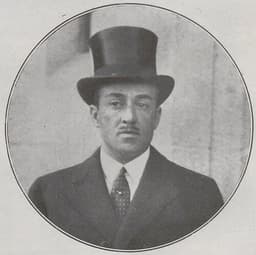
Darius I
Emperor · Ancient
74.8Total

Trajan
Emperor · Ancient
76.0Total
Basic Information
Born
-550
53
Died
-486
117
Era
Ancient
Ancient
Nationality
Persia
Roman Empire
Occupation
Emperor
Emperor
Civilization
Middle Eastern
Western
Score Comparison
Military (10%)
76.0
86.0
Political (20%)
75.0
79.2
Influence (20%)
88.0
82.0
Legacy (20%)
65.0
65.6
Leadership (15%)
72.0
73.2
Strategy (15%)
69.1
76.0
TOTAL
74.8
76.0
Darius I — Complete Timeline
522 BC
Suppression of revoltsWar◆ Major
Upon seizing the throne, Darius I suppressed widespread revolts across the empire, including in Babylon, Media, and Egypt. He recorded these victories on the Behistun Inscription, which also legitimized his rule.
RevoltEmpireBehistun Inscription
Impact: regionaldestructive
518 BC
Reorganization of the Persian EmpireReform
Darius I divided the Persian Empire into 20 provinces called satrapies, each governed by a satrap. He standardized coinage, weights, measures, and established a postal system, creating an efficient administrative structure.
AdministrationEmpireReform
Impact: globalconstructive
515 BC
Construction of PersepolisCultural◆ Major
Darius I began construction of Persepolis as the ceremonial capital of the Persian Empire. The city featured grand palaces and reliefs depicting tribute bearers from across the empire, symbolizing Achaemenid power.
ArchitectureCapitalPersia
Impact: regionalconstructive
500 BC
Construction of the Royal RoadOther◆ Major
Darius I built the Royal Road from Susa to Sardis, spanning 2,700 km. The road facilitated rapid communication and trade across the empire, with relay stations allowing messengers to travel in days.
InfrastructureRoadTrade
Impact: regionalconstructive
490 BC
Invasion of GreeceWar◆ Major
Darius I launched a punitive expedition against Greece, resulting in the Battle of Marathon. The Persian army was defeated by the Athenians, marking the first major Greek victory in the Greco-Persian Wars.
Greco-Persian WarsInvasionMarathon
Impact: global
Trajan — Complete Timeline
101 AD
Implemented the Alimenta Welfare ProgramReform◆ Major
Trajan expanded the Alimenta program, a state-funded welfare system that provided food subsidies and educational support for poor children in Italy. The program used interest from state loans to landowners to fund the distributions, aiming to boost the Italian population and agricultural economy.
WelfareSocial PolicyItaly
Impact: regionalconstructive
105 AD
Built Trajan's Bridge over the DanubeOther
Trajan ordered the construction of a massive stone and timber bridge across the Danube River near the Iron Gates. Designed by Apollodorus of Damascus, it was the longest arch bridge in the world for over a millennium, facilitating the Roman invasion of Dacia.
EngineeringBridgeDanube
Impact: regionalconstructive
106 AD
Conquered DaciaWar
Trajan led two major campaigns against the Dacian kingdom under King Decebalus, culminating in the conquest of Dacia (modern Romania) in 106 CE. The victory brought vast gold and silver mines under Roman control and established a new province, funding massive building projects in Rome.
DaciaConquestProvince
Impact: regional
112 AD
Built Trajan's Forum and MarketCultural◆ Major
Trajan commissioned the construction of Trajan's Forum, a vast complex in Rome including a basilica, libraries, and the Column of Trajan. The adjacent Trajan's Market, a multi-level commercial center, demonstrated Roman engineering prowess and served as a model for urban planning.
ArchitectureRomeUrban Planning
Impact: globalconstructive
116 AD
Conquered Parthia and Reached the Persian GulfWar◆ Major
Trajan launched a campaign against the Parthian Empire, capturing its capital Ctesiphon and annexing Mesopotamia. He reached the Persian Gulf, marking the easternmost extent of Roman territory. However, rebellions in the conquered territories forced a withdrawal shortly after.
ParthiaMesopotamiaExpansion
Impact: global
Expert Analysis
Origins
Darius I (c. 550–486 BCE) was born into the Achaemenid royal family, though not directly in line for the throne. His father, Hystaspes, was a satrap of Parthia. Darius claimed descent from Achaemenes, the founder of the dynasty. He received a traditional Persian education focused on horsemanship, archery, and truthfulness. His early career included serving as a spearman under Cyrus the Great, which gave him military experience.
Trajan (53–117 CE) was born in Italica, near Seville, in the Roman province of Hispania Baetica. His father was a prominent senator and general, serving as governor of Syria. Trajan grew up in a military family and served as a tribune in Syria. He gained command experience in Germany and Spain. Unlike Darius, Trajan was adopted by Emperor Nerva in 97 CE, making him the first emperor born outside Italy.
Rise to Power
Darius I came to power in 522 BCE after a period of turmoil following the death of Cambyses II. He led a conspiracy with six other Persian nobles to overthrow the usurper Gaumata, who had claimed to be Bardiya. Darius killed Gaumata and was crowned king. He then spent the first two years of his reign suppressing widespread revolts across the empire, including in Babylon, Media, and Egypt. He recorded these victories on the Behistun Inscription, a trilingual monument that legitimized his rule.
Trajan rose through military and administrative ranks. He served as consul in 91 CE and later as governor of Upper Germany. When Emperor Nerva faced a mutiny from the Praetorian Guard, he adopted Trajan as his successor in 97 CE, recognizing his military reputation. Trajan became emperor in 98 CE upon Nerva’s death. He delayed his entry to Rome to inspect the Rhine and Danube frontiers, ensuring loyalty from the legions.
Leadership & Governance
Darius I reorganized the Persian Empire into 20 provinces called satrapies, each governed by a satrap who collected taxes and maintained order. He standardized coinage (the daric), weights, and measures across the empire, facilitating trade. The Royal Road, spanning 2,700 km from Susa to Sardis, included relay stations that could carry messages in seven days. Darius also built Persepolis as a ceremonial capital, symbolizing imperial unity. He allowed local cultures and religions to persist, as seen in his support for the Jewish temple in Jerusalem.
Trajan’s governance focused on expansion and public works. He implemented the Alimenta welfare program, providing food subsidies and education for poor children in Italy. He built Trajan’s Forum, a massive complex including a basilica, libraries, and the Column of Trajan, which depicted his Dacian campaigns. His bridge over the Danube, designed by Apollodorus of Damascus, was the longest arch bridge for over a millennium. Trajan also improved provincial administration, appointing honest governors.
Triumph & Tragedy
Darius I’s greatest triumph was organizing a vast, multicultural empire that lasted for centuries. The Royal Road and satrap system became models for later empires. However, his invasion of Greece ended in defeat at the Battle of Marathon in 490 BCE, where a smaller Athenian army routed the Persians. This failure emboldened Greek resistance and set the stage for the Greco-Persian Wars. Darius died before launching a second invasion, leaving his son Xerxes to face the Greeks.
Trajan’s greatest triumph was the conquest of Dacia (101–106 CE), which brought immense wealth to Rome—gold mines and land. His Parthian campaign (114–117 CE) captured the capital Ctesiphon and reached the Persian Gulf, briefly annexing Mesopotamia. However, his eastern gains were unsustainable. A Jewish revolt in Egypt and Cyprus stretched Roman forces. Trajan fell ill and died in 117 CE, and his successor Hadrian abandoned most of the eastern conquests. Trajan’s ambitious expansion exceeded Rome’s capacity to hold.
Character & Destiny
Darius I was a pragmatic administrator who emphasized order and legitimacy. He carefully recorded his deeds on the Behistun Inscription, presenting himself as a champion of truth (asha) against lies. His decision to invade Greece was partly to punish Athens and Eretria for aiding the Ionian Revolt, but he underestimated Greek resolve. His character was cautious but decisive when needed, as shown by his swift suppression of revolts. Historians assess him as an effective organizer rather than a brilliant commander; his military score of 76.0 reflects solid but not exceptional skill.
Trajan was a soldier-emperor, beloved by the army for his campaigns and generosity. He led from the front, personally participating in battles. His character was ambitious and energetic, always seeking to expand Rome’s borders. He was also known for his justice and modesty, earning the title "Optimus Princeps" (Best Ruler). However, his overreach in Parthia led to instability. His strategic score of 76.0 is higher than Darius’s 69.1, indicating better tactical planning.
Legacy
Darius I’s legacy is the enduring structure of the Persian Empire. The satrap system and Royal Road influenced later empires, including the Roman and Byzantine. Persepolis, though destroyed by Alexander, remains a symbol of Persian civilization. His standardizations facilitated trade across Asia. However, his Greek defeat contributed to the eventual Persian downfall. Darius scores 88.0 in influence, reflecting his long-term impact on governance and infrastructure.
Trajan’s legacy is the Roman Empire at its maximum extent. His conquests added Dacia, Arabia, and Mesopotamia, though only Dacia was held long-term. Trajan’s Forum and Column are architectural marvels that influenced urban design. The Alimenta program was a precursor to welfare systems. He is remembered as one of the "Five Good Emperors." However, his expansionist policies strained Rome’s economy and military. Trajan scores 82.0 in influence, slightly lower than Darius.
Conclusion
Trajan has a higher total score (76.0 vs. 74.8) and superior military and strategic ratings. His conquests achieved the largest territorial extent of the Roman Empire, and his building projects left a lasting mark on Rome. Darius, while an exceptional administrator, failed in his key military venture against Greece. Although his organizational achievements were profound, Trajan’s direct impact on the shape of the Roman world and his successful campaigns give him the edge. Therefore, Trajan had a greater overall impact as a military conqueror and empire builder, even if Darius’s administrative legacy was more durable. The score gap of 1.2 points supports this conclusion.
Rankings
🥇
TrajanLeader
Mil: 86.0Pol: 79.2Inf: 82.0
76.0
🥈
Darius I
Mil: 76.0Pol: 75.0Inf: 88.0
74.8
+1.2 behind
How This Comparison Works
Algorithm
Each figure is scored on 6 dimensions (0—100 scale) based on structured historical data: Military (10%), Political (20%), Influence (20%), Legacy (20%), Leadership (15%), Strategy (15%). The weighted total produces the final ranking.
Data Sources
Scores are computed from structured sub-indicators in the database. Scale factors adjust for era (Ancient ×0.85, Modern ×1.0) and civilization size (Eastern ×1.05, Other ×0.80) to account for differences in population and military scale.
Maximum 3 Figures
Comparisons are limited to 2—3 figures to ensure readability and statistical meaningfulness.
Error Margins
±5 points per dimension — Sub-scores are derived from historical records with inherent uncertainty. Two figures within 5 points on a dimension should be considered roughly equivalent in that area.
Total Score Accuracy
±3 points overall — The weighted combination of 6 dimensions produces a total score with approximately ±3 points of uncertainty. Differences of less than 3 points are not statistically significant— the figures are effectively tied.
Known Limitations
- Historical records are incomplete and uneven across civilizations
- Figures from oral-tradition societies may be underrepresented
- Occupation labels can misclassify multi-role figures
- Scores measure capability and impact, not moral character
- Quantitative scoring is a comparison tool, not absolute truth
Capability Radar
Military (10%) — Battles & Warfare
Battles
75
95
Win Rate
70
98
Expansion
85
95
Political (20%) — Governance & Reform
Reform
95
88
Diplomacy
85
85
Economy
90
90
Influence (20%) — Cultural & Global Reach
Cultural
80
85
Global
85
85
Legacy (20%) — Historical Impact
Historical
85
90
Longevity
80
88
Leadership (15%) — Power & Stability
Tenure
90
90
Stability
80
92
Strategy (15%) — Tactics & Innovation
Strategy
80
92
Tactics
65
88
Reform
85
85
Similar Comparisons
Comments & Discussion
No comments yet. Be the first to share your thoughts!