Loading...
This comparison has not been analyzed yet.
One-time AI generation (~1 minute). Scores and timeline are already available below.
King Jinheung vs Trajan
Trajan leads by 18.1 pts · 2 figures compared
…
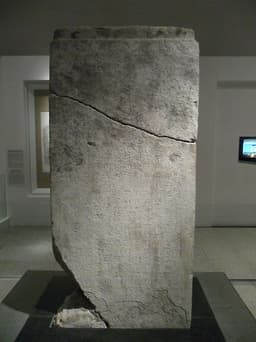
King Jinheung
Emperor · Ancient
57.9Total

Trajan
Emperor · Ancient
76.0Total
Basic Information
Born
-526
53
Died
—
117
Era
Ancient
Ancient
Nationality
Korea
Roman Empire
Occupation
Emperor
Emperor
Civilization
Eastern
Western
Score Comparison
Military (10%)
63.3
86.0
Political (20%)
45.0
79.2
Influence (20%)
57.2
82.0
Legacy (20%)
52.0
65.6
Leadership (15%)
79.8
73.2
Strategy (15%)
55.0
76.0
TOTAL
57.9
76.0
King Jinheung — Complete Timeline
540 AD
Created the HwarangReform
Jinheung formally organized the Hwarang, an elite youth corps that combined military training with cultural and spiritual education. The Hwarang became a key institution in Silla's unification of Korea.
HwarangMilitarySilla
Impact: regionalconstructive
Ascended to the Throne of SillaPolitical Action◆ Major
Jinheung became king of Silla, one of the Three Kingdoms of Korea. His reign marked a period of significant territorial expansion and cultural development.
AccessionSillaKorea
Impact: regional
550 AD
Promoted BuddhismCultural◆ Major
Jinheung actively promoted Buddhism as a state religion, building temples and supporting monks. This helped unify the kingdom and fostered cultural exchange with China.
BuddhismReligionSilla
Impact: regionalconstructive
553 AD
Expanded into the Han River ValleyWar◆ Major
Jinheung captured the Han River valley from Baekje, gaining control of a strategic region with access to China. This victory significantly strengthened Silla's position.
ExpansionHan RiverSilla
Impact: regional
562 AD
Conquered the Gaya ConfederacyWar◆ Major
Jinheung's forces conquered the Gaya Confederacy, a group of city-states in southern Korea. This annexation expanded Silla's territory and resources.
ConquestGayaSilla
Impact: regional
Trajan — Complete Timeline
101 AD
Implemented the Alimenta Welfare ProgramReform◆ Major
Trajan expanded the Alimenta program, a state-funded welfare system that provided food subsidies and educational support for poor children in Italy. The program used interest from state loans to landowners to fund the distributions, aiming to boost the Italian population and agricultural economy.
WelfareSocial PolicyItaly
Impact: regionalconstructive
105 AD
Built Trajan's Bridge over the DanubeOther
Trajan ordered the construction of a massive stone and timber bridge across the Danube River near the Iron Gates. Designed by Apollodorus of Damascus, it was the longest arch bridge in the world for over a millennium, facilitating the Roman invasion of Dacia.
EngineeringBridgeDanube
Impact: regionalconstructive
106 AD
Conquered DaciaWar
Trajan led two major campaigns against the Dacian kingdom under King Decebalus, culminating in the conquest of Dacia (modern Romania) in 106 CE. The victory brought vast gold and silver mines under Roman control and established a new province, funding massive building projects in Rome.
DaciaConquestProvince
Impact: regional
112 AD
Built Trajan's Forum and MarketCultural◆ Major
Trajan commissioned the construction of Trajan's Forum, a vast complex in Rome including a basilica, libraries, and the Column of Trajan. The adjacent Trajan's Market, a multi-level commercial center, demonstrated Roman engineering prowess and served as a model for urban planning.
ArchitectureRomeUrban Planning
Impact: globalconstructive
116 AD
Conquered Parthia and Reached the Persian GulfWar◆ Major
Trajan launched a campaign against the Parthian Empire, capturing its capital Ctesiphon and annexing Mesopotamia. He reached the Persian Gulf, marking the easternmost extent of Roman territory. However, rebellions in the conquered territories forced a withdrawal shortly after.
ParthiaMesopotamiaExpansion
Impact: global
This comparison has not been analyzed yet.
One-time AI generation (~1 minute). Scores and timeline are already available below.
Rankings
🥇
TrajanLeader
Mil: 86.0Pol: 79.2Inf: 82.0
76.0
🥈
King Jinheung
Mil: 63.3Pol: 45.0Inf: 57.2
57.9
+18.1 behind
How This Comparison Works
Algorithm
Each figure is scored on 6 dimensions (0—100 scale) based on structured historical data: Military (10%), Political (20%), Influence (20%), Legacy (20%), Leadership (15%), Strategy (15%). The weighted total produces the final ranking.
Data Sources
Scores are computed from structured sub-indicators in the database. Scale factors adjust for era (Ancient ×0.85, Modern ×1.0) and civilization size (Eastern ×1.05, Other ×0.80) to account for differences in population and military scale.
Maximum 3 Figures
Comparisons are limited to 2—3 figures to ensure readability and statistical meaningfulness.
Error Margins
±5 points per dimension — Sub-scores are derived from historical records with inherent uncertainty. Two figures within 5 points on a dimension should be considered roughly equivalent in that area.
Total Score Accuracy
±3 points overall — The weighted combination of 6 dimensions produces a total score with approximately ±3 points of uncertainty. Differences of less than 3 points are not statistically significant— the figures are effectively tied.
Known Limitations
- Historical records are incomplete and uneven across civilizations
- Figures from oral-tradition societies may be underrepresented
- Occupation labels can misclassify multi-role figures
- Scores measure capability and impact, not moral character
- Quantitative scoring is a comparison tool, not absolute truth
Capability Radar
Military (10%) — Battles & Warfare
Battles
55
95
Win Rate
60
98
Expansion
75
95
Political (20%) — Governance & Reform
Reform
70
88
Diplomacy
65
85
Economy
60
90
Influence (20%) — Cultural & Global Reach
Cultural
65
85
Global
40
85
Legacy (20%) — Historical Impact
Historical
70
90
Longevity
60
88
Leadership (15%) — Power & Stability
Tenure
80
90
Stability
70
92
Strategy (15%) — Tactics & Innovation
Strategy
65
92
Tactics
50
88
Reform
70
85
Similar Comparisons
Comments & Discussion
No comments yet. Be the first to share your thoughts!