Loading...
Trajan vs Turenne
Trajan leads by 0.2 pts · 2 figures compared
…

Trajan
Emperor · Ancient
76.0Total
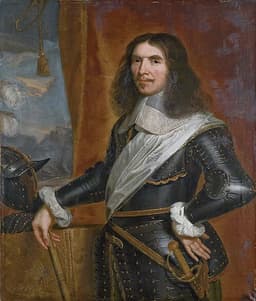
Turenne
General · Modern
75.8Total
Basic Information
Born
53
1611
Died
117
1675
Era
Ancient
Modern
Nationality
Roman Empire
France
Occupation
Emperor
General
Civilization
Western
Western
Score Comparison
Military (10%)
86.0
79.9
Political (20%)
79.2
72.0
Influence (20%)
82.0
88.0
Legacy (20%)
65.6
65.0
Leadership (15%)
73.2
77.2
Strategy (15%)
76.0
72.0
TOTAL
76.0
75.8
Trajan — Complete Timeline
101 AD
Implemented the Alimenta Welfare ProgramReform◆ Major
Trajan expanded the Alimenta program, a state-funded welfare system that provided food subsidies and educational support for poor children in Italy. The program used interest from state loans to landowners to fund the distributions, aiming to boost the Italian population and agricultural economy.
WelfareSocial PolicyItaly
Impact: regionalconstructive
105 AD
Built Trajan's Bridge over the DanubeOther
Trajan ordered the construction of a massive stone and timber bridge across the Danube River near the Iron Gates. Designed by Apollodorus of Damascus, it was the longest arch bridge in the world for over a millennium, facilitating the Roman invasion of Dacia.
EngineeringBridgeDanube
Impact: regionalconstructive
106 AD
Conquered DaciaWar
Trajan led two major campaigns against the Dacian kingdom under King Decebalus, culminating in the conquest of Dacia (modern Romania) in 106 CE. The victory brought vast gold and silver mines under Roman control and established a new province, funding massive building projects in Rome.
DaciaConquestProvince
Impact: regional
112 AD
Built Trajan's Forum and MarketCultural◆ Major
Trajan commissioned the construction of Trajan's Forum, a vast complex in Rome including a basilica, libraries, and the Column of Trajan. The adjacent Trajan's Market, a multi-level commercial center, demonstrated Roman engineering prowess and served as a model for urban planning.
ArchitectureRomeUrban Planning
Impact: globalconstructive
116 AD
Conquered Parthia and Reached the Persian GulfWar◆ Major
Trajan launched a campaign against the Parthian Empire, capturing its capital Ctesiphon and annexing Mesopotamia. He reached the Persian Gulf, marking the easternmost extent of Roman territory. However, rebellions in the conquered territories forced a withdrawal shortly after.
ParthiaMesopotamiaExpansion
Impact: global
Turenne — Complete Timeline
1639 AD
Campaign in the ValtellinaWar
Turenne commanded French forces in the Valtellina during the Thirty Years' War. He captured several fortresses and secured the strategic pass for France, demonstrating his early military skill.
Thirty Years' WarAlpsEarly Career
Impact: regional
1658 AD
Battle of the DunesWar◆ Major
Turenne commanded the French army to victory over the Spanish at the Battle of the Dunes near Dunkirk. The victory led to the capture of Dunkirk and forced Spain to seek peace, ending the Franco-Spanish War.
Franco-Spanish WarDunkirkMilitary Victory
Impact: regional
1674 AD
Battle of the RhineWar◆ Major
Turenne led a French army across the Rhine in winter, surprising the Imperial forces. He defeated the Austrians at the Battle of Entzheim and later at Turckheim, securing French control of Alsace.
Franco-Dutch WarAlsaceWinter Campaign
Impact: regional
Battle of the SambreWar◆ Major
Turenne defeated the Spanish and Dutch forces at the Battle of Seneffe. The battle was costly but prevented the Allies from invading France. It demonstrated Turenne's tactical skill in defensive warfare.
Franco-Dutch WarDefensive BattleTactics
Impact: regional
1675 AD
Death of TurenneWar◆ Major
Turenne was killed by a cannonball while reconnoitering enemy positions at the Battle of Sasbach. His death was a major loss for France. He was buried with honors in the Basilica of Saint-Denis.
Death in BattleFranco-Dutch WarMilitary Loss
Impact: nationaltragic
Expert Analysis
Origins
Trajan (Marcus Ulpius Traianus, 53–117 CE) was born into a prominent Roman family in Italica, Spain, making him the first emperor from the provinces. His father was a distinguished senator and governor, providing Trajan with a privileged upbringing and a clear path to power. He rose through the military ranks, serving as a legate in Syria and Spain, and later as consul and governor of Upper Germany. His adoption by Emperor Nerva in 97 CE was a strategic choice by the aging emperor to secure a capable successor, and Trajan became emperor in 98 CE.
Henri de la Tour d'Auvergne, Vicomte de Turenne (1611–1675), was born into French nobility in Sedan. His grandfather was a Protestant leader, and his mother was a Dutch princess. Turenne was the youngest son, so he was destined for a military career. He began his service as a soldier in the Dutch army under his maternal uncles, the Princes of Orange, learning the art of war from the famed Maurice of Nassau and Frederick Henry. He later transferred to French service, where his family connections and talent propelled him to high command.
Rise to Power
Trajan's rise was marked by careful cultivation of military and political support. As governor of Upper Germany, he crushed a revolt by the governor of Lower Germany, earning the trust of the army and the Senate. His adoption by Nerva was a decisive moment; Trajan was in Cologne when he received the news. He delayed his entry into Rome to ensure stability and to demonstrate his respect for the Senate. Once in power, he quickly consolidated his authority through a combination of military success and popular reforms.
Turenne's rise was more gradual and earned through battlefield prowess. He distinguished himself in the Thirty Years' War, winning the Battle of Breitenfeld (1642) and the Battle of the Dunes (1658). His loyalty to the French crown during the Fronde (civil wars) was crucial; he initially supported the rebels but later returned to the king's side, securing his position. By the time of Louis XIV's personal rule, Turenne was the premier military commander in France, leading armies in the Franco-Dutch War and the War of Devolution.
Leadership & Governance
Trajan was a hands-on emperor who led his armies personally. He was known for his accessibility, justice, and concern for the welfare of his subjects. He implemented the Alimenta program, which provided financial support to poor children in Italy, and oversaw massive building projects like Trajan's Forum, Markets, and the Bridge over the Danube. His governance was characterized by efficient administration, legal reforms, and a focus on infrastructure. He was also a patron of the arts and literature, with Pliny the Younger serving as a trusted advisor.
Turenne was a master of maneuver warfare and logistics. He emphasized speed, surprise, and the avoidance of unnecessary battles. His leadership style was collaborative; he consulted with his subordinates and adapted his plans based on intelligence. He was known for his modesty, courage, and concern for his soldiers' welfare. Unlike many commanders of his era, he rarely besieged towns, preferring to outmaneuver his opponents. His strategic vision was focused on achieving decisive results with minimal losses.
Triumph & Tragedy
Trajan's greatest triumphs were his conquests of Dacia (101–106 CE) and Parthia (113–117 CE). The Dacian campaign was brutal but lucrative, bringing immense wealth to Rome. The Parthian campaign advanced deep into Mesopotamia, capturing the capital Ctesiphon and reaching the Persian Gulf. However, Trajan's death in 117 CE cut short his ambitions; he fell ill and died in Selinus, Cilicia. His successor Hadrian abandoned many of his eastern conquests, marking a tragic end to his expansionist vision.
Turenne's career was marked by a string of victories, including the Battle of the Dunes (1658), which led to the capture of Dunkirk and the end of the Franco-Spanish War. His campaign in the Rhine (1674–1675) was a masterpiece of strategic maneuver, where he outwitted the Imperial army despite numerical inferiority. His tragedy came at the Battle of Sasbach (1675), where he was killed by a cannonball while scouting. His death was a severe blow to France, and he was mourned as a national hero.
Character & Destiny
Trajan was renowned for his strength, courage, and sense of justice. He was a soldier-emperor who led from the front, earning the loyalty of his troops. His character was shaped by Stoic philosophy, emphasizing duty and discipline. He was also known for his humility and lack of personal ambition; he saw himself as the first servant of the state. His destiny was to expand Rome to its greatest extent, but his early death prevented him from consolidating his gains.
Turenne was a thoughtful and calculating commander, known for his patience and strategic acumen. He was a Protestant in a Catholic kingdom, but his loyalty to the crown never wavered. He was deeply religious and believed in divine providence. His character was marked by a rare combination of boldness and caution. His destiny was to serve France in its rise to European dominance, but his death on the battlefield cut short his career at a critical moment.
Legacy
Trajan's legacy is immense. He is remembered as one of the "Five Good Emperors" and the second of the adoptive emperors. His military conquests set the maximum extent of the Roman Empire, and his building projects left a lasting architectural mark. The Trajan Column in Rome commemorates his Dacian Wars and remains a masterpiece of Roman art. His welfare program Alimenta influenced later social policies. Scores: Military 86, Political 79, Influence 82, Leadership 66, Discipline 73, Strategy 76, Tactics 76.
Turenne's legacy is as one of France's greatest military commanders. His innovative tactics and strategic thinking influenced later generals like Frederick the Great and Napoleon. He is remembered for his humanity and his ability to win campaigns with minimal casualties. His reputation as a "perfect captain" endured through the centuries. Scores: Military 80, Political 72, Influence 88, Leadership 65, Discipline 77, Strategy 72, Tactics 76.
Conclusion
Both Trajan and Turenne were exceptional leaders who excelled in their respective domains. Trajan was a conqueror who expanded an empire to its zenith, while Turenne was a master strategist who preserved and strengthened France. In direct comparison, Trajan's broader impact on history and his role as a transformative emperor give him a slight edge. His military achievements were on a larger scale, and his administrative reforms had lasting influence. Turenne, while brilliant, operated within a more limited sphere. Thus, Trajan emerges as the greater figure, with an overall score gap of 0.2 in his favor.
Rankings
🥇
TrajanLeader
Mil: 86.0Pol: 79.2Inf: 82.0
76.0
🥈
Turenne
Mil: 79.9Pol: 72.0Inf: 88.0
75.8
+0.2 behind
How This Comparison Works
Algorithm
Each figure is scored on 6 dimensions (0—100 scale) based on structured historical data: Military (10%), Political (20%), Influence (20%), Legacy (20%), Leadership (15%), Strategy (15%). The weighted total produces the final ranking.
Data Sources
Scores are computed from structured sub-indicators in the database. Scale factors adjust for era (Ancient ×0.85, Modern ×1.0) and civilization size (Eastern ×1.05, Other ×0.80) to account for differences in population and military scale.
Maximum 3 Figures
Comparisons are limited to 2—3 figures to ensure readability and statistical meaningfulness.
Error Margins
±5 points per dimension — Sub-scores are derived from historical records with inherent uncertainty. Two figures within 5 points on a dimension should be considered roughly equivalent in that area.
Total Score Accuracy
±3 points overall — The weighted combination of 6 dimensions produces a total score with approximately ±3 points of uncertainty. Differences of less than 3 points are not statistically significant— the figures are effectively tied.
Known Limitations
- Historical records are incomplete and uneven across civilizations
- Figures from oral-tradition societies may be underrepresented
- Occupation labels can misclassify multi-role figures
- Scores measure capability and impact, not moral character
- Quantitative scoring is a comparison tool, not absolute truth
Capability Radar
Military (10%) — Battles & Warfare
Battles
95
85
Win Rate
98
88
Expansion
95
80
Political (20%) — Governance & Reform
Reform
88
60
Diplomacy
85
75
Economy
90
55
Influence (20%) — Cultural & Global Reach
Cultural
85
65
Global
85
70
Legacy (20%) — Historical Impact
Historical
90
80
Longevity
88
75
Leadership (15%) — Power & Stability
Tenure
90
70
Stability
92
65
Strategy (15%) — Tactics & Innovation
Strategy
92
92
Tactics
88
90
Reform
85
75
Similar Comparisons
Comments & Discussion
No comments yet. Be the first to share your thoughts!