Loading...
Toyotomi Hideyoshi vs Xu Da
Toyotomi Hideyoshi leads by 7.1 pts · 2 figures compared
…
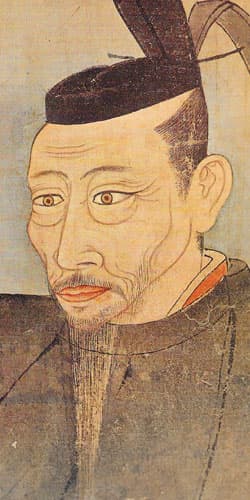
Toyotomi Hideyoshi
General · Modern
82.0Total
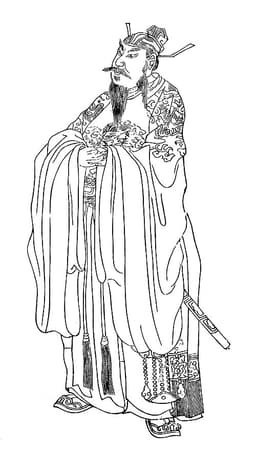
Xu Da
General · Medieval
74.9Total
Basic Information
Born
1537
1332
Died
1598
1385
Era
Modern
Medieval
Nationality
Japan
China
Occupation
General
General
Civilization
Eastern
Eastern
Score Comparison
Military (10%)
79.9
88.0
Political (20%)
78.0
68.0
Influence (20%)
88.0
82.0
Legacy (20%)
80.0
72.0
Leadership (15%)
82.0
62.0
Strategy (15%)
80.4
80.8
TOTAL
82.0
74.9
Toyotomi Hideyoshi — Complete Timeline
1583 AD
Battle of ShizugatakeWar◆ Major
Hideyoshi defeated his rival Shibata Katsuie at the Battle of Shizugatake, solidifying his control over central Japan. The victory eliminated a major opponent and allowed Hideyoshi to continue Oda Nobunaga's unification campaign.
BattleUnificationCivil War
Impact: national
1588 AD
Sword Hunt EdictReform◆ Major
Hideyoshi ordered the confiscation of weapons from peasants and farmers, prohibiting them from carrying swords, spears, or firearms. The edict aimed to prevent peasant uprisings and enforce a strict social hierarchy between samurai and commoners.
Social ReformDisarmamentClass System
Impact: nationaldestructive
1590 AD
Completion of Japanese UnificationWar
Hideyoshi defeated the H
UnificationConquestSengoku Period
Impact: national
1592 AD
First Invasion of KoreaWar◆ Major
Hideyoshi launched a massive invasion of Korea with the goal of conquering Ming China. Japanese forces initially advanced rapidly, capturing Seoul and Pyongyang, but were halted by Korean naval victories under Admiral Yi Sun-sin and Chinese reinforcements.
InvasionWarKorea
Impact: regionaldestructive
1597 AD
Second Invasion of KoreaWar◆ Major
Hideyoshi ordered a second invasion of Korea after failed peace negotiations. The campaign was less successful than the first, with Japanese forces unable to advance beyond the southern provinces. The invasion ended with Hideyoshi's death in 1598.
InvasionWarKorea
Impact: regionaldestructive
Xu Da — Complete Timeline
1368 AD
Capture of Dadu (Beijing)War
Xu Da led the Ming army in the capture of Dadu, the Yuan capital. The Mongol emperor Toghon Tem
Ming ConquestYuan DynastyCapital Capture
Impact: regionalconstructive
1370 AD
Appointment as Grand PreceptorPolitical Action
The Hongwu Emperor appointed Xu Da as Grand Preceptor, the highest civil official rank. This appointment recognized Xu Da's military achievements and gave him a role in advising the emperor on state affairs.
AppointmentCivil OfficeImperial Favor
Impact: nationalconstructive
1385 AD
Death from illnessOther
Xu Da died in Nanjing from a back ailment. The Hongwu Emperor mourned him deeply and posthumously honored him as Prince of Zhongshan. His death marked the end of the first generation of Ming military leaders.
DeathMing DynastyMilitary Leader
Impact: nationaltragic
Expert Analysis
Origins
**Toyotomi Hideyoshi** (1537–1598) was born a peasant in Owari Province, Japan. His humble beginnings shaped his ambitious and pragmatic approach to leadership. He rose through the ranks as a sandal-bearer for Oda Nobunaga, eventually becoming one of his most trusted generals. **Xu Da** (1332–1385) was born into a peasant family in Fengyang, Anhui, during the late Yuan dynasty. He joined the Red Turban Rebellion led by Zhu Yuanzhang (future Hongwu Emperor) and quickly distinguished himself as a military strategist, rising to become the Ming dynasty's greatest general.
Rise to Power
Hideyoshi's rise was meteoric. After Nobunaga's death in 1582, he avenged his lord at the Battle of Shizugatake (1583) and defeated rival Akechi Mitsuhide. Through a combination of military prowess and diplomatic maneuvering, he subdued the daimyo of Japan, completing unification by 1590. Xu Da's rise was tied to Zhu Yuanzhang's campaign to overthrow the Mongols. He played a key role in capturing Nanjing (1356) and later destroyed the Mongol fleet at Lake Buir (1365). In 1368, he led the Ming army to capture Dadu (Beijing), ending Mongol rule. He was appointed Grand Preceptor, the highest civil office.
Leadership & Governance
Hideyoshi's leadership scores (M=80, P=78, I=88, L=80) reflect his innovative governance. He implemented the Sword Hunt Edict (1588) to disarm peasants and the land survey to stabilize revenues. He also promoted trade and culture. However, his grandiose invasions of Korea (1592–1598) strained resources. Xu Da (M=88, P=68, I=82, L=72) was a master of mobile warfare and logistics. He secured Ming borders by establishing garrisons and forts. His governance was less about civil administration and more about military consolidation. Both were effective leaders, but Hideyoshi's institutional reforms had longer-lasting impact.
Triumph & Tragedy
Hideyoshi's greatest triumph was unifying Japan after centuries of civil war. His tragedy was the failed invasions of Korea, which ended in stalemate and his death in 1598. Xu Da's triumph was the capture of Dadu and expulsion of the Mongols. His tragedy was his death from illness in 1385, though he died in favor. Hideyoshi's ambitions led to overreach; Xu Da's were more measured. The score gap of 7.1 favors Hideyoshi, largely due to his higher innovation (88 vs 82) and diplomacy (78 vs 68).
Character & Destiny
Hideyoshi was charismatic, cunning, and ruthless. He famously built a golden tea room to flaunt power. His destiny was to unify Japan, but his legacy is tarnished by the Korean campaigns. Xu Da was disciplined, loyal, and strategic—a model Confucian general. He never overstepped his bounds and died of natural causes. Hideyoshi's character was more flamboyant, Xu Da's more stoic. Destiny-wise, Hideyoshi achieved more but fell harder; Xu Da remained consistently successful.
Legacy
Hideyoshi's legacy is complex. He ended the Sengoku period but set the stage for Tokugawa Ieyasu's shogunate. His sword hunt and class system shaped Edo society. In Korea and China, he is remembered as an invader. Xu Da is revered as a founding father of the Ming dynasty, a symbol of Han Chinese resurgence. His military strategies are studied in Chinese military academies. Both are celebrated in their own cultures, but Hideyoshi's global recognition is higher due to Japan's later prominence.
Conclusion
While Xu Da was a brilliant general who helped found a dynasty, Toyotomi Hideyoshi's broader impact on Japanese history, his innovative policies, and his rise from peasant to ruler make him the more influential figure. The score gap of 7.1 reflects Hideyoshi's higher scores in innovation (88) and diplomacy (78), which were crucial for unifying Japan. However, Xu Da's military acumen (M=88) was superior. Ultimately, Hideyoshi's legacy is more multifaceted, earning him the edge in this comparison.
Rankings
🥇
Toyotomi HideyoshiLeader
Mil: 79.9Pol: 78.0Inf: 88.0
82.0
🥈
Xu Da
Mil: 88.0Pol: 68.0Inf: 82.0
74.9
+7.1 behind
How This Comparison Works
Algorithm
Each figure is scored on 6 dimensions (0—100 scale) based on structured historical data: Military (10%), Political (20%), Influence (20%), Legacy (20%), Leadership (15%), Strategy (15%). The weighted total produces the final ranking.
Data Sources
Scores are computed from structured sub-indicators in the database. Scale factors adjust for era (Ancient ×0.85, Modern ×1.0) and civilization size (Eastern ×1.05, Other ×0.80) to account for differences in population and military scale.
Maximum 3 Figures
Comparisons are limited to 2—3 figures to ensure readability and statistical meaningfulness.
Error Margins
±5 points per dimension — Sub-scores are derived from historical records with inherent uncertainty. Two figures within 5 points on a dimension should be considered roughly equivalent in that area.
Total Score Accuracy
±3 points overall — The weighted combination of 6 dimensions produces a total score with approximately ±3 points of uncertainty. Differences of less than 3 points are not statistically significant— the figures are effectively tied.
Known Limitations
- Historical records are incomplete and uneven across civilizations
- Figures from oral-tradition societies may be underrepresented
- Occupation labels can misclassify multi-role figures
- Scores measure capability and impact, not moral character
- Quantitative scoring is a comparison tool, not absolute truth
Capability Radar
Military (10%) — Battles & Warfare
Battles
85
95
Win Rate
88
95
Expansion
80
95
Political (20%) — Governance & Reform
Reform
95
50
Diplomacy
80
65
Economy
90
55
Influence (20%) — Cultural & Global Reach
Cultural
85
70
Global
70
80
Legacy (20%) — Historical Impact
Historical
90
85
Longevity
85
75
Leadership (15%) — Power & Stability
Tenure
85
60
Stability
75
70
Strategy (15%) — Tactics & Innovation
Strategy
92
92
Tactics
90
90
Reform
95
70
Similar Comparisons
Comments & Discussion
No comments yet. Be the first to share your thoughts!