Loading...
Toyotomi Hideyoshi vs Vauban
Toyotomi Hideyoshi leads by 5.6 pts · 2 figures compared
…
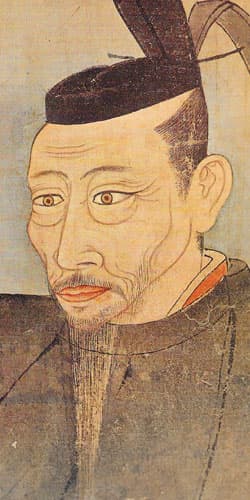
Toyotomi Hideyoshi
General · Modern
82.0Total

Vauban
General · Modern
76.4Total
Basic Information
Born
1537
1633
Died
1598
1707
Era
Modern
Modern
Nationality
Japan
France
Occupation
General
General
Civilization
Eastern
Western
Score Comparison
Military (10%)
79.9
76.0
Political (20%)
78.0
59.3
Influence (20%)
88.0
71.0
Legacy (20%)
80.0
90.0
Leadership (15%)
82.0
77.2
Strategy (15%)
80.4
80.6
TOTAL
82.0
76.4
Toyotomi Hideyoshi — Complete Timeline
1583 AD
Battle of ShizugatakeWar◆ Major
Hideyoshi defeated his rival Shibata Katsuie at the Battle of Shizugatake, solidifying his control over central Japan. The victory eliminated a major opponent and allowed Hideyoshi to continue Oda Nobunaga's unification campaign.
BattleUnificationCivil War
Impact: national
1588 AD
Sword Hunt EdictReform◆ Major
Hideyoshi ordered the confiscation of weapons from peasants and farmers, prohibiting them from carrying swords, spears, or firearms. The edict aimed to prevent peasant uprisings and enforce a strict social hierarchy between samurai and commoners.
Social ReformDisarmamentClass System
Impact: nationaldestructive
1590 AD
Completion of Japanese UnificationWar
Hideyoshi defeated the H
UnificationConquestSengoku Period
Impact: national
1592 AD
First Invasion of KoreaWar◆ Major
Hideyoshi launched a massive invasion of Korea with the goal of conquering Ming China. Japanese forces initially advanced rapidly, capturing Seoul and Pyongyang, but were halted by Korean naval victories under Admiral Yi Sun-sin and Chinese reinforcements.
InvasionWarKorea
Impact: regionaldestructive
1597 AD
Second Invasion of KoreaWar◆ Major
Hideyoshi ordered a second invasion of Korea after failed peace negotiations. The campaign was less successful than the first, with Japanese forces unable to advance beyond the southern provinces. The invasion ended with Hideyoshi's death in 1598.
InvasionWarKorea
Impact: regionaldestructive
Vauban — Complete Timeline
1673 AD
Siege of MaastrichtWar◆ Major
Vauban directed the siege of Maastricht for Louis XIV. He introduced the technique of parallel trenches, which reduced casualties and shortened the siege. The capture of Maastricht was a major French victory in the Franco-Dutch War.
Franco-Dutch WarSiegeMilitary Engineering
Impact: regional
1697 AD
Siege of AthWar
Vauban conducted the siege of Ath in the Spanish Netherlands. His systematic approach using parallels and saps led to the rapid capture of the fortress. The siege demonstrated the effectiveness of his methods.
Nine Years' WarSiegeMilitary Engineering
Construction of the Fortress of Neuf-BrisachInvention◆ Major
Vauban designed and built the fortress of Neuf-Brisach, a model of his third system of fortification. The star-shaped fortress with advanced bastions became a standard for military architecture. It was built to protect the French border after the Treaty of Ryswick.
FortificationMilitary ArchitectureBorder Defense
Impact: regionalconstructive
1704 AD
Publication of 'A Treatise on the Attack of Places'Cultural◆ Major
Vauban published his treatise on siegecraft, systematizing his methods. The work became a standard military textbook in Europe. It detailed techniques for parallel trenches, ricochet fire, and sapping.
Military TheorySiegecraftPublication
Impact: globalconstructive
1707 AD
Proposal for a 'Dîme Royale' Tax ReformReform
Vauban proposed a radical tax reform called the 'D
Tax ReformEconomic PolicyFrance
Impact: nationalconstructive
Expert Analysis
Origins
Toyotomi Hideyoshi (1537–1598) rose from a peasant background to become Japan's supreme military leader, a remarkable ascent in feudal Japan's rigid class system. Starting as a lowly sandal-bearer for Oda Nobunaga, he climbed through sheer talent and ambition. Vauban (1633–1707), born Sébastien Le Prestre, came from a minor noble family in France. He gained prominence as a military engineer under Louis XIV, focusing on fortifications. Their origins shaped their approaches: Hideyoshi's flexibility and political acumen vs. Vauban's systematic engineering.
Rise to Power
Hideyoshi's rise was meteoric. After Nobunaga's death in 1582, he avenged his lord at the Battle of Shizugatake (1583) and defeated rivals like Shibata Katsuie. By 1590, he unified Japan after the Odawara Campaign, becoming the de facto ruler. Vauban's rise was steady: his talents in siegecraft earned him the role of Commissioner of Fortifications. His successful sieges, like Maastricht (1673), and fortress designs made him indispensable to Louis XIV's military expansion.
Leadership & Governance
Hideyoshi was a brilliant strategist and administrator. He implemented the Sword Hunt (1588) to disarm peasants, conducted land surveys (Taikō Kenchi), and stabilized the economy. His leadership was charismatic but ruthless. Vauban's leadership was technical and methodical. He revolutionized fortress design with his "pré carré" (square field) system, building over 30 fortresses like Neuf-Brisach. He also wrote treatises on siege warfare and proposed the "Dîme Royale" tax reform, a progressive idea ahead of its time.
Triumph & Tragedy
Hideyoshi's triumph was unifying Japan after centuries of war. His tragedy was his overreach: the invasions of Korea (1592–98) ended in failure, draining resources and leading to his death. Vauban's triumphs include the Siege of Ath (1697) and his fortresses that protected France. His tragedy was the rejection of his tax reform by Louis XIV, which could have alleviated French fiscal woes. Both faced setbacks: Hideyoshi's Korean campaigns and Vauban's unheeded reforms.
Character & Destiny
Hideyoshi was ambitious, clever, and paranoid. His peasant origins fueled a desire for legitimacy, leading to extravagant displays of power. His destiny was to unify Japan but die before securing a stable dynasty. Vauban was diligent, innovative, and loyal to the crown. His destiny was to be the greatest military engineer of his age, yet his reformist ideas were ignored. Hideyoshi's character was more volatile; Vauban's more consistent.
Legacy
Hideyoshi's legacy is monumental: he set the stage for the Tokugawa shogunate and Japan's early modern period. His cultural contributions include tea ceremonies and castle building. Vauban's legacy is in fortifications that influenced European military architecture for centuries. His fortresses, like Neuf-Brisach, are UNESCO sites. However, Hideyoshi's impact on national unification is arguably greater than Vauban's technical contributions. Scores: Hideyoshi M=80 P=78 I=88 L=80 D=82 S=80 T=82; Vauban M=76 P=59 I=71 L=90 D=77 S=81 T=76. Gap: 5.6 favoring Hideyoshi.
Conclusion
While Vauban excelled in defense and engineering, Hideyoshi's transformation of Japan from a fractured state to a unified nation under a single ruler is a more profound achievement. Hideyoshi's higher overall score (80.0 vs 74.4) reflects his broader impact on history, combining military conquest, political innovation, and social change. Vauban's influence, though significant, was more specialized. Thus, Toyotomi Hideyoshi edges out Vauban as the more consequential figure.
Rankings
🥇
Toyotomi HideyoshiLeader
Mil: 79.9Pol: 78.0Inf: 88.0
82.0
🥈
Vauban
Mil: 76.0Pol: 59.3Inf: 71.0
76.4
+5.6 behind
How This Comparison Works
Algorithm
Each figure is scored on 6 dimensions (0—100 scale) based on structured historical data: Military (10%), Political (20%), Influence (20%), Legacy (20%), Leadership (15%), Strategy (15%). The weighted total produces the final ranking.
Data Sources
Scores are computed from structured sub-indicators in the database. Scale factors adjust for era (Ancient ×0.85, Modern ×1.0) and civilization size (Eastern ×1.05, Other ×0.80) to account for differences in population and military scale.
Maximum 3 Figures
Comparisons are limited to 2—3 figures to ensure readability and statistical meaningfulness.
Error Margins
±5 points per dimension — Sub-scores are derived from historical records with inherent uncertainty. Two figures within 5 points on a dimension should be considered roughly equivalent in that area.
Total Score Accuracy
±3 points overall — The weighted combination of 6 dimensions produces a total score with approximately ±3 points of uncertainty. Differences of less than 3 points are not statistically significant— the figures are effectively tied.
Known Limitations
- Historical records are incomplete and uneven across civilizations
- Figures from oral-tradition societies may be underrepresented
- Occupation labels can misclassify multi-role figures
- Scores measure capability and impact, not moral character
- Quantitative scoring is a comparison tool, not absolute truth
Capability Radar
Military (10%) — Battles & Warfare
Battles
85
75
Win Rate
88
85
Expansion
80
70
Political (20%) — Governance & Reform
Reform
95
80
Diplomacy
80
60
Economy
90
55
Influence (20%) — Cultural & Global Reach
Cultural
85
80
Global
70
75
Legacy (20%) — Historical Impact
Historical
90
85
Longevity
85
85
Leadership (15%) — Power & Stability
Tenure
85
65
Stability
75
70
Strategy (15%) — Tactics & Innovation
Strategy
92
90
Tactics
90
95
Reform
95
95
Similar Comparisons
Comments & Discussion
No comments yet. Be the first to share your thoughts!