Loading...
Toyotomi Hideyoshi vs Turenne
Toyotomi Hideyoshi leads by 6.2 pts · 2 figures compared
…
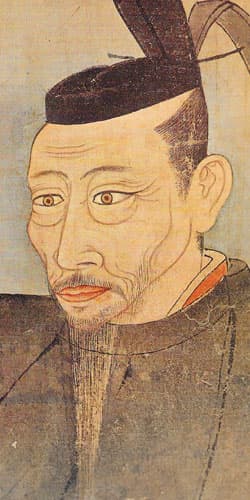
Toyotomi Hideyoshi
General · Modern
82.0Total
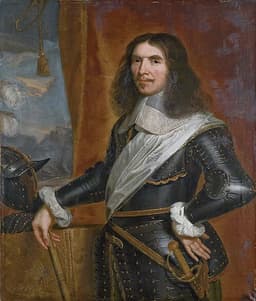
Turenne
General · Modern
75.8Total
Basic Information
Born
1537
1611
Died
1598
1675
Era
Modern
Modern
Nationality
Japan
France
Occupation
General
General
Civilization
Eastern
Western
Score Comparison
Military (10%)
79.9
79.9
Political (20%)
78.0
72.0
Influence (20%)
88.0
88.0
Legacy (20%)
80.0
65.0
Leadership (15%)
82.0
77.2
Strategy (15%)
80.4
72.0
TOTAL
82.0
75.8
Toyotomi Hideyoshi — Complete Timeline
1583 AD
Battle of ShizugatakeWar◆ Major
Hideyoshi defeated his rival Shibata Katsuie at the Battle of Shizugatake, solidifying his control over central Japan. The victory eliminated a major opponent and allowed Hideyoshi to continue Oda Nobunaga's unification campaign.
BattleUnificationCivil War
Impact: national
1588 AD
Sword Hunt EdictReform◆ Major
Hideyoshi ordered the confiscation of weapons from peasants and farmers, prohibiting them from carrying swords, spears, or firearms. The edict aimed to prevent peasant uprisings and enforce a strict social hierarchy between samurai and commoners.
Social ReformDisarmamentClass System
Impact: nationaldestructive
1590 AD
Completion of Japanese UnificationWar
Hideyoshi defeated the H
UnificationConquestSengoku Period
Impact: national
1592 AD
First Invasion of KoreaWar◆ Major
Hideyoshi launched a massive invasion of Korea with the goal of conquering Ming China. Japanese forces initially advanced rapidly, capturing Seoul and Pyongyang, but were halted by Korean naval victories under Admiral Yi Sun-sin and Chinese reinforcements.
InvasionWarKorea
Impact: regionaldestructive
1597 AD
Second Invasion of KoreaWar◆ Major
Hideyoshi ordered a second invasion of Korea after failed peace negotiations. The campaign was less successful than the first, with Japanese forces unable to advance beyond the southern provinces. The invasion ended with Hideyoshi's death in 1598.
InvasionWarKorea
Impact: regionaldestructive
Turenne — Complete Timeline
1639 AD
Campaign in the ValtellinaWar
Turenne commanded French forces in the Valtellina during the Thirty Years' War. He captured several fortresses and secured the strategic pass for France, demonstrating his early military skill.
Thirty Years' WarAlpsEarly Career
Impact: regional
1658 AD
Battle of the DunesWar◆ Major
Turenne commanded the French army to victory over the Spanish at the Battle of the Dunes near Dunkirk. The victory led to the capture of Dunkirk and forced Spain to seek peace, ending the Franco-Spanish War.
Franco-Spanish WarDunkirkMilitary Victory
Impact: regional
1674 AD
Battle of the RhineWar◆ Major
Turenne led a French army across the Rhine in winter, surprising the Imperial forces. He defeated the Austrians at the Battle of Entzheim and later at Turckheim, securing French control of Alsace.
Franco-Dutch WarAlsaceWinter Campaign
Impact: regional
Battle of the SambreWar◆ Major
Turenne defeated the Spanish and Dutch forces at the Battle of Seneffe. The battle was costly but prevented the Allies from invading France. It demonstrated Turenne's tactical skill in defensive warfare.
Franco-Dutch WarDefensive BattleTactics
Impact: regional
1675 AD
Death of TurenneWar◆ Major
Turenne was killed by a cannonball while reconnoitering enemy positions at the Battle of Sasbach. His death was a major loss for France. He was buried with honors in the Basilica of Saint-Denis.
Death in BattleFranco-Dutch WarMilitary Loss
Impact: nationaltragic
Expert Analysis
Origins
Toyotomi Hideyoshi (1537–1598) was born into a peasant family in Owari Province, Japan. His humble origins were a stark contrast to the samurai elite he would later command. He rose through the ranks as a sandal-bearer for Oda Nobunaga, eventually becoming one of his most trusted generals. Turenne (1611–1675), born Henri de la Tour d'Auvergne, was a scion of the French nobility and the grandson of William the Silent. His aristocratic lineage gave him immediate access to military education and command. While Hideyoshi's rise was a testament to meritocracy, Turenne's was a product of privilege.
Rise to Power
Hideyoshi's ascent was meteoric. After Nobunaga's death in 1582, he defeated rival generals at the Battle of Shizugatake (1583) and outmaneuvered Tokugawa Ieyasu. By 1590, he had unified all of Japan, a feat unmatched in centuries. Turenne's rise was slower. He fought in the Thirty Years' War, earning a reputation at the Battle of the Rhine (1644) and later serving Louis XIV. However, his career was marked by temporary disgraces, such as his support for the Fronde rebellion (1649–1653), which forced him into exile before reconciliation.
Leadership & Governance
Hideyoshi was not only a military commander but a ruler. He implemented the Sword Hunt (1588) to disarm peasants, conducted land surveys, and established a stable tax system. His invasion of Korea (1592–1598) was a strategic blunder, but his domestic policies laid the groundwork for the Tokugawa shogunate. Turenne was primarily a battlefield commander. He excelled in maneuver warfare, as seen at the Battle of the Dunes (1658), but never held supreme political power. His leadership was tactical, not strategic. Hideyoshi scores higher in political acumen (P=78 vs 72) and leadership (L=80 vs 65).
Triumph & Tragedy
Hideyoshi's greatest triumph was the unification of Japan, a turning point in Japanese history. His tragedy was the disastrous invasion of Korea, which ended in stalemate and his death in 1598. Turenne's triumphs include the Battle of the Dunes (1658) and his campaigns in the Valtellina (1639–1641). His tragedy came at the Battle of Sasbach (1675), where he was killed by a cannonball. Both men died in the field, but Hideyoshi's death marked the end of an era, while Turenne's was a personal loss for France.
Character & Destiny
Hideyoshi was known for his cunning, charisma, and occasional cruelty. His "Monkey" nickname reflected his cleverness. He was a master of diplomacy and psychological warfare. Turenne was reserved, methodical, and deeply religious. His tactical brilliance was paired with a cautious nature. Hideyoshi's destiny was to reshape Japan; Turenne's was to serve the French crown. Hideyoshi's drive and ambition (D=82 vs 77) and strategy (S=80 vs 72) give him an edge.
Legacy
Hideyoshi's legacy is mixed. He is revered as a unifier but criticized for the Korean invasions and his persecution of Christians. His sword hunt and class reforms had lasting impacts. Turenne is celebrated as a master of maneuver and a model of the French military tradition. Napoleon later studied his campaigns. However, Turenne's influence is limited to military tactics, while Hideyoshi's extends to governance and society. Hideyoshi's legacy score (T=82 vs 76) reflects this.
Conclusion
Hideyoshi edges Turenne in overall score (80.0 vs 73.8). He was a transformative figure who rose from nothing to rule a nation, whereas Turenne was a brilliant general within a stable system. Hideyoshi's military innovations, political reforms, and sheer audacity give him the victory. Turenne's tactical genius is undisputed, but Hideyoshi's impact on history is broader and more profound.
Rankings
🥇
Toyotomi HideyoshiLeader
Mil: 79.9Pol: 78.0Inf: 88.0
82.0
🥈
Turenne
Mil: 79.9Pol: 72.0Inf: 88.0
75.8
+6.2 behind
How This Comparison Works
Algorithm
Each figure is scored on 6 dimensions (0—100 scale) based on structured historical data: Military (10%), Political (20%), Influence (20%), Legacy (20%), Leadership (15%), Strategy (15%). The weighted total produces the final ranking.
Data Sources
Scores are computed from structured sub-indicators in the database. Scale factors adjust for era (Ancient ×0.85, Modern ×1.0) and civilization size (Eastern ×1.05, Other ×0.80) to account for differences in population and military scale.
Maximum 3 Figures
Comparisons are limited to 2—3 figures to ensure readability and statistical meaningfulness.
Error Margins
±5 points per dimension — Sub-scores are derived from historical records with inherent uncertainty. Two figures within 5 points on a dimension should be considered roughly equivalent in that area.
Total Score Accuracy
±3 points overall — The weighted combination of 6 dimensions produces a total score with approximately ±3 points of uncertainty. Differences of less than 3 points are not statistically significant— the figures are effectively tied.
Known Limitations
- Historical records are incomplete and uneven across civilizations
- Figures from oral-tradition societies may be underrepresented
- Occupation labels can misclassify multi-role figures
- Scores measure capability and impact, not moral character
- Quantitative scoring is a comparison tool, not absolute truth
Capability Radar
Military (10%) — Battles & Warfare
Battles
85
85
Win Rate
88
88
Expansion
80
80
Political (20%) — Governance & Reform
Reform
95
60
Diplomacy
80
75
Economy
90
55
Influence (20%) — Cultural & Global Reach
Cultural
85
65
Global
70
70
Legacy (20%) — Historical Impact
Historical
90
80
Longevity
85
75
Leadership (15%) — Power & Stability
Tenure
85
70
Stability
75
65
Strategy (15%) — Tactics & Innovation
Strategy
92
92
Tactics
90
90
Reform
95
75
Similar Comparisons
Comments & Discussion
No comments yet. Be the first to share your thoughts!