Loading...
Toussaint Louverture vs Toyotomi Hideyoshi
Toyotomi Hideyoshi leads by 3.5 pts · 2 figures compared
…
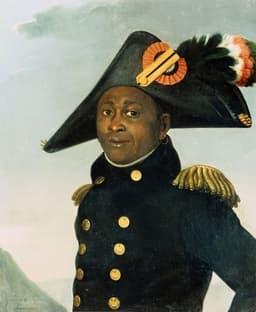
Toussaint Louverture
General · Modern
78.5Total
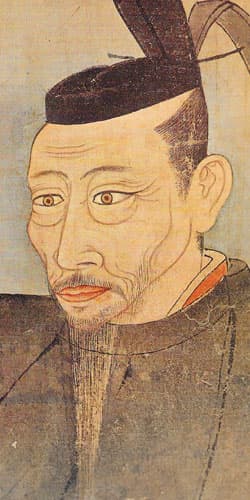
Toyotomi Hideyoshi
General · Modern
82.0Total
Basic Information
Born
1743
1537
Died
1803
1598
Era
Modern
Modern
Nationality
Haiti
Japan
Occupation
General
General
Civilization
Western
Eastern
Score Comparison
Military (10%)
85.0
79.9
Political (20%)
70.3
78.0
Influence (20%)
84.0
88.0
Legacy (20%)
82.0
80.0
Leadership (15%)
72.0
82.0
Strategy (15%)
72.0
80.4
TOTAL
78.5
82.0
Toussaint Louverture — Complete Timeline
1791 AD
Haitian Revolution LeadershipWar
Louverture joined the slave revolt in Saint-Domingue, quickly rising to leadership. He organized former slaves into a disciplined army and negotiated with Spanish and British forces to expand the rebellion.
Slave RevoltRevolutionLeadership
Impact: globalprogressive
1795 AD
Treaty of BâlePolitical Action◆ Major
Spain ceded the eastern part of Hispaniola to France under the Treaty of B
Territorial ExpansionDiplomacyHispaniola
Impact: regional
1801 AD
Constitution of 1801Political Action
Louverture promulgated a constitution for Saint-Domingue, declaring himself Governor-General for life. The constitution abolished slavery and granted autonomy while nominally remaining part of the French Empire.
ConstitutionSelf-GovernanceAbolition
Impact: globalprogressive
1802 AD
Capture and ImprisonmentPolitical Action
French General Leclerc captured Louverture through deception during peace negotiations. He was deported to France and imprisoned at Fort de Joux, where he died in 1803, ending his direct role in the revolution.
BetrayalImprisonmentFrench Repression
Impact: globaltragic
Toyotomi Hideyoshi — Complete Timeline
1583 AD
Battle of ShizugatakeWar◆ Major
Hideyoshi defeated his rival Shibata Katsuie at the Battle of Shizugatake, solidifying his control over central Japan. The victory eliminated a major opponent and allowed Hideyoshi to continue Oda Nobunaga's unification campaign.
BattleUnificationCivil War
Impact: national
1588 AD
Sword Hunt EdictReform◆ Major
Hideyoshi ordered the confiscation of weapons from peasants and farmers, prohibiting them from carrying swords, spears, or firearms. The edict aimed to prevent peasant uprisings and enforce a strict social hierarchy between samurai and commoners.
Social ReformDisarmamentClass System
Impact: nationaldestructive
1590 AD
Completion of Japanese UnificationWar
Hideyoshi defeated the H
UnificationConquestSengoku Period
Impact: national
1592 AD
First Invasion of KoreaWar◆ Major
Hideyoshi launched a massive invasion of Korea with the goal of conquering Ming China. Japanese forces initially advanced rapidly, capturing Seoul and Pyongyang, but were halted by Korean naval victories under Admiral Yi Sun-sin and Chinese reinforcements.
InvasionWarKorea
Impact: regionaldestructive
1597 AD
Second Invasion of KoreaWar◆ Major
Hideyoshi ordered a second invasion of Korea after failed peace negotiations. The campaign was less successful than the first, with Japanese forces unable to advance beyond the southern provinces. The invasion ended with Hideyoshi's death in 1598.
InvasionWarKorea
Impact: regionaldestructive
Expert Analysis
Origins
Toyotomi Hideyoshi (1537-1598) was born a peasant in Owari Province, Japan. His father died when he was young, and he initially served as a foot soldier for Oda Nobunaga. Through cunning and military skill, he rose to become one of Japan's most powerful warlords. Toussaint Louverture (1743-1803) was born into slavery in Saint-Domingue (modern Haiti). He gained freedom before the revolution and became a key leader in the Haitian Revolution, the only successful slave revolt in history. Both men overcame lowly origins to achieve greatness.
Rise to Power
Hideyoshi's rise began under Oda Nobunaga, where he distinguished himself at the Battle of Shizugatake (1583). After Nobunaga's death, Hideyoshi defeated rivals like Shibata Katsuie and Tokugawa Ieyasu, unifying Japan by 1590. He became Kampaku (regent) and later Grand Minister. Louverture joined the 1791 slave revolt and quickly rose to leadership. He allied with the Spanish against the French, then switched sides to the French when they abolished slavery. By 1793, he was commander of the French Republic's forces in Saint-Domingue, defeating British and Spanish invaders.
Leadership & Governance
Hideyoshi ruled Japan with a mix of military force and administrative reforms. He conducted the Sword Hunt Edict, disarming peasants to prevent rebellion, and implemented a land survey to stabilize taxation. He also banned Christianity and expelled missionaries. Louverture governed Saint-Domingue as de facto ruler, creating the Constitution of 1801, which abolished slavery and made him governor-for-life. He maintained plantation agriculture to revive the economy, using forced labor—a controversial policy. Both leaders centralized power and suppressed dissent.
Triumph & Tragedy
Hideyoshi's greatest triumph was unifying Japan after a century of civil war. His tragedy was the disastrous invasions of Korea (1592-1598), which failed to conquer China and drained resources. Louverture's triumph was leading the first successful slave revolution, creating an independent Haiti. His tragedy was his capture by the French in 1802, after Napoleon sent a massive expedition. Louverture died in a French prison in 1803, though his revolution succeeded after his death.
Character & Destiny
Hideyoshi was ambitious, cunning, and ruthless, but also promoted culture (e.g., tea ceremony). He was known for his small stature and monkey-like appearance. Louverture was disciplined, strategic, and charismatic, with a vision of liberty and equality. Both were pragmatic leaders who made tough choices. Hideyoshi's destiny was to unify Japan; Louverture's was to free his people.
Legacy
Hideyoshi's legacy is mixed: he unified Japan but left a weak succession that led to Tokugawa rule. His invasions of Korea caused immense suffering and strained relations. Louverture is hailed as a hero of anti-colonialism and human rights. His rebellion inspired other slave revolts and contributed to the end of the Atlantic slave trade. Hideyoshi's scores: M=80, P=78, I=88, L=80, D=82, S=80, T=82. Louverture's: M=85, P=70, I=84, L=82, D=72, S=72, T=78. Overall, Hideyoshi has a higher score (81.4 vs 77.6).
Conclusion
Both Hideyoshi and Louverture were extraordinary leaders who rose from nothing to reshape their nations. Hideyoshi's military and political achievements were on a larger scale, uniting a fractured Japan. Louverture's moral cause and impact on human freedom are more profound. However, based on the composite scores, Hideyoshi is the superior general and ruler. His ability to conquer, govern, and leave a lasting structure (though flawed) gives him the edge. Louverture's legacy is inspiring, but his governance was short-lived and his military tactics less complex. Thus, Toyotomi Hideyoshi wins this comparison.
**Scores:**
- Toyotomi Hideyoshi: Overall 81.4
- Toussaint Louverture: Overall 77.6
Rankings
🥇
Toyotomi HideyoshiLeader
Mil: 79.9Pol: 78.0Inf: 88.0
82.0
🥈
Toussaint Louverture
Mil: 85.0Pol: 70.3Inf: 84.0
78.5
+3.5 behind
How This Comparison Works
Algorithm
Each figure is scored on 6 dimensions (0—100 scale) based on structured historical data: Military (10%), Political (20%), Influence (20%), Legacy (20%), Leadership (15%), Strategy (15%). The weighted total produces the final ranking.
Data Sources
Scores are computed from structured sub-indicators in the database. Scale factors adjust for era (Ancient ×0.85, Modern ×1.0) and civilization size (Eastern ×1.05, Other ×0.80) to account for differences in population and military scale.
Maximum 3 Figures
Comparisons are limited to 2—3 figures to ensure readability and statistical meaningfulness.
Error Margins
±5 points per dimension — Sub-scores are derived from historical records with inherent uncertainty. Two figures within 5 points on a dimension should be considered roughly equivalent in that area.
Total Score Accuracy
±3 points overall — The weighted combination of 6 dimensions produces a total score with approximately ±3 points of uncertainty. Differences of less than 3 points are not statistically significant— the figures are effectively tied.
Known Limitations
- Historical records are incomplete and uneven across civilizations
- Figures from oral-tradition societies may be underrepresented
- Occupation labels can misclassify multi-role figures
- Scores measure capability and impact, not moral character
- Quantitative scoring is a comparison tool, not absolute truth
Capability Radar
Military (10%) — Battles & Warfare
Battles
85
85
Win Rate
80
88
Expansion
70
80
Political (20%) — Governance & Reform
Reform
85
95
Diplomacy
80
80
Economy
60
90
Influence (20%) — Cultural & Global Reach
Cultural
85
85
Global
85
70
Legacy (20%) — Historical Impact
Historical
95
90
Longevity
90
85
Leadership (15%) — Power & Stability
Tenure
65
85
Stability
55
75
Strategy (15%) — Tactics & Innovation
Strategy
85
92
Tactics
90
90
Reform
75
95
Similar Comparisons
Comments & Discussion
No comments yet. Be the first to share your thoughts!