Loading...
Tokugawa Ieyasu vs Yamagata Aritomo
Yamagata Aritomo leads by 0.7 pts · 2 figures compared
…
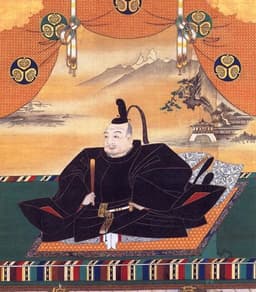
Tokugawa Ieyasu
General · Modern
81.8Total
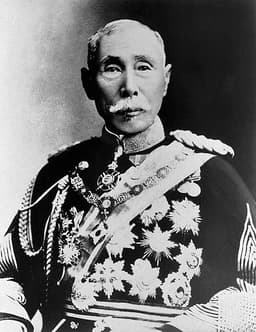
Yamagata Aritomo
General · Modern
82.5Total
Basic Information
Born
1543
1838
Died
1616
1922
Era
Modern
Modern
Nationality
Japan
Japan
Occupation
General
General
Civilization
Eastern
Eastern
Score Comparison
Military (10%)
78.0
78.0
Political (20%)
82.0
82.0
Influence (20%)
88.0
80.0
Legacy (20%)
75.0
90.0
Leadership (15%)
85.0
78.0
Strategy (15%)
82.0
82.0
TOTAL
81.8
82.5
Tokugawa Ieyasu — Complete Timeline
1600 AD
Battle of SekigaharaWar
Tokugawa Ieyasu led the Eastern Army to victory over Ishida Mitsunari's Western Army at Sekigahara. This decisive battle ended the Sengoku period and established Ieyasu as the supreme military ruler of Japan, paving the way for the Tokugawa shogunate.
Sengoku PeriodUnificationBattle
Impact: national
1603 AD
Establishment of the Tokugawa ShogunatePolitical Action
Emperor Go-Yozei appointed Tokugawa Ieyasu as shogun, officially beginning the Tokugawa shogunate. Ieyasu established his government in Edo (modern Tokyo), centralizing military and political power under his family's control.
ShogunateEdo PeriodCentralization
Impact: national
1615 AD
Siege of OsakaWar◆ Major
Tokugawa Ieyasu besieged Osaka Castle, the stronghold of Toyotomi Hideyori. The castle fell, and Hideyori committed suicide. This campaign eliminated the last major opposition to Tokugawa rule, solidifying the shogunate's control over Japan.
Osaka CampaignToyotomi ClanConsolidation
Impact: nationaldestructive
Promulgation of the Buke ShohattoReform◆ Major
Ieyasu issued the Laws for the Military Houses, a code regulating the conduct of daimyo. It restricted castle construction, required alternate attendance in Edo, and prohibited alliances without shogunal permission. This law helped control the feudal lords.
Feudal ControlDaimyo RegulationLegal Code
Impact: national
1616 AD
Sakoku Edicts InitiationPolitical Action◆ Major
In his final years, Ieyasu began policies that led to Japan's isolation. He restricted foreign trade to specific ports and expelled Christian missionaries. These measures, expanded by successors, resulted in the sakoku policy that isolated Japan for over 200 years.
IsolationismForeign PolicyChristianity
Impact: national
Yamagata Aritomo — Complete Timeline
1873 AD
Establishment of the Imperial Japanese ArmyReform
Yamagata Aritomo, as War Minister, oversaw the creation of the Imperial Japanese Army based on the Prussian model. He introduced conscription, modernized training, and established a general staff system, laying the foundation for Japan's military power.
Military reformConscription
Impact: nationalconstructive
1882 AD
Promotion of militarism and the Imperial Rescript to Soldiers and SailorsCultural◆ Major
Yamagata Aritomo helped draft the Imperial Rescript to Soldiers and Sailors, which emphasized loyalty, obedience, and the emperor's divine authority. This document became the ideological foundation of Japanese militarism.
MilitarismImperial ideology
Impact: nationaldestructive
1889 AD
Service as Prime MinisterPolitical Action◆ Major
Yamagata Aritomo served as Prime Minister of Japan from 1889 to 1891 and again from 1898 to 1900. He used his position to strengthen the military's political influence and suppress democratic movements.
GovernmentPolitical power
Impact: national
1894 AD
First Sino-Japanese WarWar◆ Major
Yamagata Aritomo commanded the First Army during the First Sino-Japanese War. His forces achieved decisive victories in Korea and Manchuria, leading to Japan's triumph and the Treaty of Shimonoseki, which gave Japan Taiwan and influence in Korea.
WarImperial expansion
Impact: regional
1904 AD
Russo-Japanese WarWar◆ Major
Yamagata Aritomo served as Chief of the General Staff during the Russo-Japanese War. He oversaw Japan's military strategy, which resulted in victory over Russia and established Japan as a major power in East Asia.
WarGreat power
Impact: global
Expert Analysis
Origins
Yamagata Aritomo (1838–1922) was born into a lower-ranking samurai family in Choshu domain, which became a hotbed of anti-shogunate sentiment. His early life was shaped by the turmoil of the Bakumatsu period, and he joined the Kiheitai, a revolutionary irregular militia, fighting for the imperial restoration. This experience forged his belief in a modern, conscripted army.
Tokugawa Ieyasu (1543–1616) was born into the Matsudaira clan, a minor samurai family in Mikawa. His childhood was marked by hostage exchanges and political instability during the Sengoku period. He learned the harsh realities of war and diplomacy early, eventually becoming a powerful daimyo through strategic alliances and military prowess.
Rise to Power
Yamagata rose through the ranks of the new Meiji government, studying military systems in Europe. He became the architect of the Imperial Japanese Army, modeled on Prussian lines, and served as its first Chief of Staff. His rise was meteoric, leveraging his expertise to become a key figure in the Meiji oligarchy, serving multiple terms as Prime Minister and Home Minister.
Tokugawa Ieyasu's rise was more gradual and tactical. He allied with Oda Nobunaga, then Toyotomi Hideyoshi, expanding his territory and influence. After Hideyoshi's death, Ieyasu maneuvered against rivals, culminating in his decisive victory at the Battle of Sekigahara (1600). This battle made him the paramount military leader, and he was appointed Shogun in 1603, establishing the Tokugawa shogunate.
Leadership & Governance
Yamagata was a staunch militarist and nationalist. He promoted the Imperial Rescript to Soldiers and Sailors, emphasizing loyalty and bushido, and pushed for military expansion. As Prime Minister, he centralized the state, expanded the military budget, and laid the groundwork for Japan's imperial ambitions. His governance was authoritarian, prioritizing military strength and national unity.
Tokugawa Ieyasu established a stable, centralized feudal system. He created a balance of power by redistributing land among loyal daimyo and implementing the Sankin Kotai (alternate attendance) system. His Buke Shohatto laws regulated samurai conduct, and his sakoku (isolation) policy controlled foreign influence. His governance brought 250 years of peace and stability, fostering economic and cultural growth.
Triumph & Tragedy
Yamagata's greatest triumphs were the First Sino-Japanese War (1894–1895) and the Russo-Japanese War (1904–1905), where the modern army he built achieved stunning victories. However, his promotion of militarism sowed seeds for future conflicts, including World War II. His later years saw him as a power broker, but his intransigence contributed to political instability.
Tokugawa Ieyasu's triumph was the Siege of Osaka (1614–1615), which eliminated the Toyotomi clan and secured Tokugawa supremacy. He established a dynasty that ruled for over 250 years. However, his sakoku policy isolated Japan, leading to technological stagnation and eventual forced opening by the West. His legacy is a double-edged sword: peace and stability, but also isolation and rigidity.
Character & Destiny
Yamagata was ambitious, ruthless, and single-minded. He was known as the "father of Japanese militarism" and his destiny was to modernize Japan's military and set it on an imperialist path. His character was driven by a desire for national strength and personal power, often clashing with civilian leaders.
Tokugawa Ieyasu was patient, cunning, and pragmatic. His famous saying, "The strong man is the one who can endure," reflects his character. His destiny was to unify Japan and establish a lasting peace. He was a master strategist, biding his time and striking when the moment was right.
Legacy
Yamagata's legacy is the modern Japanese military and its role in shaping Japan as a world power. However, his militarism also led to Japan's disastrous path in the 20th century. Today, he is remembered as a controversial figure—a brilliant organizer but also a harbinger of ultranationalism.
Tokugawa Ieyasu's legacy is the Edo period, a golden age of peace, culture, and economic development. His shogunate stabilized Japan for centuries, but his isolationist policies left Japan vulnerable. He is revered as one of Japan's great unifiers, alongside Oda Nobunaga and Toyotomi Hideyoshi.
Conclusion
In this comparison, Yamagata Aritomo edges out Tokugawa Ieyasu with a score gap of 0.7. Yamagata's military innovations and state-building had a more direct impact on modern Japan's rise as a global power. While Ieyasu's long peace was remarkable, Yamagata's influence on Japan's trajectory into the 20th century was more transformative. Both were brilliant strategists, but Yamagata's legacy resonates more in the modern era.
**Numerical Scores:**
- Yamagata Aritomo: Overall 82.5
- Tokugawa Ieyasu: Overall 81.8
Rankings
🥇
Yamagata AritomoLeader
Mil: 78.0Pol: 82.0Inf: 80.0
82.5
🥈
Tokugawa Ieyasu
Mil: 78.0Pol: 82.0Inf: 88.0
81.8
+0.7 behind
How This Comparison Works
Algorithm
Each figure is scored on 6 dimensions (0—100 scale) based on structured historical data: Military (10%), Political (20%), Influence (20%), Legacy (20%), Leadership (15%), Strategy (15%). The weighted total produces the final ranking.
Data Sources
Scores are computed from structured sub-indicators in the database. Scale factors adjust for era (Ancient ×0.85, Modern ×1.0) and civilization size (Eastern ×1.05, Other ×0.80) to account for differences in population and military scale.
Maximum 3 Figures
Comparisons are limited to 2—3 figures to ensure readability and statistical meaningfulness.
Error Margins
±5 points per dimension — Sub-scores are derived from historical records with inherent uncertainty. Two figures within 5 points on a dimension should be considered roughly equivalent in that area.
Total Score Accuracy
±3 points overall — The weighted combination of 6 dimensions produces a total score with approximately ±3 points of uncertainty. Differences of less than 3 points are not statistically significant— the figures are effectively tied.
Known Limitations
- Historical records are incomplete and uneven across civilizations
- Figures from oral-tradition societies may be underrepresented
- Occupation labels can misclassify multi-role figures
- Scores measure capability and impact, not moral character
- Quantitative scoring is a comparison tool, not absolute truth
Capability Radar
Military (10%) — Battles & Warfare
Battles
85
75
Win Rate
90
70
Expansion
75
80
Political (20%) — Governance & Reform
Reform
90
90
Diplomacy
85
75
Economy
88
70
Influence (20%) — Cultural & Global Reach
Cultural
85
80
Global
70
70
Legacy (20%) — Historical Impact
Historical
90
85
Longevity
95
75
Leadership (15%) — Power & Stability
Tenure
95
85
Stability
95
65
Strategy (15%) — Tactics & Innovation
Strategy
92
85
Tactics
88
80
Reform
80
95
Similar Comparisons
Comments & Discussion
No comments yet. Be the first to share your thoughts!