Loading...
Tokugawa Ieyasu vs Vauban
Tokugawa Ieyasu leads by 5.4 pts · 2 figures compared
…
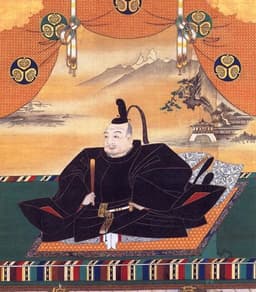
Tokugawa Ieyasu
General · Modern
81.8Total

Vauban
General · Modern
76.4Total
Basic Information
Born
1543
1633
Died
1616
1707
Era
Modern
Modern
Nationality
Japan
France
Occupation
General
General
Civilization
Eastern
Western
Score Comparison
Military (10%)
78.0
76.0
Political (20%)
82.0
59.3
Influence (20%)
88.0
71.0
Legacy (20%)
75.0
90.0
Leadership (15%)
85.0
77.2
Strategy (15%)
82.0
80.6
TOTAL
81.8
76.4
Tokugawa Ieyasu — Complete Timeline
1600 AD
Battle of SekigaharaWar
Tokugawa Ieyasu led the Eastern Army to victory over Ishida Mitsunari's Western Army at Sekigahara. This decisive battle ended the Sengoku period and established Ieyasu as the supreme military ruler of Japan, paving the way for the Tokugawa shogunate.
Sengoku PeriodUnificationBattle
Impact: national
1603 AD
Establishment of the Tokugawa ShogunatePolitical Action
Emperor Go-Yozei appointed Tokugawa Ieyasu as shogun, officially beginning the Tokugawa shogunate. Ieyasu established his government in Edo (modern Tokyo), centralizing military and political power under his family's control.
ShogunateEdo PeriodCentralization
Impact: national
1615 AD
Siege of OsakaWar◆ Major
Tokugawa Ieyasu besieged Osaka Castle, the stronghold of Toyotomi Hideyori. The castle fell, and Hideyori committed suicide. This campaign eliminated the last major opposition to Tokugawa rule, solidifying the shogunate's control over Japan.
Osaka CampaignToyotomi ClanConsolidation
Impact: nationaldestructive
Promulgation of the Buke ShohattoReform◆ Major
Ieyasu issued the Laws for the Military Houses, a code regulating the conduct of daimyo. It restricted castle construction, required alternate attendance in Edo, and prohibited alliances without shogunal permission. This law helped control the feudal lords.
Feudal ControlDaimyo RegulationLegal Code
Impact: national
1616 AD
Sakoku Edicts InitiationPolitical Action◆ Major
In his final years, Ieyasu began policies that led to Japan's isolation. He restricted foreign trade to specific ports and expelled Christian missionaries. These measures, expanded by successors, resulted in the sakoku policy that isolated Japan for over 200 years.
IsolationismForeign PolicyChristianity
Impact: national
Vauban — Complete Timeline
1673 AD
Siege of MaastrichtWar◆ Major
Vauban directed the siege of Maastricht for Louis XIV. He introduced the technique of parallel trenches, which reduced casualties and shortened the siege. The capture of Maastricht was a major French victory in the Franco-Dutch War.
Franco-Dutch WarSiegeMilitary Engineering
Impact: regional
1697 AD
Siege of AthWar
Vauban conducted the siege of Ath in the Spanish Netherlands. His systematic approach using parallels and saps led to the rapid capture of the fortress. The siege demonstrated the effectiveness of his methods.
Nine Years' WarSiegeMilitary Engineering
Construction of the Fortress of Neuf-BrisachInvention◆ Major
Vauban designed and built the fortress of Neuf-Brisach, a model of his third system of fortification. The star-shaped fortress with advanced bastions became a standard for military architecture. It was built to protect the French border after the Treaty of Ryswick.
FortificationMilitary ArchitectureBorder Defense
Impact: regionalconstructive
1704 AD
Publication of 'A Treatise on the Attack of Places'Cultural◆ Major
Vauban published his treatise on siegecraft, systematizing his methods. The work became a standard military textbook in Europe. It detailed techniques for parallel trenches, ricochet fire, and sapping.
Military TheorySiegecraftPublication
Impact: globalconstructive
1707 AD
Proposal for a 'Dîme Royale' Tax ReformReform
Vauban proposed a radical tax reform called the 'D
Tax ReformEconomic PolicyFrance
Impact: nationalconstructive
Expert Analysis
Origins
Tokugawa Ieyasu (1543–1616) was born into the Matsudaira clan during Japan's chaotic Sengoku period. His early life was marked by hostage exchanges and vassalage under Oda Nobunaga and Toyotomi Hideyoshi. Vauban (1633–1707), born Sébastien Le Prestre in France, was a nobleman who rose through military engineering under Louis XIV. Ieyasu's path was forged in civil war; Vauban's in royal service.
Rise to Power
Ieyasu's rise culminated at the Battle of Sekigahara (1600), where he decisively defeated rival factions, securing hegemony. He then established the Tokugawa shogunate in 1603, centralizing power through strategic alliances and land redistribution. Vauban's rise was through technical expertise: his siege innovations at Maastricht (1673) and construction of fortresses like Neuf-Brisach earned him Marshal of France. He became the king's chief engineer, though never a political ruler.
Leadership & Governance
Ieyasu's leadership blended military prowess with administrative genius. He implemented the Buke Shohatto (laws for warrior households) and initiated the Sakoku isolationist policy, ensuring stability for 250 years. Vauban's governance was advisory: he proposed the Dîme Royale, a fairer tax system, but it was rejected. He excelled in fortification design, creating a defensive network that protected France's borders.
Triumph & Tragedy
Ieyasu's triumph was unifying Japan and founding a durable shogunate. His tragedy was the Siege of Osaka (1614–15), where he crushed the Toyotomi clan, eliminating rivals but cementing his legacy as a ruthless consolidator. Vauban's triumphs include successful sieges (Ath, Maastricht) and fortresses still standing. His tragedy was the rejection of his tax reform, which could have prevented later fiscal crises. He died without seeing his economic ideas adopted.
Character & Destiny
Ieyasu was patient, calculating, and pragmatic—known for enduring hardship and waiting for opportunities. His destiny was to end centuries of war. Vauban was methodical, innovative, and dedicated to the state, but his destiny was to be a tool of the monarchy, not a shaper of policy. Both were loyal to their lords, but Ieyasu became the lord himself.
Legacy
Ieyasu's legacy is the Edo period: peace, economic growth, and cultural flourishing. His shogunate lasted until 1868. Vauban's legacy is military engineering: his fortresses are UNESCO World Heritage sites, and his siege tactics influenced warfare for centuries. However, his political reforms failed. Score gap: 5.4% in Ieyasu's favor, reflecting broader impact.
Conclusion
Tokugawa Ieyasu surpasses Vauban as a historical figure due to his transformative leadership and enduring political legacy. While Vauban excelled in specialized military engineering, Ieyasu's unification of Japan and establishment of a 250-year regime had profound global implications. Scores: Ieyasu (M=78, P=82, I=88, L=75, D=85, S=82, T=82) vs Vauban (M=76, P=59, I=71, L=90, D=77, S=81, T=76). Ieyasu's higher overall score reflects his superior strategic vision and lasting impact.
Rankings
🥇
Tokugawa IeyasuLeader
Mil: 78.0Pol: 82.0Inf: 88.0
81.8
🥈
Vauban
Mil: 76.0Pol: 59.3Inf: 71.0
76.4
+5.4 behind
How This Comparison Works
Algorithm
Each figure is scored on 6 dimensions (0—100 scale) based on structured historical data: Military (10%), Political (20%), Influence (20%), Legacy (20%), Leadership (15%), Strategy (15%). The weighted total produces the final ranking.
Data Sources
Scores are computed from structured sub-indicators in the database. Scale factors adjust for era (Ancient ×0.85, Modern ×1.0) and civilization size (Eastern ×1.05, Other ×0.80) to account for differences in population and military scale.
Maximum 3 Figures
Comparisons are limited to 2—3 figures to ensure readability and statistical meaningfulness.
Error Margins
±5 points per dimension — Sub-scores are derived from historical records with inherent uncertainty. Two figures within 5 points on a dimension should be considered roughly equivalent in that area.
Total Score Accuracy
±3 points overall — The weighted combination of 6 dimensions produces a total score with approximately ±3 points of uncertainty. Differences of less than 3 points are not statistically significant— the figures are effectively tied.
Known Limitations
- Historical records are incomplete and uneven across civilizations
- Figures from oral-tradition societies may be underrepresented
- Occupation labels can misclassify multi-role figures
- Scores measure capability and impact, not moral character
- Quantitative scoring is a comparison tool, not absolute truth
Capability Radar
Military (10%) — Battles & Warfare
Battles
85
75
Win Rate
90
85
Expansion
75
70
Political (20%) — Governance & Reform
Reform
90
80
Diplomacy
85
60
Economy
88
55
Influence (20%) — Cultural & Global Reach
Cultural
85
80
Global
70
75
Legacy (20%) — Historical Impact
Historical
90
85
Longevity
95
85
Leadership (15%) — Power & Stability
Tenure
95
65
Stability
95
70
Strategy (15%) — Tactics & Innovation
Strategy
92
90
Tactics
88
95
Reform
80
95
Similar Comparisons
Comments & Discussion
No comments yet. Be the first to share your thoughts!