Loading...
Tokugawa Ieyasu vs Trajan
Tokugawa Ieyasu leads by 5.8 pts · 2 figures compared
…
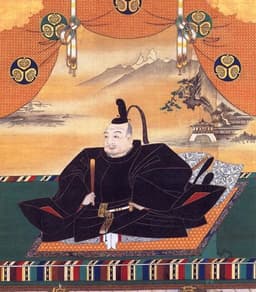
Tokugawa Ieyasu
General · Modern
81.8Total

Trajan
Emperor · Ancient
76.0Total
Basic Information
Born
1543
53
Died
1616
117
Era
Modern
Ancient
Nationality
Japan
Roman Empire
Occupation
General
Emperor
Civilization
Eastern
Western
Score Comparison
Military (10%)
78.0
86.0
Political (20%)
82.0
79.2
Influence (20%)
88.0
82.0
Legacy (20%)
75.0
65.6
Leadership (15%)
85.0
73.2
Strategy (15%)
82.0
76.0
TOTAL
81.8
76.0
Tokugawa Ieyasu — Complete Timeline
1600 AD
Battle of SekigaharaWar
Tokugawa Ieyasu led the Eastern Army to victory over Ishida Mitsunari's Western Army at Sekigahara. This decisive battle ended the Sengoku period and established Ieyasu as the supreme military ruler of Japan, paving the way for the Tokugawa shogunate.
Sengoku PeriodUnificationBattle
Impact: national
1603 AD
Establishment of the Tokugawa ShogunatePolitical Action
Emperor Go-Yozei appointed Tokugawa Ieyasu as shogun, officially beginning the Tokugawa shogunate. Ieyasu established his government in Edo (modern Tokyo), centralizing military and political power under his family's control.
ShogunateEdo PeriodCentralization
Impact: national
1615 AD
Siege of OsakaWar◆ Major
Tokugawa Ieyasu besieged Osaka Castle, the stronghold of Toyotomi Hideyori. The castle fell, and Hideyori committed suicide. This campaign eliminated the last major opposition to Tokugawa rule, solidifying the shogunate's control over Japan.
Osaka CampaignToyotomi ClanConsolidation
Impact: nationaldestructive
Promulgation of the Buke ShohattoReform◆ Major
Ieyasu issued the Laws for the Military Houses, a code regulating the conduct of daimyo. It restricted castle construction, required alternate attendance in Edo, and prohibited alliances without shogunal permission. This law helped control the feudal lords.
Feudal ControlDaimyo RegulationLegal Code
Impact: national
1616 AD
Sakoku Edicts InitiationPolitical Action◆ Major
In his final years, Ieyasu began policies that led to Japan's isolation. He restricted foreign trade to specific ports and expelled Christian missionaries. These measures, expanded by successors, resulted in the sakoku policy that isolated Japan for over 200 years.
IsolationismForeign PolicyChristianity
Impact: national
Trajan — Complete Timeline
101 AD
Implemented the Alimenta Welfare ProgramReform◆ Major
Trajan expanded the Alimenta program, a state-funded welfare system that provided food subsidies and educational support for poor children in Italy. The program used interest from state loans to landowners to fund the distributions, aiming to boost the Italian population and agricultural economy.
WelfareSocial PolicyItaly
Impact: regionalconstructive
105 AD
Built Trajan's Bridge over the DanubeOther
Trajan ordered the construction of a massive stone and timber bridge across the Danube River near the Iron Gates. Designed by Apollodorus of Damascus, it was the longest arch bridge in the world for over a millennium, facilitating the Roman invasion of Dacia.
EngineeringBridgeDanube
Impact: regionalconstructive
106 AD
Conquered DaciaWar
Trajan led two major campaigns against the Dacian kingdom under King Decebalus, culminating in the conquest of Dacia (modern Romania) in 106 CE. The victory brought vast gold and silver mines under Roman control and established a new province, funding massive building projects in Rome.
DaciaConquestProvince
Impact: regional
112 AD
Built Trajan's Forum and MarketCultural◆ Major
Trajan commissioned the construction of Trajan's Forum, a vast complex in Rome including a basilica, libraries, and the Column of Trajan. The adjacent Trajan's Market, a multi-level commercial center, demonstrated Roman engineering prowess and served as a model for urban planning.
ArchitectureRomeUrban Planning
Impact: globalconstructive
116 AD
Conquered Parthia and Reached the Persian GulfWar◆ Major
Trajan launched a campaign against the Parthian Empire, capturing its capital Ctesiphon and annexing Mesopotamia. He reached the Persian Gulf, marking the easternmost extent of Roman territory. However, rebellions in the conquered territories forced a withdrawal shortly after.
ParthiaMesopotamiaExpansion
Impact: global
Expert Analysis
Origins
Tokugawa Ieyasu (1543–1616) was born into the Matsudaira clan, a minor samurai family in Mikawa Province. His early life was marked by vassalage and hostage situations, which taught him patience and strategy. He rose through military alliances, eventually serving under Oda Nobunaga and Toyotomi Hideyoshi. Trajan (53–117 CE) was born in Italica, Hispania, to a prominent Roman family. His father was a senator and governor, providing Trajan with a privileged upbringing and military training. He served as a legate and commander, earning renown for his discipline and effectiveness. Both leaders emerged from regional backgrounds but leveraged their military prowess and political acumen to achieve supreme power.
Rise to Power
Tokugawa Ieyasu's rise culminated in the Battle of Sekigahara (1600), where he defeated the Western Army and became the de facto ruler of Japan. He then established the Tokugawa shogunate in 1603, centralizing power under his family. Trajan's rise was more straightforward: he was adopted by Emperor Nerva in 97 CE and succeeded him in 98 CE, becoming the first emperor born outside Italy. His military reputation ensured a smooth transition. While Ieyasu had to fight for his position, Trajan inherited it, but both were effective consolidators.
Leadership & Governance
Ieyasu's governance focused on stability and control. He implemented the Buke Shohatto (Laws for the Military Houses) to regulate daimyo, the sankin kotai system (alternate attendance) to weaken regional lords, and the Sakoku edicts to isolate Japan and control foreign influence. His rule brought 250 years of peace. Trajan was known for his benevolent autocracy, expanding the empire while improving infrastructure. He built Trajan's Forum, markets, and bridges, and implemented the Alimenta welfare program to support orphans. Both were effective administrators, but Ieyasu's long-term institutional legacy was more profound.
Triumph & Tragedy
Ieyasu's greatest triumph was the Siege of Osaka (1614-1615), which eliminated the Toyotomi clan and secured Tokugawa supremacy. His tragedy was the harshness of his policies, which stifled innovation and led to isolation. Trajan's triumph was the conquest of Dacia (101-106 CE) and Parthia (114-117 CE), expanding Rome to its maximum extent. His tragedy was that many of his conquests, especially in Parthia, were soon lost after his death. Both leaders achieved great military successes, but Ieyasu's victories were more enduring.
Character & Destiny
Ieyasu was pragmatic, patient, and ruthless. He was known for his careful planning and ability to wait for the right moment. His destiny was to unify Japan after centuries of civil war. Trajan was courageous, generous, and ambitious. He was beloved by the people and Senate, earning the title "Optimus Princeps" (Best Ruler). His destiny was to lead Rome to its peak. Ieyasu's character was more calculating, while Trajan's was more charismatic.
Legacy
Tokugawa Ieyasu's legacy is the Tokugawa shogunate, which ruled Japan for 250 years, shaping its culture, economy, and society. His policies laid the foundation for modern Japan. Trajan's legacy is the peak of Roman territorial expansion, impressive architecture, and the welfare system. However, his conquests were not sustainable. Ieyasu's impact was more lasting and transformative for Japan, while Trajan's was more spectacular but ephemeral.
Conclusion
Tokugawa Ieyasu and Trajan were both exceptional leaders who achieved greatness in their respective contexts. Ieyasu's scores (M=78, P=82, I=88, L=75, D=85, S=82, T=82) reflect his strategic brilliance, institutional innovation, and enduring legacy. Trajan's scores (M=86, P=79, I=82, L=66, D=73, S=76, T=76) show his military might and administrative skill but lower durability and legacy. Ieyasu's higher overall score (5.8-point gap) is justified by his creation of a stable regime that outlasted him by centuries, whereas Trajan's empire soon declined. In a direct comparison, Tokugawa Ieyasu emerges as the more impactful and enduring leader.
Rankings
🥇
Tokugawa IeyasuLeader
Mil: 78.0Pol: 82.0Inf: 88.0
81.8
🥈
Trajan
Mil: 86.0Pol: 79.2Inf: 82.0
76.0
+5.8 behind
How This Comparison Works
Algorithm
Each figure is scored on 6 dimensions (0—100 scale) based on structured historical data: Military (10%), Political (20%), Influence (20%), Legacy (20%), Leadership (15%), Strategy (15%). The weighted total produces the final ranking.
Data Sources
Scores are computed from structured sub-indicators in the database. Scale factors adjust for era (Ancient ×0.85, Modern ×1.0) and civilization size (Eastern ×1.05, Other ×0.80) to account for differences in population and military scale.
Maximum 3 Figures
Comparisons are limited to 2—3 figures to ensure readability and statistical meaningfulness.
Error Margins
±5 points per dimension — Sub-scores are derived from historical records with inherent uncertainty. Two figures within 5 points on a dimension should be considered roughly equivalent in that area.
Total Score Accuracy
±3 points overall — The weighted combination of 6 dimensions produces a total score with approximately ±3 points of uncertainty. Differences of less than 3 points are not statistically significant— the figures are effectively tied.
Known Limitations
- Historical records are incomplete and uneven across civilizations
- Figures from oral-tradition societies may be underrepresented
- Occupation labels can misclassify multi-role figures
- Scores measure capability and impact, not moral character
- Quantitative scoring is a comparison tool, not absolute truth
Capability Radar
Military (10%) — Battles & Warfare
Battles
85
95
Win Rate
90
98
Expansion
75
95
Political (20%) — Governance & Reform
Reform
90
88
Diplomacy
85
85
Economy
88
90
Influence (20%) — Cultural & Global Reach
Cultural
85
85
Global
70
85
Legacy (20%) — Historical Impact
Historical
90
90
Longevity
95
88
Leadership (15%) — Power & Stability
Tenure
95
90
Stability
95
92
Strategy (15%) — Tactics & Innovation
Strategy
92
92
Tactics
88
88
Reform
80
85
Similar Comparisons
Comments & Discussion
No comments yet. Be the first to share your thoughts!