Loading...
Tokugawa Ieyasu vs Toussaint Louverture
Tokugawa Ieyasu leads by 3.3 pts · 2 figures compared
…
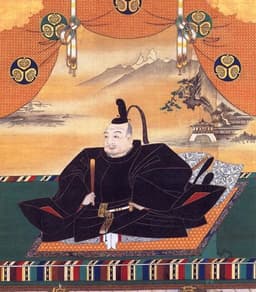
Tokugawa Ieyasu
General · Modern
81.8Total
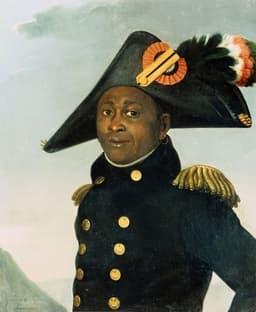
Toussaint Louverture
General · Modern
78.5Total
Basic Information
Born
1543
1743
Died
1616
1803
Era
Modern
Modern
Nationality
Japan
Haiti
Occupation
General
General
Civilization
Eastern
Western
Score Comparison
Military (10%)
78.0
85.0
Political (20%)
82.0
70.3
Influence (20%)
88.0
84.0
Legacy (20%)
75.0
82.0
Leadership (15%)
85.0
72.0
Strategy (15%)
82.0
72.0
TOTAL
81.8
78.5
Tokugawa Ieyasu — Complete Timeline
1600 AD
Battle of SekigaharaWar
Tokugawa Ieyasu led the Eastern Army to victory over Ishida Mitsunari's Western Army at Sekigahara. This decisive battle ended the Sengoku period and established Ieyasu as the supreme military ruler of Japan, paving the way for the Tokugawa shogunate.
Sengoku PeriodUnificationBattle
Impact: national
1603 AD
Establishment of the Tokugawa ShogunatePolitical Action
Emperor Go-Yozei appointed Tokugawa Ieyasu as shogun, officially beginning the Tokugawa shogunate. Ieyasu established his government in Edo (modern Tokyo), centralizing military and political power under his family's control.
ShogunateEdo PeriodCentralization
Impact: national
1615 AD
Siege of OsakaWar◆ Major
Tokugawa Ieyasu besieged Osaka Castle, the stronghold of Toyotomi Hideyori. The castle fell, and Hideyori committed suicide. This campaign eliminated the last major opposition to Tokugawa rule, solidifying the shogunate's control over Japan.
Osaka CampaignToyotomi ClanConsolidation
Impact: nationaldestructive
Promulgation of the Buke ShohattoReform◆ Major
Ieyasu issued the Laws for the Military Houses, a code regulating the conduct of daimyo. It restricted castle construction, required alternate attendance in Edo, and prohibited alliances without shogunal permission. This law helped control the feudal lords.
Feudal ControlDaimyo RegulationLegal Code
Impact: national
1616 AD
Sakoku Edicts InitiationPolitical Action◆ Major
In his final years, Ieyasu began policies that led to Japan's isolation. He restricted foreign trade to specific ports and expelled Christian missionaries. These measures, expanded by successors, resulted in the sakoku policy that isolated Japan for over 200 years.
IsolationismForeign PolicyChristianity
Impact: national
Toussaint Louverture — Complete Timeline
1791 AD
Haitian Revolution LeadershipWar
Louverture joined the slave revolt in Saint-Domingue, quickly rising to leadership. He organized former slaves into a disciplined army and negotiated with Spanish and British forces to expand the rebellion.
Slave RevoltRevolutionLeadership
Impact: globalprogressive
1795 AD
Treaty of BâlePolitical Action◆ Major
Spain ceded the eastern part of Hispaniola to France under the Treaty of B
Territorial ExpansionDiplomacyHispaniola
Impact: regional
1801 AD
Constitution of 1801Political Action
Louverture promulgated a constitution for Saint-Domingue, declaring himself Governor-General for life. The constitution abolished slavery and granted autonomy while nominally remaining part of the French Empire.
ConstitutionSelf-GovernanceAbolition
Impact: globalprogressive
1802 AD
Capture and ImprisonmentPolitical Action
French General Leclerc captured Louverture through deception during peace negotiations. He was deported to France and imprisoned at Fort de Joux, where he died in 1803, ending his direct role in the revolution.
BetrayalImprisonmentFrench Repression
Impact: globaltragic
Expert Analysis
Origins
Tokugawa Ieyasu was born in 1543 into a minor samurai clan in Mikawa Province during Japan's chaotic Sengoku period. His early life was marked by hostage situations and alliances that forged his pragmatic and patient character. In contrast, Toussaint Louverture was born around 1743 on a plantation in Saint-Domingue (modern Haiti) as a slave of African descent. He gained freedom in his 30s and became a prosperous planter, but his early life was defined by oppression and the brutality of slavery. While Ieyasu's origins were within a feudal hierarchy he would later master, Louverture's origins in bondage gave him a unique perspective on freedom and revolution.
Rise to Power
Ieyasu's rise was gradual, built on strategic alliances and battlefield prowess. He allied with Oda Nobunaga and later Toyotomi Hideyoshi, expanding his domain through careful diplomacy and military campaigns. His defining moment came at the Battle of Sekigahara in 1600, where he defeated a coalition of rival daimyo, effectively becoming Japan's supreme military leader. Louverture's rise was meteoric, driven by his leadership in the Haitian Revolution. Initially a slave, he became a key leader in the 1791 uprising against French colonial rule. He skillfully navigated alliances with the Spanish and British, eventually commanding a disciplined army. By 1801, he had conquered the entire island of Hispaniola and drafted a constitution that abolished slavery and made him governor-general for life.
Leadership & Governance
Ieyasu's governance focused on centralization and stability. After establishing the Tokugawa shogunate, he implemented policies like the Buke Shohatto (laws for warrior households) and the sankin kotai (alternate attendance system), which controlled daimyo power and prevented rebellion. He also initiated the Sakoku edicts, closing Japan to foreign influence—a move that ensured peace but also isolation. Louverture's governance was revolutionary yet pragmatic. As governor-general, he maintained plantation production by using former slaves as paid laborers, alienating some supporters. He crafted a constitution that kept Saint-Domingue within the French empire but granted autonomy and equality. Both leaders prioritized order: Ieyasu for feudal peace, Louverture for economic survival and racial equality.
Triumph & Tragedy
Ieyasu's triumphs include his victory at Sekigahara and the peaceful 250-year Edo period his shogunate brought. His tragedy is less personal but includes the persecution of Christians and the Siege of Osaka, where he eliminated the last Toyotomi opposition, leading to the death of Hideyori. Louverture's triumphs are monumental: leading the only successful slave revolt, defeating European armies, and establishing a free state. His tragedy is his capture in 1802 through deception by Napoleon's forces and his death in a French prison in 1803, before Haiti's final independence. Ieyasu died peacefully in old age, while Louverture died betrayed and imprisoned.
Character & Destiny
Ieyasu was calculating, patient, and strategic—nicknamed the "old badger" for his cunning. He was a master of timing, waiting for his rivals to weaken before striking. His destiny was to unify Japan and found a dynasty that ruled for centuries. Louverture was charismatic, disciplined, and visionary—a natural leader who inspired loyalty. His destiny was to challenge the global order of slavery and colonialism, but his trust in French promises led to his downfall. Both men were shaped by their environments: Ieyasu by the ruthless politics of feudal Japan, Louverture by the brutal realities of slavery and revolution.
Legacy
Ieyasu's legacy is the Tokugawa shogunate, which brought over two centuries of peace, economic growth, and cultural flourishing, but also isolation and eventual stagnation. He is revered as one of Japan's great unifiers. Louverture's legacy is the Haitian Revolution, which abolished slavery in Haiti and inspired anti-colonial movements worldwide. He is celebrated as a hero of freedom and racial equality. However, his authoritarian governance and maintenance of the plantation system are criticized. Both leaders left complex legacies: Ieyasu's peace came at the cost of freedom, while Louverture's freedom came at the cost of economic stability.
Conclusion
Tokugawa Ieyahu scores higher overall (M=78, P=82, I=88, L=75, D=85, S=82, T=82) compared to Toussaint Louverture (M=85, P=70, I=84, L=82, D=72, S=72, T=78), with a gap of 3.3 points. Ieyasu's strengths in political acumen, diplomacy, and strategy outweigh Louverture's higher military score. Ieyasu's ability to build a lasting institutional framework (the shogunate) that endured for 250 years demonstrates superior long-term governance and stability. Louverture's revolution was transformative but his capture and failure to secure independence before his death shows a flaw in his political strategy. While Louverture's moral cause is more compelling, Ieyasu's practical achievements in unifying and governing Japan for centuries make him the more effective leader in terms of historical impact. Therefore, Tokugawa Ieyasu emerges as the greater leader based on his superior strategic vision and lasting legacy of peace and stability.
Rankings
🥇
Tokugawa IeyasuLeader
Mil: 78.0Pol: 82.0Inf: 88.0
81.8
🥈
Toussaint Louverture
Mil: 85.0Pol: 70.3Inf: 84.0
78.5
+3.3 behind
How This Comparison Works
Algorithm
Each figure is scored on 6 dimensions (0—100 scale) based on structured historical data: Military (10%), Political (20%), Influence (20%), Legacy (20%), Leadership (15%), Strategy (15%). The weighted total produces the final ranking.
Data Sources
Scores are computed from structured sub-indicators in the database. Scale factors adjust for era (Ancient ×0.85, Modern ×1.0) and civilization size (Eastern ×1.05, Other ×0.80) to account for differences in population and military scale.
Maximum 3 Figures
Comparisons are limited to 2—3 figures to ensure readability and statistical meaningfulness.
Error Margins
±5 points per dimension — Sub-scores are derived from historical records with inherent uncertainty. Two figures within 5 points on a dimension should be considered roughly equivalent in that area.
Total Score Accuracy
±3 points overall — The weighted combination of 6 dimensions produces a total score with approximately ±3 points of uncertainty. Differences of less than 3 points are not statistically significant— the figures are effectively tied.
Known Limitations
- Historical records are incomplete and uneven across civilizations
- Figures from oral-tradition societies may be underrepresented
- Occupation labels can misclassify multi-role figures
- Scores measure capability and impact, not moral character
- Quantitative scoring is a comparison tool, not absolute truth
Capability Radar
Military (10%) — Battles & Warfare
Battles
85
85
Win Rate
90
80
Expansion
75
70
Political (20%) — Governance & Reform
Reform
90
85
Diplomacy
85
80
Economy
88
60
Influence (20%) — Cultural & Global Reach
Cultural
85
85
Global
70
85
Legacy (20%) — Historical Impact
Historical
90
95
Longevity
95
90
Leadership (15%) — Power & Stability
Tenure
95
65
Stability
95
55
Strategy (15%) — Tactics & Innovation
Strategy
92
85
Tactics
88
90
Reform
80
75
Similar Comparisons
Comments & Discussion
No comments yet. Be the first to share your thoughts!