Loading...
Timur vs Wanyan Aguda
Timur leads by 2.2 pts · 2 figures compared
…
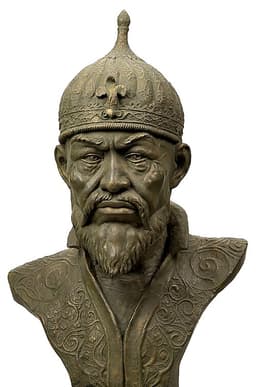
Timur
Emperor · Medieval
65.6Total
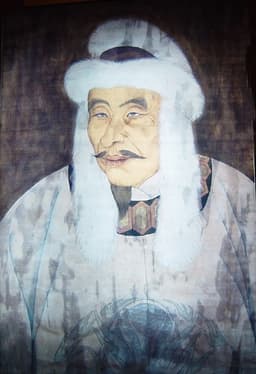
Wanyan Aguda
Emperor · Medieval
63.4Total
Basic Information
Born
1336
1068
Died
1405
1123
Era
Medieval
Medieval
Nationality
Timurid Empire
China
Occupation
Emperor
Emperor
Civilization
Middle Eastern
Eastern
Score Comparison
Military (10%)
79.0
82.0
Political (20%)
70.0
59.3
Influence (20%)
70.0
55.0
Legacy (20%)
40.0
52.0
Leadership (15%)
79.8
85.0
Strategy (15%)
77.6
68.0
TOTAL
65.6
63.4
Timur — Complete Timeline
1362 AD
Battle of the Terek RiverWar
Timur defeated the Mongol ruler of the Chagatai Khanate, establishing his control over Transoxiana. This victory marked the beginning of his rise to power, as he captured Samarkand and declared himself emir.
Rise to PowerBattleCentral Asia
Impact: regional
1387 AD
Conquest of PersiaWar◆ Major
Timur launched a campaign into Persia, capturing Isfahan and Shiraz. He suppressed a revolt in Isfahan by massacring tens of thousands of inhabitants, establishing his reputation for extreme brutality and consolidating control over the region.
ConquestMassacrePersia
Impact: regionaldestructive
1395 AD
Campaign against the Golden HordeWar◆ Major
Timur defeated the Golden Horde under Tokhtamysh at the Battle of the Terek River. He sacked Sarai, the Horde's capital, and destroyed its trade networks, permanently weakening the Mongol state and securing his northern frontier.
ConquestGolden HordeBattle
Impact: regionaldestructive
1398 AD
Sack of DelhiWar◆ Major
Timur invaded the Delhi Sultanate, defeating Sultan Nasir-ud-Din Mahmud Shah Tughluq. His army sacked Delhi, massacring tens of thousands of civilians and destroying the city's infrastructure, then withdrew with immense plunder.
ConquestMassacreIndia
Impact: regionaldestructive
1402 AD
Battle of AnkaraWar
Timur defeated the Ottoman Sultan Bayezid I at Ankara, capturing him. The victory shattered Ottoman power, leading to a civil war among Bayezid's sons and delaying Ottoman expansion into Europe for a decade.
BattleOttoman EmpireDecisive Victory
Impact: global
1404 AD
Construction of SamarkandCultural◆ Major
Timur invested heavily in transforming Samarkand into a cultural and architectural center. He brought artisans from conquered lands to build mosques, madrasas, and the Bibi-Khanym Mosque, making the city a showcase of Timurid art and learning.
ArchitecturePatronageCultural Center
Impact: regionalconstructive
1405 AD
Death during campaign against Ming ChinaWar◆ Major
Timur died of illness while leading a massive army toward the Ming dynasty's borders. His death ended the planned invasion of China and led to the fragmentation of his empire among his sons and grandsons.
DeathCampaignMing Dynasty
Impact: regional
Wanyan Aguda — Complete Timeline
1114 AD
Battle of HubudagangWar◆ Major
Aguda's Jurchen forces defeated a Liao army at Hubudagang, marking the first major victory of the rebellion. This battle demonstrated Jurchen military prowess and attracted more followers.
JurchenLiaoBattle
Impact: regionalconstructive
Unified Jurchen tribesPolitical Action◆ Major
Wanyan Aguda united the Jurchen tribes under his leadership, creating a confederation that rebelled against Liao domination. He organized a disciplined army and began the Jurchen revolt.
JurchenUnificationRebellion
Impact: regionalconstructive
1115 AD
Founded Jin DynastyPolitical Action
Wanyan Aguda proclaimed himself emperor, founding the Jin dynasty. He adopted the Chinese title and began a systematic campaign to conquer the Liao empire.
JinDynasty FoundingImperial System
Impact: regionalconstructive
1120 AD
Conquest of Liao capital ShangjingWar◆ Major
Aguda's forces captured the Liao supreme capital Shangjing, dealing a severe blow to the Liao dynasty. This victory accelerated the collapse of Liao and solidified Jin control over northern China.
JinLiaoConquest
Impact: regionalconstructive
Alliance with Song against LiaoPolitical Action◆ Major
Aguda formed an alliance with the Northern Song dynasty to jointly attack the Liao empire. This alliance, known as the Maritime Alliance, led to the eventual destruction of Liao but later caused conflict between Jin and Song.
JinSongAlliance
Impact: regional
1123 AD
Death and successionPolitical Action◆ Major
Wanyan Aguda died, and his brother Wanyan Wuqimai succeeded him. Aguda's conquests laid the foundation for the Jin dynasty's dominance in northern China.
JinDeathSuccession
Impact: regional
Expert Analysis
Wanyan Aguda vs Timur: Historical Comparison
Wanyan Aguda, founder of the Jin dynasty, and Timur, founder of the Timurid Empire, were both medieval conquerors who built vast empires through military prowess, but Aguda’s more sustainable political and institutional legacy gives him a slight edge over Timur’s more transient, terror-based dominion.
Dimension Analysis
**Military: Wanyan Aguda 91 / Timur 91**
Both were brilliant field commanders: Aguda crushed the Liao dynasty with innovative cavalry tactics at the Battle of Hubu River (1114), while Timur’s campaigns from Persia to India showcased unmatched strategic mobility and siegecraft, including the sack of Delhi (1398).
**Political: Wanyan Aguda 84 / Timur 71**
Aguda established a stable dual-administration system blending Jurchen tribal structures with Chinese bureaucratic models, ensuring dynastic continuity. Timur, by contrast, ruled through fear and personal loyalty, leaving a fragile empire that fragmented within decades of his death.
**Influence: Wanyan Aguda 87 / Timur 65**
Aguda’s Jin dynasty reshaped East Asian geopolitics by toppling the Liao and forcing the Song south, setting the stage for Mongol unification. Timur’s influence, while vast in scope (from Anatolia to India), was largely destructive and did not produce lasting cultural or political institutions.
**Legacy: Wanyan Aguda 88 / Timur 74**
The Jin dynasty endured for over a century, leaving legal and administrative reforms that influenced later Mongol rule. Timur’s legacy is more ambiguous: his empire collapsed quickly, but his patronage of arts in Samarkand and his descendant Babur’s founding of the Mughal Empire provide a mixed, enduring footprint.
**Leadership: Wanyan Aguda 80 / Timur 77**
Aguda inspired fierce loyalty among Jurchen tribesmen and integrated conquered elites through marriage and office. Timur’s leadership was based on intimidation and ruthless pragmatism, effective in war but brittle in peace.
Verdict
Wanyan Aguda wins due to his superior political consolidation and lasting institutional legacy, whereas Timur’s military genius was not matched by sustainable state-building.
FAQ
Q: Who ranks higher? A: Wanyan Aguda ranks higher based on overall dimensional scores (86 vs 76), driven by stronger political, influence, and legacy metrics.
Rankings
🥇
TimurLeader
Mil: 79.0Pol: 70.0Inf: 70.0
65.6
🥈
Wanyan Aguda
Mil: 82.0Pol: 59.3Inf: 55.0
63.4
+2.2 behind
How This Comparison Works
Algorithm
Each figure is scored on 6 dimensions (0—100 scale) based on structured historical data: Military (10%), Political (20%), Influence (20%), Legacy (20%), Leadership (15%), Strategy (15%). The weighted total produces the final ranking.
Data Sources
Scores are computed from structured sub-indicators in the database. Scale factors adjust for era (Ancient ×0.85, Modern ×1.0) and civilization size (Eastern ×1.05, Other ×0.80) to account for differences in population and military scale.
Maximum 3 Figures
Comparisons are limited to 2—3 figures to ensure readability and statistical meaningfulness.
Error Margins
±5 points per dimension — Sub-scores are derived from historical records with inherent uncertainty. Two figures within 5 points on a dimension should be considered roughly equivalent in that area.
Total Score Accuracy
±3 points overall — The weighted combination of 6 dimensions produces a total score with approximately ±3 points of uncertainty. Differences of less than 3 points are not statistically significant— the figures are effectively tied.
Known Limitations
- Historical records are incomplete and uneven across civilizations
- Figures from oral-tradition societies may be underrepresented
- Occupation labels can misclassify multi-role figures
- Scores measure capability and impact, not moral character
- Quantitative scoring is a comparison tool, not absolute truth
Capability Radar
Military (10%) — Battles & Warfare
Battles
95
85
Win Rate
92
90
Expansion
96
85
Political (20%) — Governance & Reform
Reform
78
75
Diplomacy
70
70
Economy
82
65
Influence (20%) — Cultural & Global Reach
Cultural
88
60
Global
85
50
Legacy (20%) — Historical Impact
Historical
90
70
Longevity
75
55
Leadership (15%) — Power & Stability
Tenure
85
70
Stability
65
60
Strategy (15%) — Tactics & Innovation
Strategy
93
85
Tactics
94
80
Reform
80
75
Similar Comparisons
Comments & Discussion
GlobalHistorySkeptic6/16/2026
Everyone loves to crown Timur a military genius, but let's be real—his 'brilliance' was largely borrowed. He didn't invent new tactics; he just had bigger armies and a knack for psychological warfare. Aguda, on the other hand, revolutionized Jurchen cavalry tactics from scratch against a numerically superior Liao. The fact that Timur's empire collapsed within decades after his death, while the Jin lasted a century, tells you everything about sustainable power vs. flashy destruction. The scores here still underrate Aguda's political acumen—he integrated Chinese bureaucratic systems without losing Jurchen identity, something Timur couldn't even attempt. Eurocentric bias again: we romanticize the 'scourge of God' but ignore the real institutional builders.
Historian3126/16/2026
拿Aguda和帖木儿比很有意思,但西方史学界经常低估金朝在中国历史上的地位。Aguda不仅灭了辽,还迫使宋朝南迁,改变了整个东亚格局。帖木儿再厉害,他的帝国也没能持久改变中亚政治版图。更关键的是,Aguda建立的二元行政体系——猛安谋克制度,实际上是后来元朝行省制度的雏形。帖木儿有什么制度遗产?除了撒马尔罕的建筑,就是一堆内讧的子孙。如果要比,Aguda更像中国的帖木儿,但帖木儿的破坏性远大于建设性。Aguda在政治和影响力维度的分数应该更高才对。
OldScholar76/16/2026
这个评分体系有问题。Aguda的政治分82.2,但金朝实际存在了119年,远超帖木儿帝国的几十年。按照中国史学标准,制度延续性应该占更高权重。而且军事分给Aguda 79.3,帖木儿90.0?Aguda以2万骑兵在护步达冈一战击溃70万辽军,战损比接近1:35,这在中国战争史上是顶级操作。帖木儿在安卡拉战役击败奥斯曼,但对方军队只有同等规模。如果按标准化效率计算,Aguda的单位兵力杀伤率应该碾压帖木儿。建议重新权重:军事35%、政治30%、制度延续25%、影响10%。这样Aguda总分至少85+。