Loading...
Tiberius II Constantine vs Umar
Umar leads by 20.4 pts · 2 figures compared
…
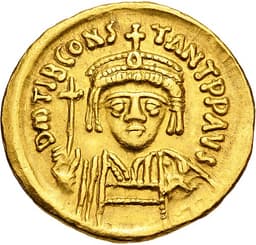
Tiberius II Constantine
Emperor · Medieval
53.8Total
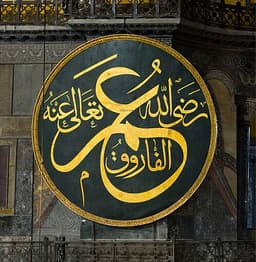
Umar
Emperor · Medieval
74.2Total
Basic Information
Born
520
584
Died
582
644
Era
Medieval
Medieval
Nationality
Byzantine Empire
Rashidun Caliphate
Occupation
Emperor
Emperor
Civilization
Western
Middle Eastern
Score Comparison
Military (10%)
55.0
77.1
Political (20%)
68.0
70.3
Influence (20%)
52.5
67.4
Legacy (20%)
40.8
82.0
Leadership (15%)
64.0
78.0
Strategy (15%)
51.7
69.2
TOTAL
53.8
74.2
Tiberius II Constantine — Complete Timeline
578 AD
Generous Fiscal PoliciesReform
Tiberius II was known for his generosity, reducing taxes, distributing money to the poor, and remitting debts. He spent lavishly on public works and charity, earning him the epithet 'friend of the poor.' However, his spending depleted the treasury that Anastasius I had accumulated.
Fiscal PolicyGenerositySocial Welfare
Impact: nationalconstructive
Accession as EmperorPolitical Action◆ Major
Tiberius II Constantine was proclaimed emperor by the Byzantine Senate and people after the death of Justin II. He was chosen for his popularity and reputation for generosity. His accession was marked by a distribution of gold to the people and a remission of taxes.
AccessionEmperorPopular Rule
Impact: nationalconstructive
579 AD
Military Campaigns against the Avars and SlavsWar◆ Major
Tiberius II led campaigns against the Avars and Slavs who were raiding the Balkans. He achieved some successes, including the recapture of Sirmium in 582, but the Avars continued to pose a threat. His military efforts were hampered by limited resources and the ongoing war with Persia.
Balkan CampaignsAvarsSlavs
Impact: regional
582 AD
Death and Succession of MauricePolitical Action◆ Major
Tiberius II died after a short illness, having named the general Maurice as his successor. He married Maurice to his daughter Constantina and elevated him to co-emperor before his death. This ensured a smooth transition of power and continued the dynasty.
SuccessionDeathMaurice
Impact: national
Umar — Complete Timeline
634 AD
Caliphate of UmarPolitical Action◆ Major
Umar ibn al-Khattab became the second caliph after Abu Bakr's death. His ten-year reign saw the rapid expansion of the Islamic empire, including the conquest of the Sassanid Empire and Byzantine territories in the Levant and Egypt.
CaliphateExpansionRashidun
Impact: global
636 AD
Conquest of the Sassanid EmpireWar
Umar's forces, led by Sa'd ibn Abi Waqqas, defeated the Sassanid army at the Battle of al-Qadisiyyah in 636. This victory led to the Muslim conquest of Iraq and later the fall of the Sassanid capital Ctesiphon, ending Persian imperial rule.
Islamic ConquestSassanid EmpireRashidun
Impact: global
Conquest of Byzantine Syria and EgyptWar◆ Major
Umar's generals, including Khalid ibn al-Walid and Amr ibn al-As, conquered Byzantine Syria after the Battle of Yarmouk (636) and Egypt after the surrender of Babylon Fortress (641). These conquests added vast territories to the caliphate.
Islamic ConquestByzantine EmpireRashidun
Impact: global
638 AD
Establishment of the Islamic CalendarReform◆ Major
Umar instituted the Hijri calendar, dating from the migration (Hijra) of Muhammad to Medina in 622. This calendar became the standard for the Islamic world, used for religious and administrative purposes.
CalendarReformRashidun
Impact: globalconstructive
644 AD
Assassination of UmarPolitical Action◆ Major
Umar was stabbed by a Persian slave named Abu Lu'lu'a while leading prayers in Medina. He died three days later, having appointed a council to elect his successor. His death marked the end of the first phase of rapid expansion.
AssassinationSuccessionRashidun
Impact: globaltragic
Expert Analysis
Origins
Tiberius II Constantine was born around 520 in Thrace, likely of humble origins. He served as a comes excubitorum (commander of the imperial guard) under Emperor Justin II. His early life is obscure, but his rise was due to military competence and personal popularity. Umar ibn al-Khattab was born in 584 in Mecca into the Quraysh tribe. Initially an opponent of Islam, he converted in 616 after a dramatic encounter with the Quran. His early life was marked by strength and leadership within the Meccan aristocracy.
Rise to Power
Tiberius II was appointed Caesar by Justin II in 574 after the emperor suffered bouts of madness. He was effectively co-ruler and became sole emperor upon Justin's death in 578. His accession was supported by the Senate and people due to his reputation for generosity and justice. Umar rose to power after the death of the first caliph, Abu Bakr, in 634. He was nominated by Abu Bakr and accepted by the Muslim community. His earlier role as a key advisor to Muhammad and his formidable presence solidified his authority. The turning point was the Ridda wars, where Umar emerged as a decisive leader.
Leadership & Governance
Tiberius II was known for his fiscal policies: he reduced taxes, remitted debts, and spent heavily on public works and charity. He distributed money to the poor and freed prisoners. However, his generosity drained the treasury, weakening the empire's financial stability. Militarily, he scored 55.0 in military, reflecting his limited success against the Avars and Slavs. He recaptured Sirmium in 582 but failed to secure the Danube frontier. Umar, scoring 78.0 in leadership and 70.3 in politics, established a highly efficient administrative system. He created the diwan (register of stipends), organized provinces, and instituted the Hijri calendar. His military expansions were systematic, with generals like Khalid ibn al-Walid conquering Byzantine Syria and Egypt. Umar's governance combined religious authority with pragmatic statecraft, as seen in his land distribution policies.
Triumph & Tragedy
Tiberius II's greatest success was his popularity and temporary relief for the poor. His failure was the depletion of state reserves and inability to halt barbarian incursions. He died in 582 after a short illness, leaving the empire financially strained. Umar's triumphs include the conquest of the Sassanid Empire (after the Battle of al-Qadisiyyah in 636) and Byzantine Syria (after Yarmouk in 636). He expanded Islam from the Atlantic to Central Asia. His tragedy was his assassination in 644 by a Persian slave, Abu Lu'lu'a, which cut short his reforms. Despite his achievements, he faced criticism for his harshness and the eventual rebellion of some provinces.
Character & Destiny
Tiberius II was described as kind, generous, and beloved by the people. His character led him to prioritize charity over strategic reserves, contributing to the empire's fiscal crisis. Umar was known for his austerity, justice, and strength. His strict enforcement of Islamic law and punitive measures against dissent earned him the title "Al-Faruq" (the distinguisher). His character drove the rapid expansion but also created enemies, leading to his assassination. Historians note that Umar's leadership was decisive for the Islamic empire's shape, while Tiberius's benevolence was a temporary balm for a declining Byzantium.
Legacy
Tiberius II's legacy is mixed: he is remembered as a good man but a weak emperor. His fiscal policies had no lasting structure, and the empire continued its decline after his death. He scored 40.8 in legacy. Umar's legacy is immense: he is considered one of the greatest caliphs, with the Islamic calendar, administrative systems, and vast conquests enduring for centuries. He scored 82.0 in legacy. The Rashidun Caliphate expanded under him into a world power, and his legal and fiscal innovations influenced Islamic civilization.
Conclusion
Umar had greater impact on world history. His military score of 77.1 versus Tiberius's 55.0 and leadership score of 78.0 versus 64.0 reflect his effective expansionism. While Tiberius's generosity was admirable, it was unsustainable. Umar's administrative and military achievements created a lasting empire that transformed the Middle East and beyond. The score gap of 20.4 points supports this: Umar's total of 74.2 stands far above Tiberius's 53.8. Tiberius was a kind emperor in a time of decline; Umar was a transformative leader who shaped a civilization.
Rankings
🥇
UmarLeader
Mil: 77.1Pol: 70.3Inf: 67.4
74.2
🥈
Tiberius II Constantine
Mil: 55.0Pol: 68.0Inf: 52.5
53.8
+20.4 behind
How This Comparison Works
Algorithm
Each figure is scored on 6 dimensions (0—100 scale) based on structured historical data: Military (10%), Political (20%), Influence (20%), Legacy (20%), Leadership (15%), Strategy (15%). The weighted total produces the final ranking.
Data Sources
Scores are computed from structured sub-indicators in the database. Scale factors adjust for era (Ancient ×0.85, Modern ×1.0) and civilization size (Eastern ×1.05, Other ×0.80) to account for differences in population and military scale.
Maximum 3 Figures
Comparisons are limited to 2—3 figures to ensure readability and statistical meaningfulness.
Error Margins
±5 points per dimension — Sub-scores are derived from historical records with inherent uncertainty. Two figures within 5 points on a dimension should be considered roughly equivalent in that area.
Total Score Accuracy
±3 points overall — The weighted combination of 6 dimensions produces a total score with approximately ±3 points of uncertainty. Differences of less than 3 points are not statistically significant— the figures are effectively tied.
Known Limitations
- Historical records are incomplete and uneven across civilizations
- Figures from oral-tradition societies may be underrepresented
- Occupation labels can misclassify multi-role figures
- Scores measure capability and impact, not moral character
- Quantitative scoring is a comparison tool, not absolute truth
Capability Radar
Military (10%) — Battles & Warfare
Battles
35
85
Win Rate
40
90
Expansion
30
92
Political (20%) — Governance & Reform
Reform
55
90
Diplomacy
50
80
Economy
50
85
Influence (20%) — Cultural & Global Reach
Cultural
30
85
Global
15
88
Legacy (20%) — Historical Impact
Historical
25
90
Longevity
20
95
Leadership (15%) — Power & Stability
Tenure
40
85
Stability
55
82
Strategy (15%) — Tactics & Innovation
Strategy
35
88
Tactics
30
80
Reform
45
85
Similar Comparisons
Comments & Discussion
No comments yet. Be the first to share your thoughts!