Loading...
Oba Ozolua vs Umar
Umar leads by 17.5 pts · 2 figures compared
…
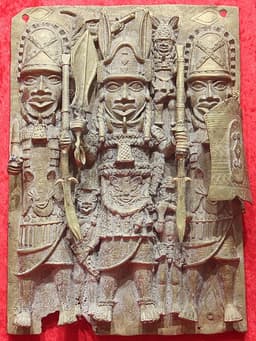
Oba Ozolua
Emperor · Medieval
56.7Total
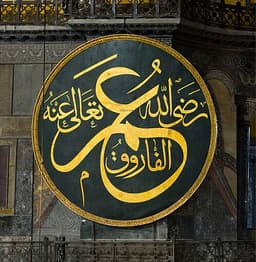
Umar
Emperor · Medieval
74.2Total
Basic Information
Born
1473
584
Died
1504
644
Era
Medieval
Medieval
Nationality
Benin Kingdom
Rashidun Caliphate
Occupation
Emperor
Emperor
Civilization
Other
Middle Eastern
Score Comparison
Military (10%)
72.5
77.1
Political (20%)
43.7
70.3
Influence (20%)
55.7
67.4
Legacy (20%)
48.3
82.0
Leadership (15%)
74.0
78.0
Strategy (15%)
57.5
69.2
TOTAL
56.7
74.2
Oba Ozolua — Complete Timeline
1480 AD
Conquest of IdahWar◆ Major
Oba Ozolua led a successful military campaign against the Igala kingdom of Idah, defeating their forces and securing Benin's northern border. This victory established Benin as the dominant power in the region.
ConquestBeninIgala
Impact: regional
1485 AD
Expansion into Yoruba territoryWar◆ Major
Ozolua extended Benin's control westward into Yoruba lands, conquering towns such as Akure and Owo. These campaigns brought significant territory under Benin's influence and established tributary relationships.
ConquestBeninYoruba
Impact: regional
1490 AD
Construction of moats and wallsReform
Ozolua ordered the construction of additional defensive earthworks around Benin City, including deep moats and ramparts. These fortifications enhanced the city's defenses against potential attacks from rival kingdoms.
FortificationBenin CityDefense
constructive
Umar — Complete Timeline
634 AD
Caliphate of UmarPolitical Action◆ Major
Umar ibn al-Khattab became the second caliph after Abu Bakr's death. His ten-year reign saw the rapid expansion of the Islamic empire, including the conquest of the Sassanid Empire and Byzantine territories in the Levant and Egypt.
CaliphateExpansionRashidun
Impact: global
636 AD
Conquest of the Sassanid EmpireWar
Umar's forces, led by Sa'd ibn Abi Waqqas, defeated the Sassanid army at the Battle of al-Qadisiyyah in 636. This victory led to the Muslim conquest of Iraq and later the fall of the Sassanid capital Ctesiphon, ending Persian imperial rule.
Islamic ConquestSassanid EmpireRashidun
Impact: global
Conquest of Byzantine Syria and EgyptWar◆ Major
Umar's generals, including Khalid ibn al-Walid and Amr ibn al-As, conquered Byzantine Syria after the Battle of Yarmouk (636) and Egypt after the surrender of Babylon Fortress (641). These conquests added vast territories to the caliphate.
Islamic ConquestByzantine EmpireRashidun
Impact: global
638 AD
Establishment of the Islamic CalendarReform◆ Major
Umar instituted the Hijri calendar, dating from the migration (Hijra) of Muhammad to Medina in 622. This calendar became the standard for the Islamic world, used for religious and administrative purposes.
CalendarReformRashidun
Impact: globalconstructive
644 AD
Assassination of UmarPolitical Action◆ Major
Umar was stabbed by a Persian slave named Abu Lu'lu'a while leading prayers in Medina. He died three days later, having appointed a council to elect his successor. His death marked the end of the first phase of rapid expansion.
AssassinationSuccessionRashidun
Impact: globaltragic
Expert Analysis
Origins
Oba Ozolua, whose name means "the one who is as powerful as the god of war," was born around 1450 in Benin City, the son of Oba Ewuare the Great. He grew up in a period of Benin's resurgence, learning military tactics from his father's campaigns. Ozolua's early life was marked by palace intrigue and the need to assert his claim to the throne after Ewuare's death. He was reportedly one of several sons, but his ambition and martial prowess set him apart.
Umar ibn al-Khattab was born in 584 CE in Mecca to the Banu Adi clan of the Quraysh tribe. Initially a fierce opponent of Islam, he converted in 616 after a dramatic confrontation with his sister. Umar's pre-Islamic life included work as a merchant and participation in tribal warfare. His conversion gave the early Muslim community a powerful leader known for his physical strength and unwavering determination.
Rise to Power
Ozolua became Oba around 1481 after a succession struggle. He quickly launched campaigns to expand Benin's borders. His greatest military achievement was the conquest of Idah, the capital of the Igala kingdom, securing Benin's northern frontier. This victory, likely occurring in the 1480s, involved a siege and a decisive battle where Ozolua's forces used superior tactics and possibly firearms obtained from Portuguese traders. He also expanded westward into Yoruba territory, subjugating towns like Akure and Owo, bringing them under Benin's tributary system.
Umar rose to power after the death of Caliph Abu Bakr in 634. During Abu Bakr's caliphate, Umar had been a key advisor and military commander. Upon Abu Bakr's deathbed nomination, Umar became the second caliph. His rise was uncontested, as the Muslim community recognized his administrative skills and piety. His reign (634-644) marked a turning point in Islamic history, as he transformed the nascent state into a world empire.
Leadership & Governance
Ozolua ruled as a warrior-king, personally leading his armies into battle. He strengthened Benin's centralized monarchy, expanding the use of titled chiefs and court officials. He commissioned the construction of massive moats and earthen walls around Benin City, enhancing its defenses. His governance relied on military force and tribute from conquered territories. However, his focus on expansion may have strained the kingdom's resources, and he did not implement major administrative reforms.
Umar established the foundations of the Islamic state. He created the Diwan (register of soldiers and pensions), instituted the Hijri calendar, and organized the empire into provinces with appointed governors. He established Islamic legal and tax systems, including the kharaj (land tax) and jizya (poll tax on non-Muslims). Umar's leadership was consultative; he sought advice from companions but made final decisions with authority. His governance was marked by justice and accountability, famously inspecting his officials' conduct.
Triumph & Tragedy
Ozolua's triumphs were primarily military: he expanded Benin's territory to its greatest extent, defeated the Igala, and secured tribute from Yoruba states. His construction of defensive works protected the capital. However, his reign saw no lasting administrative or cultural achievements. His death around 1504 led to a succession crisis, and some of his conquests were lost. His son Oba Esigie later recovered some territories, but Ozolua's empire was fragile.
Umar's triumphs were immense: the conquest of the Sassanid Empire (including Persia) and the defeat of Byzantine Syria and Egypt. Under his caliphate, the Islamic state expanded from Arabia to include Iraq, Persia, Syria, Palestine, Egypt, and parts of North Africa. He oversaw the capture of Jerusalem in 637, where he personally negotiated a peaceful surrender. His tragedy was his assassination in 644 by a Persian slave, Abu Lu'lu'a, a personal act that ended his transformative rule. He died without naming a successor, leading to a contentious election of Uthman.
Character & Destiny
Ozolua was aggressive and ambitious, driven by a desire to emulate his father's conquests. His character was that of a warrior-king, valuing military glory over governance. This focus shaped his destiny: he expanded the kingdom but left it vulnerable. His nickname "Ozolua" (the war god) reflects his martial identity. Historians note his lack of diplomatic skill and his reliance on force, which ultimately limited his empire's sustainability.
Umar was known for his piety, justice, and stern demeanor. He was decisive and disciplined, often walking the streets of Medina at night to monitor his subjects' welfare. His character combined religious zeal with administrative pragmatism. His destiny was to be the architect of the Islamic empire; his assassination cut short a reign that might have achieved even more. He is remembered as a model ruler in Islamic tradition, with his reign considered a golden age of justice and expansion.
Legacy
Ozolua's legacy is primarily as a conqueror in Benin oral tradition and history. He is remembered as a warrior Oba who expanded the kingdom's borders. The moats and walls he built are still visible. However, his impact on governance was minimal; his successors built on his military gains but also faced rebellions. In the broader context, Ozolua's legacy is regional, confined to the Edo people and Nigerian history.
Umar's legacy is global. He established the administrative and legal structures that sustained the Islamic empire for centuries. His conquests spread Islam across the Middle East and North Africa, shaping world history. The Hijri calendar is still used by Muslims worldwide. Umar is revered as one of the "Rightly Guided" caliphs, and his policies influenced Islamic governance. His military score of 77.1 reflects his strategic success, while his legacy score of 82.0 underscores his enduring impact.
Conclusion
While Oba Ozolua was a capable military leader for Benin, his impact is dwarfed by Umar's. Umar's total score of 74.2 versus Ozolua's 56.7 reflects this gap. Umar's conquests created an empire that transformed the ancient world, and his administrative innovations outlived him. Ozolua's achievements, though significant for the Benin Kingdom, were more localized and less enduring. Umar's legacy is felt across continents and centuries, making him the more influential figure. The data supports this: Umar scores higher in every category, especially legacy (82.0 vs 48.3).
Rankings
🥇
UmarLeader
Mil: 77.1Pol: 70.3Inf: 67.4
74.2
🥈
Oba Ozolua
Mil: 72.5Pol: 43.7Inf: 55.7
56.7
+17.5 behind
How This Comparison Works
Algorithm
Each figure is scored on 6 dimensions (0—100 scale) based on structured historical data: Military (10%), Political (20%), Influence (20%), Legacy (20%), Leadership (15%), Strategy (15%). The weighted total produces the final ranking.
Data Sources
Scores are computed from structured sub-indicators in the database. Scale factors adjust for era (Ancient ×0.85, Modern ×1.0) and civilization size (Eastern ×1.05, Other ×0.80) to account for differences in population and military scale.
Maximum 3 Figures
Comparisons are limited to 2—3 figures to ensure readability and statistical meaningfulness.
Error Margins
±5 points per dimension — Sub-scores are derived from historical records with inherent uncertainty. Two figures within 5 points on a dimension should be considered roughly equivalent in that area.
Total Score Accuracy
±3 points overall — The weighted combination of 6 dimensions produces a total score with approximately ±3 points of uncertainty. Differences of less than 3 points are not statistically significant— the figures are effectively tied.
Known Limitations
- Historical records are incomplete and uneven across civilizations
- Figures from oral-tradition societies may be underrepresented
- Occupation labels can misclassify multi-role figures
- Scores measure capability and impact, not moral character
- Quantitative scoring is a comparison tool, not absolute truth
Capability Radar
Military (10%) — Battles & Warfare
Battles
55
85
Win Rate
60
90
Expansion
65
92
Political (20%) — Governance & Reform
Reform
35
90
Diplomacy
40
80
Economy
45
85
Influence (20%) — Cultural & Global Reach
Cultural
45
85
Global
30
88
Legacy (20%) — Historical Impact
Historical
50
90
Longevity
40
95
Leadership (15%) — Power & Stability
Tenure
60
85
Stability
50
82
Strategy (15%) — Tactics & Innovation
Strategy
55
88
Tactics
50
80
Reform
40
85
Similar Comparisons
Comments & Discussion
No comments yet. Be the first to share your thoughts!