Loading...
Rudolf I of Germany vs Tiberius II Constantine
Rudolf I of Germany leads by 2.2 pts · 2 figures compared
…
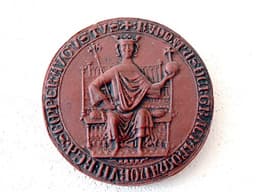
Rudolf I of Germany
Emperor · Medieval
56.0Total
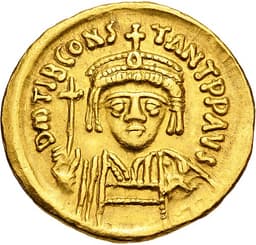
Tiberius II Constantine
Emperor · Medieval
53.8Total
Basic Information
Born
1218
520
Died
1291
582
Era
Medieval
Medieval
Nationality
Holy Roman Empire
Byzantine Empire
Occupation
Emperor
Emperor
Civilization
Western
Western
Score Comparison
Military (10%)
55.0
55.0
Political (20%)
68.0
68.0
Influence (20%)
61.0
52.5
Legacy (20%)
52.0
40.8
Leadership (15%)
40.0
64.0
Strategy (15%)
60.0
51.7
TOTAL
56.0
53.8
Rudolf I of Germany — Complete Timeline
1273 AD
Election as King of GermanyPolitical Action
Rudolf I was elected King of Germany by the prince-electors, ending the Great Interregnum. He was the first Habsburg to hold the German throne. His election restored stability to the Holy Roman Empire after a period of civil war and weak central authority.
ElectionHabsburgInterregnum
Impact: regionalconstructive
1274 AD
Recognition of Papal AuthorityPolitical Action
Rudolf I formally renounced all imperial claims to the Papal States and recognized the temporal authority of the Pope. He also agreed to lead a crusade (which never materialized). This improved relations with the papacy and secured papal support for his rule.
PapacyImperial-Papal RelationsCrusade
Impact: regionalconstructive
1278 AD
Battle on the MarchfeldWar◆ Major
Rudolf I defeated King Ottokar II of Bohemia at the Battle on the Marchfeld in Austria. Ottokar was killed in the battle. Rudolf then secured the duchies of Austria, Styria, and Carniola for the Habsburg dynasty, laying the foundation for their future power.
BattleHabsburgAustria
Impact: regional
1282 AD
Grant of Austria to His SonsPolitical Action◆ Major
Rudolf I formally enfeoffed his sons Albert and Rudolf with the duchies of Austria and Styria at the Diet of Augsburg. This established the Habsburgs as a major territorial power in Central Europe. The grant was later confirmed by the imperial princes.
Territorial GrantHabsburgAustria
Impact: regionalconstructive
Tiberius II Constantine — Complete Timeline
578 AD
Generous Fiscal PoliciesReform
Tiberius II was known for his generosity, reducing taxes, distributing money to the poor, and remitting debts. He spent lavishly on public works and charity, earning him the epithet 'friend of the poor.' However, his spending depleted the treasury that Anastasius I had accumulated.
Fiscal PolicyGenerositySocial Welfare
Impact: nationalconstructive
Accession as EmperorPolitical Action◆ Major
Tiberius II Constantine was proclaimed emperor by the Byzantine Senate and people after the death of Justin II. He was chosen for his popularity and reputation for generosity. His accession was marked by a distribution of gold to the people and a remission of taxes.
AccessionEmperorPopular Rule
Impact: nationalconstructive
579 AD
Military Campaigns against the Avars and SlavsWar◆ Major
Tiberius II led campaigns against the Avars and Slavs who were raiding the Balkans. He achieved some successes, including the recapture of Sirmium in 582, but the Avars continued to pose a threat. His military efforts were hampered by limited resources and the ongoing war with Persia.
Balkan CampaignsAvarsSlavs
Impact: regional
582 AD
Death and Succession of MauricePolitical Action◆ Major
Tiberius II died after a short illness, having named the general Maurice as his successor. He married Maurice to his daughter Constantina and elevated him to co-emperor before his death. This ensured a smooth transition of power and continued the dynasty.
SuccessionDeathMaurice
Impact: national
Expert Analysis
Origins
Rudolf I of Germany (born 1218) was the son of Count Albert IV of Habsburg and Hedwig of Kyburg. Growing up in the fragmented Holy Roman Empire, he inherited modest territories in modern-day Switzerland and Alsace. His early years were marked by feuds with local nobles, shaping his pragmatic and ambitious character.
Tiberius II Constantine (born c. 520s) was a Thracian officer in the Byzantine army, rising through merit. His origins were humble; he served under Emperor Justin II and became comes excubitorum (commander of the imperial guard). His early life in the military gave him firsthand experience of the empire's fiscal and military crises.
Rise to Power
Rudolf I's rise came amid the Great Interregnum (1254–1273), when no single king could claim the German throne. The prince-electors, weary of chaos, elected the relatively minor Count Rudolf as King of Germany on October 1, 1273. His election was a compromise, but Rudolf quickly asserted authority. He secured recognition from Pope Gregory X by renouncing imperial claims to Rome and promising a crusade.
Tiberius II was proclaimed emperor in 578 after Justin II's death. Justin, suffering from bouts of madness, had already elevated Tiberius to Caesar in 574. The Byzantine Senate and people acclaimed him due to his reputation for generosity and competence. His rise was smooth, backed by the military and civil administration.
Leadership & Governance
Rudolf I governed as a pragmatic feudal monarch. His primary goal was to restore royal authority and expand Habsburg power. He used marriage alliances, strategic grants, and military force. In 1282, he enfeoffed his sons with Austria and Styria, creating the Habsburg core territories. He also recognized papal supremacy, gaining legitimacy. His style was hands-on: he personally led campaigns and negotiated with electors.
Tiberius II was a benevolent reformer. He reduced taxes, remitted debts, and spent heavily on public works and charity. He was known as "the friend of the poor." Financially, he depleted the treasury through generosity but maintained popularity. Militarily, he focused on defending the Danube frontier against Avars and Slavs. He also continued the policy of hiring barbarian mercenaries, which increased short-term security but long-term vulnerability.
Triumph & Tragedy
Rudolf I's greatest triumph was the Battle on the Marchfeld (1278), where he defeated and killed Ottokar II of Bohemia, securing Austria and Styria. This victory ended the threat from Bohemia and established Habsburg dominance. His tragedy was the failure to secure the imperial crown for his dynasty; after his death, the electors chose Adolf of Nassau, not a Habsburg. His legacy of territorial expansion, however, paid off later.
Tiberius II's triumph was the temporary stabilization of the Balkan frontier. He recaptured Sirmium from the Avars in 581 and strengthened defenses. His tragedy was fiscal overextension: his generous policies drained reserves, and his military campaigns were costly. He died in 582 after a short illness, leaving the empire in a precarious financial state. His successor, Maurice, inherited a war with Persia and Avar incursions.
Character & Destiny
Rudolf I was shrewd, patient, and focused on dynastic aggrandizement. He scored 40.0 in leadership—not commanding personally in battle but effective in diplomacy and long-term planning. His strategy score of 60.0 reflects his ability to outmaneuver rivals like Ottokar. His decision to enfeoff his sons rather than centralize power was a gamble that eventually made the Habsburgs a leading European dynasty.
Tiberius II was generous and beloved, scoring 64.0 in leadership. His popularity among the people and army was high, but his political score of 68.0 was matched by Rudolf. Tiberius's character—kind and fiscally liberal—led to short-term happiness but long-term strain. His destiny was to be a transitional figure, remembered more for his charity than his strategic impact.
Legacy
Rudolf I's legacy is foundational: he ended the Great Interregnum, restored royal authority, and planted the Habsburgs in Austria. The dynasty ruled until 1918. His score of 61.0 in influence and 52.0 in legacy reflect his role as a starting point for Habsburg power, though overshadowed by later emperors like Charles V.
Tiberius II's legacy is mixed: he is remembered as a kind emperor but not a great reformer. His influence score of 52.5 and legacy of 40.8 indicate limited long-term impact. His fiscal policies were unsustainable, and his military gains were soon lost. He is a footnote in Byzantine history, often overshadowed by Maurice and Heraclius.
Conclusion
Rudolf I had greater impact than Tiberius II. His total score (56.0 vs 53.8) reflects the enduring nature of his achievements. Rudolf founded a dynasty that shaped European history for centuries, while Tiberius's reforms were ephemeral. Rudolf's strategic focus on territorial acquisition and dynastic continuity proved more consequential than Tiberius's generosity. The Habsburgs' rise to dominance in Central Europe began with Rudolf; Tiberius's reign was a brief interlude. Thus, Rudolf I of Germany is the more significant historical figure.
Rankings
🥇
Rudolf I of GermanyLeader
Mil: 55.0Pol: 68.0Inf: 61.0
56.0
🥈
Tiberius II Constantine
Mil: 55.0Pol: 68.0Inf: 52.5
53.8
+2.2 behind
How This Comparison Works
Algorithm
Each figure is scored on 6 dimensions (0—100 scale) based on structured historical data: Military (10%), Political (20%), Influence (20%), Legacy (20%), Leadership (15%), Strategy (15%). The weighted total produces the final ranking.
Data Sources
Scores are computed from structured sub-indicators in the database. Scale factors adjust for era (Ancient ×0.85, Modern ×1.0) and civilization size (Eastern ×1.05, Other ×0.80) to account for differences in population and military scale.
Maximum 3 Figures
Comparisons are limited to 2—3 figures to ensure readability and statistical meaningfulness.
Error Margins
±5 points per dimension — Sub-scores are derived from historical records with inherent uncertainty. Two figures within 5 points on a dimension should be considered roughly equivalent in that area.
Total Score Accuracy
±3 points overall — The weighted combination of 6 dimensions produces a total score with approximately ±3 points of uncertainty. Differences of less than 3 points are not statistically significant— the figures are effectively tied.
Known Limitations
- Historical records are incomplete and uneven across civilizations
- Figures from oral-tradition societies may be underrepresented
- Occupation labels can misclassify multi-role figures
- Scores measure capability and impact, not moral character
- Quantitative scoring is a comparison tool, not absolute truth
Capability Radar
Military (10%) — Battles & Warfare
Battles
45
35
Win Rate
50
40
Expansion
50
30
Political (20%) — Governance & Reform
Reform
55
55
Diplomacy
65
50
Economy
50
50
Influence (20%) — Cultural & Global Reach
Cultural
40
30
Global
55
15
Legacy (20%) — Historical Impact
Historical
65
25
Longevity
70
20
Leadership (15%) — Power & Stability
Tenure
60
40
Stability
55
55
Strategy (15%) — Tactics & Innovation
Strategy
55
35
Tactics
40
30
Reform
30
45
Similar Comparisons
Comments & Discussion
No comments yet. Be the first to share your thoughts!