Loading...
This comparison has not been analyzed yet.
One-time AI generation (~1 minute). Scores and timeline are already available below.
Thutmose III vs Tiglath-Pileser III
Tiglath-Pileser III leads by 4.5 pts · 2 figures compared
…

Thutmose III
Emperor · Ancient
64.5Total
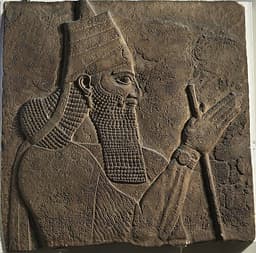
Tiglath-Pileser III
Emperor · Ancient
69.0Total
Basic Information
Born
-1481
-745
Died
-1425
-727
Era
Ancient
Ancient
Nationality
Egypt
Assyria
Occupation
Emperor
Emperor
Civilization
Middle Eastern
Middle Eastern
Score Comparison
Military (10%)
86.0
75.0
Political (20%)
58.1
77.8
Influence (20%)
68.0
65.2
Legacy (20%)
40.0
55.0
Leadership (15%)
81.0
78.0
Strategy (15%)
80.1
80.3
TOTAL
64.5
69.0
Thutmose III — Complete Timeline
1457 BC
Battle of MegiddoWar
Thutmose III led his army through the Aruna Pass to surprise a Canaanite coalition at Megiddo. The Egyptian victory secured control over Syria-Palestine and marked the first recorded battle in history with a detailed tactical account.
Military CampaignCanaanSiege
Impact: regional
1456 BC
Campaigns in Syria and MitanniWar◆ Major
Thutmose III conducted a series of annual campaigns into Syria, capturing cities such as Kadesh and Carchemish. He crossed the Euphrates River into Mitanni territory, extending Egyptian influence to its greatest geographical extent.
Imperial ExpansionMitanniEuphrates
Impact: regional
1450 BC
Construction of the Festival Hall at KarnakCultural◆ Major
Thutmose III built the Akh-menu, or Festival Hall, at the Karnak temple complex in Thebes. The hall featured reliefs depicting his military campaigns and served as a center for the Heb-sed festival, reinforcing his divine kingship.
ArchitectureKarnakReligious Center
Impact: nationalconstructive
1445 BC
Obelisk Erection at KarnakCultural
Thutmose III erected two large obelisks at the Karnak temple, one of which now stands in Istanbul. The obelisks commemorated his military victories and were inscribed with texts praising his achievements as a warrior pharaoh.
MonumentObeliskCommemoration
Impact: nationalconstructive
1440 BC
Suppression of the Rebellion in NubiaWar
Thutmose III led a campaign into Nubia to crush a rebellion against Egyptian rule. The victory secured the southern border and ensured continued access to gold mines and trade routes in the region.
NubiaRebellionGold Trade
Impact: regional
Tiglath-Pileser III — Complete Timeline
740 BC
Reform of the Assyrian ArmyReform
Tiglath-Pileser III reorganized the Assyrian army into a standing professional force with specialized units, including cavalry, chariotry, and siege engineers. This reform made the army more efficient and enabled rapid conquests.
Military ReformStanding ArmyAssyrian Empire
Impact: regionalconstructive
Deportation of PopulationsPolitical Action◆ Major
Tiglath-Pileser III implemented a policy of mass deportation, moving conquered peoples to different parts of the empire. This broke up resistance and integrated diverse groups into the Assyrian economy and administration.
DeportationPopulation TransferImperial Policy
Impact: regionaldestructive
734 BC
Conquest of Syria and PalestineWar◆ Major
Tiglath-Pileser III launched a campaign into Syria and Palestine, defeating the kingdoms of Damascus, Israel, and Philistia. He annexed their territories and imposed tribute, extending Assyrian control to the borders of Egypt.
Military CampaignSyriaPalestine
Impact: regional
729 BC
Coronation as King of BabylonPolitical Action◆ Major
Tiglath-Pileser III conquered Babylon and had himself crowned as King of Babylon under the name Pulu. This personal union of the Assyrian and Babylonian thrones marked a new phase in the relationship between the two regions.
CoronationBabylonPersonal Union
Impact: regional
This comparison has not been analyzed yet.
One-time AI generation (~1 minute). Scores and timeline are already available below.
Rankings
🥇
Tiglath-Pileser IIILeader
Mil: 75.0Pol: 77.8Inf: 65.2
69.0
🥈
Thutmose III
Mil: 86.0Pol: 58.1Inf: 68.0
64.5
+4.5 behind
How This Comparison Works
Algorithm
Each figure is scored on 6 dimensions (0—100 scale) based on structured historical data: Military (10%), Political (20%), Influence (20%), Legacy (20%), Leadership (15%), Strategy (15%). The weighted total produces the final ranking.
Data Sources
Scores are computed from structured sub-indicators in the database. Scale factors adjust for era (Ancient ×0.85, Modern ×1.0) and civilization size (Eastern ×1.05, Other ×0.80) to account for differences in population and military scale.
Maximum 3 Figures
Comparisons are limited to 2—3 figures to ensure readability and statistical meaningfulness.
Error Margins
±5 points per dimension — Sub-scores are derived from historical records with inherent uncertainty. Two figures within 5 points on a dimension should be considered roughly equivalent in that area.
Total Score Accuracy
±3 points overall — The weighted combination of 6 dimensions produces a total score with approximately ±3 points of uncertainty. Differences of less than 3 points are not statistically significant— the figures are effectively tied.
Known Limitations
- Historical records are incomplete and uneven across civilizations
- Figures from oral-tradition societies may be underrepresented
- Occupation labels can misclassify multi-role figures
- Scores measure capability and impact, not moral character
- Quantitative scoring is a comparison tool, not absolute truth
Capability Radar
Military (10%) — Battles & Warfare
Battles
95
85
Win Rate
98
90
Expansion
95
90
Political (20%) — Governance & Reform
Reform
80
95
Diplomacy
85
85
Economy
82
88
Influence (20%) — Cultural & Global Reach
Cultural
75
75
Global
70
78
Legacy (20%) — Historical Impact
Historical
85
85
Longevity
80
80
Leadership (15%) — Power & Stability
Tenure
88
80
Stability
85
82
Strategy (15%) — Tactics & Innovation
Strategy
95
92
Tactics
92
88
Reform
85
95
Similar Comparisons
Comments & Discussion
No comments yet. Be the first to share your thoughts!