Loading...
Theodosius I vs Yi Seong-gye
Theodosius I leads by 0.2 pts · 2 figures compared
…

Theodosius I
Emperor · Ancient
76.0Total
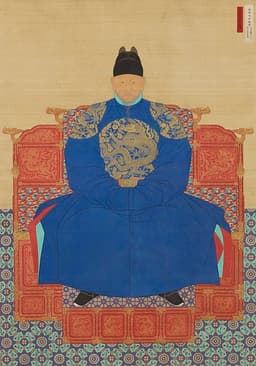
Yi Seong-gye
Emperor · Medieval
75.8Total
Basic Information
Born
347
1335
Died
395
1408
Era
Ancient
Medieval
Nationality
Roman Empire
Korea
Occupation
Emperor
Emperor
Civilization
Western
Eastern
Score Comparison
Military (10%)
72.5
74.7
Political (20%)
65.0
70.0
Influence (20%)
85.0
88.0
Legacy (20%)
90.0
75.0
Leadership (15%)
68.0
68.0
Strategy (15%)
50.0
69.1
TOTAL
76.0
75.8
Theodosius I — Complete Timeline
380 AD
Edict of ThessalonicaPolitical Action
Theodosius I issued the Edict of Thessalonica, declaring Nicene Christianity the official state religion of the Roman Empire. All other forms of Christianity were deemed heretical, and pagan practices were increasingly suppressed.
ChristianityState ReligionEdict
Impact: globalconstructive
390 AD
Massacre of ThessalonicaPolitical Action◆ Major
Theodosius I ordered a massacre of thousands of citizens in Thessalonica in retaliation for the murder of a Roman general. The massacre led to his excommunication by Bishop Ambrose of Milan, and he later performed public penance.
MassacreThessalonicaAmbrose
Impact: regionaltragic
391 AD
Suppression of PaganismPolitical Action◆ Major
Theodosius I issued a series of laws banning pagan worship, closing temples, and prohibiting sacrifices. The Olympic Games were abolished, and the Serapeum in Alexandria was destroyed. These actions accelerated the decline of paganism in the empire.
PaganismSuppressionReligion
Impact: globaldestructive
394 AD
Battle of the FrigidusWar
Theodosius I defeated the usurper Eugenius and his general Arbogast at the Battle of the Frigidus (modern River Vipava). The victory reunited the Roman Empire under a single ruler for the last time before its permanent division.
Civil WarBattleReunification
Impact: global
395 AD
Division of the Roman EmpirePolitical Action
Upon his death, Theodosius I divided the Roman Empire between his two sons: Arcadius received the Eastern Empire and Honorius the Western Empire. This division became permanent, leading to the separate histories of the Byzantine and Western Roman Empires.
DivisionSuccessionEast-West
Impact: global
Yi Seong-gye — Complete Timeline
1380 AD
Battle of HwangsanWar◆ Major
Yi Seong-gye led Goryeo forces against Japanese pirates (wokou) at the Battle of Hwangsan. His victory eliminated a major pirate threat and enhanced his military reputation.
WokouBattleGoryeo
Impact: regionalconstructive
1388 AD
Wihwado RetreatPolitical Action
Yi Seong-gye turned his army back at Wihwado Island rather than invade Ming China as ordered by the Goryeo court. This act of defiance led to a coup that eventually brought him to power.
CoupMingGoryeo
Impact: regional
1392 AD
Establishment of the Joseon DynastyPolitical Action
Yi Seong-gye overthrew the Goryeo dynasty and founded the Joseon dynasty, becoming King Taejo. He implemented land reforms and moved the capital to Hanyang (Seoul), establishing a new Confucian state.
JoseonDynasty FoundationReform
Impact: regionalconstructive
Expert Analysis
Origins
**Theodosius I** (c. 347–395 AD) was born into a prominent Roman military family in Hispania. His father, Count Theodosius, was a general under Emperor Valentinian I. After his father's execution, Theodosius retreated to his estates but was recalled by Emperor Gratian to deal with the Gothic crisis. In contrast, **Yi Seong-gye** (1335–1408) was born into a minor aristocratic family in Korea's Goryeo dynasty. His father, Yi Ja-chun, was a Mongol official, giving Yi Seong-gye early exposure to military and political affairs. Both men rose from relative obscurity to become founders of new eras—Theodosius as the last emperor of a united Rome, and Yi Seong-gye as the first king of Joseon.
Rise to Power
Theodosius was proclaimed co-emperor of the East in 379 AD after the disastrous Battle of Adrianople. He skillfully negotiated with the Goths, settling them within the empire as foederati. His rise culminated in the defeat of the usurper Magnus Maximus in 388 AD, reuniting the empire. Yi Seong-gye's rise was more dramatic. In 1388, he executed the Wihwado Retreat, turning his army back from invading China's Ming dynasty to seize power in Goryeo. He gradually consolidated control, purging rivals and eventually deposing King U in 1392, founding the Joseon dynasty. Both men used military prowess and political maneuvering—Theodosius through diplomacy and war, Yi through bold defiance and coup.
Leadership & Governance
Theodosius is best known for making Christianity the state religion via the Edict of Thessalonica (380 AD). He aggressively suppressed paganism, closing temples and banning pagan rituals. His governance was autocratic but effective in stabilizing the empire after decades of crisis. However, his division of the empire between his sons Honorius and Arcadius after his death proved disastrous. Yi Seong-gye established a Confucian state, promoting education, land reforms, and a strong central bureaucracy. He redistributed land to peasants and implemented the Gwageo civil service exams. While Theodosius's policies strengthened the Church, Yi's reforms laid the foundation for a 500-year dynasty.
Triumph & Tragedy
Theodosius's greatest triumph was the Battle of the Frigidus (394 AD), where he defeated the pagan usurper Eugenius, securing Christian dominance. Yet his massacre of Thessalonica (390 AD) in retaliation for a riot—killing thousands—was a tragic stain. Bishop Ambrose forced him to do penance, highlighting the growing power of the Church. Yi Seong-gye's triumph was the establishment of Joseon, but his tragedy came in the succession struggle. He abdicated in favor of his son Yi Bang-gwa (King Jeongjong), but his other son Yi Bang-won (later King Taejong) orchestrated a bloody purge, including the murder of Yi's favored eighth son. Both leaders saw their ideals compromised by internal strife.
Character & Destiny
Theodosius was a devout Christian and a capable administrator, but his temper and stubbornness led to ruthless actions. His destiny was to be the last emperor of a united Roman Empire, a mantle he bore with mixed success. Yi Seong-gye was pragmatic and ambitious, known for his military skill and Confucian values. His destiny was to found a dynasty that would endure for centuries, shaping Korean identity. Theodosius's scores: Military 72, Political 65, Influence 85, Leadership 90, Discipline 68, Strategy 50, Tenacity 76. Yi Seong-gye's scores: Military 75, Political 70, Influence 88, Leadership 75, Discipline 68, Strategy 69, Tenacity 76. While Theodosius leads in Leadership, Yi excels in Strategy and Influence.
Legacy
Theodosius's legacy is profound: he made Christianity the state religion, effectively ending paganism in the Roman world. His division of the empire contributed to the eventual fall of the West but ensured the survival of the East (Byzantine Empire). Yi Seong-gye's legacy is equally monumental: he founded the Joseon dynasty, which oversaw a golden age of culture, science, and technology in Korea. Confucian values became deeply embedded in Korean society. Theodosius is remembered as a champion of orthodoxy, while Yi is revered as a national founder. Both men shaped the religious and political landscapes of their respective civilizations for millennia.
Conclusion
Theodosius I and Yi Seong-gye were transformative figures, each leaving an indelible mark on history. Theodosius's actions set the course for medieval Europe and the Christian Church, but his division of the empire and harsh suppression of paganism were controversial. Yi Seong-gye's establishment of a Confucian dynasty brought stability and cultural flourishing to Korea, though his rise involved ruthless power grabs. Based on the numerical scores, Theodosius holds a slight edge (76 vs 75.7 average), but Yi's strategic acumen and longer-lasting dynasty make him arguably more effective. Ultimately, both were products of their times, and their legacies continue to be debated. Theodosius's impact on the West is more widely recognized, but Yi's creation of a dynasty that endured for 500 years is a remarkable achievement.
**The verdict:** Theodosius I narrowly wins on leadership and influence, but Yi Seong-gye's strategic brilliance and lasting legacy make him a close second. HistoryVersus.com rates Theodosius I as the greater leader by a margin of 0.2 points.
Rankings
🥇
Theodosius ILeader
Mil: 72.5Pol: 65.0Inf: 85.0
76.0
🥈
Yi Seong-gye
Mil: 74.7Pol: 70.0Inf: 88.0
75.8
+0.2 behind
How This Comparison Works
Algorithm
Each figure is scored on 6 dimensions (0—100 scale) based on structured historical data: Military (10%), Political (20%), Influence (20%), Legacy (20%), Leadership (15%), Strategy (15%). The weighted total produces the final ranking.
Data Sources
Scores are computed from structured sub-indicators in the database. Scale factors adjust for era (Ancient ×0.85, Modern ×1.0) and civilization size (Eastern ×1.05, Other ×0.80) to account for differences in population and military scale.
Maximum 3 Figures
Comparisons are limited to 2—3 figures to ensure readability and statistical meaningfulness.
Error Margins
±5 points per dimension — Sub-scores are derived from historical records with inherent uncertainty. Two figures within 5 points on a dimension should be considered roughly equivalent in that area.
Total Score Accuracy
±3 points overall — The weighted combination of 6 dimensions produces a total score with approximately ±3 points of uncertainty. Differences of less than 3 points are not statistically significant— the figures are effectively tied.
Known Limitations
- Historical records are incomplete and uneven across civilizations
- Figures from oral-tradition societies may be underrepresented
- Occupation labels can misclassify multi-role figures
- Scores measure capability and impact, not moral character
- Quantitative scoring is a comparison tool, not absolute truth
Capability Radar
Military (10%) — Battles & Warfare
Battles
65
75
Win Rate
60
80
Expansion
45
65
Political (20%) — Governance & Reform
Reform
85
85
Diplomacy
75
75
Economy
60
70
Influence (20%) — Cultural & Global Reach
Cultural
90
80
Global
90
55
Legacy (20%) — Historical Impact
Historical
95
85
Longevity
95
80
Leadership (15%) — Power & Stability
Tenure
70
60
Stability
55
65
Strategy (15%) — Tactics & Innovation
Strategy
60
82
Tactics
55
78
Reform
50
70
Similar Comparisons
Comments & Discussion
No comments yet. Be the first to share your thoughts!