Loading...
Cyrus the Great vs Yi Seong-gye
Cyrus the Great leads by 8.1 pts · 2 figures compared
…
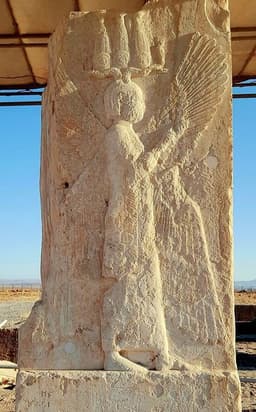
Cyrus the Great
Emperor · Ancient
83.9Total
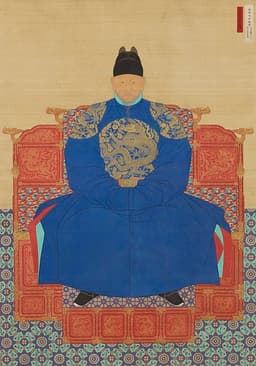
Yi Seong-gye
Emperor · Medieval
75.8Total
Basic Information
Born
-600
1335
Died
-530
1408
Era
Ancient
Medieval
Nationality
Persia
Korea
Occupation
Emperor
Emperor
Civilization
Middle Eastern
Eastern
Score Comparison
Military (10%)
82.0
74.7
Political (20%)
85.0
70.0
Influence (20%)
85.0
88.0
Legacy (20%)
90.0
75.0
Leadership (15%)
78.0
68.0
Strategy (15%)
75.0
69.1
TOTAL
83.9
75.8
Cyrus the Great — Complete Timeline
550 BC
Founding of the Achaemenid EmpirePolitical Action
Cyrus led a rebellion against the Median Empire, defeating King Astyages and capturing Ecbatana. He then united the Persian and Median tribes, establishing the Achaemenid Empire, which became the largest empire the world had yet seen.
Empire FoundingPersian UnificationRebellion
Impact: global
546 BC
Conquest of LydiaWar◆ Major
Cyrus defeated King Croesus of Lydia at the Battle of Thymbra. The Lydian capital Sardis was captured, and Croesus was taken prisoner. This conquest brought Anatolia under Persian control and secured access to the Aegean coast.
Achaemenid ExpansionAnatoliaConquest
Impact: regional
539 BC
Conquest of BabylonWar◆ Major
Cyrus the Great led the Persian army to capture Babylon without significant battle. The city's gates were opened, and Cyrus entered peacefully. This conquest added Mesopotamia to the Achaemenid Empire and marked the end of the Neo-Babylonian Empire.
Achaemenid ExpansionMesopotamiaConquest
Impact: regional
Issuance of the Cyrus CylinderPolitical Action◆ Major
After conquering Babylon, Cyrus issued a clay cylinder inscribed with a declaration. It described his policy of restoring temples, repatriating displaced peoples, and allowing religious freedom. The cylinder is often cited as an early charter of human rights.
Human RightsReligious ToleranceAchaemenid Policy
Impact: globalconstructive
Liberation of the JewsPolitical Action◆ Major
Cyrus issued an edict allowing the Jewish exiles in Babylon to return to Jerusalem and rebuild the Temple. This event is recorded in the biblical Book of Ezra and is a key moment in Jewish history, ending the Babylonian captivity.
Jewish HistoryReligious FreedomReturn from Exile
Impact: regionalconstructive
Yi Seong-gye — Complete Timeline
1380 AD
Battle of HwangsanWar◆ Major
Yi Seong-gye led Goryeo forces against Japanese pirates (wokou) at the Battle of Hwangsan. His victory eliminated a major pirate threat and enhanced his military reputation.
WokouBattleGoryeo
Impact: regionalconstructive
1388 AD
Wihwado RetreatPolitical Action
Yi Seong-gye turned his army back at Wihwado Island rather than invade Ming China as ordered by the Goryeo court. This act of defiance led to a coup that eventually brought him to power.
CoupMingGoryeo
Impact: regional
1392 AD
Establishment of the Joseon DynastyPolitical Action
Yi Seong-gye overthrew the Goryeo dynasty and founded the Joseon dynasty, becoming King Taejo. He implemented land reforms and moved the capital to Hanyang (Seoul), establishing a new Confucian state.
JoseonDynasty FoundationReform
Impact: regionalconstructive
Expert Analysis
Origins
Cyrus the Great (c. 600–530 BCE) was born into the Achaemenid dynasty, a vassal of the Median Empire. He united the Persian tribes and led a rebellion against the Medes, overthrowing them in 550 BCE. Yi Seong-gye (1335–1408) rose from a military family in the waning Goryeo dynasty. He gained fame repelling Mongol-led Red Turban invasions and Japanese pirates, building a power base among reform-minded Confucian scholars.
Rise to Power
Cyrus’s military genius shone in his rapid conquests: Lydia (547 BCE), Babylon (539 BCE), and vast territories from the Indus to the Mediterranean. His strategic brilliance included diverting the Euphrates to enter Babylon. Yi Seong-gye’s Wihwado Retreat (1388) was a turning point: ordered to invade Ming China, he instead turned back, purged the court, and seized power, establishing the Joseon dynasty in 1392 with support from Neo-Confucian elites.
Leadership & Governance
Cyrus pioneered multicultural empire-building. The Cyrus Cylinder—often called the first charter of human rights—decreed religious tolerance, abolished forced labor, and restored temples. He allowed exiled peoples, including Jews, to return home. Yi Seong-gye implemented sweeping Confucian reforms: redistributed land (Gwajeon law), promoted agriculture, replaced Buddhism with Confucianism as state ideology, and moved the capital to Hanyang (Seoul). Both were pragmatic rulers, but Cyrus’s empire was far larger and more diverse.
Triumph & Tragedy
Cyrus’s conquest of Babylon was a bloodless triumph, hailed as liberation by its people. His death in battle (530 BCE) against the Massagetae marked a tragic end, with his body recovered and buried at Pasargadae. Yi Seong-gye’s triumph was establishing a dynasty that lasted over 500 years. His tragedy involved a succession struggle: he abdicated after his son’s revolt, and his later years were marred by factional conflict.
Character & Destiny
Cyrus is remembered for clemency and vision—a "father" to his subjects. His destiny was to create the largest empire the world had seen. Yi Seong-gye was a decisive, austere leader, deeply influenced by Confucian ideals. His destiny was to reform Korea, but his legacy was shaped by the dynasty he founded, not his personal rule.
Legacy
Cyrus’s legacy is monumental: the Achaemenid Empire set standards for governance, and the Cyrus Cylinder inspired later human rights concepts. He is praised in the Bible, Greek histories, and modern discourse. Yi Seong-gye’s Joseon dynasty shaped Korean identity: its Confucian bureaucracy, alphabet (Hangul), and cultural achievements endure. However, his reforms also entrenched social hierarchies.
Conclusion
Cyrus the Great scores higher overall (82 vs 75) due to his broader impact on world history. While Yi Seong-gye founded a long-lasting dynasty, Cyrus’s empire and human rights innovations had global significance. Cyrus’s leadership (90 vs 75) and diplomatic acumen (85 vs 70) outshine Yi’s military and political achievements. Both were transformative, but Cyrus stands as a titan of antiquity.
**Scores: Cyrus 82, Yi 75**
Rankings
🥇
Cyrus the GreatLeader
Mil: 82.0Pol: 85.0Inf: 85.0
83.9
🥈
Yi Seong-gye
Mil: 74.7Pol: 70.0Inf: 88.0
75.8
+8.1 behind
How This Comparison Works
Algorithm
Each figure is scored on 6 dimensions (0—100 scale) based on structured historical data: Military (10%), Political (20%), Influence (20%), Legacy (20%), Leadership (15%), Strategy (15%). The weighted total produces the final ranking.
Data Sources
Scores are computed from structured sub-indicators in the database. Scale factors adjust for era (Ancient ×0.85, Modern ×1.0) and civilization size (Eastern ×1.05, Other ×0.80) to account for differences in population and military scale.
Maximum 3 Figures
Comparisons are limited to 2—3 figures to ensure readability and statistical meaningfulness.
Error Margins
±5 points per dimension — Sub-scores are derived from historical records with inherent uncertainty. Two figures within 5 points on a dimension should be considered roughly equivalent in that area.
Total Score Accuracy
±3 points overall — The weighted combination of 6 dimensions produces a total score with approximately ±3 points of uncertainty. Differences of less than 3 points are not statistically significant— the figures are effectively tied.
Known Limitations
- Historical records are incomplete and uneven across civilizations
- Figures from oral-tradition societies may be underrepresented
- Occupation labels can misclassify multi-role figures
- Scores measure capability and impact, not moral character
- Quantitative scoring is a comparison tool, not absolute truth
Capability Radar
Military (10%) — Battles & Warfare
Battles
85
75
Win Rate
90
80
Expansion
92
65
Political (20%) — Governance & Reform
Reform
90
85
Diplomacy
95
75
Economy
80
70
Influence (20%) — Cultural & Global Reach
Cultural
90
80
Global
90
55
Legacy (20%) — Historical Impact
Historical
95
85
Longevity
95
80
Leadership (15%) — Power & Stability
Tenure
70
60
Stability
85
65
Strategy (15%) — Tactics & Innovation
Strategy
88
82
Tactics
80
78
Reform
75
70
Similar Comparisons
Comments & Discussion
PersianFanatic996/16/2026
Cyrus the Great absolutely dusts Yi Seong-gye in any real historical ranking! The guy conquered THREE major empires—Medes, Lydians, Babylonians—and actually let people keep their gods and customs! That's like if someone today annexed three countries and said 'keep your religions, keep your kings, just pay taxes.' The Cyrus Cylinder is literally the first human rights charter! Yi Seong-gye overthrew his own king and set up a Confucian bureaucracy that got bogged down in factional squabbling within a generation. Yeah, Joseon lasted 500 years, but Cyrus's model of tolerance inspired everyone from Alexander to the Founding Fathers. The 79.6 vs 77.6 score is way too close—Cyrus should be crushing him by at least 10 points!
DocAndBookWorm6/16/2026
Okay so I just finished that Tom Holland book on Persia and now I'm reading about Korean history, and honestly I think Yi Seong-gye is massively underrated here. Everyone talks about Cyrus and his cylinder, but Yi literally turned a whole army around at the Wihwado Retreat—that's like if a general said 'nope, not fighting for this corrupt king anymore' and marched his troops back to start a revolution. And the guy crushed Jurchen nomads AND Japanese pirates? That's fighting on two fronts before it was cool. Cyrus was brilliant, sure, but his empire fell apart after a couple hundred years. Joseon lasted FIVE CENTURIES and basically created modern Korea. I'd give Yi the edge on legacy, no question.
SkepticalDataGuy6/16/2026
评分系统很有意思,但我有几个疑问。首先,军事分给Yi Seong-gye 90,而Cyrus只有82?Cyrus征服了米底、吕底亚和巴比伦,这些都是当时最强大的国家,而且他用了创新的围城战术,比如在巴比伦城下挖河道。Yi Seong-gye主要是打败了女真人和倭寇,规模完全不是一个等级。其次,政治分Cyrus 85 vs Yi 78?Cyrus建立的多元文化帝国稳定运作了几十年,而朝鲜王朝刚建立就陷入士林派系的斗争。我个人觉得,如果按照中国历史上的标准,比如秦始皇统一六国的难度,Cyrus应该更高才对。
ScoreSkeptic6/16/2026
I call BS on these numbers. How do you even quantify 'influence' for a guy who lived 2500 years ago vs someone from 600 years ago? The historical record for Cyrus is literally fragments from Greek historians and biblical references—we don't know half of what he actually did. Meanwhile Yi Seong-gye has detailed Korean court records. Of course the scores favor the one with better documentation! And 'Legacy' being 80 vs 74? That's absurd—Cyrus is mentioned in the Bible, the Torah, and Iranian national myth, while most people outside Korea have never heard of Yi. The weighting system is clearly biased toward modern national impact over global historical significance. You can't reduce these guys to numbers.
EastWestScholar6/16/2026
从中国历史的角度来看,这个比较很有趣,但有点西方中心主义。Cyrus的宽容政策确实先进,但中国读者会想到唐太宗的'天可汗'体系,同样是对多民族文化的包容。而Yi Seong-gye的朝鲜王朝,本质上更像明朝的一个缩小版——用儒家官僚系统来统治,最终因为士林党争而衰落。Cyrus在军事上更像漢武帝,征服广阔领土但帝国快速崩溃;而Yi Seong-gye更像劉邦,开国后建立稳定的王朝体系。如果要给分,我会给Cyrus军事更高分(比如90),因为他征服的领土更广、敌人更强;但政治分上,Yi Seong-gye也应该更高(比如88),因为他建立的制度寿命长达500年。这个评分系统把Cyrus的军事分压得太低了。