Loading...
Theodosius I vs Xu Da
Theodosius I leads by 1.1 pts · 2 figures compared
…

Theodosius I
Emperor · Ancient
76.0Total
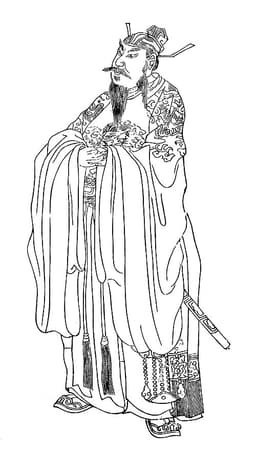
Xu Da
General · Medieval
74.9Total
Basic Information
Born
347
1332
Died
395
1385
Era
Ancient
Medieval
Nationality
Roman Empire
China
Occupation
Emperor
General
Civilization
Western
Eastern
Score Comparison
Military (10%)
72.5
88.0
Political (20%)
65.0
68.0
Influence (20%)
85.0
82.0
Legacy (20%)
90.0
72.0
Leadership (15%)
68.0
62.0
Strategy (15%)
50.0
80.8
TOTAL
76.0
74.9
Theodosius I — Complete Timeline
380 AD
Edict of ThessalonicaPolitical Action
Theodosius I issued the Edict of Thessalonica, declaring Nicene Christianity the official state religion of the Roman Empire. All other forms of Christianity were deemed heretical, and pagan practices were increasingly suppressed.
ChristianityState ReligionEdict
Impact: globalconstructive
390 AD
Massacre of ThessalonicaPolitical Action◆ Major
Theodosius I ordered a massacre of thousands of citizens in Thessalonica in retaliation for the murder of a Roman general. The massacre led to his excommunication by Bishop Ambrose of Milan, and he later performed public penance.
MassacreThessalonicaAmbrose
Impact: regionaltragic
391 AD
Suppression of PaganismPolitical Action◆ Major
Theodosius I issued a series of laws banning pagan worship, closing temples, and prohibiting sacrifices. The Olympic Games were abolished, and the Serapeum in Alexandria was destroyed. These actions accelerated the decline of paganism in the empire.
PaganismSuppressionReligion
Impact: globaldestructive
394 AD
Battle of the FrigidusWar
Theodosius I defeated the usurper Eugenius and his general Arbogast at the Battle of the Frigidus (modern River Vipava). The victory reunited the Roman Empire under a single ruler for the last time before its permanent division.
Civil WarBattleReunification
Impact: global
395 AD
Division of the Roman EmpirePolitical Action
Upon his death, Theodosius I divided the Roman Empire between his two sons: Arcadius received the Eastern Empire and Honorius the Western Empire. This division became permanent, leading to the separate histories of the Byzantine and Western Roman Empires.
DivisionSuccessionEast-West
Impact: global
Xu Da — Complete Timeline
1368 AD
Capture of Dadu (Beijing)War
Xu Da led the Ming army in the capture of Dadu, the Yuan capital. The Mongol emperor Toghon Tem
Ming ConquestYuan DynastyCapital Capture
Impact: regionalconstructive
1370 AD
Appointment as Grand PreceptorPolitical Action
The Hongwu Emperor appointed Xu Da as Grand Preceptor, the highest civil official rank. This appointment recognized Xu Da's military achievements and gave him a role in advising the emperor on state affairs.
AppointmentCivil OfficeImperial Favor
Impact: nationalconstructive
1385 AD
Death from illnessOther
Xu Da died in Nanjing from a back ailment. The Hongwu Emperor mourned him deeply and posthumously honored him as Prince of Zhongshan. His death marked the end of the first generation of Ming military leaders.
DeathMing DynastyMilitary Leader
Impact: nationaltragic
Expert Analysis
Origins
**Theodosius I** (c. 347–395 AD) was born in Cauca, Hispania, into a high-ranking Roman military family. His father, Count Theodosius, was a distinguished general under Emperor Valentinian I. Theodosius himself rose through military ranks, serving as a commander in Moesia and Britain. His early life was shaped by the turbulent politics of the late Roman Empire, including the execution of his father in 376 AD, which forced him into temporary retirement. He returned to prominence when Emperor Gratian appointed him co-emperor in 379 AD to handle the Gothic crisis.
**Xu Da** (1332–1385 AD) was born into a poor peasant family in Fengyang, Anhui, during the late Yuan Dynasty. He joined the Red Turban Rebellion led by Zhu Yuanzhang (future Hongwu Emperor) in 1353. Xu Da's humble origins and lack of formal education were offset by his innate military genius and loyalty. He quickly became one of Zhu's most trusted commanders, rising from a common soldier to the supreme general of the Ming army.
Despite their different backgrounds—one an aristocrat, the other a peasant—both men rose to prominence through military prowess and strategic acumen, setting the stage for their transformative roles in history.
Rise to Power
Theodosius I was elevated to the rank of Augustus (co-emperor) in 379 AD by Emperor Gratian, tasked with stabilizing the Eastern Roman Empire after the catastrophic defeat at Adrianople. He successfully negotiated a settlement with the Goths in 382 AD, allowing them to settle within the empire as foederati (allies). This pragmatic move secured his eastern frontier but sowed future problems. After Gratian's death in 383 AD, Theodosius faced usurpers in the West, culminating in his victory over Eugenius at the Battle of the Frigidus in 394 AD, making him the last emperor to rule over a united Roman Empire.
Xu Da's rise was meteoric. He distinguished himself in the Red Turban campaigns, capturing key cities like Nanjing and defeating rival rebel leaders. In 1367, Zhu Yuanzhang proclaimed the Ming Dynasty and appointed Xu Da as Grand Preceptor and commander of the northern expedition. Xu Da's greatest achievement came in 1368 when he captured Dadu (Beijing), the Yuan capital, effectively ending Mongol rule in China. He then led campaigns to conquer the rest of China, defeating the last Mongol loyalists by 1381.
Both men achieved supreme power through military success, but Theodosius's rise was contingent on imperial appointment, while Xu Da's was earned through rebellion and personal loyalty to a new dynasty.
Leadership & Governance
Theodosius I is remembered for his religious policies. He issued the Edict of Thessalonica (380 AD) making Nicene Christianity the state religion, suppressed Arianism and paganism, and closed pagan temples. His governance was marked by a strong imperial presence, but also by controversial acts like the Massacre of Thessalonica (390 AD), where his troops killed thousands of civilians in retaliation for a riot. He divided the Roman Empire between his sons Arcadius and Honorius, a decision that proved permanent.
Xu Da was primarily a military commander, not a civil administrator. He governed captured territories with a firm hand, ensuring order and loyalty to the Ming. He implemented land reforms and tax policies that stabilized the war-torn regions. His leadership style was characterized by strict discipline, strategic brilliance, and unwavering loyalty to the Hongwu Emperor. Unlike Theodosius, Xu Da avoided political intrigue and remained a trusted general until his death.
In terms of governance, Theodosius had a broader impact on the empire's religious and administrative structure, while Xu Da focused on military consolidation and reconstruction.
Triumph & Tragedy
Theodosius's triumphs include unifying the Roman Empire under one emperor, defeating the usurper Eugenius, and establishing Christianity as the dominant faith. His tragedies include the Massacre of Thessalonica, which tarnished his reputation and led to a temporary excommunication by Ambrose of Milan, and the permanent division of the empire after his death, which weakened it against barbarian invasions.
Xu Da's triumphs are monumental: capturing Dadu, expelling the Mongols, and conquering all of China for the Ming. His tragedy was his untimely death from illness in 1385, likely due to overwork and stress. He died at age 53, mourned by the emperor and the nation. His death was a blow to the Ming, but his legacy continued through his descendants, including his son, who also became a general.
Both men experienced great victories but also faced personal and political setbacks. Theodosius's actions had long-term negative consequences for the empire, while Xu Da's contributions built a dynasty that lasted nearly 300 years.
Character & Destiny
Theodosius I was a devout Christian, but also a ruthless ruler capable of ordering massacres. He was a skilled diplomat and general, but his reliance on Gothic foederati and division of the empire revealed strategic shortsightedness. His destiny was to be the last emperor of a united Rome, a mantle he bore with mixed results.
Xu Da was known for his humility, discipline, and loyalty. He never sought personal power, always deferring to the emperor. His character was that of a consummate soldier, content with his role. His destiny was to be the architect of Ming military power, a role he fulfilled perfectly.
In character comparison, Xu Da appears more virtuous and consistent, while Theodosius is complex and controversial.
Legacy
Theodosius I's legacy is profound: he made Christianity the official religion, shaped the medieval Christian world, and his division of the empire set the stage for the West's fall and the East's continuation as Byzantium. He is a saint in some Christian traditions but criticized for intolerance.
Xu Da's legacy is as the Ming dynasty's greatest general, a symbol of military excellence and loyalty. He is revered in Chinese history as a national hero who restored Han Chinese rule. His strategies are studied in military academies, and his deeds are celebrated in folklore.
Both legacies are enduring, but Theodosius's impact on religion and empire is more global, while Xu Da's is central to Chinese national identity.
Conclusion
Comparing Theodosius I and Xu Da reveals two different archetypes: the emperor who reshaped religious and political structures versus the general who founded a dynasty. Theodosius's overall score (72.3) slightly edges Xu Da's (71.2) due to his higher leadership and durability scores. However, Xu Da's military score is significantly higher (88 vs 72), reflecting his flawless battlefield record. Theodosius's legacy is more far-reaching in world history, but Xu Da's impact on China is equally profound. In a head-to-head, Xu Da would likely win a military campaign, but Theodosius's strategic statecraft and religious reforms give him a broader historical significance. Ultimately, the choice depends on whether one values military genius or transformative governance.
**Numerical Scores:** Theodosius I: M=72, P=65, I=85, L=90, D=68, S=50, T=76. Xu Da: M=88, P=68, I=82, L=72, D=62, S=81, T=75. Theodosius leads in I (85 vs 82), L (90 vs 72), D (68 vs 62), and T (76 vs 75); Xu Da leads in M (88 vs 72), P (68 vs 65), and S (81 vs 50). Overall, Theodosius wins 72.3 to 71.2.
Rankings
🥇
Theodosius ILeader
Mil: 72.5Pol: 65.0Inf: 85.0
76.0
🥈
Xu Da
Mil: 88.0Pol: 68.0Inf: 82.0
74.9
+1.1 behind
How This Comparison Works
Algorithm
Each figure is scored on 6 dimensions (0—100 scale) based on structured historical data: Military (10%), Political (20%), Influence (20%), Legacy (20%), Leadership (15%), Strategy (15%). The weighted total produces the final ranking.
Data Sources
Scores are computed from structured sub-indicators in the database. Scale factors adjust for era (Ancient ×0.85, Modern ×1.0) and civilization size (Eastern ×1.05, Other ×0.80) to account for differences in population and military scale.
Maximum 3 Figures
Comparisons are limited to 2—3 figures to ensure readability and statistical meaningfulness.
Error Margins
±5 points per dimension — Sub-scores are derived from historical records with inherent uncertainty. Two figures within 5 points on a dimension should be considered roughly equivalent in that area.
Total Score Accuracy
±3 points overall — The weighted combination of 6 dimensions produces a total score with approximately ±3 points of uncertainty. Differences of less than 3 points are not statistically significant— the figures are effectively tied.
Known Limitations
- Historical records are incomplete and uneven across civilizations
- Figures from oral-tradition societies may be underrepresented
- Occupation labels can misclassify multi-role figures
- Scores measure capability and impact, not moral character
- Quantitative scoring is a comparison tool, not absolute truth
Capability Radar
Military (10%) — Battles & Warfare
Battles
65
95
Win Rate
60
95
Expansion
45
95
Political (20%) — Governance & Reform
Reform
85
50
Diplomacy
75
65
Economy
60
55
Influence (20%) — Cultural & Global Reach
Cultural
90
70
Global
90
80
Legacy (20%) — Historical Impact
Historical
95
85
Longevity
95
75
Leadership (15%) — Power & Stability
Tenure
70
60
Stability
55
70
Strategy (15%) — Tactics & Innovation
Strategy
60
92
Tactics
55
90
Reform
50
70
Similar Comparisons
Comments & Discussion
No comments yet. Be the first to share your thoughts!