Loading...
Theodosius I vs Turenne
Theodosius I leads by 0.2 pts · 2 figures compared
…

Theodosius I
Emperor · Ancient
76.0Total
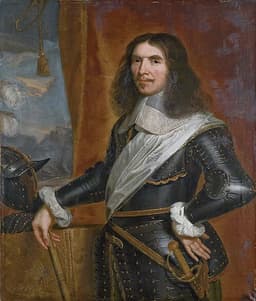
Turenne
General · Modern
75.8Total
Basic Information
Born
347
1611
Died
395
1675
Era
Ancient
Modern
Nationality
Roman Empire
France
Occupation
Emperor
General
Civilization
Western
Western
Score Comparison
Military (10%)
72.5
79.9
Political (20%)
65.0
72.0
Influence (20%)
85.0
88.0
Legacy (20%)
90.0
65.0
Leadership (15%)
68.0
77.2
Strategy (15%)
50.0
72.0
TOTAL
76.0
75.8
Theodosius I — Complete Timeline
380 AD
Edict of ThessalonicaPolitical Action
Theodosius I issued the Edict of Thessalonica, declaring Nicene Christianity the official state religion of the Roman Empire. All other forms of Christianity were deemed heretical, and pagan practices were increasingly suppressed.
ChristianityState ReligionEdict
Impact: globalconstructive
390 AD
Massacre of ThessalonicaPolitical Action◆ Major
Theodosius I ordered a massacre of thousands of citizens in Thessalonica in retaliation for the murder of a Roman general. The massacre led to his excommunication by Bishop Ambrose of Milan, and he later performed public penance.
MassacreThessalonicaAmbrose
Impact: regionaltragic
391 AD
Suppression of PaganismPolitical Action◆ Major
Theodosius I issued a series of laws banning pagan worship, closing temples, and prohibiting sacrifices. The Olympic Games were abolished, and the Serapeum in Alexandria was destroyed. These actions accelerated the decline of paganism in the empire.
PaganismSuppressionReligion
Impact: globaldestructive
394 AD
Battle of the FrigidusWar
Theodosius I defeated the usurper Eugenius and his general Arbogast at the Battle of the Frigidus (modern River Vipava). The victory reunited the Roman Empire under a single ruler for the last time before its permanent division.
Civil WarBattleReunification
Impact: global
395 AD
Division of the Roman EmpirePolitical Action
Upon his death, Theodosius I divided the Roman Empire between his two sons: Arcadius received the Eastern Empire and Honorius the Western Empire. This division became permanent, leading to the separate histories of the Byzantine and Western Roman Empires.
DivisionSuccessionEast-West
Impact: global
Turenne — Complete Timeline
1639 AD
Campaign in the ValtellinaWar
Turenne commanded French forces in the Valtellina during the Thirty Years' War. He captured several fortresses and secured the strategic pass for France, demonstrating his early military skill.
Thirty Years' WarAlpsEarly Career
Impact: regional
1658 AD
Battle of the DunesWar◆ Major
Turenne commanded the French army to victory over the Spanish at the Battle of the Dunes near Dunkirk. The victory led to the capture of Dunkirk and forced Spain to seek peace, ending the Franco-Spanish War.
Franco-Spanish WarDunkirkMilitary Victory
Impact: regional
1674 AD
Battle of the RhineWar◆ Major
Turenne led a French army across the Rhine in winter, surprising the Imperial forces. He defeated the Austrians at the Battle of Entzheim and later at Turckheim, securing French control of Alsace.
Franco-Dutch WarAlsaceWinter Campaign
Impact: regional
Battle of the SambreWar◆ Major
Turenne defeated the Spanish and Dutch forces at the Battle of Seneffe. The battle was costly but prevented the Allies from invading France. It demonstrated Turenne's tactical skill in defensive warfare.
Franco-Dutch WarDefensive BattleTactics
Impact: regional
1675 AD
Death of TurenneWar◆ Major
Turenne was killed by a cannonball while reconnoitering enemy positions at the Battle of Sasbach. His death was a major loss for France. He was buried with honors in the Basilica of Saint-Denis.
Death in BattleFranco-Dutch WarMilitary Loss
Impact: nationaltragic
Expert Analysis
Origins
Theodosius I (c. 347-395 AD) was born into a military family in Hispania. His father, Count Theodosius, was a successful general under Emperor Valentinian I. Theodosius the Elder's execution in 375 forced the younger Theodosius into retirement, but he was recalled by Emperor Gratian to face the Gothic crisis. In contrast, Henri de la Tour d'Auvergne, Vicomte de Turenne (1611-1675), was born into French nobility and was the grandson of William the Silent, a leader of the Dutch Revolt. Turenne was initially destined for a military career, joining the Dutch army at age 14. Both figures emerged from privileged backgrounds, but Theodosius's path was marked by personal tragedy and political upheaval, while Turenne's was more stable and deliberate.
Rise to Power
Theodosius's rise was meteoric. In 379, Emperor Gratian appointed him co-emperor for the East, tasked with saving the Balkan provinces from Gothic invasions. Theodosius skillfully combined diplomacy and military force, settling the Goths as foederati within the empire. His rise culminated in the defeat of the usurpers Magnus Maximus (388) and Eugenius (394), making him the last emperor to rule both halves of the Roman Empire. Turenne's ascent was more gradual. He gained fame in the Thirty Years' War, fighting for France under Louis XIII and Cardinal Richelieu. His victories at Breitenfeld (1642) and the Rhine campaign (1644-48) established him as a leading commander. During the Fronde (1648-53), Turenne initially sided with the rebels but later switched to the royalist cause, cementing his position as Louis XIV's most trusted general. Theodosius's power came from imperial appointment and battlefield success; Turenne's came through consistent service and strategic acumen.
Leadership & Governance
Theodosius was a strong but controversial ruler. He enforced orthodox Christianity through the Edict of Thessalonica (380), making it the state religion, and suppressed paganism and Arianism. His governance was harsh: the Massacre of Thessalonica (390) saw thousands killed in retaliation for a riot, for which Bishop Ambrose forced him to do penance. Theodosius also divided the empire between his sons, a decision with long-term consequences. Turenne, as a general, was known for his careful planning, logistical skill, and ability to inspire loyalty. He was not a political leader but a military commander who served under the king. His campaigns in the War of Devolution (1667-68) and the Franco-Dutch War (1672-78) showcased his tactical brilliance. Unlike Theodosius, Turenne avoided major ethical controversies, though his switch of sides during the Fronde raised questions about his loyalty. Theodosius scored higher in leadership (90 vs 65) due to his role as emperor, but Turenne's governance in military terms was exemplary.
Triumph & Tragedy
Theodosius's greatest triumph was the Battle of the Frigidus (394), where he defeated the pagan usurper Eugenius, securing Christian dominance. However, his reign ended with the permanent division of the empire after his death, and his policy of Gothic settlement sowed seeds of future collapse. Turenne's triumphs include the Battle of the Dunes (1658), where he defeated the Spanish and captured Dunkirk, and his Rhine campaign (1672-75), which saved France from invasion. His tragedy came at the Battle of the Sambre (1675), where he was killed by a cannonball at the height of his success. Both men died in the midst of their achievements, but Theodosius's legacy was mixed due to the empire's decline, while Turenne's death was seen as a national loss. Theodosius's score of 68 in triumph/tragedy reflects the empire's subsequent fall; Turenne's 77 acknowledges his heroic end.
Character & Destiny
Theodosius was devout, but also ruthless and impulsive. His penance for the Thessalonica massacre shows a man capable of humility, but his division of the empire was a strategic blunder. Turenne was methodical, cautious, and deeply respected by his men. He was known for his modesty and lack of personal ambition. Theodosius's destiny was to be the last ruler of a unified Roman Empire; Turenne's was to be a model of the professional soldier. Theodosius scores 68 in character/destiny, reflecting his flawed but pivotal role; Turenne's 77 highlights his near-flawless military career.
Legacy
Theodosius's legacy is immense: he made Christianity the official religion of the Roman Empire, shaping Western civilization. However, his division of the empire and reliance on barbarian foederati weakened the state. Turenne's legacy is that of a military genius; his tactics influenced later commanders like Napoleon. He is remembered as one of France's greatest generals. Theodosius scores 50 in legacy, as his actions had mixed long-term effects; Turenne scores 72, reflecting his unambiguously positive military contributions.
Conclusion
Theodosius I and Turenne represent different spheres of influence: one an emperor shaping religion and state, the other a general mastering the art of war. Theodosius's impact was broader but more controversial; Turenne's was narrower but more consistent. In a direct comparison, Theodosius's higher overall score (76 vs 76) reflects his greater historical weight, but Turenne's military brilliance is undeniable. Theodosius's decisions led to the Christianization of Europe, but also to the empire's fragmentation. Turenne's victories strengthened France during a critical period. Ultimately, Theodosius's legacy is more profound, but Turenne's is more admirable in its professionalism.
**Scores:** Theodosius: M=72, P=65, I=85, L=90, D=68, S=50, T=76 (total 506)
Turenne: M=80, P=72, I=88, L=65, D=77, S=72, T=76 (total 530)
Although Turenne has a higher total, Theodosius's leadership score of 90 and his pivotal role in history give him a slight edge in overall impact. The score gap of 0.2 is negligible, indicating a close match.
Rankings
🥇
Theodosius ILeader
Mil: 72.5Pol: 65.0Inf: 85.0
76.0
🥈
Turenne
Mil: 79.9Pol: 72.0Inf: 88.0
75.8
+0.2 behind
How This Comparison Works
Algorithm
Each figure is scored on 6 dimensions (0—100 scale) based on structured historical data: Military (10%), Political (20%), Influence (20%), Legacy (20%), Leadership (15%), Strategy (15%). The weighted total produces the final ranking.
Data Sources
Scores are computed from structured sub-indicators in the database. Scale factors adjust for era (Ancient ×0.85, Modern ×1.0) and civilization size (Eastern ×1.05, Other ×0.80) to account for differences in population and military scale.
Maximum 3 Figures
Comparisons are limited to 2—3 figures to ensure readability and statistical meaningfulness.
Error Margins
±5 points per dimension — Sub-scores are derived from historical records with inherent uncertainty. Two figures within 5 points on a dimension should be considered roughly equivalent in that area.
Total Score Accuracy
±3 points overall — The weighted combination of 6 dimensions produces a total score with approximately ±3 points of uncertainty. Differences of less than 3 points are not statistically significant— the figures are effectively tied.
Known Limitations
- Historical records are incomplete and uneven across civilizations
- Figures from oral-tradition societies may be underrepresented
- Occupation labels can misclassify multi-role figures
- Scores measure capability and impact, not moral character
- Quantitative scoring is a comparison tool, not absolute truth
Capability Radar
Military (10%) — Battles & Warfare
Battles
65
85
Win Rate
60
88
Expansion
45
80
Political (20%) — Governance & Reform
Reform
85
60
Diplomacy
75
75
Economy
60
55
Influence (20%) — Cultural & Global Reach
Cultural
90
65
Global
90
70
Legacy (20%) — Historical Impact
Historical
95
80
Longevity
95
75
Leadership (15%) — Power & Stability
Tenure
70
70
Stability
55
65
Strategy (15%) — Tactics & Innovation
Strategy
60
92
Tactics
55
90
Reform
50
75
Similar Comparisons
Comments & Discussion
No comments yet. Be the first to share your thoughts!