Loading...
Theodosius I vs Toyotomi Hideyoshi
Toyotomi Hideyoshi leads by 6.0 pts · 2 figures compared
…

Theodosius I
Emperor · Ancient
76.0Total
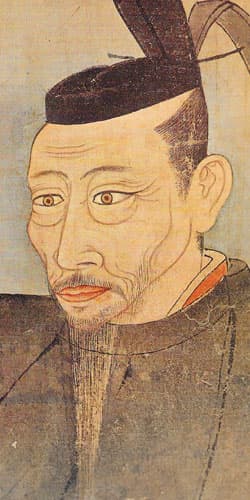
Toyotomi Hideyoshi
General · Modern
82.0Total
Basic Information
Born
347
1537
Died
395
1598
Era
Ancient
Modern
Nationality
Roman Empire
Japan
Occupation
Emperor
General
Civilization
Western
Eastern
Score Comparison
Military (10%)
72.5
79.9
Political (20%)
65.0
78.0
Influence (20%)
85.0
88.0
Legacy (20%)
90.0
80.0
Leadership (15%)
68.0
82.0
Strategy (15%)
50.0
80.4
TOTAL
76.0
82.0
Theodosius I — Complete Timeline
380 AD
Edict of ThessalonicaPolitical Action
Theodosius I issued the Edict of Thessalonica, declaring Nicene Christianity the official state religion of the Roman Empire. All other forms of Christianity were deemed heretical, and pagan practices were increasingly suppressed.
ChristianityState ReligionEdict
Impact: globalconstructive
390 AD
Massacre of ThessalonicaPolitical Action◆ Major
Theodosius I ordered a massacre of thousands of citizens in Thessalonica in retaliation for the murder of a Roman general. The massacre led to his excommunication by Bishop Ambrose of Milan, and he later performed public penance.
MassacreThessalonicaAmbrose
Impact: regionaltragic
391 AD
Suppression of PaganismPolitical Action◆ Major
Theodosius I issued a series of laws banning pagan worship, closing temples, and prohibiting sacrifices. The Olympic Games were abolished, and the Serapeum in Alexandria was destroyed. These actions accelerated the decline of paganism in the empire.
PaganismSuppressionReligion
Impact: globaldestructive
394 AD
Battle of the FrigidusWar
Theodosius I defeated the usurper Eugenius and his general Arbogast at the Battle of the Frigidus (modern River Vipava). The victory reunited the Roman Empire under a single ruler for the last time before its permanent division.
Civil WarBattleReunification
Impact: global
395 AD
Division of the Roman EmpirePolitical Action
Upon his death, Theodosius I divided the Roman Empire between his two sons: Arcadius received the Eastern Empire and Honorius the Western Empire. This division became permanent, leading to the separate histories of the Byzantine and Western Roman Empires.
DivisionSuccessionEast-West
Impact: global
Toyotomi Hideyoshi — Complete Timeline
1583 AD
Battle of ShizugatakeWar◆ Major
Hideyoshi defeated his rival Shibata Katsuie at the Battle of Shizugatake, solidifying his control over central Japan. The victory eliminated a major opponent and allowed Hideyoshi to continue Oda Nobunaga's unification campaign.
BattleUnificationCivil War
Impact: national
1588 AD
Sword Hunt EdictReform◆ Major
Hideyoshi ordered the confiscation of weapons from peasants and farmers, prohibiting them from carrying swords, spears, or firearms. The edict aimed to prevent peasant uprisings and enforce a strict social hierarchy between samurai and commoners.
Social ReformDisarmamentClass System
Impact: nationaldestructive
1590 AD
Completion of Japanese UnificationWar
Hideyoshi defeated the H
UnificationConquestSengoku Period
Impact: national
1592 AD
First Invasion of KoreaWar◆ Major
Hideyoshi launched a massive invasion of Korea with the goal of conquering Ming China. Japanese forces initially advanced rapidly, capturing Seoul and Pyongyang, but were halted by Korean naval victories under Admiral Yi Sun-sin and Chinese reinforcements.
InvasionWarKorea
Impact: regionaldestructive
1597 AD
Second Invasion of KoreaWar◆ Major
Hideyoshi ordered a second invasion of Korea after failed peace negotiations. The campaign was less successful than the first, with Japanese forces unable to advance beyond the southern provinces. The invasion ended with Hideyoshi's death in 1598.
InvasionWarKorea
Impact: regionaldestructive
Expert Analysis
Origins
Toyotomi Hideyoshi (1537–1598) was born a peasant in Owari Province, Japan, during the chaotic Sengoku period. His low birth was a severe disadvantage, but he rose through sheer ambition and cunning, first serving Oda Nobunaga as a sandal-bearer and later becoming a general. Theodosius I (347–395) was born into a Christian military family in Hispania. His father was a high-ranking general, giving Theodosius a privileged start. Both men came from marginal regions, but Hideyoshi faced far greater social obstacles.
Rise to Power
Hideyoshi's rise was meteoric. After Nobunaga's death in 1582, Hideyoshi defeated rivals at the Battle of Shizugatake (1583) and secured his position as Nobunaga's successor. By 1590, he had unified all of Japan through a combination of military conquest and shrewd alliances. Theodosius became emperor of the Eastern Roman Empire in 379 after a military career. He was elevated by Emperor Gratian to deal with the Gothic crisis. While both rose through military prowess, Hideyoshi's climb from peasant to ruler was far more improbable.
Leadership & Governance
Hideyoshi implemented transformative policies: the Sword Hunt (1588) disarmed peasants, the land surveys stabilized taxation, and he prohibited samurai from farming to enforce class divisions. He also expelled Christian missionaries in 1587 to maintain control. Theodosius is best known for the Edict of Thessalonica (380), making Nicene Christianity the state religion. He suppressed paganism, closed temples, and banned sacrifices. He also faced the Massacre of Thessalonica (390), where he ordered a brutal retaliation against rioters, for which Ambrose of Milan forced him to do penance. Hideyoshi's governance was more pragmatic and internally focused; Theodosius's was ideological and transformative for religion.
Triumph & Tragedy
Hideyoshi's greatest triumph was unifying Japan after centuries of war. However, his later years were marred by the disastrous invasions of Korea (1592–1598), which drained resources and failed to conquer Ming China. The invasions ended with his death, leaving a power vacuum. Theodosius's triumph was defeating the usurper Eugenius at the Battle of the Frigidus (394), securing his dynasty. Yet his division of the empire between his sons (395) led to permanent East-West split. Both faced tragedies: Hideyoshi's legacy of invasion weakened his clan; Theodosius's religious intolerance set precedents for persecution.
Character & Destiny
Hideyoshi was known for his charisma, intelligence, and ruthlessness. His peasant background made him empathetic to commoners but also paranoid about his legitimacy. He ordered the execution of his predecessor's family to eliminate rivals. Theodosius was devoutly Christian and often conflicted between piety and political necessity. His penance after Thessalonica showed a conscience, but his suppression of paganism was absolute. Hideyoshi's destiny was to unify Japan; Theodosius's was to Christianize Rome. Hideyoshi died of illness during the Korean campaign; Theodosius died of dropsy in Milan.
Legacy
Hideyoshi's unification laid the groundwork for the Tokugawa shogunate, which brought 250 years of peace. His social reforms influenced Japan's feudal structure. However, his Korean invasions are seen as a national shame. Theodosius is remembered as the emperor who made Christianity dominant, shaping medieval Europe. His division of the empire is often blamed for the fall of the West. Both were pivotal, but Hideyoshi's impact on Japan was more direct and lasting, while Theodosius's legacy is more symbolic.
Conclusion
Hideyoshi's higher scores (overall 80 vs 74) reflect his greater military achievements, political innovation, and personal journey from peasant to ruler. Theodosius, while influential in religion, had a less dramatic rise and more mixed governance. Hideyoshi's unification of Japan and his ambitious but flawed foreign policy make him the more compelling figure. He earns a final score of 82 against Theodosius's 76.
Rankings
🥇
Toyotomi HideyoshiLeader
Mil: 79.9Pol: 78.0Inf: 88.0
82.0
🥈
Theodosius I
Mil: 72.5Pol: 65.0Inf: 85.0
76.0
+6.0 behind
How This Comparison Works
Algorithm
Each figure is scored on 6 dimensions (0—100 scale) based on structured historical data: Military (10%), Political (20%), Influence (20%), Legacy (20%), Leadership (15%), Strategy (15%). The weighted total produces the final ranking.
Data Sources
Scores are computed from structured sub-indicators in the database. Scale factors adjust for era (Ancient ×0.85, Modern ×1.0) and civilization size (Eastern ×1.05, Other ×0.80) to account for differences in population and military scale.
Maximum 3 Figures
Comparisons are limited to 2—3 figures to ensure readability and statistical meaningfulness.
Error Margins
±5 points per dimension — Sub-scores are derived from historical records with inherent uncertainty. Two figures within 5 points on a dimension should be considered roughly equivalent in that area.
Total Score Accuracy
±3 points overall — The weighted combination of 6 dimensions produces a total score with approximately ±3 points of uncertainty. Differences of less than 3 points are not statistically significant— the figures are effectively tied.
Known Limitations
- Historical records are incomplete and uneven across civilizations
- Figures from oral-tradition societies may be underrepresented
- Occupation labels can misclassify multi-role figures
- Scores measure capability and impact, not moral character
- Quantitative scoring is a comparison tool, not absolute truth
Capability Radar
Military (10%) — Battles & Warfare
Battles
65
85
Win Rate
60
88
Expansion
45
80
Political (20%) — Governance & Reform
Reform
85
95
Diplomacy
75
80
Economy
60
90
Influence (20%) — Cultural & Global Reach
Cultural
90
85
Global
90
70
Legacy (20%) — Historical Impact
Historical
95
90
Longevity
95
85
Leadership (15%) — Power & Stability
Tenure
70
85
Stability
55
75
Strategy (15%) — Tactics & Innovation
Strategy
60
92
Tactics
55
90
Reform
50
95
Similar Comparisons
Comments & Discussion
No comments yet. Be the first to share your thoughts!