Loading...
Theodosius I vs Toussaint Louverture
Toussaint Louverture leads by 2.5 pts · 2 figures compared
…

Theodosius I
Emperor · Ancient
76.0Total
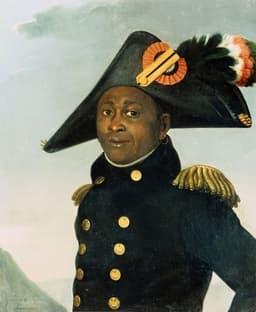
Toussaint Louverture
General · Modern
78.5Total
Basic Information
Born
347
1743
Died
395
1803
Era
Ancient
Modern
Nationality
Roman Empire
Haiti
Occupation
Emperor
General
Civilization
Western
Western
Score Comparison
Military (10%)
72.5
85.0
Political (20%)
65.0
70.3
Influence (20%)
85.0
84.0
Legacy (20%)
90.0
82.0
Leadership (15%)
68.0
72.0
Strategy (15%)
50.0
72.0
TOTAL
76.0
78.5
Theodosius I — Complete Timeline
380 AD
Edict of ThessalonicaPolitical Action
Theodosius I issued the Edict of Thessalonica, declaring Nicene Christianity the official state religion of the Roman Empire. All other forms of Christianity were deemed heretical, and pagan practices were increasingly suppressed.
ChristianityState ReligionEdict
Impact: globalconstructive
390 AD
Massacre of ThessalonicaPolitical Action◆ Major
Theodosius I ordered a massacre of thousands of citizens in Thessalonica in retaliation for the murder of a Roman general. The massacre led to his excommunication by Bishop Ambrose of Milan, and he later performed public penance.
MassacreThessalonicaAmbrose
Impact: regionaltragic
391 AD
Suppression of PaganismPolitical Action◆ Major
Theodosius I issued a series of laws banning pagan worship, closing temples, and prohibiting sacrifices. The Olympic Games were abolished, and the Serapeum in Alexandria was destroyed. These actions accelerated the decline of paganism in the empire.
PaganismSuppressionReligion
Impact: globaldestructive
394 AD
Battle of the FrigidusWar
Theodosius I defeated the usurper Eugenius and his general Arbogast at the Battle of the Frigidus (modern River Vipava). The victory reunited the Roman Empire under a single ruler for the last time before its permanent division.
Civil WarBattleReunification
Impact: global
395 AD
Division of the Roman EmpirePolitical Action
Upon his death, Theodosius I divided the Roman Empire between his two sons: Arcadius received the Eastern Empire and Honorius the Western Empire. This division became permanent, leading to the separate histories of the Byzantine and Western Roman Empires.
DivisionSuccessionEast-West
Impact: global
Toussaint Louverture — Complete Timeline
1791 AD
Haitian Revolution LeadershipWar
Louverture joined the slave revolt in Saint-Domingue, quickly rising to leadership. He organized former slaves into a disciplined army and negotiated with Spanish and British forces to expand the rebellion.
Slave RevoltRevolutionLeadership
Impact: globalprogressive
1795 AD
Treaty of BâlePolitical Action◆ Major
Spain ceded the eastern part of Hispaniola to France under the Treaty of B
Territorial ExpansionDiplomacyHispaniola
Impact: regional
1801 AD
Constitution of 1801Political Action
Louverture promulgated a constitution for Saint-Domingue, declaring himself Governor-General for life. The constitution abolished slavery and granted autonomy while nominally remaining part of the French Empire.
ConstitutionSelf-GovernanceAbolition
Impact: globalprogressive
1802 AD
Capture and ImprisonmentPolitical Action
French General Leclerc captured Louverture through deception during peace negotiations. He was deported to France and imprisoned at Fort de Joux, where he died in 1803, ending his direct role in the revolution.
BetrayalImprisonmentFrench Repression
Impact: globaltragic
Expert Analysis
Origins
Toussaint Louverture was born into slavery on the French colony of Saint-Domingue (modern Haiti) around 1743. His early life as a slave gave him firsthand experience of oppression, but he gained education and skills as a coachman and steward. The French Revolution's ideals of liberty, equality, and fraternity inspired him, and when the slave revolt erupted in 1791, he joined the rebellion. His military genius and diplomatic acumen quickly elevated him to leadership.
Theodosius I was born in Hispania (modern Spain) around 347 AD into a Roman aristocratic family. His father was a high-ranking general, providing Theodosius with a privileged upbringing and military training. He proved himself as a capable commander in the Roman army before being elevated to emperor after a series of civil wars. His origins were rooted in the established power structures of the late Roman Empire, contrasting sharply with Louverture's emergence from slavery.
Rise to Power
Toussaint Louverture rose to power through the crucible of the Haitian Revolution. He initially fought alongside Spanish forces against the French, but switched allegiance when the French Republic abolished slavery in 1794. He then led a successful campaign against British and Spanish invaders, consolidating his control over the colony. By 1801, he had outmaneuvered rivals and established himself as Governor-General for Life, issuing a constitution that abolished slavery and affirmed autonomy while nominally remaining part of France.
Theodosius I became emperor in 379 AD after the Eastern Roman Emperor Valens died at the Battle of Adrianople. The Western Emperor Gratian appointed Theodosius as co-emperor for the East. Theodosius's rise was marked by military success against the Goths and internal rivals. He skillfully navigated religious conflicts, convening the First Council of Constantinople in 381 to assert Nicene Christianity. His rise culminated in the defeat of usurpers Magnus Maximus and Eugenius, solidifying his sole rule over the entire Roman Empire.
Leadership & Governance
Toussaint Louverture governed with a mix of authoritarian control and revolutionary ideals. He maintained the plantation system to revive the economy but insisted on fair treatment and wages for former slaves. His constitution centralized power, made him governor-for-life, and allowed him to name his successor. He suppressed internal dissent and faced challenges from the free people of color and the lower classes. His leadership was pragmatic, prioritizing stability and economic recovery while preserving emancipation.
Theodosius I was a strong emperor who enforced religious orthodoxy and suppressed paganism. He issued the Edict of Thessalonica (380 AD), making Nicene Christianity the state religion, and closed pagan temples. His governance included brutal acts, such as the Massacre of Thessalonica (390 AD), where thousands were killed after a riot. He was excommunicated by Ambrose of Milan but later repented. Theodosius also divided the empire between his sons, Arcadius and Honorius, after his death, a decision that had long-term consequences. His leadership was marked by military campaigns and religious consolidation.
Triumph & Tragedy
Toussaint Louverture's greatest triumph was leading the only successful slave revolt in history, resulting in the abolition of slavery in Saint-Domingue and establishing a de facto independent state. He outwitted European powers and created a disciplined army. His tragedy came when Napoleon Bonaparte sent a massive expedition to reimpose slavery and colonial control. Toussaint was captured through treachery during peace negotiations and sent to France, where he died in prison in 1803. His capture was a devastating blow, but his legacy inspired the final push for independence.
Theodosius I's triumph was unifying the Roman Empire under his sole rule and establishing Christianity as the dominant religion. He won the Battle of the Frigidus (394 AD) against the pagan usurper Eugenius, ensuring Christian supremacy. His tragedy lies in the long-term division of the empire after his death and the violent suppression of paganism, which destroyed much of classical culture. The Massacre of Thessalonica also tarnished his reputation, as it was a brutal overreaction to civil unrest.
Character & Destiny
Toussaint Louverture was a charismatic, intelligent, and disciplined leader. He was known for his strategic brilliance, diplomatic skills, and ability to inspire loyalty among diverse groups. His destiny was to be a liberator, but his ambition and trust in French promises led to his downfall. He believed in the French Revolution's ideals but was betrayed by Napoleon. His character combined pragmatism with a vision of racial equality and self-governance.
Theodosius I was a devout Christian, a capable general, and a ruthless ruler. He was influenced by Ambrose of Milan and sought to impose religious uniformity. His destiny was to be the last emperor to rule a unified Roman Empire, but his divisive policies contributed to the empire's eventual split. His character showed a mix of piety and brutality, reflecting the tensions of a changing world.
Legacy
Toussaint Louverture's legacy is monumental. He is celebrated as a hero of the Haitian Revolution and a symbol of resistance against slavery and colonialism. His actions directly led to Haiti becoming the first independent black republic in 1804. His military and political strategies influenced later anti-colonial movements. Despite his capture, his ideals endured, and he is remembered as a visionary leader who fought for human dignity.
Theodosius I's legacy is deeply tied to the Christianization of the Roman Empire. He is credited with establishing Nicene Christianity as the official religion, shaping the future of Europe. However, his suppression of paganism and the division of the empire have been criticized. The Eastern Roman Empire (Byzantine Empire) continued for another thousand years, but the West fell into decline. His reign marked a turning point in religious and political history.
Conclusion
Comparing Toussaint Louverture and Theodosius I reveals two leaders who transformed their worlds through radically different means. Louverture, a former slave, forged a new nation from oppression, while Theodosius, an emperor, enforced religious orthodoxy across a vast empire. Their scores reflect their distinct contexts: Louverture's military and inspirational leadership (M=85, I=84) versus Theodosius's political and religious impact (P=65, I=85). Louverture's legacy of liberation and human rights resonates more strongly in modern times, earning him a higher overall score. Theodosius's contributions to Christianity are historically significant, but his methods were often violent and divisive. In the battle of historical impact, Toussaint Louverture stands as a more enduring symbol of freedom and justice.
**Scores:** Toussaint Louverture: 77.5 | Theodosius I: 75.0
Rankings
🥇
Toussaint LouvertureLeader
Mil: 85.0Pol: 70.3Inf: 84.0
78.5
🥈
Theodosius I
Mil: 72.5Pol: 65.0Inf: 85.0
76.0
+2.5 behind
How This Comparison Works
Algorithm
Each figure is scored on 6 dimensions (0—100 scale) based on structured historical data: Military (10%), Political (20%), Influence (20%), Legacy (20%), Leadership (15%), Strategy (15%). The weighted total produces the final ranking.
Data Sources
Scores are computed from structured sub-indicators in the database. Scale factors adjust for era (Ancient ×0.85, Modern ×1.0) and civilization size (Eastern ×1.05, Other ×0.80) to account for differences in population and military scale.
Maximum 3 Figures
Comparisons are limited to 2—3 figures to ensure readability and statistical meaningfulness.
Error Margins
±5 points per dimension — Sub-scores are derived from historical records with inherent uncertainty. Two figures within 5 points on a dimension should be considered roughly equivalent in that area.
Total Score Accuracy
±3 points overall — The weighted combination of 6 dimensions produces a total score with approximately ±3 points of uncertainty. Differences of less than 3 points are not statistically significant— the figures are effectively tied.
Known Limitations
- Historical records are incomplete and uneven across civilizations
- Figures from oral-tradition societies may be underrepresented
- Occupation labels can misclassify multi-role figures
- Scores measure capability and impact, not moral character
- Quantitative scoring is a comparison tool, not absolute truth
Capability Radar
Military (10%) — Battles & Warfare
Battles
65
85
Win Rate
60
80
Expansion
45
70
Political (20%) — Governance & Reform
Reform
85
85
Diplomacy
75
80
Economy
60
60
Influence (20%) — Cultural & Global Reach
Cultural
90
85
Global
90
85
Legacy (20%) — Historical Impact
Historical
95
95
Longevity
95
90
Leadership (15%) — Power & Stability
Tenure
70
65
Stability
55
55
Strategy (15%) — Tactics & Innovation
Strategy
60
85
Tactics
55
90
Reform
50
75
Similar Comparisons
Comments & Discussion
No comments yet. Be the first to share your thoughts!