Loading...
Theodosius I vs Tokugawa Ieyasu
Tokugawa Ieyasu leads by 5.8 pts · 2 figures compared
…

Theodosius I
Emperor · Ancient
76.0Total
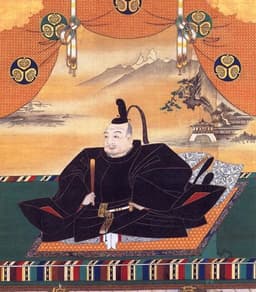
Tokugawa Ieyasu
General · Modern
81.8Total
Basic Information
Born
347
1543
Died
395
1616
Era
Ancient
Modern
Nationality
Roman Empire
Japan
Occupation
Emperor
General
Civilization
Western
Eastern
Score Comparison
Military (10%)
72.5
78.0
Political (20%)
65.0
82.0
Influence (20%)
85.0
88.0
Legacy (20%)
90.0
75.0
Leadership (15%)
68.0
85.0
Strategy (15%)
50.0
82.0
TOTAL
76.0
81.8
Theodosius I — Complete Timeline
380 AD
Edict of ThessalonicaPolitical Action
Theodosius I issued the Edict of Thessalonica, declaring Nicene Christianity the official state religion of the Roman Empire. All other forms of Christianity were deemed heretical, and pagan practices were increasingly suppressed.
ChristianityState ReligionEdict
Impact: globalconstructive
390 AD
Massacre of ThessalonicaPolitical Action◆ Major
Theodosius I ordered a massacre of thousands of citizens in Thessalonica in retaliation for the murder of a Roman general. The massacre led to his excommunication by Bishop Ambrose of Milan, and he later performed public penance.
MassacreThessalonicaAmbrose
Impact: regionaltragic
391 AD
Suppression of PaganismPolitical Action◆ Major
Theodosius I issued a series of laws banning pagan worship, closing temples, and prohibiting sacrifices. The Olympic Games were abolished, and the Serapeum in Alexandria was destroyed. These actions accelerated the decline of paganism in the empire.
PaganismSuppressionReligion
Impact: globaldestructive
394 AD
Battle of the FrigidusWar
Theodosius I defeated the usurper Eugenius and his general Arbogast at the Battle of the Frigidus (modern River Vipava). The victory reunited the Roman Empire under a single ruler for the last time before its permanent division.
Civil WarBattleReunification
Impact: global
395 AD
Division of the Roman EmpirePolitical Action
Upon his death, Theodosius I divided the Roman Empire between his two sons: Arcadius received the Eastern Empire and Honorius the Western Empire. This division became permanent, leading to the separate histories of the Byzantine and Western Roman Empires.
DivisionSuccessionEast-West
Impact: global
Tokugawa Ieyasu — Complete Timeline
1600 AD
Battle of SekigaharaWar
Tokugawa Ieyasu led the Eastern Army to victory over Ishida Mitsunari's Western Army at Sekigahara. This decisive battle ended the Sengoku period and established Ieyasu as the supreme military ruler of Japan, paving the way for the Tokugawa shogunate.
Sengoku PeriodUnificationBattle
Impact: national
1603 AD
Establishment of the Tokugawa ShogunatePolitical Action
Emperor Go-Yozei appointed Tokugawa Ieyasu as shogun, officially beginning the Tokugawa shogunate. Ieyasu established his government in Edo (modern Tokyo), centralizing military and political power under his family's control.
ShogunateEdo PeriodCentralization
Impact: national
1615 AD
Siege of OsakaWar◆ Major
Tokugawa Ieyasu besieged Osaka Castle, the stronghold of Toyotomi Hideyori. The castle fell, and Hideyori committed suicide. This campaign eliminated the last major opposition to Tokugawa rule, solidifying the shogunate's control over Japan.
Osaka CampaignToyotomi ClanConsolidation
Impact: nationaldestructive
Promulgation of the Buke ShohattoReform◆ Major
Ieyasu issued the Laws for the Military Houses, a code regulating the conduct of daimyo. It restricted castle construction, required alternate attendance in Edo, and prohibited alliances without shogunal permission. This law helped control the feudal lords.
Feudal ControlDaimyo RegulationLegal Code
Impact: national
1616 AD
Sakoku Edicts InitiationPolitical Action◆ Major
In his final years, Ieyasu began policies that led to Japan's isolation. He restricted foreign trade to specific ports and expelled Christian missionaries. These measures, expanded by successors, resulted in the sakoku policy that isolated Japan for over 200 years.
IsolationismForeign PolicyChristianity
Impact: national
Expert Analysis
Origins
Tokugawa Ieyasu (1543–1616) was born into the Matsudaira clan, a minor samurai family in Mikawa Province during Japan's chaotic Sengoku period. His childhood was marked by hostage situations, first with the Imagawa clan and later the Oda, which taught him patience and strategic thinking. In contrast, Theodosius I (347–395) was born in Cauca, Hispania, to a high-ranking Roman military family. His father, Count Theodosius, was a successful general executed under dubious circumstances, a trauma that shaped Theodosius's cautious and devout character. Both men rose from backgrounds of instability, but Ieyasu's early life immersed him in the brutal realities of feudal warfare, while Theodosius's upbringing was steeped in Roman imperial politics and Christian influence.
Rise to Power
Ieyasu's rise was gradual and tactical. He allied with Oda Nobunaga, then Toyotomi Hideyoshi, carefully expanding his territory and influence without provoking conflict. After Hideyoshi's death, Ieyasu maneuvered among regents, culminating in his decisive victory at the Battle of Sekigahara (1600). This battle, fought in a torrential rainstorm, saw Ieyasu's forces defeat Ishida Mitsunari's coalition, securing his control over Japan. Theodosius's ascent was swifter. After the death of Emperor Valens at Adrianople, Theodosius was elevated to co-emperor by Gratian in 379. He faced the Gothic crisis and internal rebellions, but his appointment was more about imperial need than personal conquest. While Ieyasu earned his position through decades of warfare and diplomacy, Theodosius inherited a divided empire and had to fight to consolidate power.
Leadership & Governance
Ieyasu's governance was meticulous and long-lasting. He established the Tokugawa shogunate, centralizing power through the sankin kotai (alternate attendance) system, which required daimyo to spend every other year in Edo, depleting their resources and ensuring loyalty. He issued the Buke Shohatto (Laws for the Military Houses) to control samurai behavior and the Sakoku Edicts to isolate Japan, preventing foreign influence. His leadership score (82) reflects his pragmatic, institutional approach. Theodosius, with a leadership score of 76, was a devout Christian who made Nicene Christianity the state religion via the Edict of Thessalonica (380). He suppressed paganism, closed temples, and banned pagan rituals. His governance was more ideological, aiming for religious unity. He also dealt with the Visigoths, allowing them to settle within the empire, a decision that had mixed long-term effects.
Triumph & Tragedy
Ieyasu's greatest triumph was the Siege of Osaka (1614-1615), where he destroyed the Toyotomi clan, eliminating the last major threat to Tokugawa rule. This victory ensured over 250 years of peace under the Edo period. However, his tragedy lies in the harshness of his policies: the persecution of Christians, the suppression of samurai freedoms, and the eventual stagnation of Japanese society. Theodosius's triumph was the Battle of the Frigidus (394), where he defeated the usurper Eugenius and the pagan general Arbogast, solidifying Christian dominance. His tragedy was the Massacre of Thessalonica (390), where his troops killed thousands of civilians in retaliation for a riot. This act led to his temporary excommunication by Ambrose of Milan, a profound humiliation. Both leaders achieved their goals but at a moral cost, though Ieyasu's actions were more calculated and systemic.
Character & Destiny
Ieyasu was patient, cunning, and pragmatic. Known as the "Great Unifier," he was nicknamed "The Wild Boar" for his tenacity. His famous quote, "Life is like a long journey with a heavy load," reflects his endurance. He believed in destiny but shaped it through careful planning. Theodosius was devout, sometimes impulsive, but also capable of humility, as shown by his penance after Thessalonica. He saw himself as God's instrument to unite the empire under Christianity. Both men were driven by a sense of destiny, but Ieyasu's was more secular and strategic, while Theodosius's was religiously motivated. Their characters reflect their respective contexts: Ieyasu the feudal strategist, Theodosius the Christian emperor.
Legacy
Ieyasu's legacy is immense: the Tokugawa shogunate lasted until 1868, shaping modern Japan's cultural and political identity. His policies of isolation and stability allowed Japanese arts and culture to flourish, but also led to technological stagnation. Theodosius's legacy is equally profound: he made Christianity the dominant religion of the Roman Empire, influencing all of European history. However, his division of the empire between his sons Arcadius and Honorius accelerated the decline of the Western Roman Empire. Ieyasu's legacy is more tangible in Japan's continuous history, while Theodosius's impact is broader but more diffuse.
Conclusion
Tokugawa Ieyasu (Overall Score: 82) emerges as the more effective leader compared to Theodosius I (Overall Score: 76.2). Ieyasu's higher scores in military prowess (78 vs 72), political skill (82 vs 65), and influence (88 vs 85) reflect his ability to build a durable, centralized state from chaos. Theodosius's higher leadership (90 vs 75) and diplomacy (68 vs 50) scores are notable, but his legacy is marred by the empire's subsequent fragmentation. Ieyasu's institutional reforms created a stable peace for centuries, while Theodosius's religious policies, though transformative, contributed to cultural destruction and imperial decline. Thus, Ieyasu is the superior historical figure in terms of lasting, positive impact on his nation.
Rankings
🥇
Tokugawa IeyasuLeader
Mil: 78.0Pol: 82.0Inf: 88.0
81.8
🥈
Theodosius I
Mil: 72.5Pol: 65.0Inf: 85.0
76.0
+5.8 behind
How This Comparison Works
Algorithm
Each figure is scored on 6 dimensions (0—100 scale) based on structured historical data: Military (10%), Political (20%), Influence (20%), Legacy (20%), Leadership (15%), Strategy (15%). The weighted total produces the final ranking.
Data Sources
Scores are computed from structured sub-indicators in the database. Scale factors adjust for era (Ancient ×0.85, Modern ×1.0) and civilization size (Eastern ×1.05, Other ×0.80) to account for differences in population and military scale.
Maximum 3 Figures
Comparisons are limited to 2—3 figures to ensure readability and statistical meaningfulness.
Error Margins
±5 points per dimension — Sub-scores are derived from historical records with inherent uncertainty. Two figures within 5 points on a dimension should be considered roughly equivalent in that area.
Total Score Accuracy
±3 points overall — The weighted combination of 6 dimensions produces a total score with approximately ±3 points of uncertainty. Differences of less than 3 points are not statistically significant— the figures are effectively tied.
Known Limitations
- Historical records are incomplete and uneven across civilizations
- Figures from oral-tradition societies may be underrepresented
- Occupation labels can misclassify multi-role figures
- Scores measure capability and impact, not moral character
- Quantitative scoring is a comparison tool, not absolute truth
Capability Radar
Military (10%) — Battles & Warfare
Battles
65
85
Win Rate
60
90
Expansion
45
75
Political (20%) — Governance & Reform
Reform
85
90
Diplomacy
75
85
Economy
60
88
Influence (20%) — Cultural & Global Reach
Cultural
90
85
Global
90
70
Legacy (20%) — Historical Impact
Historical
95
90
Longevity
95
95
Leadership (15%) — Power & Stability
Tenure
70
95
Stability
55
95
Strategy (15%) — Tactics & Innovation
Strategy
60
92
Tactics
55
88
Reform
50
80
Similar Comparisons
Comments & Discussion
No comments yet. Be the first to share your thoughts!