Loading...
This comparison has not been analyzed yet.
One-time AI generation (~1 minute). Scores and timeline are already available below.
Teuku Umar vs Yi Sun-sin
Yi Sun-sin leads by 11.2 pts · 2 figures compared
…
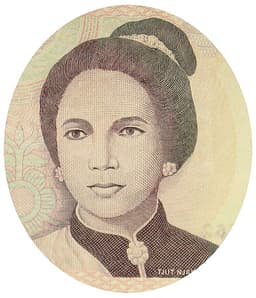
Teuku Umar
General · Modern
47.1Total

Yi Sun-sin
General · Modern
58.3Total
Basic Information
Born
1854
1545
Died
1899
1598
Era
Modern
Modern
Nationality
Indonesia
Korea
Occupation
General
General
Civilization
Eastern
Eastern
Score Comparison
Military (10%)
10.0
79.1
Political (20%)
42.2
42.3
Influence (20%)
56.4
65.0
Legacy (20%)
48.3
40.0
Leadership (15%)
50.7
68.0
Strategy (15%)
60.0
76.0
TOTAL
47.1
58.3
Teuku Umar — Complete Timeline
1873 AD
Alliance with Sultan of Aceh (1873)Political Action
Teuku Umar allied with the Sultan of Aceh to resist the Dutch invasion. He organized and led guerrilla forces that harassed Dutch supply lines and outposts, becoming a key figure in the Aceh War that lasted decades.
AllianceAceh WarResistance
Impact: regionalconstructive
1893 AD
Deception of the Dutch (1893-1896)War◆ Major
Teuku Umar pretended to surrender to the Dutch and accepted a commission to lead a colonial militia. He used this position to obtain weapons and intelligence, then defected back to the Acehnese resistance, launching a surprise attack on Dutch positions.
DeceptionGuerrilla TacticsAceh War
Impact: regional
1899 AD
Battle of Meulaboh (1899)War◆ Major
Teuku Umar was killed in a Dutch ambush at Meulaboh, West Aceh. His death was a major blow to the Acehnese resistance, but his guerrilla tactics and leadership continued to inspire the struggle against Dutch colonialism.
BattleDeathAceh War
Impact: regionaltragic
Yi Sun-sin — Complete Timeline
1592 AD
Introduction of the Turtle Ship (Geobukseon)Invention◆ Major
Yi Sun-sin oversaw the deployment of the turtle ship, an ironclad warship with a spiked iron roof and cannons. These ships played a crucial role in early victories against the Japanese navy, breaking their supply lines and protecting Korean coastlines.
Naval InnovationWarshipImjin War
Impact: regional
1597 AD
Battle of MyeongnyangWar
Admiral Yi Sun-sin, with only 13 ships, defeated a Japanese fleet of over 130 vessels in the Myeongnyang Strait. Using the strong currents and his tactical skill, he inflicted heavy losses without losing a single ship, cutting off Japanese supply lines and turning the tide of the war.
Naval BattleTactical VictoryImjin War
Impact: regional
1598 AD
Death at the Battle of NoryangWar◆ Major
Yi Sun-sin was killed by a stray bullet during the Battle of Noryang, the final major naval engagement of the Imjin War. His death occurred as his fleet was defeating the Japanese, securing a decisive victory that ended the Japanese invasion of Korea.
Death in BattleFinal VictoryImjin War
Impact: regionaltragic
This comparison has not been analyzed yet.
One-time AI generation (~1 minute). Scores and timeline are already available below.
Rankings
🥇
Yi Sun-sinLeader
Mil: 79.1Pol: 42.3Inf: 65.0
58.3
🥈
Teuku Umar
Mil: 10.0Pol: 42.2Inf: 56.4
47.1
+11.2 behind
How This Comparison Works
Algorithm
Each figure is scored on 6 dimensions (0—100 scale) based on structured historical data: Military (10%), Political (20%), Influence (20%), Legacy (20%), Leadership (15%), Strategy (15%). The weighted total produces the final ranking.
Data Sources
Scores are computed from structured sub-indicators in the database. Scale factors adjust for era (Ancient ×0.85, Modern ×1.0) and civilization size (Eastern ×1.05, Other ×0.80) to account for differences in population and military scale.
Maximum 3 Figures
Comparisons are limited to 2—3 figures to ensure readability and statistical meaningfulness.
Error Margins
±5 points per dimension — Sub-scores are derived from historical records with inherent uncertainty. Two figures within 5 points on a dimension should be considered roughly equivalent in that area.
Total Score Accuracy
±3 points overall — The weighted combination of 6 dimensions produces a total score with approximately ±3 points of uncertainty. Differences of less than 3 points are not statistically significant— the figures are effectively tied.
Known Limitations
- Historical records are incomplete and uneven across civilizations
- Figures from oral-tradition societies may be underrepresented
- Occupation labels can misclassify multi-role figures
- Scores measure capability and impact, not moral character
- Quantitative scoring is a comparison tool, not absolute truth
Capability Radar
Military (10%) — Battles & Warfare
Battles
45
85
Win Rate
40
98
Expansion
25
30
Political (20%) — Governance & Reform
Reform
15
30
Diplomacy
60
50
Economy
10
20
Influence (20%) — Cultural & Global Reach
Cultural
40
75
Global
30
65
Legacy (20%) — Historical Impact
Historical
45
80
Longevity
35
75
Leadership (15%) — Power & Stability
Tenure
30
40
Stability
20
35
Strategy (15%) — Tactics & Innovation
Strategy
50
90
Tactics
55
95
Reform
20
80
Similar Comparisons
Comments & Discussion
No comments yet. Be the first to share your thoughts!