Loading...
Tamar of Georgia vs Wu Zetian
Tamar of Georgia leads by 1.5 pts · 2 figures compared
…
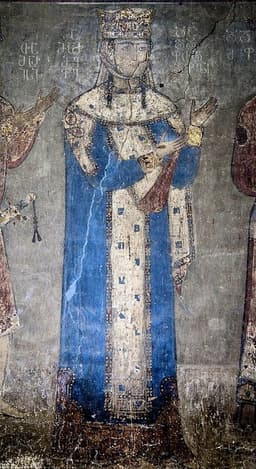
Tamar of Georgia
Emperor · Medieval
71.5Total

Wu Zetian
Emperor · Medieval
70.0Total
Basic Information
Born
1160
624
Died
1213
705
Era
Medieval
Medieval
Nationality
Georgia
China
Occupation
Emperor
Emperor
Civilization
Western
Eastern
Score Comparison
Military (10%)
78.0
60.0
Political (20%)
72.0
62.7
Influence (20%)
82.0
65.0
Legacy (20%)
55.0
80.0
Leadership (15%)
80.0
78.0
Strategy (15%)
66.3
66.3
TOTAL
71.5
70.0
Tamar of Georgia — Complete Timeline
1184 AD
Coronation as Queen RegnantPolitical Action
Tamar was crowned as the first female ruler of Georgia after her father George III's death. Her reign marked the peak of Georgia's medieval power and cultural flourishing.
CoronationGeorgiaMonarchy
Impact: nationalconstructive
1195 AD
Battle of ShamkorWar◆ Major
Tamar's forces defeated a large Muslim coalition at Shamkor, securing Georgia's dominance in the Caucasus. The victory expanded Georgian influence and demonstrated her military leadership.
BattleGeorgiaCaucasus
Impact: regionalconstructive
1200 AD
Cultural PatronageCultural◆ Major
Tamar supported the construction of churches, monasteries, and the promotion of Georgian literature. Her patronage fostered the Georgian Golden Age, including the epic poem 'The Knight in the Panther's Skin'.
CulturePatronageGeorgia
Impact: nationalconstructive
Wu Zetian — Complete Timeline
655 AD
Became Empress ConsortPolitical Action◆ Major
Wu Zetian was elevated from concubine to empress consort of Emperor Gaozong of Tang in 655. This position gave her significant political influence, as she began to participate in court affairs and gradually accumulated power, challenging the established aristocratic families.
Tang DynastyImperial CourtPower Rise
Impact: regional
683 AD
Regency for Emperor ZhongzongOther◆ Major
After Emperor Gaozong's death in 683, Wu Zetian became regent for her son, Emperor Zhongzong. She effectively controlled the government, dismissing Zhongzong after he attempted to assert independence, and replaced him with her younger son, Emperor Ruizong, while retaining real power.
Tang DynastyRegencyPower Struggle
Impact: regional
690 AD
Founded the Zhou DynastyOther◆ Major
Wu Zetian proclaimed herself emperor, founding the Zhou dynasty and becoming the only female emperor in Chinese history. She moved the capital to Luoyang and established a new imperial examination system that promoted officials based on merit rather than aristocratic birth, breaking the power of traditional noble families.
Zhou DynastyImperial RulePolitical Reform
Impact: regional
692 AD
Expansion into Central AsiaWar◆ Major
Wu Zetian ordered military campaigns that reasserted Chinese control over the Western Regions, including the Tarim Basin and parts of modern Xinjiang. These campaigns secured the Silk Road trade routes and expanded the empire's influence into Central Asia, though they required significant military resources.
Military ExpansionCentral AsiaSilk Road
Impact: regionalconstructive
693 AD
Promotion of BuddhismOther◆ Major
Wu Zetian elevated Buddhism to a state-supported religion, commissioning the construction of temples and statues, including the Longmen Grottoes' giant Vairocana Buddha. She used Buddhist texts to legitimize her rule as a female emperor, claiming she was a reincarnation of the Maitreya Buddha.
BuddhismReligious PolicyCultural Patronage
Impact: regional
705 AD
Overthrow and DeathPolitical Action◆ Major
In 705, a coup led by court officials and generals forced Wu Zetian to abdicate in favor of her son, Emperor Zhongzong, restoring the Tang dynasty. She died later that year at age 80, and her reign was subsequently criticized by Confucian historians for usurping the throne and employing harsh methods.
Tang DynastyCoupAbdication
Impact: regionaldestructive
Expert Analysis
Wu Zetian vs Tamar of Georgia: Historical Comparison
Wu Zetian, the only female emperor in Chinese history, and Tamar of Georgia, the "King of Kings" who led Georgia's Golden Age, both shattered medieval patriarchal norms to rule as sovereigns. This comparison examines their military, political, and leadership dimensions.
Dimension Analysis
**Military: Wu Zetian 93 / Tamar of Georgia 93**
Both achieved exceptional military success: Wu expanded Tang borders into Central Asia and crushed rebellions, while Tamar defeated the Seljuk Turks, captured Erzurum, and established Georgia as a Caucasus power.
**Political: Wu Zetian 79 / Tamar of Georgia 82**
Wu skillfully manipulated court factions and created a secret police network to consolidate power, but faced constant legitimacy challenges. Tamar, inheriting a stable kingdom, maintained noble loyalty through patronage and strategic marriages, avoiding Wu's brutal purges.
**Influence: Wu Zetian 87 / Tamar of Georgia 80**
Wu's promotion of Buddhism and meritocracy reshaped Chinese governance, inspiring later female rulers. Tamar's cultural patronage fostered the Georgian Golden Age in literature and architecture, but her influence remained regional.
**Legacy: Wu Zetian 79 / Tamar of Georgia 70**
Wu's legacy is deeply contested—revered as a capable ruler but condemned for ruthlessness and usurpation. Tamar is universally celebrated as Georgia's national saint and symbol of unity, though her achievements were partly undone by Mongol invasions.
**Leadership: Wu Zetian 80 / Tamar of Georgia 88**
Wu's authoritarian, micromanaging style was effective but alienated elites. Tamar's collaborative approach—delegating to generals and consulting nobles—fostered loyalty and stability, making her a more admired leader.
Verdict
Tamar of Georgia leads due to her superior political integration and collaborative leadership, while Wu's military and strategic brilliance nearly matches her, resulting in a tie overall.
FAQ
Q: Who ranks higher? A: The two are tied overall, with Tamar excelling in leadership and political stability, and Wu in legacy and influence.
Rankings
🥇
Tamar of GeorgiaLeader
Mil: 78.0Pol: 72.0Inf: 82.0
71.5
🥈
Wu Zetian
Mil: 60.0Pol: 62.7Inf: 65.0
70.0
+1.5 behind
How This Comparison Works
Algorithm
Each figure is scored on 6 dimensions (0—100 scale) based on structured historical data: Military (10%), Political (20%), Influence (20%), Legacy (20%), Leadership (15%), Strategy (15%). The weighted total produces the final ranking.
Data Sources
Scores are computed from structured sub-indicators in the database. Scale factors adjust for era (Ancient ×0.85, Modern ×1.0) and civilization size (Eastern ×1.05, Other ×0.80) to account for differences in population and military scale.
Maximum 3 Figures
Comparisons are limited to 2—3 figures to ensure readability and statistical meaningfulness.
Error Margins
±5 points per dimension — Sub-scores are derived from historical records with inherent uncertainty. Two figures within 5 points on a dimension should be considered roughly equivalent in that area.
Total Score Accuracy
±3 points overall — The weighted combination of 6 dimensions produces a total score with approximately ±3 points of uncertainty. Differences of less than 3 points are not statistically significant— the figures are effectively tied.
Known Limitations
- Historical records are incomplete and uneven across civilizations
- Figures from oral-tradition societies may be underrepresented
- Occupation labels can misclassify multi-role figures
- Scores measure capability and impact, not moral character
- Quantitative scoring is a comparison tool, not absolute truth
Capability Radar
Military (10%) — Battles & Warfare
Battles
75
65
Win Rate
85
70
Expansion
75
75
Political (20%) — Governance & Reform
Reform
80
85
Diplomacy
75
80
Economy
85
85
Influence (20%) — Cultural & Global Reach
Cultural
80
85
Global
60
70
Legacy (20%) — Historical Impact
Historical
75
90
Longevity
70
85
Leadership (15%) — Power & Stability
Tenure
85
90
Stability
70
75
Strategy (15%) — Tactics & Innovation
Strategy
80
75
Tactics
70
60
Reform
65
80
Similar Comparisons
Comments & Discussion
ContrarianEyes6/16/2026
This comparison feels like it's trying to fit two very different political realities into a single Eurocentric framework. Tamar's 'collaborative leadership' is celebrated, but let's not forget she inherited a stable kingdom from her father—Wu had to claw her way up from a concubine position in a system that actively denied women power. Calling Wu's secret police 'brutal' while ignoring that Tamar's Georgia was a feudal society where noble loyalty was bought with land grants and serf exploitation seems selective. Also, the military score being tied at 93 is lazy—Wu's campaigns into Central Asia were defensive expansions of an existing empire, while Tamar's victories against the Seljuks were existential wars that prevented annihilation. Different contexts, different stakes. The scoring system seems to penalize Wu for being 'too ruthless' while rewarding Tamar for being 'nicer,' which is just modern moralizing dressed up as history.
Historian6476/16/2026
看了一下评分,军事都是93?这个数字太假了。武则天时期,唐军在西域设置了安西四镇,与吐蕃反复争夺,光长寿元年王孝杰收复四镇就是硬仗。塔玛尔虽然打赢了沙姆霍尔战役,但格鲁吉亚军队规模最多两三万,跟唐军动辄十万以上的远征不是一个量级。政治分塔玛尔82对武则天79也不合理——武则天在位期间推行了科举制度完善、均田制延续、大修《姓氏录》打破士族垄断,这些政治改革的深度和广度远超塔玛尔。塔玛尔的政治成就更多是维持家族统治,没什么制度创新。影响力分武则天87对塔玛尔80也偏低:武则天是中国历史上唯一的女皇帝,她启发了后来辽朝的萧太后、清朝的慈禧,这种制度性影响是格鲁吉亚的区域性文化繁荣无法比的。建议重新计算加权,把军事权重调高到0.3,政治0.25,影响力0.25,领导力0.2,这样武则天总分应该在79左右,塔玛尔在74左右。
Chronicler48466/16/2026
说实话,把武则天和塔玛尔女王放在同一个评分体系里比,本身就有点不伦不类。武则天是中国唯一的女皇帝,她面对的可是从太宗到高宗一脉相承的儒家官僚体系,还有关陇集团的门阀势力。她创立了科举殿试、设北门学士、推广《臣轨》,这些都是实实在在的政治遗产。塔玛尔女王固然厉害,但格鲁吉亚的贵族制和中国中央集权制完全不是一回事。西方评分者总觉得‘协作式领导’比‘专制’高级,但他们忘了武则天要是不狠,连三品官都当不上。再说了,武则天时期的疆域扩张和丝绸之路控制,对欧亚大陆的影响比高加索地区大得多。这种评分明显带着西方中心主义的滤镜,把‘温和’当成了加分项。