Loading...
Takenaka Hanbei vs Umaro Sissoco Embalo
Takenaka Hanbei leads by 1.1 pts · 2 figures compared
…
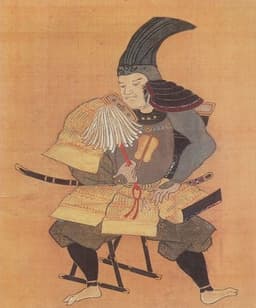
Takenaka Hanbei
General · Modern
43.6Total

Umaro Sissoco Embalo
General · Modern
42.5Total
Basic Information
Born
1544
1972
Died
1579
—
Era
Modern
Modern
Nationality
Japan
Guinea-Bissau
Occupation
General
General
Civilization
Eastern
Other
Score Comparison
Military (10%)
25.0
10.2
Political (20%)
30.8
43.7
Influence (20%)
53.3
50.2
Legacy (20%)
47.5
37.5
Leadership (15%)
36.9
62.2
Strategy (15%)
57.5
36.8
TOTAL
43.6
42.5
Takenaka Hanbei — Complete Timeline
1567 AD
Capture of Inabayama CastleWar◆ Major
Takenaka Hanbei devised a plan for Toyotomi Hideyoshi to capture Inabayama Castle from the Saito clan. Using a night attack and infiltration, the castle fell, marking a key step in Oda Nobunaga's unification of Japan.
InabayamaSiegeHideyoshi
Impact: regionalconstructive
Service as Strategist to HideyoshiOther
Takenaka Hanbei became a chief strategist for Toyotomi Hideyoshi after the capture of Inabayama Castle. He advised on military campaigns and administrative reforms until his death from illness in 1579.
StrategyHideyoshiAdvisor
Impact: regionalconstructive
Umaro Sissoco Embalo — Complete Timeline
2019 AD
Election of Umaro Sissoco EmbaloPolitical Action◆ Major
Embalo won the presidential election as an independent candidate, defeating Domingos Simoes Pereira. His victory was contested by the opposition, but he assumed office, promising to combat corruption and reform the military.
ElectionPresidencyGuinea-Bissau
Impact: nationalconstructive
2022 AD
Survived Coup AttemptPolitical Action◆ Major
Embalo survived an attempted coup when armed men attacked a government meeting in Bissau. The attack resulted in deaths but Embalo escaped unharmed, and the government blamed drug traffickers and political rivals.
Coup AttemptPolitical ViolenceGuinea-Bissau
Impact: nationaldestructive
Expert Analysis
Origins
Takenaka Hanbei (1544-1579) was born into a samurai family serving the Saito clan in Mino Province, Japan. His father, Takenaka Shigekado, was a retainer of Saito Dosan. Hanbei received a classical education in military strategy and Confucian philosophy, showing early aptitude for tactics. He became a trusted advisor to Saito Yoshitatsu but later served Toyotomi Hideyoshi.
Umaro Sissoco Embalo (born 1972) hails from Bissau, Guinea-Bissau. He studied economics at the University of Lisbon and earned a PhD in international relations from the Complutense University of Madrid. Embalo worked as an economist and diplomat before entering politics, serving as Minister of Finance in 2016.
Rise to Power
Hanbei's rise began with the capture of Inabayama Castle in 1567. He devised a plan for Hideyoshi to infiltrate the castle via a night attack, using a small force to open the gates. This victory eliminated the Saito clan and propelled Hideyoshi into prominence. Hanbei became Hideyoshi's chief strategist, advising on campaigns against the Mori clan and administrative reforms.
Embalo rose through Guinea-Bissau's political ranks. He was elected president in 2019 as an independent, defeating Domingos Simoes Pereira in a runoff. His victory was contested by the opposition, but the Supreme Court validated the results. Embalo survived a coup attempt in February 2022 when armed men attacked a government meeting, killing 11 but leaving him unharmed.
Leadership & Governance
Hanbei led through strategic innovation. His plan for Inabayama Castle (scoring 57.5 in strategy) used psychological warfare and stealth, minimizing casualties. He advocated for meritocracy, advising Hideyoshi to promote based on ability rather than birth. His governance focused on efficient administration, but he avoided direct command roles, preferring advisory positions.
Embalo's leadership (scoring 62.2) emphasizes political stability. He has consolidated power by appointing allies to key posts and cracking down on corruption. However, his tenure has been marked by political crises, including a 2020 attempted kidnapping and the 2022 coup. His military score of 10.2 reflects his limited military experience.
Triumph & Tragedy
Hanbei's greatest triumph was the capture of Inabayama Castle, a turning point in Japan's unification. He also contributed to Hideyoshi's rise, scoring 53.3 in influence. His tragedy was his short life; he died of illness at 35, preventing him from seeing Hideyoshi's full success. He also failed to secure a prominent domain for his family.
Embalo's triumph is surviving the 2022 coup, which strengthened his image as a resilient leader. He has maintained power despite instability, scoring 43.7 in politics. His tragedy includes ongoing political polarization and economic stagnation. Guinea-Bissau remains one of the world's poorest countries, with a GDP per capita of $700.
Character & Destiny
Hanbei was known for his calm, analytical mind. He prioritized strategy over personal glory, often staying behind the scenes. His decision to serve Hideyoshi rather than his own clan showed pragmatism. His early death shaped his legacy as a 'what if' figure.
Embalo is assertive and ambitious, but his leadership style has been criticized as authoritarian. He has dissolved parliament and delayed elections, citing security concerns. His survival instinct is strong, but his destiny is tied to Guinea-Bissau's fragile democracy.
Legacy
Hanbei's strategic methods influenced later Japanese warfare. His night attack tactic became a model for surprise operations. He is remembered in Japanese history as a key but unsung figure in unification. His legacy score of 47.5 reflects his limited direct impact.
Embalo's legacy is still forming. He will be remembered as a president who survived a coup and navigated political crises. However, his long-term impact depends on whether he strengthens or weakens democratic institutions. His legacy score of 37.5 is provisional.
Conclusion
Takenaka Hanbei had greater impact in a shorter time, scoring 43.6 total vs Embalo's 42.5. Hanbei's strategy (57.5) and influence (53.3) shaped Japan's unification, while Embalo's military score (10.2) and strategy (36.8) are lower. Although Embalo leads in leadership (62.2), Hanbei's contributions to a major historical transformation give him the edge. Hanbei's legacy, though limited by his early death, is more enduring than Embalo's ongoing but uncertain presidency.
Rankings
🥇
Takenaka HanbeiLeader
Mil: 25.0Pol: 30.8Inf: 53.3
43.6
🥈
Umaro Sissoco Embalo
Mil: 10.2Pol: 43.7Inf: 50.2
42.5
+1.1 behind
How This Comparison Works
Algorithm
Each figure is scored on 6 dimensions (0—100 scale) based on structured historical data: Military (10%), Political (20%), Influence (20%), Legacy (20%), Leadership (15%), Strategy (15%). The weighted total produces the final ranking.
Data Sources
Scores are computed from structured sub-indicators in the database. Scale factors adjust for era (Ancient ×0.85, Modern ×1.0) and civilization size (Eastern ×1.05, Other ×0.80) to account for differences in population and military scale.
Maximum 3 Figures
Comparisons are limited to 2—3 figures to ensure readability and statistical meaningfulness.
Error Margins
±5 points per dimension — Sub-scores are derived from historical records with inherent uncertainty. Two figures within 5 points on a dimension should be considered roughly equivalent in that area.
Total Score Accuracy
±3 points overall — The weighted combination of 6 dimensions produces a total score with approximately ±3 points of uncertainty. Differences of less than 3 points are not statistically significant— the figures are effectively tied.
Known Limitations
- Historical records are incomplete and uneven across civilizations
- Figures from oral-tradition societies may be underrepresented
- Occupation labels can misclassify multi-role figures
- Scores measure capability and impact, not moral character
- Quantitative scoring is a comparison tool, not absolute truth
Capability Radar
Military (10%) — Battles & Warfare
Battles
35
5
Win Rate
40
5
Expansion
30
5
Political (20%) — Governance & Reform
Reform
10
30
Diplomacy
25
35
Economy
10
25
Influence (20%) — Cultural & Global Reach
Cultural
30
15
Global
20
15
Legacy (20%) — Historical Impact
Historical
40
15
Longevity
35
10
Leadership (15%) — Power & Stability
Tenure
15
40
Stability
15
20
Strategy (15%) — Tactics & Innovation
Strategy
60
10
Tactics
65
10
Reform
20
10
Similar Comparisons
Comments & Discussion
No comments yet. Be the first to share your thoughts!