Loading...
Emilio Garrastazu Medici vs Takenaka Hanbei
Emilio Garrastazu Medici leads by 9.4 pts · 2 figures compared
…

Emilio Garrastazu Medici
General · Modern
53.0Total
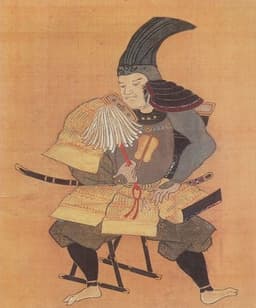
Takenaka Hanbei
General · Modern
43.6Total
Basic Information
Born
1905
1544
Died
1985
1579
Era
Modern
Modern
Nationality
Brazil
Japan
Occupation
General
General
Civilization
Western
Eastern
Score Comparison
Military (10%)
25.9
25.0
Political (20%)
70.0
30.8
Influence (20%)
54.9
53.3
Legacy (20%)
45.0
47.5
Leadership (15%)
72.0
36.9
Strategy (15%)
41.0
57.5
TOTAL
53.0
43.6
Emilio Garrastazu Medici — Complete Timeline
1969 AD
Assumed the Presidency of BrazilPolitical Action◆ Major
Médici became president after Costa e Silva's incapacitation, leading the most repressive phase of the military dictatorship. His government combined brutal suppression of dissent with high economic growth, known as the 'Brazilian Miracle'.
Military DictatorshipRepressionEconomic Miracle
Impact: national
1970 AD
Launched the National Integration Plan (PIN)Reform◆ Major
Médici's government initiated PIN, a program to develop the Amazon region through road construction (Trans-Amazonian Highway), colonization, and resource extraction. The plan aimed to integrate the Amazon into the national economy but caused environmental damage and indigenous displacement.
Amazon DevelopmentInfrastructureEnvironment
Impact: regionalconstructive
Presided over the 'Brazilian Economic Miracle'Other◆ Major
Under Médici, Brazil's GDP grew at an average of 11% per year, driven by state-led infrastructure projects, foreign investment, and consumer credit expansion. The growth widened income inequality and was financed by foreign debt.
Economic GrowthDevelopmentInequality
Impact: nationalconstructive
Intensified Political Repression and TorturePolitical Action◆ Major
Médici's regime expanded the use of torture, forced disappearances, and censorship against leftist guerrillas and opposition figures. The repression was most intense in the Araguaia guerrilla campaign and urban counterinsurgency operations.
Human Rights AbusesTortureDictatorship
Impact: nationaldestructive
Brazil Won the 1970 FIFA World CupCultural
Médici's government heavily exploited Brazil's third World Cup victory for nationalist propaganda. The triumph was used to boost the regime's popularity and project an image of national unity and progress.
SportsPropagandaNationalism
Impact: national
Takenaka Hanbei — Complete Timeline
1567 AD
Capture of Inabayama CastleWar◆ Major
Takenaka Hanbei devised a plan for Toyotomi Hideyoshi to capture Inabayama Castle from the Saito clan. Using a night attack and infiltration, the castle fell, marking a key step in Oda Nobunaga's unification of Japan.
InabayamaSiegeHideyoshi
Impact: regionalconstructive
Service as Strategist to HideyoshiOther
Takenaka Hanbei became a chief strategist for Toyotomi Hideyoshi after the capture of Inabayama Castle. He advised on military campaigns and administrative reforms until his death from illness in 1579.
StrategyHideyoshiAdvisor
Impact: regionalconstructive
Expert Analysis
Origins
Emilio Garrastazu Medici was born on December 4, 1905, in Bagé, Rio Grande do Sul, Brazil, into a military family. He entered the Brazilian Army at age 16, attending the Military School of Realengo. His career advanced through the ranks, with service in cavalry units and staff positions. Medici's formative years were shaped by the military's role in Brazilian politics, particularly the 1930 Revolution and the subsequent Estado Novo dictatorship. He became a protégé of General Artur da Costa e Silva, aligning with the hardline faction of the military regime.
Takenaka Hanbei was born in 1544 in Mino Province, Japan, into a samurai family serving the Saito clan. His father, Takenaka Shigekado, was a retainer of Saito Dosan. Hanbei was known as a brilliant strategist from a young age, but his early career was marked by service to the Saito until their decline. He was a vassal of Saito Yoshitatsu and later Saito Tatsuoki. However, disillusioned with the Saito's incompetence, he secretly allied with the rising Toyotomi Hideyoshi. His background in military tactics and castle warfare proved crucial.
Rise to Power
Medici rose to prominence through his role in the 1964 Brazilian coup d'état, which overthrew President João Goulart. He served as head of the National Intelligence Service (SNI) under the first military president, Humberto de Alencar Castelo Branco. In 1969, after President Costa e Silva suffered a stroke, a military junta selected Medici as president. His rise was a product of the dictatorship's internal power struggles, representing the hardline faction that favored greater repression.
Takenaka Hanbei rose to fame in 1567 when he devised the plan for the capture of Inabayama Castle. At the time, he was a retainer of the Saito clan but secretly communicated with Hideyoshi. He orchestrated a night attack where a small force infiltrated the castle, leading to its fall. This victory was pivotal for Hideyoshi, who was then a general under Oda Nobunaga. Hanbei became Hideyoshi's chief strategist, advising on campaigns that led to the unification of Japan.
Leadership & Governance
Medici's leadership was authoritarian and centralized. He governed Brazil from 1969 to 1974, overseeing the "Brazilian Economic Miracle" with GDP growth averaging 11% per year. His government launched the National Integration Plan (PIN), building the Trans-Amazonian Highway and promoting Amazon colonization. Economically, he pursued state-led industrialization, foreign investment, and consumer credit expansion. However, his rule was marked by severe political repression: torture, forced disappearances, and censorship. The regime crushed leftist guerrilla movements like the Ação Libertadora Nacional (ALN) and the Vanguarda Popular Revolucionária (VPR). His leadership score of 72.0 reflects his effectiveness in implementing policies, but at a high human cost.
Takenaka Hanbei was a strategist rather than a ruler. He served as an advisor to Hideyoshi, focusing on military campaigns and administration. His leadership was indirect; he influenced decisions through counsel. He is credited with the successful siege of Inabayama and later advised on the Chugoku campaign against the Mori clan. His strategic score of 57.5 indicates his tactical acumen, but his political score of 30.8 shows limited direct governance. He died young in 1579, possibly of illness, before Hideyoshi's final unification.
Triumph & Tragedy
Medici's greatest triumph was the economic growth of Brazil, which transformed the country's infrastructure and industrial base. The Trans-Amazonian Highway opened the Amazon for development. His regime also won the 1970 FIFA World Cup, used for nationalist propaganda. However, his tragedy was the brutal repression: thousands were tortured, hundreds killed or disappeared. The economic growth was not sustainable, leading to debt and inflation later. His legacy is tarnished by human rights abuses.
Takenaka Hanbei's triumph was the capture of Inabayama Castle, a brilliant strategic victory that elevated Hideyoshi. He also contributed to Hideyoshi's early success. His tragedy was his early death at age 35, preventing him from seeing Hideyoshi's full unification. He died without achieving high rank or wealth, though his family later served the Toyotomi.
Character & Destiny
Medici was a disciplined, hardline military officer. He believed in order and development, justifying repression as necessary for progress. His character shaped his destiny: he rose to the top of a dictatorship but is remembered as a symbol of authoritarianism. Historical assessments note his efficiency in economic matters but condemn his human rights record.
Takenaka Hanbei was a loyal but pragmatic strategist. He betrayed the Saito clan when he saw their downfall, aligning with Hideyoshi. His character was cautious and clever, preferring indirect methods. His early death cut short his potential, but his contributions were crucial for Hideyoshi.
Legacy
Medici's legacy is mixed. The Brazilian Economic Miracle is studied for its rapid growth, but also for its inequalities. The infrastructure projects remain, but the Amazon development had environmental costs. His regime's repression set a precedent for military rule in Latin America. His influence score of 54.9 and legacy score of 45.0 reflect this ambiguity. In Brazil, he is often viewed negatively due to human rights abuses.
Takenaka Hanbei's legacy is that of a master strategist. His plan for Inabayama Castle is a classic example of siege warfare. He is remembered in Japanese history as a key figure behind Hideyoshi's rise. His legacy score of 47.5 is modest but enduring in samurai lore.
Conclusion
Emilio Medici had a greater impact on history than Takenaka Hanbei, based on the scope of his actions. Medici's presidency affected millions of Brazilians, shaping the country's economic and political trajectory for decades. His total score of 53.0 versus Hanbei's 43.6 reflects this broader influence. While Hanbei's tactical brilliance was important, it was confined to a single campaign in a civil war. Medici's policies had lasting national consequences, for better or worse. Thus, Medici ranks higher in historical significance.
Rankings
🥇
Emilio Garrastazu MediciLeader
Mil: 25.9Pol: 70.0Inf: 54.9
53.0
🥈
Takenaka Hanbei
Mil: 25.0Pol: 30.8Inf: 53.3
43.6
+9.4 behind
How This Comparison Works
Algorithm
Each figure is scored on 6 dimensions (0—100 scale) based on structured historical data: Military (10%), Political (20%), Influence (20%), Legacy (20%), Leadership (15%), Strategy (15%). The weighted total produces the final ranking.
Data Sources
Scores are computed from structured sub-indicators in the database. Scale factors adjust for era (Ancient ×0.85, Modern ×1.0) and civilization size (Eastern ×1.05, Other ×0.80) to account for differences in population and military scale.
Maximum 3 Figures
Comparisons are limited to 2—3 figures to ensure readability and statistical meaningfulness.
Error Margins
±5 points per dimension — Sub-scores are derived from historical records with inherent uncertainty. Two figures within 5 points on a dimension should be considered roughly equivalent in that area.
Total Score Accuracy
±3 points overall — The weighted combination of 6 dimensions produces a total score with approximately ±3 points of uncertainty. Differences of less than 3 points are not statistically significant— the figures are effectively tied.
Known Limitations
- Historical records are incomplete and uneven across civilizations
- Figures from oral-tradition societies may be underrepresented
- Occupation labels can misclassify multi-role figures
- Scores measure capability and impact, not moral character
- Quantitative scoring is a comparison tool, not absolute truth
Capability Radar
Military (10%) — Battles & Warfare
Battles
10
35
Win Rate
10
40
Expansion
10
30
Political (20%) — Governance & Reform
Reform
70
10
Diplomacy
55
25
Economy
80
10
Influence (20%) — Cultural & Global Reach
Cultural
30
30
Global
30
20
Legacy (20%) — Historical Impact
Historical
40
40
Longevity
20
35
Leadership (15%) — Power & Stability
Tenure
60
15
Stability
65
15
Strategy (15%) — Tactics & Innovation
Strategy
15
60
Tactics
15
65
Reform
20
20
Similar Comparisons
Comments & Discussion
No comments yet. Be the first to share your thoughts!