Loading...
Joseph Saidu Momoh vs Takenaka Hanbei
Takenaka Hanbei leads by 6.6 pts · 2 figures compared
…

Joseph Saidu Momoh
General · Modern
37.0Total
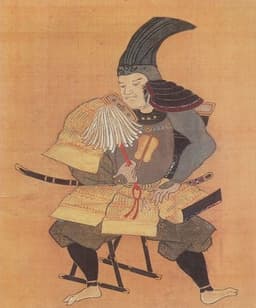
Takenaka Hanbei
General · Modern
43.6Total
Basic Information
Born
1937
1544
Died
—
1579
Era
Modern
Modern
Nationality
Sierra Leone
Japan
Occupation
General
General
Civilization
Other
Eastern
Score Comparison
Military (10%)
10.2
25.0
Political (20%)
27.9
30.8
Influence (20%)
47.1
53.3
Legacy (20%)
35.0
47.5
Leadership (15%)
45.0
36.9
Strategy (15%)
45.0
57.5
TOTAL
37.0
43.6
Joseph Saidu Momoh — Complete Timeline
1985 AD
Became President of Sierra LeonePolitical Action◆ Major
Momoh succeeded Siaka Stevens as President of Sierra Leone, inheriting a one-party state under the All People's Congress. His presidency began with promises of reform but faced economic decline and political instability.
PresidencySierra LeoneTransition
Impact: national
1992 AD
Overthrown by CoupPolitical Action
Momoh was overthrown in a military coup led by Captain Valentine Strasser. The coup ended his seven-year rule and plunged Sierra Leone into a period of military governance and civil war.
CoupSierra LeoneOverthrow
Impact: nationaldestructive
Takenaka Hanbei — Complete Timeline
1567 AD
Capture of Inabayama CastleWar◆ Major
Takenaka Hanbei devised a plan for Toyotomi Hideyoshi to capture Inabayama Castle from the Saito clan. Using a night attack and infiltration, the castle fell, marking a key step in Oda Nobunaga's unification of Japan.
InabayamaSiegeHideyoshi
Impact: regionalconstructive
Service as Strategist to HideyoshiOther
Takenaka Hanbei became a chief strategist for Toyotomi Hideyoshi after the capture of Inabayama Castle. He advised on military campaigns and administrative reforms until his death from illness in 1579.
StrategyHideyoshiAdvisor
Impact: regionalconstructive
Expert Analysis
Origins
Joseph Saidu Momoh was born on January 26, 1937, in Binkolo, Sierra Leone, into a Limba family. He attended the Government Rural School in Binkolo and later the Bo Government Secondary School. He enlisted in the Sierra Leone Army in 1958, training at the Royal Military Academy Sandhurst in the UK and the Nigerian Military Training College. His military career advanced steadily, with postings in the Sierra Leone Regiment.
Takenaka Hanbei (also known as Takenaka Shigeharu) was born in 1544 in Mino Province, Japan, into a samurai family serving the Saito clan. His father, Takenaka Shigemoto, was a retainer of Saito Dōsan. Hanbei received a classical education in military strategy and Confucian thought. He was known for his strategic acumen and served the Saito clan before switching allegiance to Oda Nobunaga and later Toyotomi Hideyoshi.
Rise to Power
Momoh rose through the military ranks, becoming a Brigadier and Commander of the Sierra Leone Army. In 1985, President Siaka Stevens chose him as his successor, and Momoh became President of Sierra Leone on November 28, 1985, inheriting a one-party state under the All People's Congress (APC). His rise was not through popular support but through elite selection.
Takenaka Hanbei rose to prominence in 1567 when he devised the plan for Toyotomi Hideyoshi to capture Inabayama Castle. He infiltrated the castle with a small force and opened the gates for Hideyoshi's army, leading to the fall of the Saito clan. This victory earned him Hideyoshi's trust and he became a chief strategist, advising on campaigns and administration. His rise was based on tactical brilliance and loyalty.
Leadership & Governance
Momoh's leadership was characterized by political inertia and economic decline. He inherited a corrupt one-party state and failed to implement meaningful reforms. In 1991, he introduced a multi-party constitution, but by then the economy had collapsed and rebel war had begun. His governance score is 27.9, reflecting weak political control. He relied on the army for support but alienated many officers.
Takenaka Hanbei's leadership was advisory; he served as a strategist rather than a ruler. He scored 30.8 in political influence. His governance approach focused on military efficiency and strategic planning. He helped Hideyoshi consolidate power in central Japan, but died young in 1579 at age 35, limiting his direct impact.
Triumph & Tragedy
Momoh's greatest triumph was peacefully succeeding Siaka Stevens, avoiding immediate chaos. He also introduced multi-party elections in 1991. His greatest tragedy was the outbreak of the Sierra Leone Civil War in 1991, which he failed to contain, and his overthrow in a coup on April 29, 1992, by Captain Valentine Strasser. His legacy score is 35.0, reflecting a failed presidency.
Takenaka Hanbei's triumph was the capture of Inabayama Castle, a turning point in Hideyoshi's rise. He also contributed to the unification of Japan under Hideyoshi. His tragedy was his early death from illness, preventing him from seeing Japan's full unification. His legacy score is 47.5, higher due to his lasting reputation as a brilliant strategist.
Character & Destiny
Momoh was described as indecisive and reliant on patronage networks. He lacked the political will to reform the corrupt APC system. His character led to a weak response to the rebel war, hastening his downfall. He died in exile in Guinea in 2003.
Takenaka Hanbei was known for his calm demeanor, strategic thinking, and loyalty. He famously advised Hideyoshi to 'use the enemy's strength against them.' His early death cut short a promising career, but his strategies influenced later campaigns. He scored 57.5 in strategy, reflecting his tactical skill.
Legacy
Momoh's legacy is largely negative: he is remembered as a weak leader whose tenure precipitated civil war and state collapse. Sierra Leone's democracy and stability were set back decades. His total score is 37.0.
Takenaka Hanbei is remembered as a master strategist in Japanese history. His capture of Inabayama Castle is a classic example of tactical brilliance. He appears in popular culture and military studies. His total score is 43.6, higher than Momoh's.
Conclusion
Takenaka Hanbei had greater impact than Joseph Momoh. Hanbei's strategic contributions helped shape Japan's unification under Hideyoshi, a pivotal historical process. Momoh's rule ended in failure and chaos. While Hanbei's direct influence was limited by his early death, his legacy as a strategist endures. Momoh's legacy is one of missed opportunities and decline. Thus, Takenaka Hanbei scores higher overall (43.6 vs 37.0) and has a more positive and enduring historical footprint.
Rankings
🥇
Takenaka HanbeiLeader
Mil: 25.0Pol: 30.8Inf: 53.3
43.6
🥈
Joseph Saidu Momoh
Mil: 10.2Pol: 27.9Inf: 47.1
37.0
+6.6 behind
How This Comparison Works
Algorithm
Each figure is scored on 6 dimensions (0—100 scale) based on structured historical data: Military (10%), Political (20%), Influence (20%), Legacy (20%), Leadership (15%), Strategy (15%). The weighted total produces the final ranking.
Data Sources
Scores are computed from structured sub-indicators in the database. Scale factors adjust for era (Ancient ×0.85, Modern ×1.0) and civilization size (Eastern ×1.05, Other ×0.80) to account for differences in population and military scale.
Maximum 3 Figures
Comparisons are limited to 2—3 figures to ensure readability and statistical meaningfulness.
Error Margins
±5 points per dimension — Sub-scores are derived from historical records with inherent uncertainty. Two figures within 5 points on a dimension should be considered roughly equivalent in that area.
Total Score Accuracy
±3 points overall — The weighted combination of 6 dimensions produces a total score with approximately ±3 points of uncertainty. Differences of less than 3 points are not statistically significant— the figures are effectively tied.
Known Limitations
- Historical records are incomplete and uneven across civilizations
- Figures from oral-tradition societies may be underrepresented
- Occupation labels can misclassify multi-role figures
- Scores measure capability and impact, not moral character
- Quantitative scoring is a comparison tool, not absolute truth
Capability Radar
Military (10%) — Battles & Warfare
Battles
5
35
Win Rate
5
40
Expansion
5
30
Political (20%) — Governance & Reform
Reform
10
10
Diplomacy
15
25
Economy
10
10
Influence (20%) — Cultural & Global Reach
Cultural
5
30
Global
5
20
Legacy (20%) — Historical Impact
Historical
5
40
Longevity
5
35
Leadership (15%) — Power & Stability
Tenure
30
15
Stability
5
15
Strategy (15%) — Tactics & Innovation
Strategy
5
60
Tactics
5
65
Reform
5
20
Similar Comparisons
Comments & Discussion
No comments yet. Be the first to share your thoughts!