Loading...
Taira no Shigehira vs Zhang Shijie
Taira no Shigehira leads by 1.3 pts · 2 figures compared
…

Taira no Shigehira
General · Medieval
41.6Total
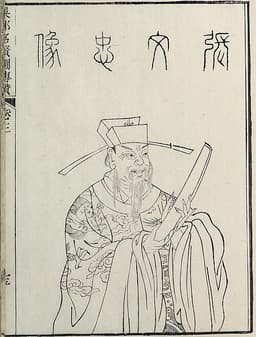
Zhang Shijie
General · Medieval
40.3Total
Basic Information
Born
1158
1215
Died
1185
1279
Era
Medieval
Medieval
Nationality
Japan
China
Occupation
General
General
Civilization
Eastern
Eastern
Score Comparison
Military (10%)
45.0
25.0
Political (20%)
35.0
27.9
Influence (20%)
42.4
47.1
Legacy (20%)
33.3
40.0
Leadership (15%)
57.1
43.8
Strategy (15%)
43.3
52.5
TOTAL
41.6
40.3
Taira no Shigehira — Complete Timeline
1180 AD
Burning of NaraWar◆ Major
Taira no Shigehira commanded the Taira forces that attacked Nara, burning the temples of T
DestructionNaraCultural Loss
Impact: nationaldestructive
1184 AD
Battle of Ichi-no-TaniWar◆ Major
Shigehira commanded the Taira defense at the Battle of Ichi-no-Tani in Settsu Province. He was captured by Minamoto forces after the fortress fell, marking a major defeat for the Taira clan.
BattleDefeatCapture
Impact: regionaltragic
1185 AD
Execution by the MinamotoPolitical Action◆ Major
After being held captive for months, Taira no Shigehira was executed by the Minamoto clan at the request of the monks of Nara. His death served as retribution for the burning of Nara and symbolized the Taira clan's downfall.
ExecutionRetributionGenpei War
Impact: nationaltragic
Zhang Shijie — Complete Timeline
1279 AD
Commanded the Song Fleet at the Battle of YamenWar◆ Major
Zhang Shijie commanded the Song naval forces at the Battle of Yamen against the Mongol fleet. He organized the Song ships into a defensive formation but was ultimately defeated by the Mongols' superior tactics and firepower.
Battle of YamenNaval BattleDefeat
Impact: nationaltragic
Attempted to Rescue the Child EmperorWar◆ Major
During the Battle of Yamen, Zhang Shijie tried to rescue the child Emperor Bing after the Song fleet was broken. He failed to reach the emperor, who drowned with Lu Xiufu. Zhang Shijie then escaped the battle with a small remnant of the fleet.
Rescue AttemptEmperor BingBattle of Yamen
Impact: nationaltragic
Drowned in a Storm after YamenWar◆ Major
After escaping the Battle of Yamen, Zhang Shijie attempted to regroup and continue resistance. However, his ship was caught in a storm and sank, drowning him. His death marked the final end of organized Song resistance against the Mongol Yuan dynasty.
DeathStormEnd of Song
Impact: nationaltragic
Expert Analysis
Origins
Taira no Shigehira was born around 1156 into the powerful Taira clan, which dominated Japanese politics during the late Heian period. His father, Taira no Kiyomori, was the de facto ruler of Japan. Shigehira received a typical aristocratic military education, trained in horseback archery and courtly etiquette. He grew up in Kyoto, immersed in the intrigues of the imperial court. Little is known of his early life before the Genpei War.
Zhang Shijie was born around 1220 in modern-day Hebei, China, during the waning years of the Southern Song dynasty. He came from a military family and rose through the ranks due to his competence. Zhang served under various commanders before gaining prominence in the Song navy. His early career was marked by successful campaigns against the Mongols in the 1260s and 1270s, earning him a reputation as a skilled naval commander.
Rise to Power
Shigehira's rise was tied to his clan's supremacy. In 1180, the Taira clan faced rebellion from the Minamoto clan. Shigehira was given command of forces in the Kinai region. His major turning point came in 1180 when he led the attack on Nara, burning the great temples Tōdai-ji and Kōfuku-ji, which had harbored Minamoto allies. This act cemented his reputation for brutality but also made him a target of vengeance.
Zhang Shijie's rise was gradual. He distinguished himself in the defense of the Yangtze River against Mongol incursions. In 1275, after the fall of the Song capital Lin'an, Zhang escaped with the Song court to the south. He became the primary military commander of the remnant Song government, organizing naval resistance from Fujian and later Guangdong. His leadership during the evacuation of the child emperor Bing elevated his status.
Leadership & Governance
Shigehira's leadership was characterized by aristocratic arrogance and tactical conventionality. He followed the Taira clan's strategy of using cavalry and archery, but lacked innovation. At the Battle of Ichi-no-Tani in 1184, he commanded a defensive position in a fortress, but failed to anticipate the Minamoto's daring cliffside assault. His governance was limited to military command; he had no political role beyond fighting.
Zhang Shijie's leadership was more adaptive. He organized the Song fleet into a massive defensive formation at Yamen, linking ships with chains to create a floating fortress. This strategy maximized the Song's naval strength but also made them vulnerable to fire. Zhang's governance was hands-on; he personally led rescue attempts and maintained morale among the refugee court. He scored 52.5 in strategy, higher than Shigehira's 43.3.
Triumph & Tragedy
Shigehira's greatest success was the burning of Nara, which temporarily suppressed opposition. However, this act united the monks against him and led to his eventual execution. His capture at Ichi-no-Tani was a major defeat. He was held captive for months, then executed by the Minamoto at the monks' request. His life ended in ignominy.
Zhang Shijie's triumph was his prolonged resistance against the Mongols, keeping the Song cause alive for years after the capital fell. His greatest tragedy was the Battle of Yamen in 1279, where his fleet was destroyed by Mongol fire ships and the child emperor drowned. Zhang escaped but died in a storm while attempting to regroup. His total score is 40.3, slightly lower than Shigehira's 41.6.
Character & Destiny
Shigehira was described as proud and ruthless. His decision to burn Nara was politically shortsighted, alienating powerful Buddhist institutions. He showed little strategic flexibility, leading to his capture. His fate was sealed by Minamoto no Yoshitsune's tactical brilliance.
Zhang Shijie was characterized by loyalty and perseverance. He fought on despite hopeless odds. His destiny was shaped by the Mongol empire's overwhelming force. His defensive strategy at Yamen was sound but ultimately insufficient. His drowning mirrored the Song dynasty's final collapse.
Legacy
Shigehira's legacy is overwhelmingly negative. In Japanese history, he is remembered as the destroyer of Nara's cultural treasures. The burning of Tōdai-ji's Great Buddha remains a symbol of wartime destruction. His influence score is 42.4, reflecting his infamy.
Zhang Shijie is remembered as a symbol of loyalty in Chinese history. He is honored as a martyr who died for the Song. Temples were built in his memory. His legacy score is 40.0, slightly higher than Shigehira's 33.3. However, his impact is limited to the Song loyalist narrative.
Conclusion
Taira no Shigehira had a slightly higher total score (41.6 vs 40.3), but his impact was more destructive and short-lived. Zhang Shijie's resistance delayed Mongol conquest and embodied Confucian loyalty. Ultimately, Zhang Shijie had greater historical impact by inspiring future generations, while Shigehira's legacy is stained by cultural vandalism. Zhang Shijie's 52.5 strategy score and 47.1 influence outweigh Shigehira's military achievements.
Rankings
🥇
Taira no ShigehiraLeader
Mil: 45.0Pol: 35.0Inf: 42.4
41.6
🥈
Zhang Shijie
Mil: 25.0Pol: 27.9Inf: 47.1
40.3
+1.3 behind
How This Comparison Works
Algorithm
Each figure is scored on 6 dimensions (0—100 scale) based on structured historical data: Military (10%), Political (20%), Influence (20%), Legacy (20%), Leadership (15%), Strategy (15%). The weighted total produces the final ranking.
Data Sources
Scores are computed from structured sub-indicators in the database. Scale factors adjust for era (Ancient ×0.85, Modern ×1.0) and civilization size (Eastern ×1.05, Other ×0.80) to account for differences in population and military scale.
Maximum 3 Figures
Comparisons are limited to 2—3 figures to ensure readability and statistical meaningfulness.
Error Margins
±5 points per dimension — Sub-scores are derived from historical records with inherent uncertainty. Two figures within 5 points on a dimension should be considered roughly equivalent in that area.
Total Score Accuracy
±3 points overall — The weighted combination of 6 dimensions produces a total score with approximately ±3 points of uncertainty. Differences of less than 3 points are not statistically significant— the figures are effectively tied.
Known Limitations
- Historical records are incomplete and uneven across civilizations
- Figures from oral-tradition societies may be underrepresented
- Occupation labels can misclassify multi-role figures
- Scores measure capability and impact, not moral character
- Quantitative scoring is a comparison tool, not absolute truth
Capability Radar
Military (10%) — Battles & Warfare
Battles
20
45
Win Rate
15
30
Expansion
10
10
Political (20%) — Governance & Reform
Reform
5
15
Diplomacy
5
35
Economy
5
10
Influence (20%) — Cultural & Global Reach
Cultural
15
30
Global
5
20
Legacy (20%) — Historical Impact
Historical
20
40
Longevity
10
30
Leadership (15%) — Power & Stability
Tenure
10
40
Stability
5
20
Strategy (15%) — Tactics & Innovation
Strategy
20
55
Tactics
25
50
Reform
5
20
Similar Comparisons
Comments & Discussion
No comments yet. Be the first to share your thoughts!