Loading...
Alexander Nevsky vs Zhang Shijie
Alexander Nevsky leads by 8.0 pts · 2 figures compared
…

Alexander Nevsky
General · Medieval
48.3Total
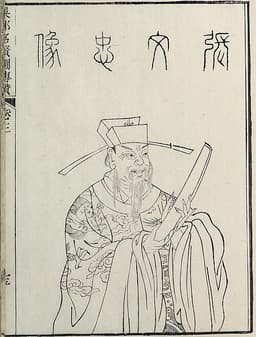
Zhang Shijie
General · Medieval
40.3Total
Basic Information
Born
1220
1215
Died
1263
1279
Era
Medieval
Medieval
Nationality
Novgorod
China
Occupation
General
General
Civilization
Western
Eastern
Score Comparison
Military (10%)
20.0
25.0
Political (20%)
33.6
27.9
Influence (20%)
54.9
47.1
Legacy (20%)
47.5
40.0
Leadership (15%)
64.5
43.8
Strategy (15%)
60.0
52.5
TOTAL
48.3
40.3
Alexander Nevsky — Complete Timeline
1240 AD
Battle of the NevaWar◆ Major
Alexander, Prince of Novgorod, led a surprise attack on Swedish forces at the Neva River. He defeated the Swedes, preventing their invasion of Novgorod. This victory earned him the epithet 'Nevsky' (of the Neva).
BattleSwedish InvasionNovgorod
Impact: regionalconstructive
1242 AD
Battle on the IceWar
Alexander Nevsky defeated the Teutonic Knights on the frozen surface of Lake Peipus. The victory halted the German crusaders' eastward expansion and secured Novgorod's western borders. The battle became a symbol of Russian resistance.
BattleTeutonic KnightsCrusade
Impact: regionalconstructive
Submission to the Mongol EmpirePolitical Action
Alexander Nevsky chose to submit to the Mongol Golden Horde rather than resist. He traveled to Sarai and Karakorum to pledge allegiance, securing Mongol support and protection for Novgorod and Vladimir-Suzdal against Western threats.
Mongol SubmissionGolden HordeDiplomacy
Impact: regional
1252 AD
Appointment as Grand Prince of VladimirPolitical Action◆ Major
Alexander Nevsky was appointed Grand Prince of Vladimir by the Mongol Khan. He used this position to enforce Mongol rule, suppress uprisings against tribute collection, and maintain stability in northeastern Rus.
Grand PrinceMongol AppointmentVladimir
Impact: regional
Zhang Shijie — Complete Timeline
1279 AD
Commanded the Song Fleet at the Battle of YamenWar◆ Major
Zhang Shijie commanded the Song naval forces at the Battle of Yamen against the Mongol fleet. He organized the Song ships into a defensive formation but was ultimately defeated by the Mongols' superior tactics and firepower.
Battle of YamenNaval BattleDefeat
Impact: nationaltragic
Attempted to Rescue the Child EmperorWar◆ Major
During the Battle of Yamen, Zhang Shijie tried to rescue the child Emperor Bing after the Song fleet was broken. He failed to reach the emperor, who drowned with Lu Xiufu. Zhang Shijie then escaped the battle with a small remnant of the fleet.
Rescue AttemptEmperor BingBattle of Yamen
Impact: nationaltragic
Drowned in a Storm after YamenWar◆ Major
After escaping the Battle of Yamen, Zhang Shijie attempted to regroup and continue resistance. However, his ship was caught in a storm and sank, drowning him. His death marked the final end of organized Song resistance against the Mongol Yuan dynasty.
DeathStormEnd of Song
Impact: nationaltragic
Expert Analysis
Origins
Alexander Nevsky was born in 1221 in Pereslavl-Zalessky, the second son of Prince Yaroslav Vsevolodovich of Vladimir. He grew up in the turbulent world of Kievan Rus', where inter-princely conflicts and external threats from the west and east shaped his early years. At age 15, he was appointed prince of Novgorod, a wealthy trading republic with a tradition of strong local autonomy. His education focused on military tactics, diplomacy, and Orthodox Christian piety, which later influenced his decisions.
Zhang Shijie was born around 1210 in modern-day Hebei Province, China, during the final decades of the Southern Song dynasty. Little is known of his early life; he rose from obscure origins as a soldier in the Song army. By 1260, he had become a naval commander, fighting the Mongol invasions led by Kublai Khan. Unlike Nevsky, Zhang had no noble lineage; his career was built on merit and loyalty to the Song imperial house.
Rise to Power
Alexander Nevsky's rise began with the Battle of the Neva in 1240, where he defeated Swedish invaders at age 19. This victory earned him the epithet "Nevsky" and cemented his status as a defender of Novgorod. However, his political acumen was tested in 1242 when he defeated the Teutonic Knights at the Battle on the Ice (Lake Peipus). This turning point halted the German crusaders' eastward expansion. Despite these western victories, Nevsky faced the overwhelming power of the Mongol Golden Horde. In 1247, he traveled to Sarai and Karakorum to submit to the Mongols, securing his position as Grand Prince of Vladimir. This submission allowed him to consolidate power under Mongol suzerainty.
Zhang Shijie's rise came during the Song's desperate defense against the Mongols. He commanded fleets in the Yangtze River region, notably at the Battle of Xiangyang (1267-1273), though the city fell. His most significant role was at the Battle of Yamen in 1279, where he commanded the Song fleet in a last-ditch effort. Despite his leadership, the Mongol fleet, commanded by Zhang Hongfan, outmaneuvered and destroyed the Song navy.
Leadership & Governance
Alexander Nevsky's leadership was pragmatic and authoritarian. He suppressed anti-Mongol uprisings in Novgorod (1257-1259) to maintain peace and prevent Mongol reprisals. His governance prioritized stability over resistance, using Mongol backing to strengthen his own rule. He enforced tribute collection and maintained order, earning him the trust of the Mongol khans. His strategy score of 60.0 reflects his ability to choose battles wisely, avoiding conflict with the Mongols while defeating western foes.
Zhang Shijie's leadership was characterized by loyalty and desperation. At Yamen, he ordered the Song fleet to form a defensive chain, a tactic that initially worked but became a trap when the Mongols used fire ships and wind to break the formation. His political score of 27.9 indicates limited diplomatic skill; he failed to secure alliances or internally consolidate the Song court, which was riven by factionalism. His leadership score of 43.8 reflects his inability to inspire consistent success.
Triumph & Tragedy
Alexander Nevsky's greatest triumph was the Battle on the Ice, where he decisively defeated the Teutonic Knights, securing Novgorod's western borders. His submission to the Mongols, while controversial, preserved Novgorod's autonomy and prevented destruction. His tragedy lies in his collaboration: he enforced Mongol rule, suppressed Russian uprisings, and facilitated the Mongol yoke. His military score of 20.0 is low by modern metrics, but his strategic and political scores (60.0 and 33.6) highlight his focus on survival over conquest.
Zhang Shijie's triumph was his steadfast loyalty to the Song cause. He organized the fleet at Yamen and attempted to rescue the child emperor Bing after the defeat. His tragedy is absolute: the battle ended the Song dynasty, and he drowned in a storm while trying to regroup. His military score of 25.0 and strategy of 52.5 show competence but insufficient to overcome the Mongol juggernaut.
Character & Destiny
Alexander Nevsky was calculating and patient. He recognized the futility of fighting the Mongols and chose collaboration to preserve his people. His character was shaped by realpolitik; he is often seen as a protector of Orthodox Christianity against the Catholic West, but his legacy is tainted by his role as a Mongol vassal. His total score of 48.3 reflects a balanced but not outstanding historical figure.
Zhang Shijie was courageous but inflexible. He fought to the end, refusing to surrender, yet his tactical choices at Yamen proved disastrous. His destiny was tied to the doomed Song dynasty; his failure to adapt or negotiate sealed his fate. His total score of 40.3 is lower, reflecting a narrower impact.
Legacy
Alexander Nevsky's legacy is complex. He is a national hero in Russia, canonized by the Orthodox Church for his defense of the faith. His image was used by Stalin during World War II to rally resistance against Germany. The Order of Alexander Nevsky is a Soviet and Russian military decoration. His choice to submit to the Mongols is seen as pragmatic, allowing Russian culture to survive.
Zhang Shijie is remembered in China as a symbol of loyalty. His story is taught in schools as an example of devotion to the nation. However, his impact is limited; he did not prevent the Song's fall, and his tactics are studied as a case of failed naval defense. His influence score of 47.1 is lower than Nevsky's 54.9.
Conclusion
Alexander Nevsky had a greater impact than Zhang Shijie. His political maneuvering preserved Novgorod's independence within the Mongol Empire, while Zhang's last stand failed to save the Song. Nevsky's legacy endures in Russian identity and military honors, whereas Zhang's is confined to historical footnotes. The score gap of 8.0 points reflects this: Nevsky's strategic choices (60.0 vs 52.5) and leadership (64.5 vs 43.8) were more effective. Alexander Nevsky's pragmatic submission, though controversial, secured a future for his people, making him the more consequential figure.
Rankings
🥇
Alexander NevskyLeader
Mil: 20.0Pol: 33.6Inf: 54.9
48.3
🥈
Zhang Shijie
Mil: 25.0Pol: 27.9Inf: 47.1
40.3
+8.0 behind
How This Comparison Works
Algorithm
Each figure is scored on 6 dimensions (0—100 scale) based on structured historical data: Military (10%), Political (20%), Influence (20%), Legacy (20%), Leadership (15%), Strategy (15%). The weighted total produces the final ranking.
Data Sources
Scores are computed from structured sub-indicators in the database. Scale factors adjust for era (Ancient ×0.85, Modern ×1.0) and civilization size (Eastern ×1.05, Other ×0.80) to account for differences in population and military scale.
Maximum 3 Figures
Comparisons are limited to 2—3 figures to ensure readability and statistical meaningfulness.
Error Margins
±5 points per dimension — Sub-scores are derived from historical records with inherent uncertainty. Two figures within 5 points on a dimension should be considered roughly equivalent in that area.
Total Score Accuracy
±3 points overall — The weighted combination of 6 dimensions produces a total score with approximately ±3 points of uncertainty. Differences of less than 3 points are not statistically significant— the figures are effectively tied.
Known Limitations
- Historical records are incomplete and uneven across civilizations
- Figures from oral-tradition societies may be underrepresented
- Occupation labels can misclassify multi-role figures
- Scores measure capability and impact, not moral character
- Quantitative scoring is a comparison tool, not absolute truth
Capability Radar
Military (10%) — Battles & Warfare
Battles
35
45
Win Rate
40
30
Expansion
20
10
Political (20%) — Governance & Reform
Reform
20
15
Diplomacy
55
35
Economy
25
10
Influence (20%) — Cultural & Global Reach
Cultural
55
30
Global
45
20
Legacy (20%) — Historical Impact
Historical
60
40
Longevity
55
30
Leadership (15%) — Power & Stability
Tenure
50
40
Stability
40
20
Strategy (15%) — Tactics & Innovation
Strategy
40
55
Tactics
45
50
Reform
15
20
Similar Comparisons
Comments & Discussion
No comments yet. Be the first to share your thoughts!