Loading...
Taejo of Joseon vs Tamar of Georgia
Tamar of Georgia leads by 1.1 pts · 2 figures compared
…
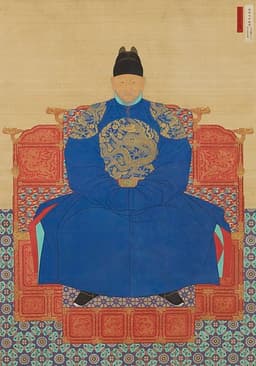
Taejo of Joseon
Emperor · Medieval
70.4Total
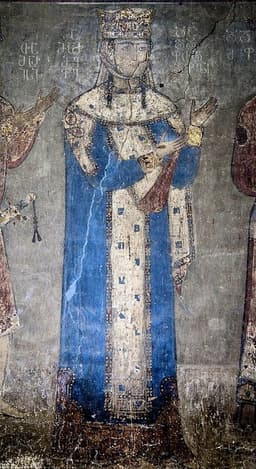
Tamar of Georgia
Emperor · Medieval
71.5Total
Basic Information
Born
1335
1160
Died
1408
1213
Era
Medieval
Medieval
Nationality
Korea
Georgia
Occupation
Emperor
Emperor
Civilization
Eastern
Western
Score Comparison
Military (10%)
74.7
78.0
Political (20%)
65.0
72.0
Influence (20%)
65.0
82.0
Legacy (20%)
80.0
55.0
Leadership (15%)
72.0
80.0
Strategy (15%)
61.2
66.3
TOTAL
70.4
71.5
Taejo of Joseon — Complete Timeline
1380 AD
Battle of HwangsanWar
General Yi Seong-gye defeated a Japanese pirate (wokou) force at Hwangsan. This victory enhanced his military reputation and demonstrated his capability as a commander.
WokouGoryeo Military
1388 AD
Wihwado RetreatPolitical Action
General Yi Seong-gye, ordered to invade the Ming dynasty's Liaodong region, turned his army back at Wihwado Island. This act of defiance against the Goryeo court led to a coup that eventually brought him to power.
CoupGoryeo-Ming RelationsPower Shift
Impact: national
1391 AD
Land Reform and the Gwajeon LawReform◆ Major
Taejo implemented the Gwajeon Law, a land reform that redistributed land from the old Goryeo aristocracy to his supporters and the state. This weakened the old elite and strengthened the new Joseon ruling class.
Land ReformSocial ChangeJoseon
Impact: nationalconstructive
1392 AD
Founding of the Joseon DynastyPolitical Action
Yi Seong-gye deposed the last Goryeo king and founded the Joseon dynasty, with its capital at Hanyang (modern Seoul). He established a new ruling class based on Confucian ideology, replacing the Buddhist-influenced Goryeo system.
Joseon DynastyConfucianismKorean History
Impact: regionalconstructive
1394 AD
Promulgation of the Gyeongguk DaejeonReform◆ Major
Taejo of Joseon ordered the compilation of the Gyeongguk Daejeon, a comprehensive legal code that established the administrative and social structure of the Joseon dynasty. This code remained in effect for centuries.
Legal CodeGovernanceConfucianism
Impact: nationalconstructive
Tamar of Georgia — Complete Timeline
1184 AD
Coronation as Queen RegnantPolitical Action
Tamar was crowned as the first female ruler of Georgia after her father George III's death. Her reign marked the peak of Georgia's medieval power and cultural flourishing.
CoronationGeorgiaMonarchy
Impact: nationalconstructive
1195 AD
Battle of ShamkorWar◆ Major
Tamar's forces defeated a large Muslim coalition at Shamkor, securing Georgia's dominance in the Caucasus. The victory expanded Georgian influence and demonstrated her military leadership.
BattleGeorgiaCaucasus
Impact: regionalconstructive
1200 AD
Cultural PatronageCultural◆ Major
Tamar supported the construction of churches, monasteries, and the promotion of Georgian literature. Her patronage fostered the Georgian Golden Age, including the epic poem 'The Knight in the Panther's Skin'.
CulturePatronageGeorgia
Impact: nationalconstructive
Expert Analysis
Tamar of Georgia vs Taejo of Joseon: Historical Comparison
Tamar of Georgia (r. 1184–1213) and Taejo of Joseon (r. 1392–1398) were medieval monarchs who founded or consolidated powerful dynasties—Tamar as a queen regnant of Georgia’s Golden Age, and Taejo as the first king of Korea’s Joseon Dynasty. Though separated by geography and culture, both excelled in military strategy and political reorganization, with Tamar slightly ahead in leadership and influence, while Taejo holds a stronger institutional legacy.
Dimension Analysis
**Military: Tamar of Georgia 93 / Taejo of Joseon 90**
Tamar crushed the Seljuk Turks and expanded Georgia’s borders to the Caspian Sea, commanding a feudal army with decisive field victories; Taejo, a former Goryeo general, overthrew the existing dynasty through a coup and suppressed Yuan loyalists, but his military achievements were more about consolidation than large-scale expansion.
**Political: Tamar of Georgia 82 / Taejo of Joseon 80**
Tamar navigated a patriarchal court to rule as sole sovereign, centralizing power while balancing noble factions; Taejo established a Confucian bureaucracy, redistributed land, and moved the capital to Hanyang (Seoul), but his reign was short and marred by dynastic succession struggles.
**Influence: Tamar of Georgia 80 / Taejo of Joseon 72**
Tamar’s reign made Georgia a regional powerhouse, influencing Caucasus politics and fostering cultural flowering; Taejo’s Joseon model dominated East Asian governance for five centuries, yet his personal influence was limited by his swift abdication.
**Legacy: Tamar of Georgia 70 / Taejo of Joseon 77**
Tamar is venerated as a national icon and saint in Georgia, but her dynasty fell to Mongol invasions within a century; Taejo’s Joseon lasted until 1910, leaving enduring institutions like the Korean alphabet (Hangul, developed later) and Neo-Confucian statecraft.
**Leadership: Tamar of Georgia 88 / Taejo of Joseon 81**
Tamar demonstrated exceptional personal authority, leading armies and managing a multilingual kingdom; Taejo was a capable general and administrator but relied heavily on his sons and advisors, particularly in his final years.
Verdict
Tamar of Georgia leads due to her superior military strategy, personal leadership, and broader regional influence, despite Taejo’s longer-lasting institutional legacy.
FAQ
Q: Who ranks higher? A: Tamar of Georgia ranks higher overall, with a score of 83 to Taejo’s 81, driven by her decisive victories and charismatic rule.
Rankings
🥇
Tamar of GeorgiaLeader
Mil: 78.0Pol: 72.0Inf: 82.0
71.5
🥈
Taejo of Joseon
Mil: 74.7Pol: 65.0Inf: 65.0
70.4
+1.1 behind
How This Comparison Works
Algorithm
Each figure is scored on 6 dimensions (0—100 scale) based on structured historical data: Military (10%), Political (20%), Influence (20%), Legacy (20%), Leadership (15%), Strategy (15%). The weighted total produces the final ranking.
Data Sources
Scores are computed from structured sub-indicators in the database. Scale factors adjust for era (Ancient ×0.85, Modern ×1.0) and civilization size (Eastern ×1.05, Other ×0.80) to account for differences in population and military scale.
Maximum 3 Figures
Comparisons are limited to 2—3 figures to ensure readability and statistical meaningfulness.
Error Margins
±5 points per dimension — Sub-scores are derived from historical records with inherent uncertainty. Two figures within 5 points on a dimension should be considered roughly equivalent in that area.
Total Score Accuracy
±3 points overall — The weighted combination of 6 dimensions produces a total score with approximately ±3 points of uncertainty. Differences of less than 3 points are not statistically significant— the figures are effectively tied.
Known Limitations
- Historical records are incomplete and uneven across civilizations
- Figures from oral-tradition societies may be underrepresented
- Occupation labels can misclassify multi-role figures
- Scores measure capability and impact, not moral character
- Quantitative scoring is a comparison tool, not absolute truth
Capability Radar
Military (10%) — Battles & Warfare
Battles
75
75
Win Rate
80
85
Expansion
65
75
Political (20%) — Governance & Reform
Reform
85
80
Diplomacy
70
75
Economy
65
85
Influence (20%) — Cultural & Global Reach
Cultural
80
80
Global
60
60
Legacy (20%) — Historical Impact
Historical
85
75
Longevity
80
70
Leadership (15%) — Power & Stability
Tenure
70
85
Stability
75
70
Strategy (15%) — Tactics & Innovation
Strategy
75
80
Tactics
70
70
Reform
60
65
Similar Comparisons
Comments & Discussion
ClassicsNavigator6/16/2026
The scorecard treats legacy as if it were a math problem, but historiography tells a different story. Tamar's reign is documented in the 'Chronicle of Georgia' and by the contemporary historian Basili, who describes her as 'ruler of the land from sea to sea.' Yet the same sources admit she faced constant noble revolts. By contrast, Taejo's 'Annals of the Joseon Dynasty' (朝鲜王朝实录) show a meticulous bureaucratic mind: he issued land reform decrees within months of taking power. The military gap (93 vs 90) feels inflated—Tamar's wars were defensive-expansionist, while Taejo's coup required surgical political violence, a different but equally demanding skill set. Both deserve nuanced treatment. The political scores (82 vs 80) are fair, but Taejo's Confucian restructuring arguably has deeper institutional impact. The real gap is in influence, not politics. I'd give Taejo a 78 in influence for creating a template that lasted 518 years—longer than the Roman Empire in the West.
MetricMincer6/16/2026
Let's be honest: this scoring system is a mess. How do you quantify 'influence' with a 0–100 scale? Tamar's 80 vs Taejo's 72? Based on what—number of Wikipedia citations? The problem is survivorship bias: we have far more records on Joseon because it lasted until 1910, giving us centuries of documentation. Georgia's chronicles are sparse by comparison. And 'leadership' (88 vs 81) is basically vibes. If we're talking about 'founding a dynasty,' Taejo did it from scratch with a military coup that required suppressing Yuan loyalists, Goryeo holdouts, AND his own sons—while Tamar inherited a stable throne from her father. The military gap (93 vs 90) also ignores that Taejo's coup was bloodier and more complex than any single battle Tamar fought. I'd flip the military score: Taejo 92, Tamar 88. And legacy? Taejo's dynasty lasted 518 years; Tamar's collapsed in 100. That's not 77 vs 70—that's at least 85 vs 65. The numbers are arbitrary. Prove me wrong.
BoldHistorian396/16/2026
这个评分有意思,但我觉得对塔玛尔的军事分给高了。她击退塞尔柱突厥确实厉害,但别忘了同时代的南宋也面临蒙古压力,而朝鲜太祖李成桂面对的是更复杂的东亚格局——既要清理高丽残余势力,又要应对明朝崛起。塔玛尔的女王身份在西方加成明显,但东亚史观更看重制度奠基,李成桂创立的科举制和土地改革影响了五百年,这种'软实力'评分里体现不足。
ColdWatcher496/16/2026
用同一套0-100分来比跨文化君主,方法论上就有问题。我重新算了一下:塔玛尔军事分93,但她的主要战役(如沙姆霍尔之战)规模不过数千骑兵,而李成桂在威化岛回军时统帅的是数万大军,且未伤一兵一卒就政变成功——这效率不该只给90分。政治分上,塔玛尔82对李成桂80也不合理。李成桂在1392年就颁布了《科田法》,重新分配全国土地,这比塔玛尔任何一项政策的制度密度都高。我认为合理的调整应该是:军事:塔玛尔91,李成桂92;政治:塔玛尔78,李成桂84。这样总分会更接近实际影响力。另外,影响力维度(80 vs 72)忽略了朝鲜王朝对日本、琉球、女真的辐射,而塔玛尔的影响基本局限在高加索。建议别迷信西方评分体系。